

Israel a ‘bedrock’ of US strategy, defense secretary says
In Tel Aviv, Ashton Carter seeks to ease fears over Iran deal before addressing concerns among Washington’s Arab allies
 Add ToI as a Preferred Source on Google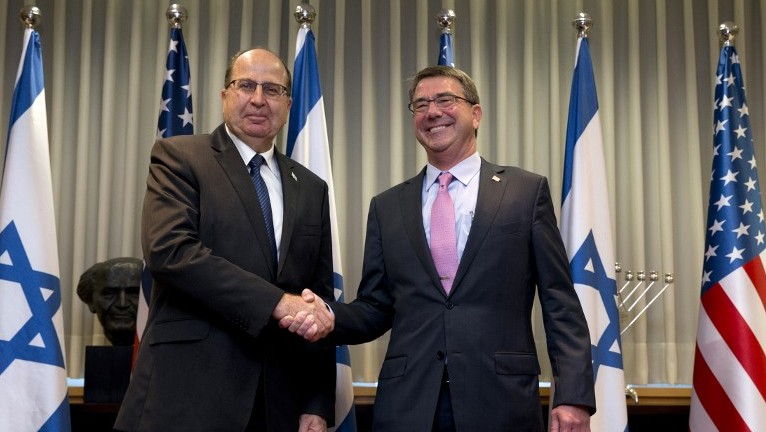
US Defense Secretary Ashton Carter visited Israel on Monday in a bid to ease concerns over the nuclear deal with Iran, saying the Jewish state remains the “bedrock of American strategy” in the region.
Israel was Carter’s first stop on a regional tour following last week’s historic agreement between Iran and world powers, underlining the importance of the relationship between the two countries despite frictions over the accord.
Prime Minister Benjamin Netanyahu has condemned the deal with Iran, whose Islamist regime seeks the destruction of Israel, arguing it will not keep the ayatollahs from obtaining nuclear weapons that could be used to target his country.
He has also signaled that military force remains on the table to prevent Iran from obtaining nuclear weapons, though experts say unilateral strikes by Israel appear highly unlikely for now.
Ahead of a meeting with Defense Minister Moshe Ya’alon, Carter said the two countries would “work together to maintain our safety and security in this troubled region.
“Israel is the bedrock of American strategy in the Middle East,” he said.
Ya’alon avoided mentioning the two countries’ disagreements in his statement before the meeting, saying, “We share common interests as well as common values.
“And today we will have an opportunity to discuss the developing situation in the Middle East. It is really developing, changing almost every day. So we have to adjust our strategy… in order to meet the challenges,” Ya’alon said.
‘Much deadlier weapons’
The United States grants Israel about $3 billion in military aid annually in addition to spending on other projects, such as the Iron Dome missile defense system.
There have been suggestions that the country could receive additional compensation to help it defend itself against the threat it says the Iranian nuclear deal now poses, but Netanyahu has so far shown no sign of tempering his criticism.
Army Radio on Monday cited Defense Ministry officials as saying they were ready to begin discussing such compensation, but Netanyahu has been hesitant because he believes it would signal acceptance of the agreement.
Beyond saying the deal will not block Iran’s path to nuclear weapons, Netanyahu argues that the lifting of sanctions will allow it to further finance proxy militants in the Middle East, including the Lebanese terror group Hezbollah, which has engaged Israel in combat many times over the past decades.
Carter was due to visit Israel’s northern border with Lebanon later Monday for an assessment of the threat Hezbollah poses.
Under the July 14 agreement, Iran has agreed to dismantle or mothball much of its nuclear industry in return for an easing and eventual lifting of sanctions. World powers have called it a historic opportunity to set relations with Iran on a new path.
On his flight to Israel, Carter said, however, that the deal does not preclude the use of military force to stop Iran from obtaining nuclear weapons, though the agreement is designed to resolve the issue diplomatically.
In response to talk of military force, Iranian Foreign Minister Mohammad Javad Zarif said that “the world sees last week’s agreement in Vienna as a victory of diplomacy over war and violence.”
“Unfortunately there are still people who speak of the illegal and illegitimate use of violence to attain their objective based on illusions and insist on maintaining an ineffective option,” he said, according to state news agency IRNA.
Netanyahu will now turn his attention to the US Congress, which has 60 days to review the agreement. He has given interviews to a range of US television programs, warning that the agreement is a catastrophic mistake.
The deal “may block or delay Iran’s path to one or two bombs for the next few years, assuming they don’t cheat, but paves their way to many, many bombs after a decade or so,” he said Sunday on CBS.
Carter is due to meet Netanyahu on Tuesday before traveling on to Jordan and Saudi Arabia.










The Times of Israel Community.