

Japan says it won’t follow US on Jerusalem embassy move
A day after meeting Israeli and Palestinian leaders, Foreign Minister Taro Kono tells his Jordanian counterpart Japan is committed to two-state solution
 Add ToI as a Preferred Source on Google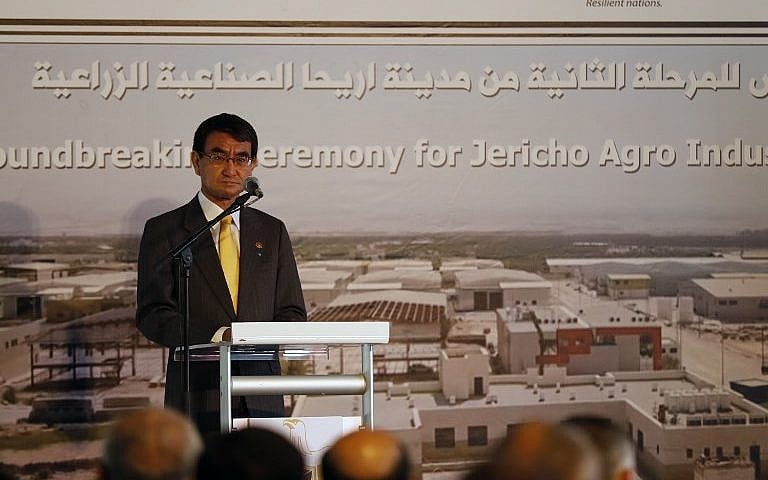
Japan’s Foreign Minister Taro Kono held talks on Tuesday with his Jordanian counterpart in Amman, where he said Japan would not follow its longstanding ally the US in moving its embassy to Jerusalem.
Kono also reiterated Japan’s support for a two-state solution to the Israeli-Palestinian conflict during his meeting with Ayman Safadi, Jordan’s official Petra news agency said.
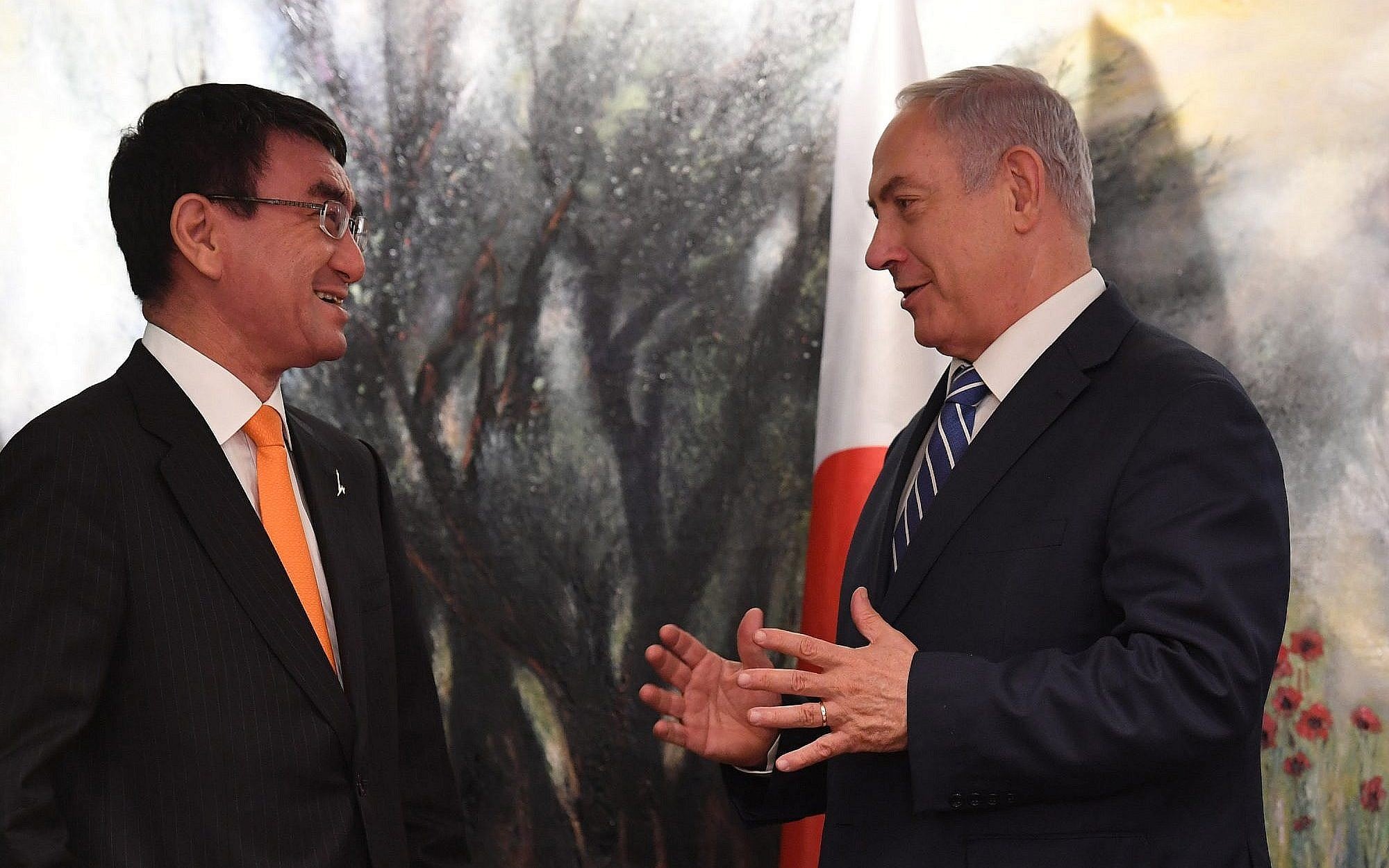
The Japanese foreign minister’s comments came after he met with Prime Minister Benjamin Netanyahu and Palestinian Authority President Mahmoud Abbas in separate meetings on Monday in Jerusalem and Ramallah.
Kono didn’t publicly address Trump’s decision to recognize Jerusalem as Israel’s capital in those meetings.
Earlier on Tuesday, Hebrew media reported Kono invited Netanyahu and Abbas to a four-way peace summit in Tokyo that would also include Jared Kushner, who is overseeing US President Donald Trump’s efforts to revive peace talks.
According to Channel 10, Netanyahu said he was open to attending, but only if the US agreed.
The TV channel said the proposal was first made to Netanyahu by Japanese Prime Minister Shinzo Abe when the two met in New York during the UN General Assembly in September.
It said Netanyahu told Abe he would only attend if the summit was coordinated with the US, which has traditionally been the arbitrator of Israeli-Palestinian peace talks.
The reports did not say how Abbas responded to Kono’s proposal.
While Kono did not publicly criticize the US recognition in his meetings with Israeli leaders, Japan last week voted in favor of a non-binding UN General Assembly resolution condemning the American move.
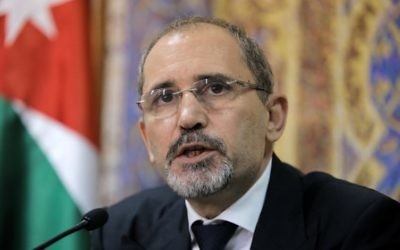
During Tuesday’s meeting in Amman, Jordan’s foreign minister said Jerusalem’s fate should be decided in peace talks.
The status of the city should be decided “through direct negotiations and according to the relevant international resolutions,” Safadi was quoted by the Petra news agency as saying.
Jordan, which under its 1994 peace deal with Israel is the custodian of Jerusalem’s Muslim and Christian holy sites, has been outspoken in its opposition to Trump’s declaration.
While the move was widely welcomed in Israel, Trump’s recognition of Jerusalem as Israel’s capital has been denounced by the vast majority of countries worldwide, with a non-binding UN General Assembly resolution condemning the move passing 128-9 last week.
Besides the US and Israel, only seven countries voted against the measure, including Guatemala, which said on Sunday it would follow the US in moving its embassy to Israel to the holy city.
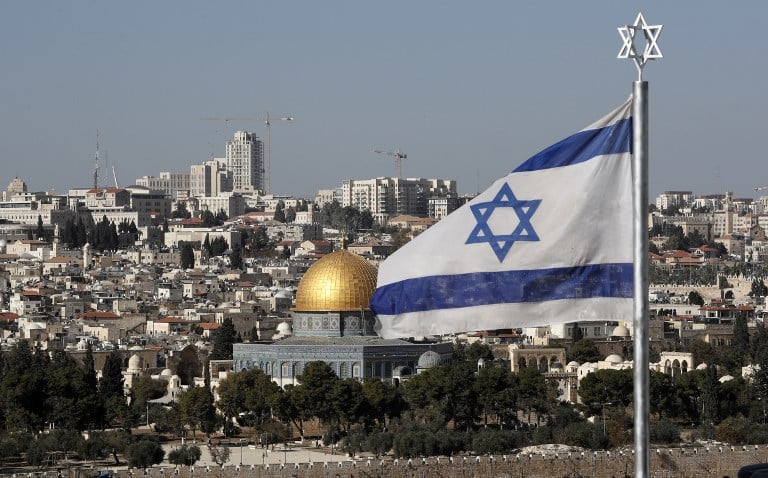
Israel’s deputy foreign minister on Monday said at least 10 other countries are in talks to move their own missions to the city. Channel 10 reported that the next country likely to announce an embassy move was Honduras. Other countries also reportedly in talks to move their embassies are South America’s Paraguay and the west African nation of Togo.
The issue of Jerusalem is one of the thorniest in the Israeli-Palestinian conflict. Israel maintains the whole city is its united capital, while the Palestinians claim East Jerusalem as the capital of their future state.
Israel captured East Jerusalem from Jordan in the 1967 Six Day War and later extended Israeli law over it in a move not recognized by the international community.
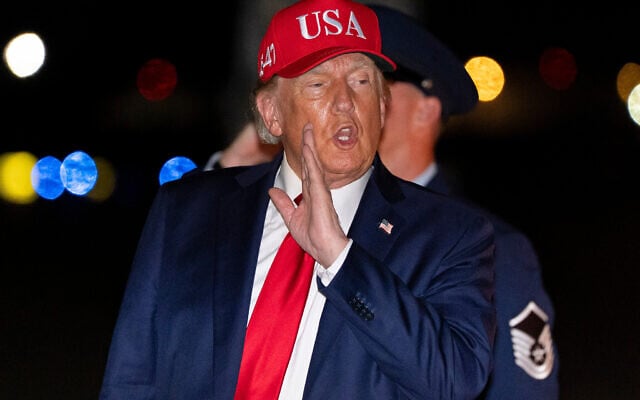
In a December 6 address from the White House, Trump insisted that after repeated failures to achieve peace a new approach was long overdue, describing his decision to recognize Jerusalem as the seat of Israel’s government as merely based on reality.
Trump stressed that he was not specifying the boundaries of Israeli sovereignty in the city, and called for no change in the status quo at the city’s holy sites.








The Times of Israel Community.