

Jerusalem’s newest luxury hotel opens with a touch of the ‘Orient’
The Isrotel group’s latest 243-room retreat in the capital’s historic Germany Colony preserves the old with upscale accommodations
 Add ToI as a Preferred Source on Google
Jessica Steinberg, The Times of Israel's culture and lifestyles editor, covers the Sabra scene from south to north and back to the center
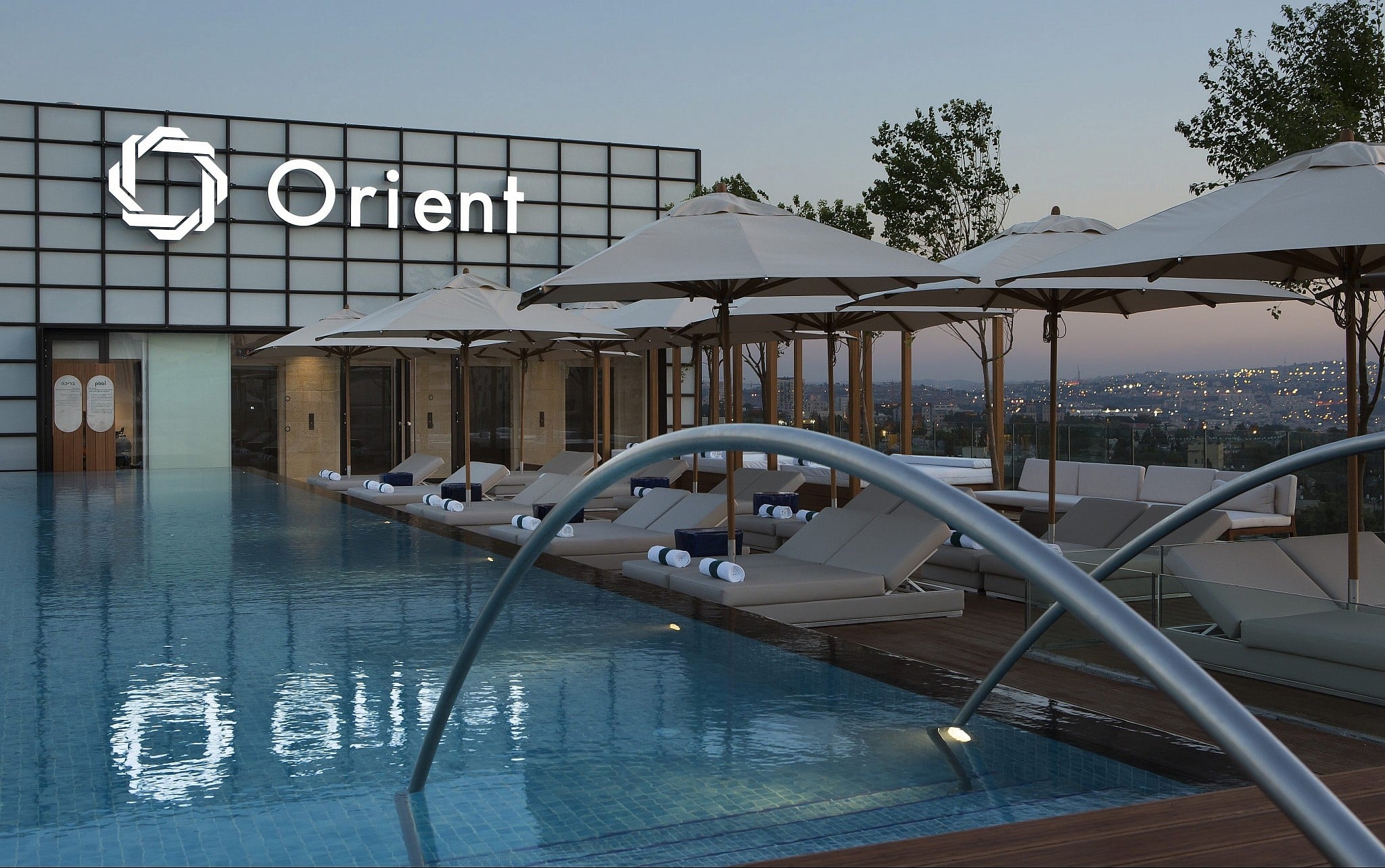
It’s been a long wait for the opening of the Orient, Isrotel’s newest hotel, situated at the tip of Jerusalem’s German Colony.
The hotel, which opened in July after four years of construction, is a sprawling luxury complex that includes a swanky rooftop pool and two renovated Templar residences at the entrance, part of its efforts to blend into the 19th-century architecture of this historic neighborhood.
That melding of old and new was intentional as the construction of the Orient was long protested by neighbors who opposed its presence in the quiet, mostly residential area. While Isrotel ultimately prevailed, it was told to find solutions for preserving the community’s character and feel.
Now that it has opened for business, this latest addition to the Israeli luxury hotel chain has changed the look of the neighborhood, as local residents suspected, but also beckons to Israeli and foreign tourists, with its easy access to downtown Jerusalem, the Old City, First Station and other city attractions.
It is the kind of hotel that can appeal to locals as well, offering an easy escape without having to leave the neighborhood. That said, not every part of the hotel is open to non-guests.
For example, the infinity pool on the roof — a perfect way to relax at the end of a long day of touring, staring through glass walls at views of Jerusalem, from the Old City and Mount Scopus to the red-tiled roofs of the German Colony — is for hotel guests only, as is the sleek underground pool and spa. The pool area will eventually include a bar, but at present, guests need to be satisfied with cups of water from the cooler. The hotel may consider offering day or monthly passes in the future.
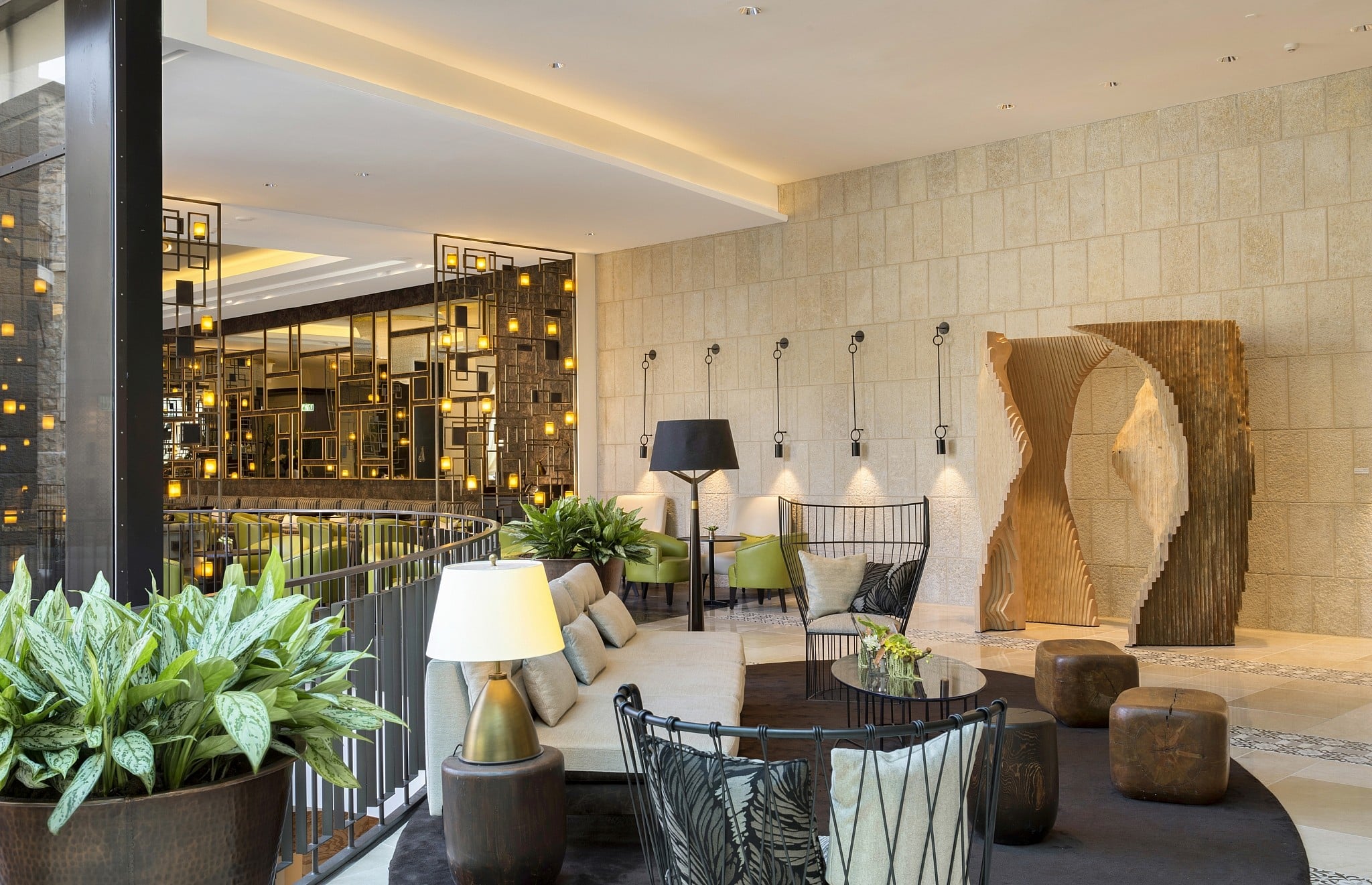
The hotel is opening other facilities to the public, though. Outsiders can make reservations for the lavish breakfast (NIS 140/$40 per person) served in the Smadar, the lower-level dining room, where the menu is organized according Jerusalem neighborhoods, such as herring and kugel from Mea Shearim, and olives, filo pastries and chopped salads from the Mahane Yehuda market.
There’s a la carte service at the tables, with waiters pouring fresh-squeezed orange juice and cappuccinos, and serving eggs on signature dishes used at all Isrotel hotels made by an Israeli ceramicist. It’s particularly pleasant to sit in the outdoor courtyard for breakfast.
Below the level which houses the dining room, indoor pool and spa, are event halls and banquet rooms that can be reserved for weddings, bar and bat mitzvahs and professional gatherings.
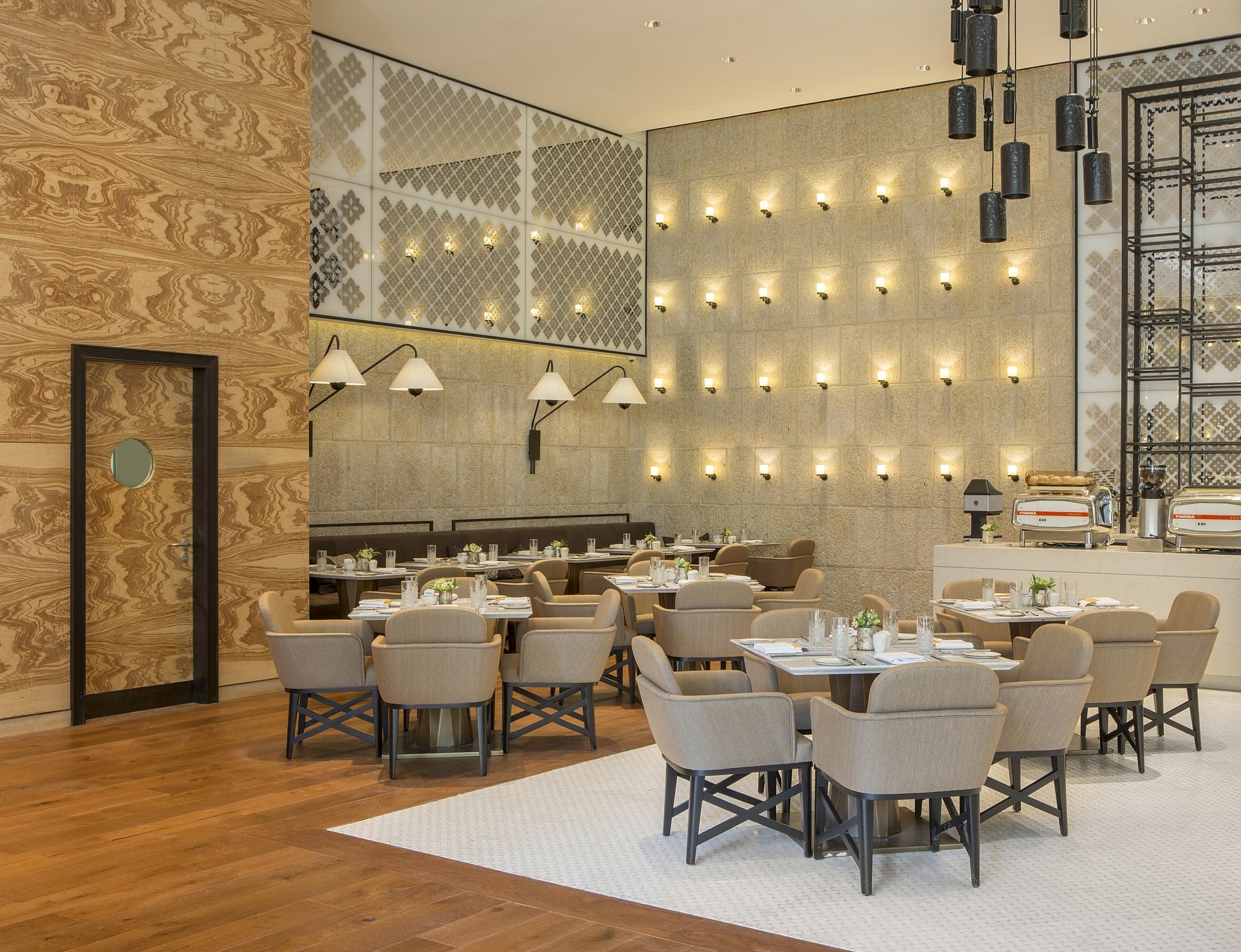
The Khan Bar and Lounge is situated on the lobby floor, a cozy but elegant retreat accented with small tables, upholstered benches and oversized chairs, and a dairy menu that emphasizes local Jerusalem treats. There are local breads and salads (try the focaccia), fish and pasta (less local in flavor) and some calorie-worthy desserts, such as knafe served above a flame, and halvah-inspired sweets.
The bar, which is also open to outside customers, is a natural extension of the lobby, a space inspired by local colors, materials and crafts, with a grand atrium of glass and Jerusalem stone, and heightened by accents of mosaic tiles.
Of course, if you’re staying at the hotel (and perhaps taking advantage of the current soft launch of 20% discount that currently bring costs down to $180 per person per night in a room for two until October 15) there are the other cushy details that mark the swanky accommodation.
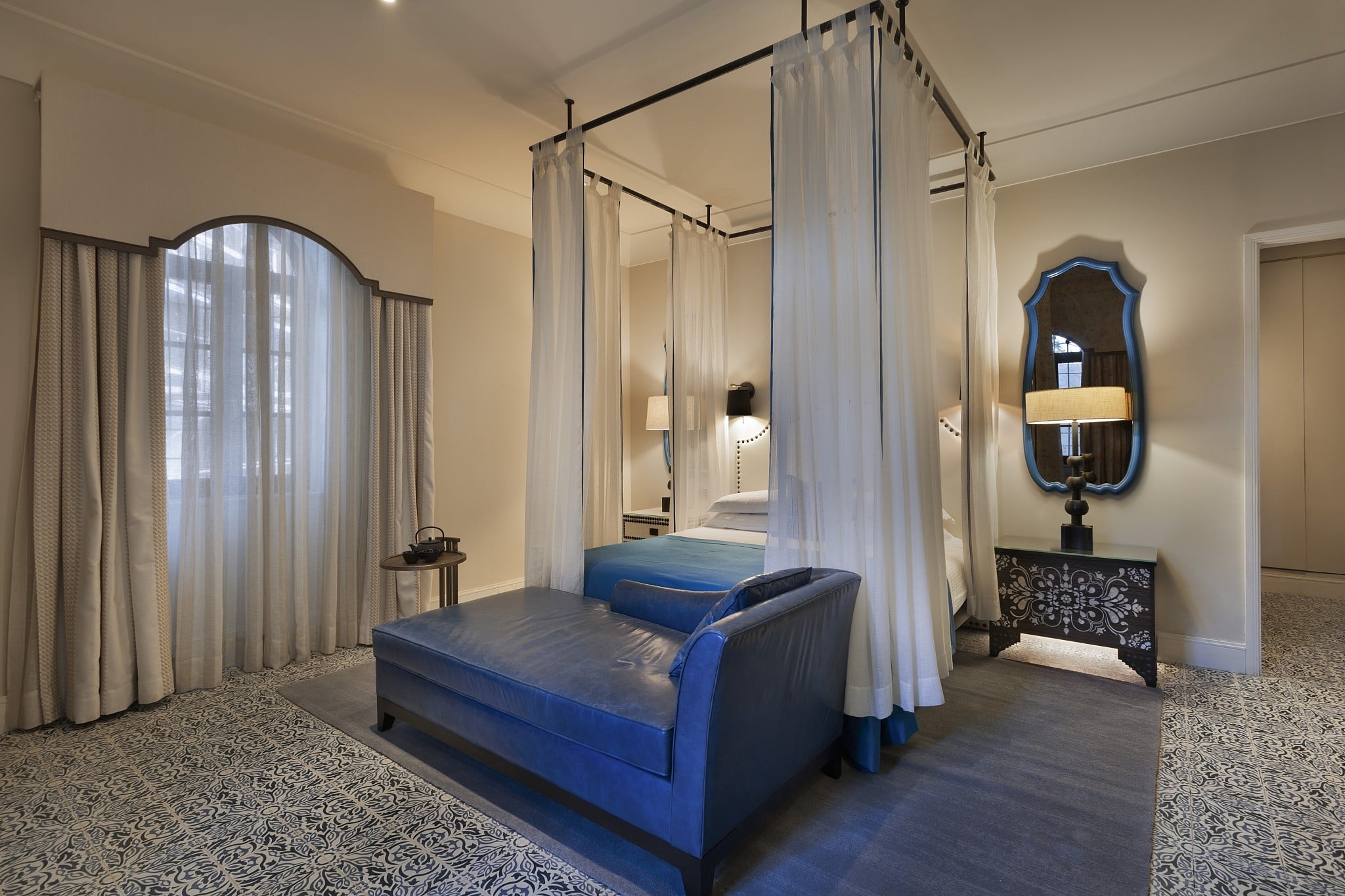
The 243 rooms are spacious, mostly overlooking the leafy expanse of the streets of the German Colony, and lavishly furnished with studded headboards and artisanal lamps, olive wood table tops and richly textiled chairs, and surrounded by walls hung with carefully chosen, original Israeli art.
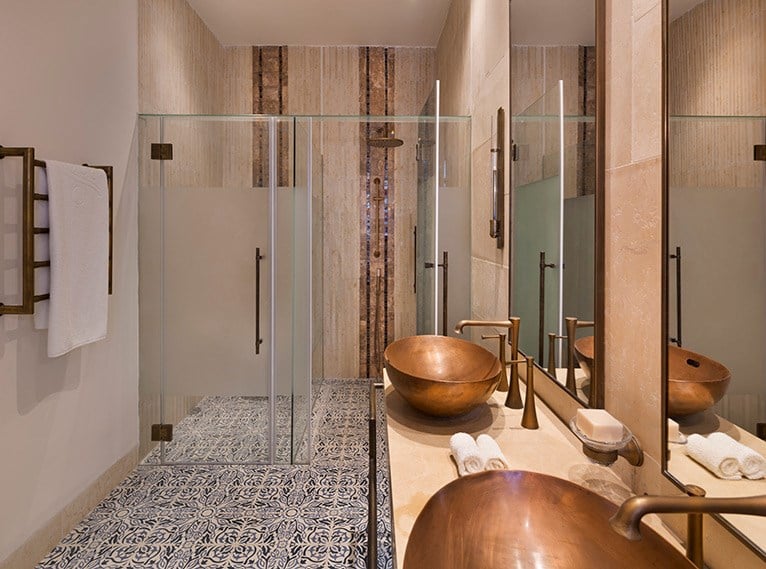
The bathrooms are also luxurious, featuring copper sinks and fixtures, more of the original ceramic pieces for holding soaps and toothbrushes, and with separate shower stalls and bathtubs.
Each room has a private balcony, just a small outdoor space to step out and appreciate the view, although the chocolate-brown iron work offers a heavy look to the hotel’s exterior.
For visitors seeking a more authentic accommodation, there are the 39 rooms in the two historic Templar buildings just outside the hotel, where families can reserve entire floors and be treated to the arched windows, wrought iron bed frames, copper clad bathtubs and blue and ivory palette that harken back to Templar times.
The Isrotel chain wanted to connect to the German Colony neighborhood, notable for its collection of 19th-century Templer buildings, built by the German pilgrims who settled in several cities throughout the Holy Land.
Members of the Templer sect came to Jerusalem in 1873, buying a tract of land in the Refaim Valley — hence the main street of the German Colony, Emek Refaim, or Valley of the Spirits, where the hotel is located.
The hotel’s plan was always to benefit from the historic buildings on site, and create a structure that wouldn’t overtake the neighborhood, said Jonathan Shebson, a local realtor who handled the marketing of two residences of 11 private apartments next to the hotel, and serviced by the hotel.
Isrotel had to be meticulous in their preservation of the original facades, said Eyal Ziv, the architect handling the preservation details of the project, restoring them to their authentic look.
That kind of renovation and level of design comes at a price, set at around $584 a night, (after the October 15 soft launch), in a room for two, with variations in price for standard rooms, rooms with a view of the Old City and so-called Colony rooms in the restored Templer buildings.
It’s typical pricing for an Isrotel, where luxury never comes cheap. But a lavish breakfast in the courtyard or dinner in the Khan Bar also offers a taste of this newest addition to the neighborhood, and will cost far less.
Orient Hotel Jerusalem, 3 Emek Refaim, Jerusalem, 02-569-9090.










The Times of Israel Community.