

Lawmaker says UN panel showed ‘ignorance’ of Gaza conflict
Former head of regional council near Gaza who testified before committee describes ‘enormous gap’ between ‘what they know and the truth’
 Add ToI as a Preferred Source on Google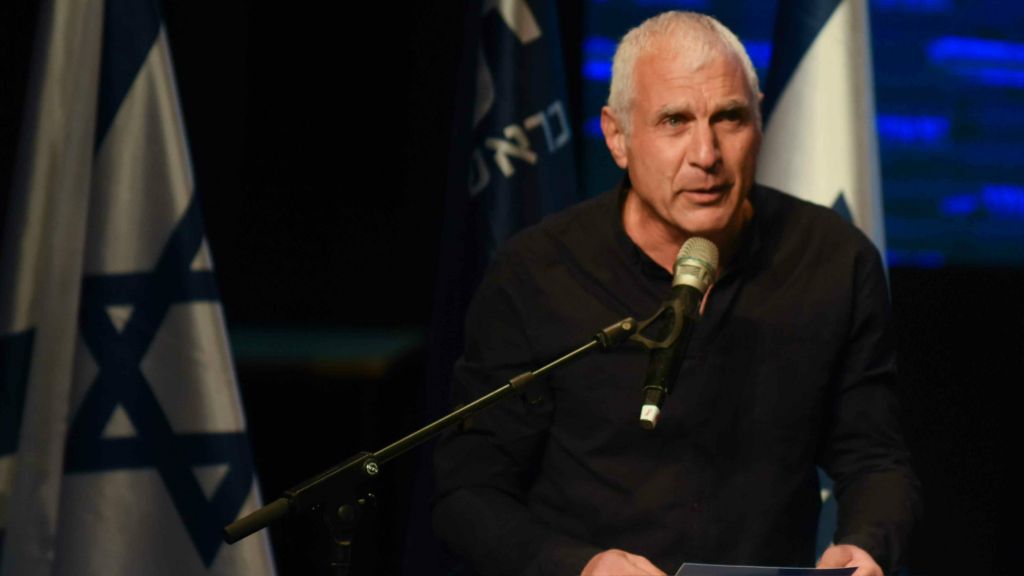
With the UN Human Rights Council’s investigative committee set to publish the conclusions of its probe on last summer’s Gaza war, Knesset member Haim Jelin, the former Eshkol Regional Council head who went to Geneva to testify before the committee, said Monday that the Israeli government is not doing enough to state Israel’s case before the world.
Jelin (Yesh Atid), who went to Geneva with seven others to testify before the committee on his constituents’ behalf in January, also told Army Radio that the questions he was asked by members of the UNHRC’s investigative committee betrayed lack of knowledge.
“It is truly ignorance,” Jelin said. “I felt that they were asking questions that were utterly disconnected from reality. It shows the enormous gap that exists between what they know and think and the truth.”
As an example, the radio station, which obtained a recording of his testimony (Jelin spoke in Hebrew while committee members questioned him in English), played back a question by
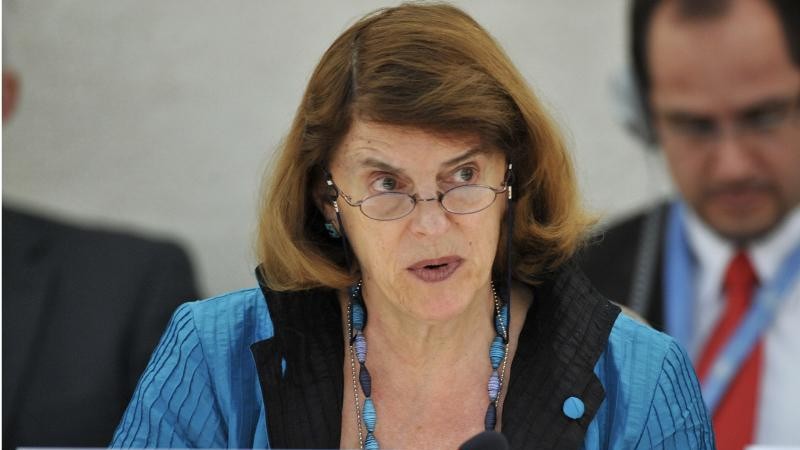
, the former New York justice who would go on to head of the investigation. She asked Jelin, about 30 minutes into the recording, “I’m just curious as to how far these (Israeli army) camps were, or how close they were, to your council, the area that you represent.”
The implication of the question was that Gazan factions may have been firing at Israeli soldiers rather than civilians during the war. Jelin answered that there had been an army base in the area, but that it had been moved a year and a half before the war.
Jelin’s Eshkol regional council was one of the hardest-hit by rocket fire from Gaza during the war.
“We are accused of being warmongers, that we hate the other,” Jelin told the UN committee, just after telling them that his own son had been wounded in the fighting. “If only you knew how much we raise our young people to love the other. I am aware that this is what the world thinks, so I came here, and it is a big risk for me to come here because I could be attacked. I decided that I would come to tell our truth, which we have been enduring for 15 years.”
He also showed the committee photographs that he had taken of cross-border tunnels used to attack Israeli soldiers. “I went into the tunnels and took photographs,” he said. “These are the pictures that I sent you. No photographer took them; only I did. There’s so much darkness there. That is the future of the Palestinians in the Gaza Strip. This is Hamas’s doing. Instead of developing agriculture and the region, and giving their residents a future, they dig tunnels underground to kill us.”
When Jelin told the story of Daniel Tragerman, a four-year-old boy from Kibbutz Nahal Oz who was killed by Hamas rocket fire toward the end of last summer’s conflict, he wept for a few moments, then apologized for having lost his composure.
“I do not like boycotts. I am not willing to boycott, and I do not think it was right to boycott ,” Jelin said on Monday, referring to Israel’s decision to not cooperate with the committee. “Even if the situation is hopeless, we must fight with determination for the justness of our cause and never give in. We must never despair or lose hope. We must keep on and work so that our truth comes to light, and the Israeli government is not doing that.”
Jonathan Beck contributed to this report.







The Times of Israel Community.