

Liberman opts to give army chief extra year in saddle
Pending approval from the government, Eisenkot to remain in his position until February 2019
 Add ToI as a Preferred Source on Google
Judah Ari Gross is The Times of Israel's religions and Diaspora affairs correspondent.
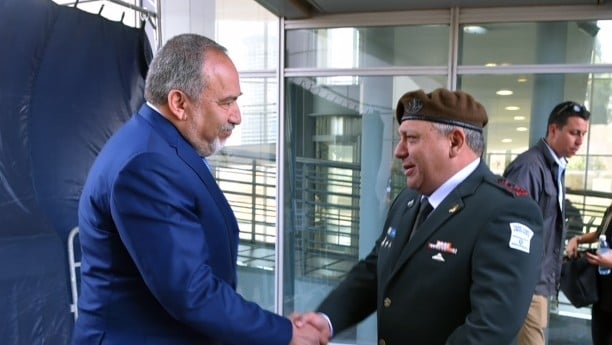
Defense Minister Avigdor Liberman decided on Wednesday to extend Lt. Gen. Gadi Eisenkot’s tenure as head of the Israel Defense Forces for an additional year, pending final approval from the government.
The position of IDF chief of staff is a three-year position, though it can be extended by one or, on rare occasions, two years.
Liberman consulted Prime Minister Benjamin Netanyahu about the decision prior to its announcement, but the extension is subject to official approved by the cabinet.
The cabinet will vote on the issue on January 29, according to Liberman’s office.
“Lt. Gen. Eisenkot is a valued chief of staff who has led the army to success and with great professionalism. The fruitful cooperation with him has allowed us to advance plans, to prepare the army for the challenges before it and to fortify the security of the State of Israel,” Liberman said in a statement.
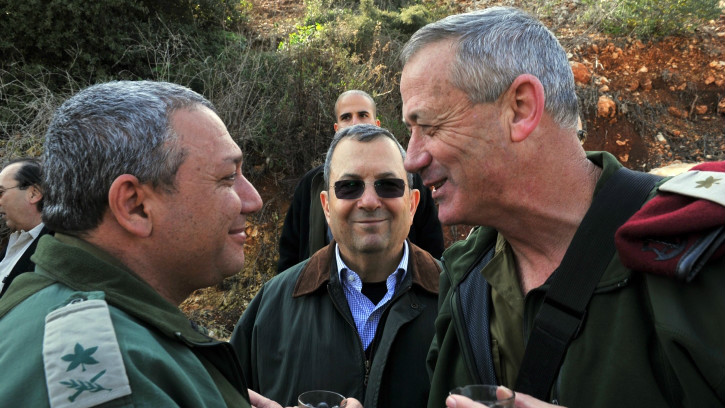
Eisenkot entered his position in February 2015, taking over for Benny Gantz.
In his two years as army chief, Eisenkot has introduced a number of streamlining efforts in the IDF, as part of the military’s multi-year Gideon Plan.
Opposition chief Isaac Herzog praised the decision to extend Eisenkot’s time as army chief.
“It’s the right decision, about the right person at the right time,” he said.
While Eisenkot has been praised for some of his changes to the IDF — notably for his plan to give every soldier a free education — he has also drawn his share of criticism and denunciation, mostly from Israel’s right.
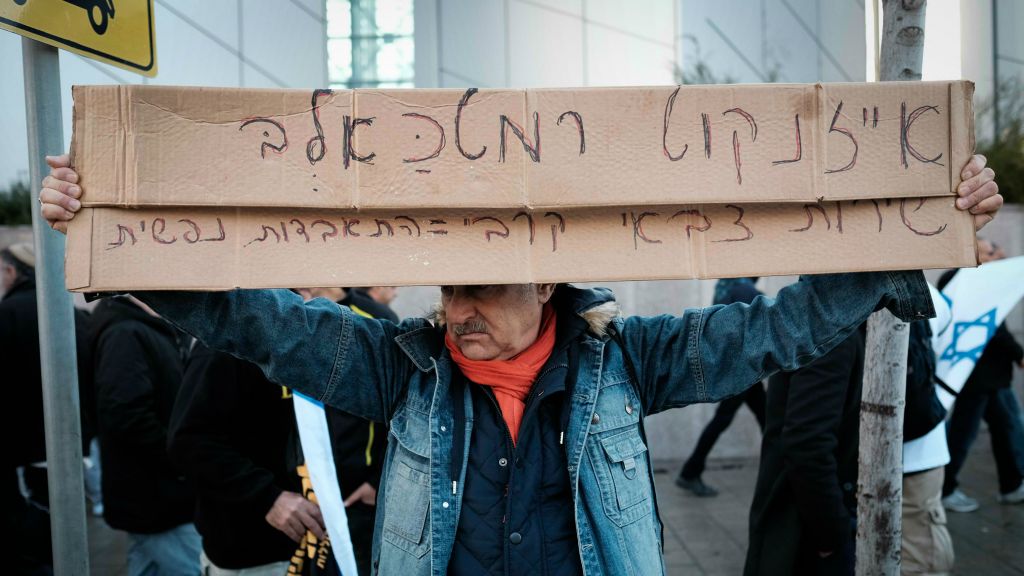
Most recently, following the contentious Elor Azaria verdict, supporters of the soldier verbally attacked Eisenkot, shouting slogans such as “Gadi watch out, Rabin is looking for a friend,” referring to former prime minister Yitzhak Rabin, who was assassinated by a right-wing extremist in 1995.
However, Eisenkot has been odds with Israel’s right wing since before the Azaria case.
Following a stabbing attack in Jerusalem, in which two teenage girls were shot repeatedly by an off-duty police officer, Eisenkot told Israeli students he didn’t “want to see a soldier open fire and empty his magazine at a girl like that, even if she is committing a very serious act.”
The comment drew criticism from members of the Israeli public, but also from politicians, with Deputy Foreign Minister Tzipi Hotovely accusing him of damaging Israel’s image.
On Monday, the army announced that Eisenkot would enter the hospital later in the week to undergo an unspecified medical procedure.
The army refused to divulge the nature of his condition, citing Eisenkot’s privacy, but said he is expected to be released from Beilinson Hospital in a Petah Tikva in a few days.
While Eisenkot, 56, is in the hospital, his deputy, Maj. Gen. Yair Golan, is acting chief of staff.






The Times of Israel Community.