

Live updates (closed)
 Add ToI as a Preferred Source on Google
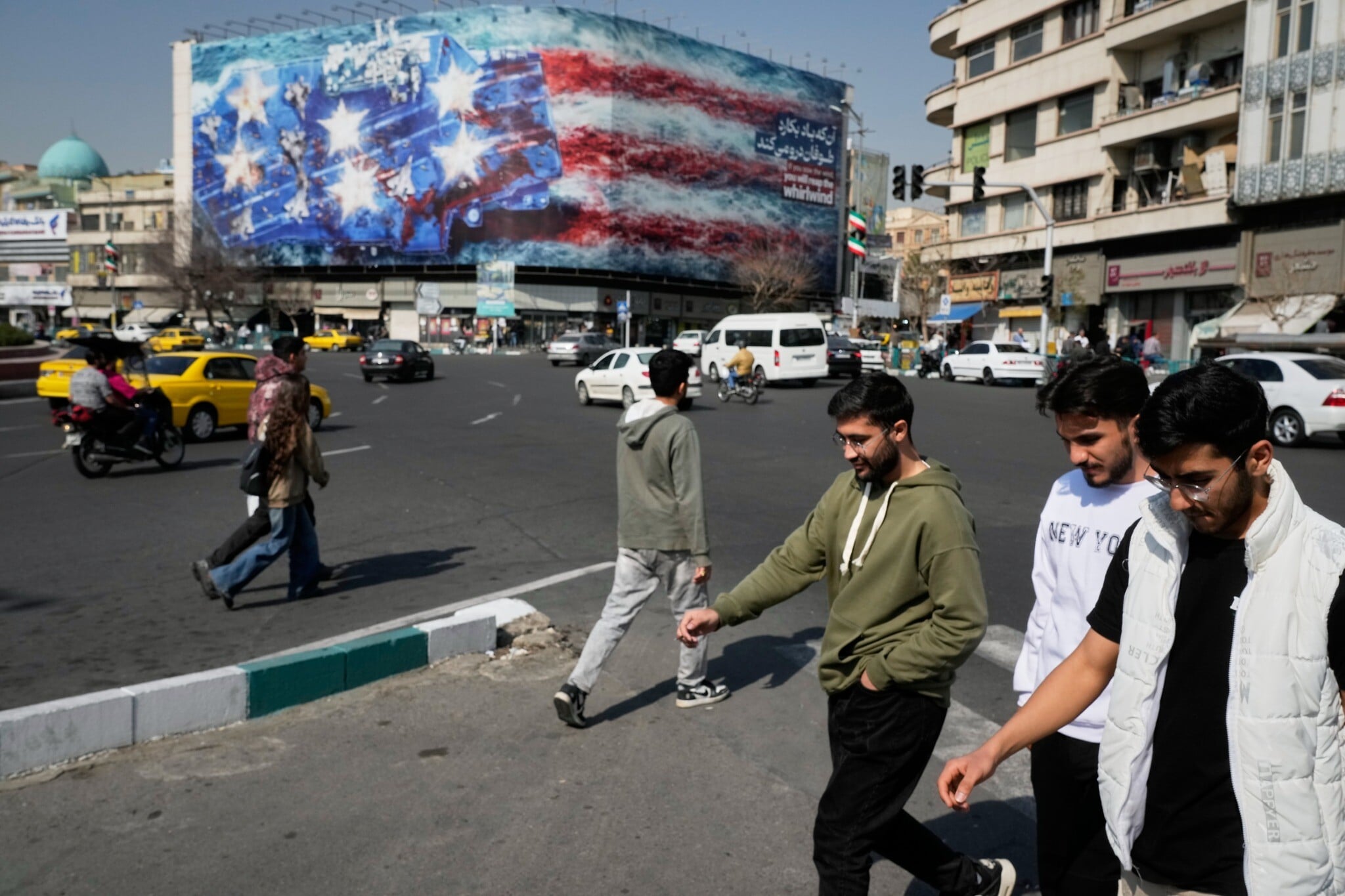
The Times of Israel liveblogged Sunday’s events as they unfolded.
ISIS claims two attacks on Syrian army after calling for opposition to its government
The Islamic State jihadist group claims responsibility for two attacks targeting Syrian army personnel in northern and eastern Syria, as the group signaled what it described as a new phase of operations against the country’s leadership.
The group says on its Dabiq news agency that it had targeted “an individual of the apostate Syrian regime” in the city of Mayadin in Deir al-Zor province using a pistol, and attacked two other personnel with machine guns in the northern city of Raqqa.
Syria’s Defense Ministry says in a statement that a Syrian army soldier and a civilian were killed on Saturday by “unknown assailants.” A military source tells Reuters the soldier belonged to the army’s 42nd Division.
The attacks come amid a sharp escalation by ISIS against Syria’s leadership under President Ahmed al-Sharaa, a former al Qaeda leader who broke with the terror group in 2016 before leading a coalition of Islamist factions that overthrew President Bashar al-Assad at the end of 2024.
The latest incidents come two days after ISIS claimed responsibility for another attack in Deir al-Zor that killed a member of the Interior Ministry’s internal security forces and wounded another.
Trump administration avoids condemning settler killing of US citizen, says it’s monitoring situation
US President Donald Trump’s administration avoids condemning this week’s settler killing of a Palestinian-American in the West Bank.
Asked for comment on 19-year-old Nasrallah Abu Siam’s killing in an armed settler attack on the central West Bank Palestinian village of Mukhmas, a US State Department spokesperson asserts the administration “has no higher priority than the safety and security of Americans.”
”We are aware of the death of an American citizen in the West Bank,” the spokesperson continues. “We are closely monitoring the situation and stand ready to provide consular assistance.”
“Out of respect for the privacy of the family and loved ones during this difficult time, we have no further comment at this time,” the statement adds.
The Trump administration has largely avoided commenting on settler violence in the West Bank.
The rare exceptions have been some of the incidents involving US citizens, though that does not appear to be the case this time.
Tucker Carlson apologizes for falsely saying President Herzog visited Epstein’s island
Conservative US commentator Tucker Carlson publicly apologizes to President Isaac Herzog for falsely suggesting that he had visited sex offender Jeffrey Epstein’s island.
Carlson says he made the claim in his interview that aired Friday with US Ambassador to Israel Mike Huckabee because Epstein apparently claimed in a 2014 email recently released by the US Justice Department that Herzog and former prime minister Ehud Barak would be among the guests at a party on his island.
In a two-minute video uploaded to X, Carlson says he received a long letter from Herzog’s office vehemently denying that the Israeli president has ever been in contact with Epstein, let alone attended one of his parties, which trafficked underage women were known to frequent.
“They didn’t know each other, they never emailed with each other, never been in the same room. They had no relationship of any kind,” Carlson says the letter from Herzog’s camp stated.
Huckabee had earlier posted similar remarks from Herzog’s office.
“And so for that reason, we are taking it seriously. There is nothing worse than impugning the reputation of an innocent man,” Carlson says.
“So I just want to say clearly I’m sorry to imply that I knew something I didn’t know — of course I didn’t know that Isaac Herzog was on that island. I was referring to that email and the protest against him. But I don’t know that, and I didn’t mean to suggest that I do know that.”
Earlier this year, a British reporter posted what she said was a photo of Herzog alongside Epstein, which turned out to be an AI-generated fake, leading the reporter to delete it and apologize.
Statement on Israeli President Isaac Herzog pic.twitter.com/z2hIAO9ptY
— Tucker Carlson (@TuckerCarlson) February 21, 2026
Witkoff: Trump ‘curious’ why Iran hasn’t ‘capitulated’ under US pressure
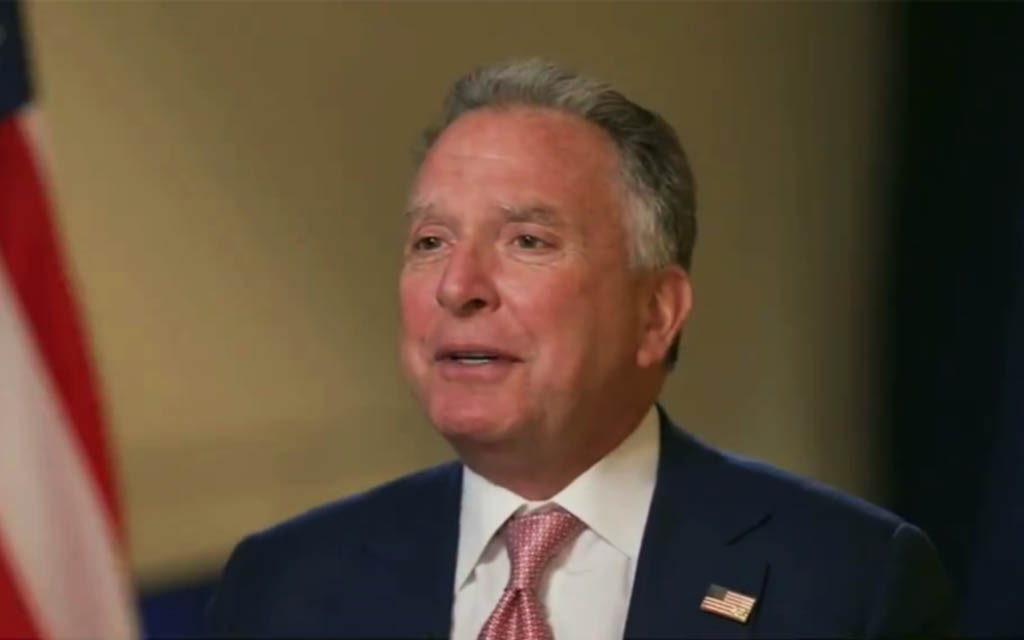
US Special Envoy Steve Witkoff in an interview with Fox News, February 22, 2025. (Screen capture)
US Special Envoy Steve Witkoff says President Donald Trump is “curious” as to why Iran has not yielded under mounting US pressure, as nuclear talks between the sides remain stalled on core issues.
In an interview with Fox News, Witkoff says Trump is questioning why Tehran has not “capitulated” despite what he describes as significant US naval and sea power deployed in the region.
“The president asked me that this morning, and he’s — I don’t wanna use the word frustrated… because he understands he’s got plenty of alternatives, but… he’s curious as to why they haven’t, I don’t wanna use the word capitulated, but why they haven’t capitulated.”
Witkoff suggests that Washington expects Iran to formally state that it does not seek a nuclear weapon and outline concrete steps to prove it.
Witkoff on Iran: The president is curious as to why — I don’t want to use the word capitulated but why they haven't capitulated. Why under this pressure with the amount of naval power over there, why they haven't come to us and said we profess we don't want a weapon… pic.twitter.com/gdv9CXjwBW
— Acyn (@Acyn) February 22, 2026
Witkoff’s remarks come as two rounds of US-Iran talks have stalled over major sticking points, including uranium enrichment levels, Iran’s missile program and the scope of sanctions relief.
After talks in Geneva on Tuesday, Iranian Foreign Minister Abbas Araghchi said the sides had agreed on “guiding principles,” though the White House said significant gaps remain.
A US official said Iran is expected to submit a written proposal in the coming days, while Araghchi said Friday that Tehran would present a draft counterproposal within days.
Israel disqualifies its own Olympic bobsleigh team for lying to officials

Israel's AJ Edelman, left, Menachem Chen, Uri Zisman and Omer Katz arrive at the finish during a four-man bobsleigh run at the 2026 Winter Olympics, in Cortina d'Ampezzo, Italy, Feb. 21, 2026. (AP/Alessandra Tarantino)
In a shock move, Israel’s bobsleigh team has been disqualified from completing its competition today in the four-man bobsleigh event by Israeli Olympic officials.
In a statement to the Times of Israel, the Olympic Committee of Israel says it has barred the team from competing today after one of its athletes lied to Olympic officials in order to allow their teammate, Ward Fawarseh, to compete in their stead.
Israel competed yesterday with the makeup of AJ Edelman, Menachem Chen, Uri Zisman and Omer Katz. As of this morning, the team was still slated to compete according to the official schedule, but with Edelman, Chen, Fawarseh and Katz.
Had he taken to the ice, Fawarseh would have been Israel’s first-ever Druze Olympian. But he traveled to the games officially as an alternate, and wouldn’t be allowed to compete unless another member of the team was unwell.
“The bobsleigh team asked to include Ward, the substitute, in the competition. According to the rules, this is only permitted if one of the athletes is injured or ill,” the Olympic Committee of Israel says. “In order to make this possible, one of the team members — encouraged by his teammates — declared that he was unwell. He even went for a medical examination and signed an affidavit so that the Olympic Committee could request approval for a substitution.”
Afterward, the OCI says, “he admitted to the head of the delegation that he had acted improperly. This forced the Olympic Committee of Israel to withdraw the request and disqualify the move.”
The OCI says that the team’s behavior was “improper” and “goes against fair and sportsmanlike conduct.”
There was no immediate response to a request for comment from the Israel Bobsleigh Skeleton Federation. Edelman’s X account appears to no longer exist, though it is not clear if he deleted it or was banned from the platform.
Following its first two runs yesterday, the team was in 24th place out of 27 competitors after three sleds crashed during the second run.
Police detain 34 after drone-dropped grenade hits house amid gunfight in northern Arab town

Illustrative: A police vehicle at a crime scene in Netanya, September 30, 2023. (Flash90/ File)
Police say that 34 suspects were arrested overnight in raids across Kafr Kanna following a string of violent incidents tied to an ongoing feud between two local families, after a grenade blast and gunfight rocked the northern Arab town last night.
Large forces from Northern District police and Border Police carried out raids on dozens of targets, detaining suspects allegedly involved in recent shootings and other acts of violence linked to the dispute between the Awawdeh and Taha families.
The arrests come after four people were wounded yesterday evening when a grenade was detonated inside a home in Kafr Kanna, amid a broader exchange of gunfire that erupted after dark. The grenade was allegedly dropped from a drone hovering overhead, tearing through the roof and injuring those inside.
The shootout involved young men from the rival families, who have been locked in a prolonged conflict despite reconciliation efforts. Immediately after the violence, the head of the town’s reconciliation committee convened elders from both families and pressed them to agree to a truce, which they managed to reach within the hour.
Police say some of the detainees are expected to be brought before a court for remand hearings, adding that Northern District police officers are continuing extensive operations to combat crime, including efforts to thwart weapons trafficking and respond rapidly to violent incidents.
Liberman seeks pre-election pledge from opposition leaders on universal draft
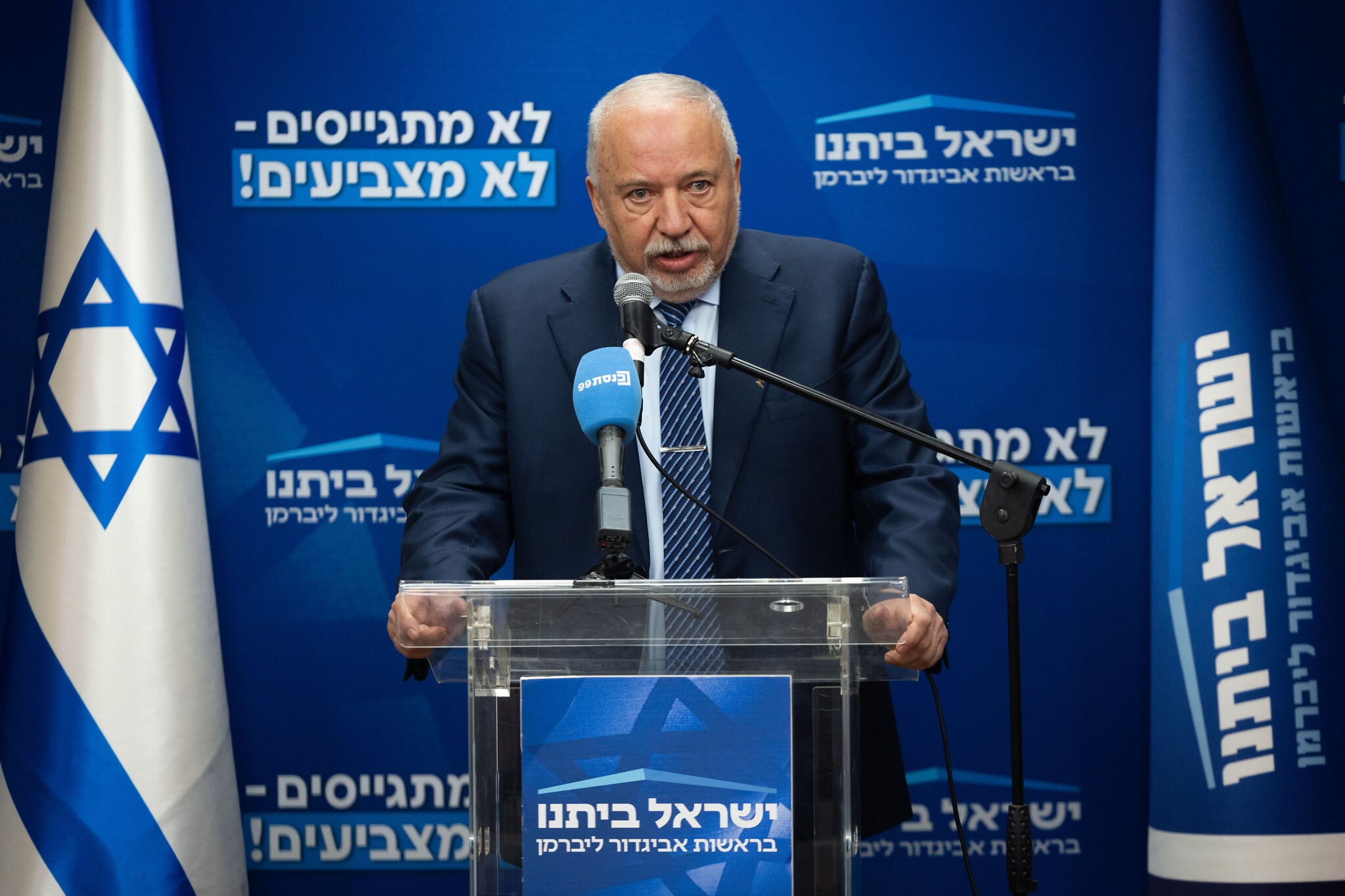
Yisrael Beiteinu party chairman Avigdor Liberman leads a faction meeting at the Knesset in Jerusalem, on February 16, 2026. (Yonatan Sindel/Flash90)
Yisrael Beytenu chairman Avigdor Liberman calls on opposition leaders to publicly commit to passing a universal conscription law with no exemptions, arguing that voters deserve clear pledges ahead of the next election.
In a post on X, Liberman says Israeli citizens “will not settle for hearing complaints, they will demand commitments,” and urges Opposition Leader Yair Lapid, Yashar party chair and ex-military chief Gadi Eisenkot, and former prime minister Naftali Bennett to explicitly back a draft law applying to all citizens.
“I emphasize: a universal draft law. Jews, Muslims, Christians, Druze and Circassians,” Liberman writes, proposing two tracks — military and civilian — with the IDF determining who would serve in the army and who would be assigned to meaningful civilian national service.
Liberman insists the next coalition must pass such legislation during the first Knesset session, and rejects what he describes as vague or conditional formulas, including proposals to allow exemptions for certain groups or to defer details until after the election.
Without an explicit commitment to a blanket draft law, he argues, it would be impossible to form a “truly Zionist and liberal coalition,” adding that the public is entitled to know candidates’ positions before casting their ballots.
Ex-IAF chief: Iranian regime ‘finished its career,’ diplomacy still in play
Former Israeli Air Force chief Maj. Gen. (res.) Eitan Ben Eliyahu says in an interview with the 103FM radio station that he believes the Iranian regime is nearing its end, while cautioning against assuming that a military strike is imminent amid faltering US-Iran talks.
“The regime in Iran has finished its career. It will happen soon — in two, three, or four years — it’s finished,” Ben Eliyahu says. He argues that signs of internal erosion are already visible, predicting that “the protests will escalate,” and warning that while change takes time in a “large and divided nation,” the unrest “won’t end.”
At the same time, Ben Eliyahu pushes back against claims that a confrontation is just around the corner.
“I never said that in the end diplomacy would win; I said that for now what’s happening is negotiations,” he says, adding that despite widespread calls to strike immediately, “what’s currently taking place is negotiations.”
He says that recent US military signals in the region should be seen as part of pressure tactics rather than proof of an imminent attack.
“The signs did not necessarily indicate that there would be an attack tomorrow morning; they were part of the negotiations,” he says. “But by default, if it fails, everything is prepared and ready for an attack.”
Addressing the ballistic missile threat, Ben Eliyahu stresses that it is not an existential danger to Israel.
“The missile threat cannot be considered an existential threat — it’s not an atomic bomb,” he says, citing Israel’s “exceptional defense system” and “exceptional Home Front Command.”
Report: Leading GOP senator urges Trump to ignore advisers opposing Iran strike
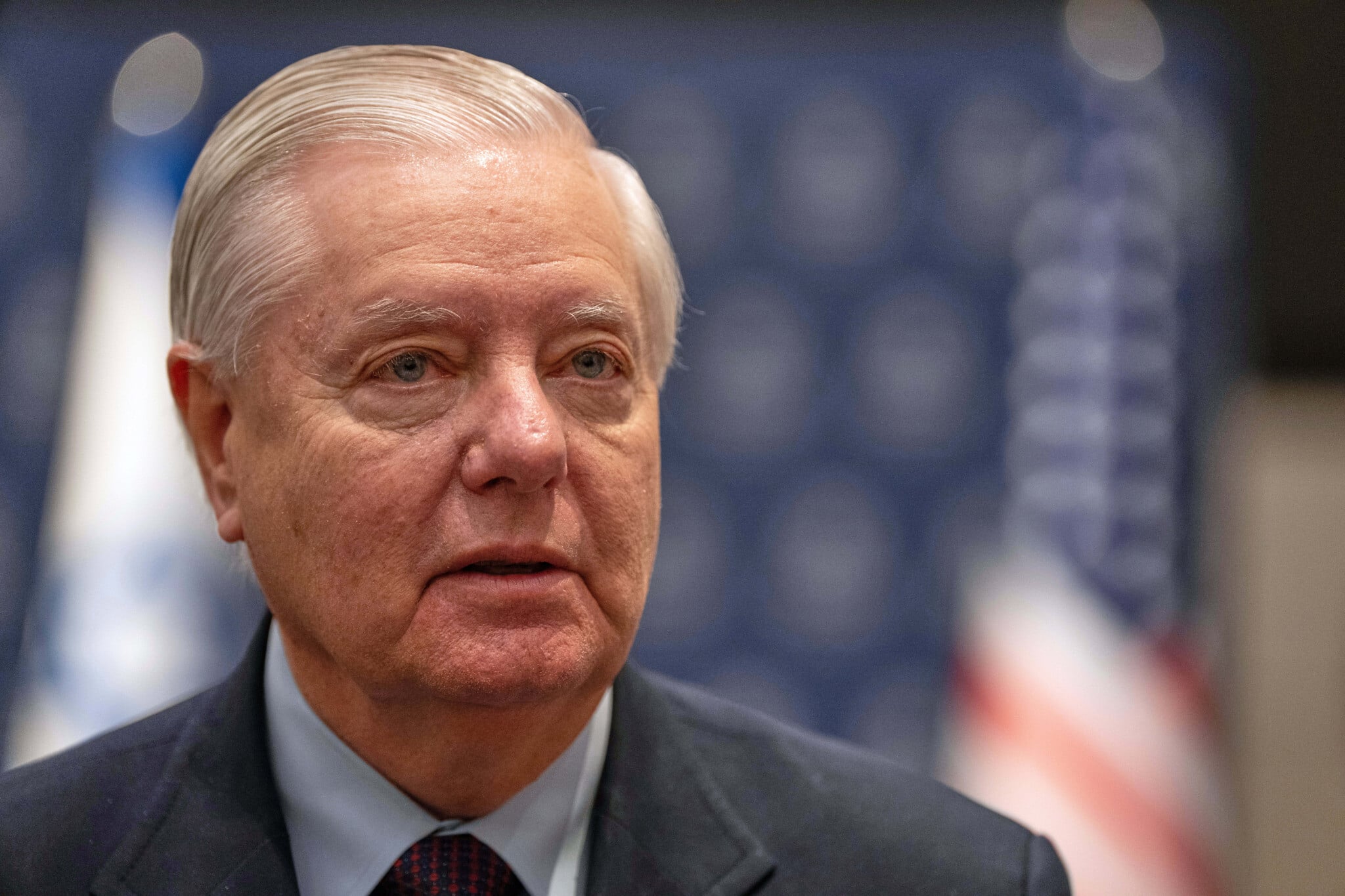
US Senator Lindsey Graham speaks to the media in Tel Aviv, Israel, December 21, 2025. (AP/Maya Levin)
US Sen. Lindsey Graham, a South Carolina Republican, is urging President Donald Trump to press ahead with military action against Iran, warning against advisers counseling restraint as the White House weighs its options, Axios reports.
“I understand concerns about major military operations in the Middle East, given past entanglements. However, the voices who counsel against getting entangled seem to ignore the consequences of letting evil go unchecked,” Graham tells the news outlet.
Graham, who recently visited the Middle East and met with leaders in Israel, the United Arab Emirates and Saudi Arabia, says he believes there is an opportunity “to bring about historic change” in Iran. However, he adds, “it’s increasingly clear to me that voices opposing entanglement and the risk associated with decisive action are getting louder. Time will tell as to how this plays out.”
“I have a lot of respect for President Trump. He is his own man,” Graham says. “And as with all presidents, he will be held responsible for his decisions on such weighty matters. As to me, history will be very clear as to where I stood, for better or worse.”
The remarks come as two US aircraft carriers and hundreds of warplanes are positioned in the region, and Trump has been presented with military options that include targeting Iran’s Supreme Leader Ali Khamenei and his son Mojtaba, according to Axios. At the same time, senior US officials say the president has not yet made a final decision.
Some of Trump’s advisers are reportedly urging him to hold off on strikes and continue leveraging the military buildup to extract concessions from Tehran. A senior official previously told Axios the US would consider an Iranian proposal allowing limited “token” uranium enrichment, provided it blocks any path to a nuclear bomb.
Russia launched 50 missiles, 297 drones at Ukraine overnight, Kyiv’s air force says
KYIV — Russia launched 50 missiles and 297 drones in overnight attacks against Ukraine, Ukraine’s air force says.
Air defense units shot down or neutralized 33 missiles and 274 drones, the air force says in a post on Telegram.
Yesterday, Ukrainian drones struck an industrial site deep inside Russia, which a Russian news channel said was a key state-owned missile factory.
Iran and US diverge in views on sanctions relief, senior Iranian official says
DUBAI — Iran and the US have differing views on the scope and mechanism for lifting sanctions on Tehran in exchange for curbs on its nuclear program, a senior Iranian official tells Reuters, adding that renewed talks are scheduled for early March and could lead to an interim deal.
Palestinian Authority: 17-year-old succumbs to IDF gunshot wounds
A 17-year-old Palestinian who was seriously injured by IDF gunfire in the northern West Bank yesterday succumbed to his wounds overnight, the Palestinian Authority’s health ministry says.
He is identified as Muhammad Hanini. Hanini died at Nablus’s Rafidia Surgical Hospital, where his funeral procession left from today, according to footage published by Palestinian media.
Hanini was originally identified as a 20-year-old in a Red Crescent statement that said he was shot in the head while another 16-year-old was shot in the leg.
مديرية التربية والتعليم #بنابلس:
ننعى الطالب الشهيد محمد وهبي عبدالعزيز حنني من مدرسة بيت فوريك الثانوية للبنين، من طلبة الصف الثاني عشر الذي ارتقى شهيداً اليوم. pic.twitter.com/izeAP0Y3qW— وكالة سند للأنباء – Snd News Agency (@Snd_pal) February 22, 2026
According to Palestinian media, the two were shot amid IDF operations in Beit Furik, east of Nablus, that followed a clash between locals and settlers, during which troops opened fire at a car, injuring a 14-year-old.
The IDF has not commented on the incident.
Report: Khamenei planning for assassination scenario, appoints Larijani to key role
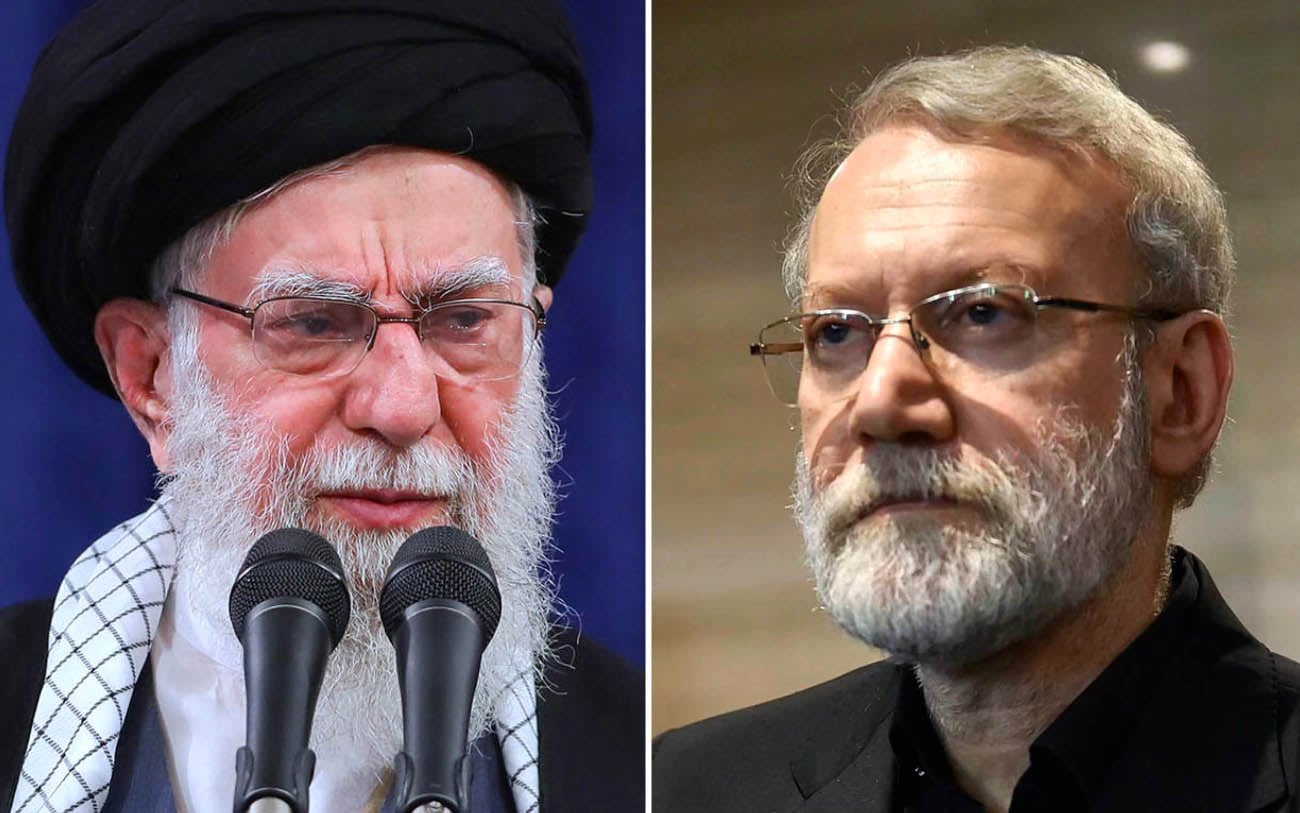
Iran's Supreme Leader Ayatollah Ali Khamenei (left) seen during an address in Tehran on February 17, 2026. (Office of the Iranian Supreme Leader via AP); Iranian Secretary of Supreme National Security Council Ali Larijani seen in Beirut, Lebanon, August 13, 2025. (Lebanese Parliament / AFP)
Iran’s Supreme Leader Ayatollah Ali Khamenei has instructed senior associates on how to act if he is killed in potential US or Israeli strikes, The New York Times reports, outlining contingency plans that include layered succession orders and emergency chains of command.
According to the report, at the height of nationwide protests last month and amid rising US threats of military action, Khamenei elevated longtime loyalist Ali Larijani — a former Revolutionary Guards commander and veteran politician — to a central governing role, effectively placing him at the helm of state affairs.
Citing interviews with senior Iranian officials, members of the Revolutionary Guards and former diplomats, The New York Times reports that Larijani has since overseen the crackdown on protests, managed sensitive nuclear diplomacy with Washington, and coordinated with allies including Russia, Qatar and Oman.
He is also said to be leading wartime planning as Iran braces for possible US strikes.
Khamenei has reportedly named multiple layers of successors for key military and political posts and delegated decision-making authority to a tight inner circle should communications be severed or he be assassinated.
While Larijani is not considered a likely successor to the supreme leader — as he is not a senior Shiite cleric — he is described as one of Khamenei’s most trusted crisis managers.
Iran has placed its armed forces on high alert, positioned missile systems near Iraq and along the Persian Gulf, and conducted military drills in preparation for potential conflict, the news outlet reports. Publicly, Khamenei has struck a defiant tone, warning that any attack would be met with a powerful response.
Meeting set to discuss bill giving Chief Rabbinate full control of Western Wall canceled
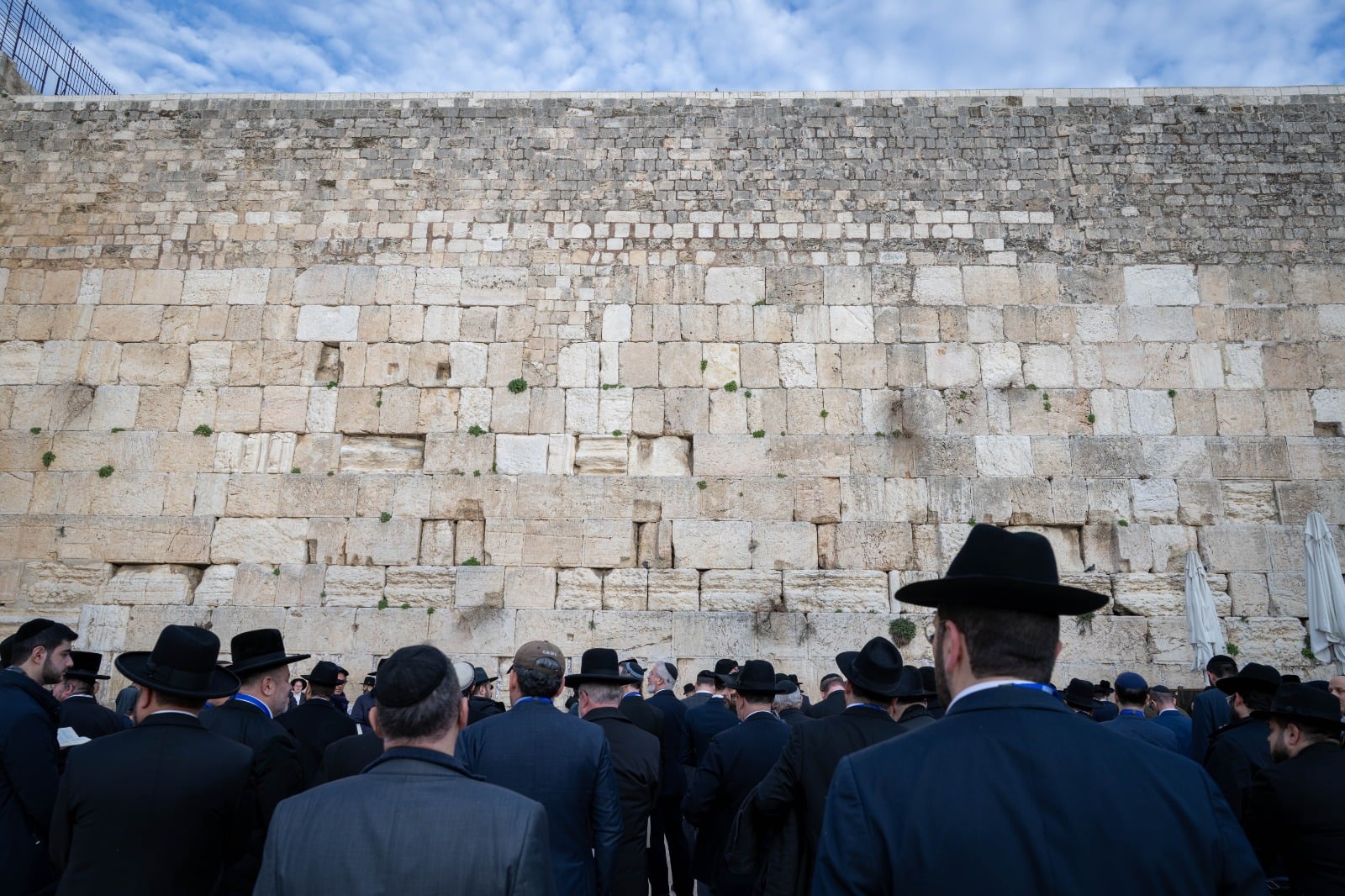
Attendees of the Conference of European Rabbis visit the Western Wall in Jerusalem, January 27, 2026 (D.V.A. Productions)
Cabinet Secretary Yossi Fuchs cancels today’s meeting of the Ministerial Committee for Legislation, which was due to discuss Noam MK Avi Maoz’s bill giving the Chief Rabbinate full control over prayer at all parts of the Western Wall.
Maoz’s proposal is intended to undercut last Thursday’s High Court of Justice ruling that the state must move forward with the upgrade of the Western Wall egalitarian plaza, which would allow non-Orthodox prayers at a lesser-used portion of the holy site.
Responding to the cancellation, Maoz tweets that he will bring the bill for its preliminary reading on Wednesday and calls “upon all members of the Knesset to stand up and vote for the integrity of the Western Wall and against the High Court and the Bennett plan for the division of the Wall.”
In a statement, Justice Minister Yariv Levin calls on members of the coalition to support the bill in its upcoming preliminary reading despite the fact that it did not receive the backing of the committee.
“A few minutes ago, I received the announcement from the Government Secretariat that the meeting of the ministerial committee had been canceled,” he says. “Since there is no government stance on this matter, I plan to vote for the bill. I urge all MKs, especially those in the coalition, to join me and send a clear message to the High Court: Enough is enough.”
Asked about the cancellation of today’s meeting, a spokesman for Levin tells The Times of Israel, “You’ll have to ask Yossi Fuchs why he ordered the cancellation.”
In a separate statement, coalition whip Ofir Katz frees up coalition MKs to vote as they wish on the legislation.
“As the bill to protect the holy sites goes up for preliminary reading on Wednesday, the coalition will be able to vote according to the dictates of their conscience,” he announces.
Knesset Immigration, Absorption and Diaspora Affairs Committee head MK Gilad Kariv (The Democrats), a former leader of the Reform Movement in Israel, commends Prime Minister Benjamin Netanyahu for blocking today’s vote on Maoz’s “extreme and anti-Zionist bill” but says that as long as he allows members of the coalition to vote freely on the matter he is “bandaging a corpse.”
“On behalf of the majority of the Jewish people in Israel and the Diaspora, we demand that the prime minister not allow coalition members to drag the Jewish world into a needless and unfair dispute, in the midst of a wave of antisemitism that is indiscriminately striking individuals and communities of all denominations,” he declares, calling on the premier to “halt the wave of incitement and poisonous propaganda.”
“If he does not do so, Israel’s greatest friends in the Jewish world will,” warns Kariv.
Supreme Court rejects Braverman’s request to appeal his release conditions

The Prime Minister's Office's Chief of Staff Tzachi Braverman, seen in the Knesset in Jerusalem, November 11, 2024. (Chaim Goldberg/ Flash90)
The Supreme Court rejects Tzachi Braverman’s request to file an appeal against the restrictive conditions that were imposed on him while he is under suspicion of interfering with an investigation.
Braverman — Prime Minister Benjamin Netanyahu’s chief of staff, who was appointed to be ambassador to the United Kingdom but has yet to take up the post — is barred from leaving the country, and cannot contact Netanyahu or other officials in the Prime Minister’s Office as conditions for his release from detention.
The court rules that Braverman’s case is not the right opportunity to consider whether the public interest can factor into matters regarding arrest and release conditions. Braverman has argued that it is in the public interest for the restriction on his leaving the country to be lifted, since it is delaying his ability to take up his post as UK ambassador and harming relations between the two countries.
Judge David Mintz says that the restrictions are due to expire on Tuesday, and that Israel’s diplomatic standing is unlikely to be harmed during that period to an extent that would justify changing the balance between the needs of investigators and the public good.
Mintz also points out that the ambassador post has been empty since September 2025, and that even though Braverman was appointed that month, it was decided he would not begin his term until January 2026 for professional reasons and due to his position as the chief of staff to the prime minister.
Braverman is being investigated on suspicion of interfering with an investigation and other crimes, in connection with allegations that Braverman told Eli Feldstein, a spokesperson for Netanyahu, that he could quash a military investigation into Feldstein over the leak of a classified document to the German newspaper Bild.
Ben Gvir bars senior police officer from joining wiretapping hearing; AG, state attorney walk out
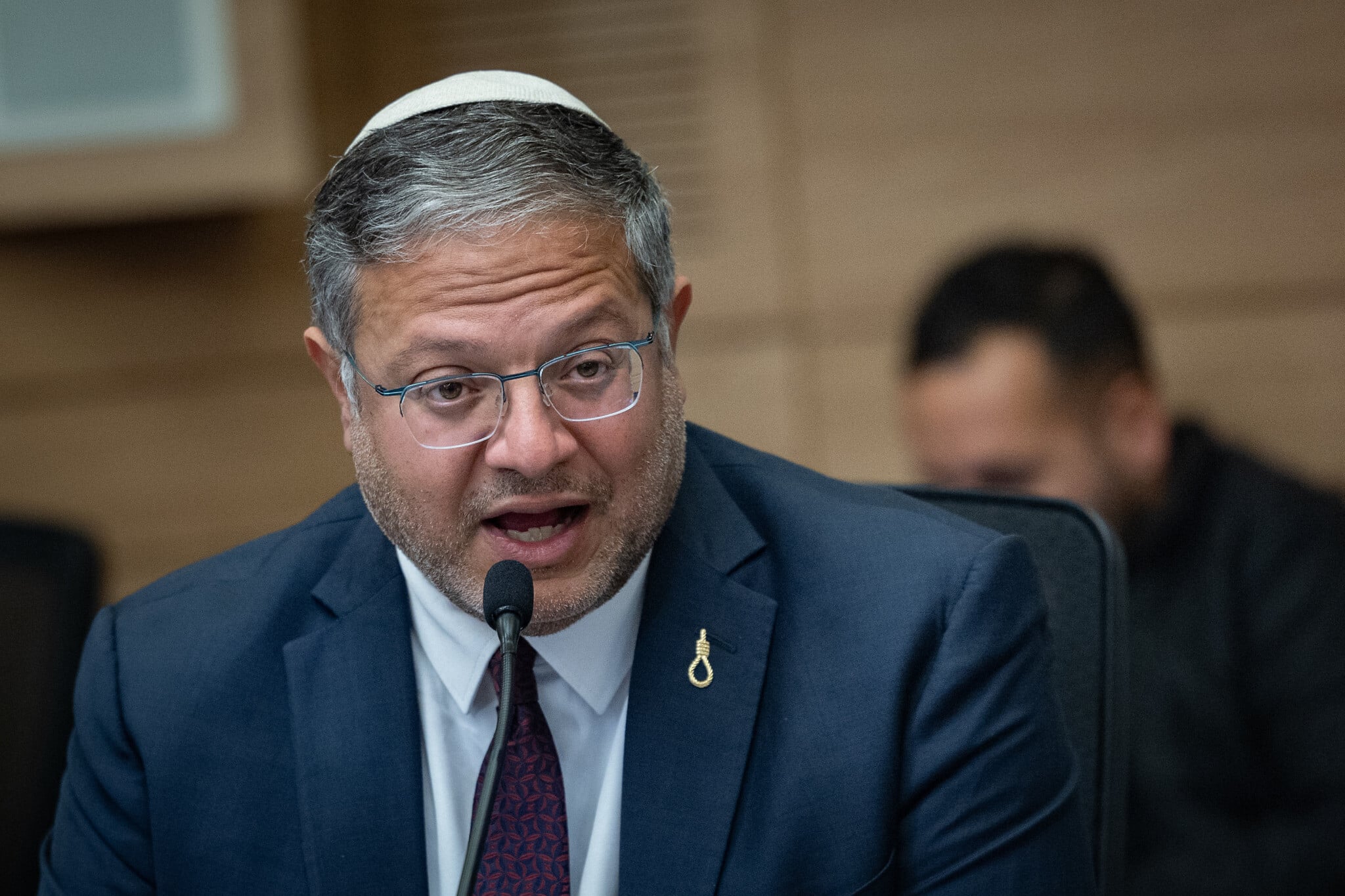
National Security Minister Itamar Ben Gvir attends a National Security Committee meeting at the Knesset on December 31, 2025. (Chaim Goldberg/Flash90)
A furor breaks out between cabinet ministers and Attorney General Gali Baharav-Miara, during a cabinet discussion on the use of technological forms of wiretapping.
Baharav-Miara decided to attend the meeting and insisted that the head of the police department for investigations and intelligence, Boaz Blatt, be present as the relevant police official to discuss the issue.
National Security Minister Itamar Ben Gvir reportedly refuses to permit Blatt to be present during the hearing, however, leading Baharav-Miara to leave the hearing before it started, together with State Attorney Amit Aisman.
According to Ynet, Police Commissioner Daniel Levy was also on his way to the cabinet meeting, but decided not to turn up when he heard Blatt had been refused entry.
Ynet cites sources accusing the government of trying to hold “an empty, political debate” on the issue by refusing to allow the relevant law enforcement officials to participate.
“You can’t hold a professional hearing on wiretapping without allowing the police commission or senior police officials responsible for the issue to participate,” the sources said.
The government and the attorney general have been at war since August 2023 over the decision to establish a government commission of inquiry into law enforcement agencies’ use of spyware and wiretapping against Israeli citizens and government officials.
Baharav-Miara has alleged the commission seeks to review aspects of the investigations into Prime Minister Benjamin Netanyahu, which led to his indictments and his ongoing trial, something she says is unlawful.
The government has strongly rejected the claim that the inquiry would intervene in pending legal proceedings and has accused the attorney general of sabotaging the inquiry.
Woman, 27, said killed by IDF in northern Gaza’s Beit Lahiya
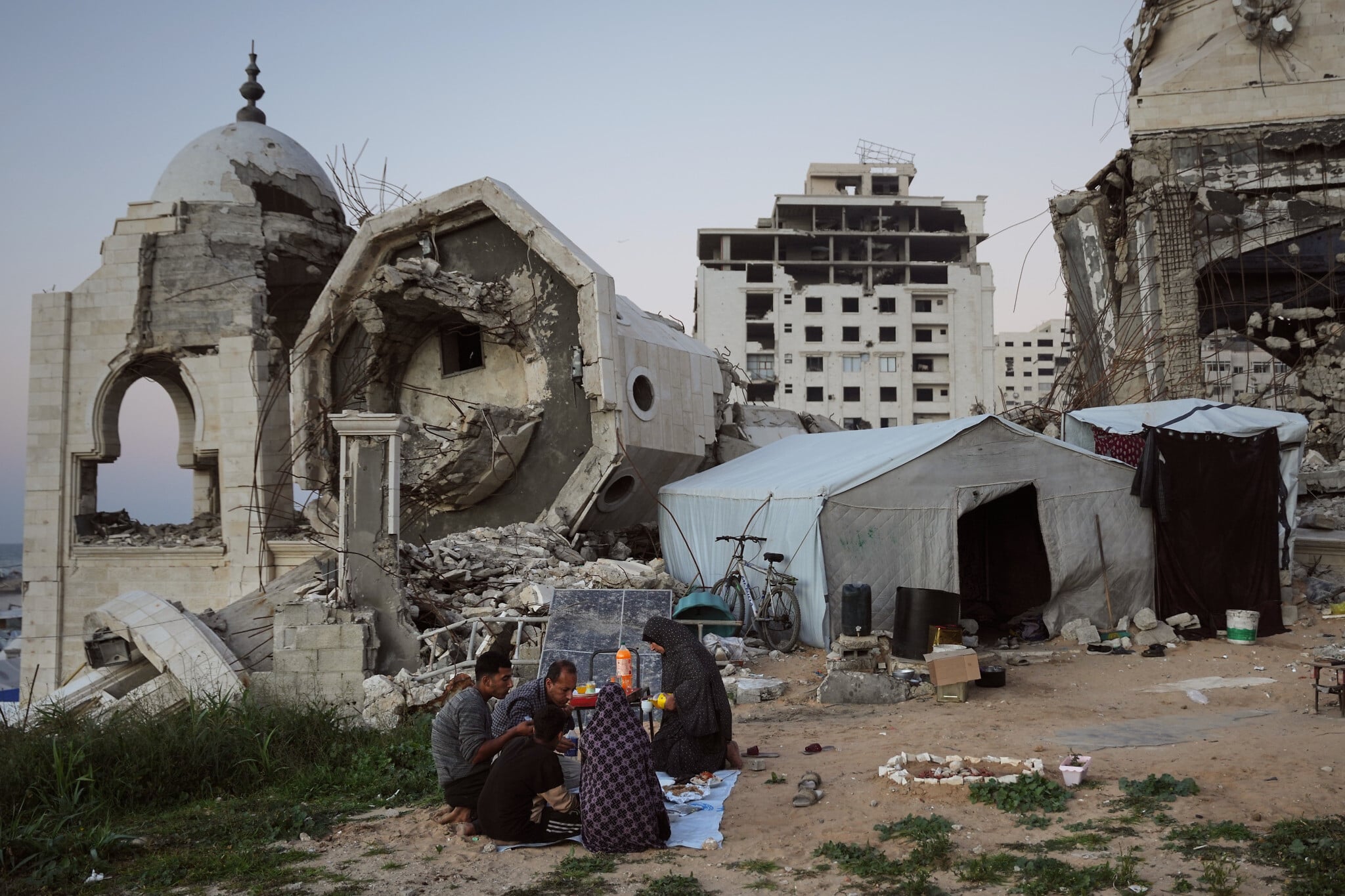
Members of the Al-Ghafeer family break their fast during the holy month of Ramadan beside the tent where they are sheltering at the Gaza City port on Friday, Feb. 20, 2026. (AP Photo/Abdel Kareem Hana)
A woman was killed this morning by IDF gunfire on the Hamas-controlled side of the Gaza ceasefire line in Beit Lahiya, in the Strip’s north, according to Palestinian media.
She is identified as Basma Aram Banat, 27. Her body was reportedly brought to Gaza City’s Shifa Hospital.
The military has not commented on the reports, but regularly says such killings come in response to ceasefire violations.
Gaza’s Hamas-run health ministry confirmed in a noon report that hospitals in the Strip had received three people wounded and the bodies of two people killed by the IDF over the past 24 hours.
The statement did not identify the dead or wounded or specify where they were targeted or the severity of the wounds.
Palestinian media yesterday reported two men killed by IDF gunfire around noon, including 30-year-old Majed Abu Maaruf in northern Gaza’s Jabalia and 46-year-old Osama al-Najjar near southern Gaza’s Khan Younis.
Najjar’s body was reportedly brought to Khan Younis’s Nasser Hospital. There did not appear to be reports that Abu Maaruf’s body had been brought to a hospital.
The IDF on Saturday said it killed a “terrorist” who crossed the ceasefire line in northern Gaza and endangered troops. The military has not commented on the reports that it also killed a man in southern Gaza.
As of today, the IDF has killed 614 Palestinians throughout the ceasefire that began in October, according to the Hamas-run health ministry. The figure cannot be independently verified and does not distinguish between civilians and combatants.
Netanyahu: Modi visit is part of effort to create alliance against radical Sunni, Shiite axes
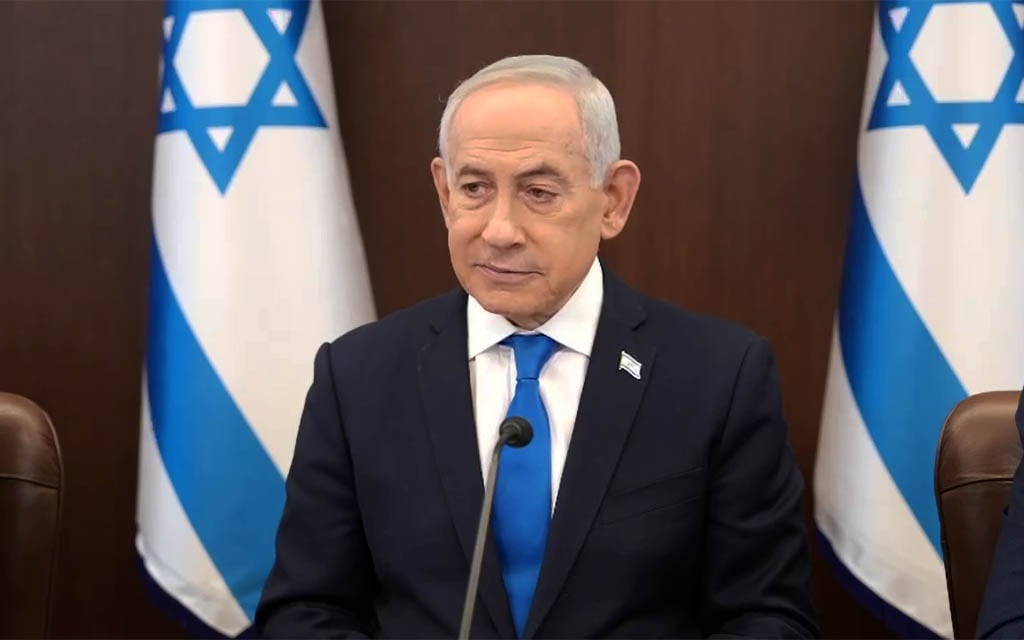
Prime Minister Benjamin Netanyahu speaks at a cabinet meeting, February 22, 2025. (Screenshot/GPO)
Indian Prime Minister Narendra Modi will arrive in Israel on Wednesday for an official visit that will result in closer “economic cooperation, diplomatic cooperation, and security cooperation,” says Prime Minister Benjamin Netanyahu at the start of the weekly cabinet meeting.
“I also note another special area of cooperation,” Netanyahu continues, “we will advance cooperation in high-tech, in AI and in quantum.”
Modi is set to address the Knesset that afternoon at 4:30 p.m., and both leaders will visit Yad Vashem and attend an innovation event in Jerusalem.
Netanyahu says that Israel “will create an entire system — essentially a kind of hexagon of alliances — around or within the Middle East,” listing India, Greece, Cyprus, and unnamed Arab, African and Asian countries.
“The intention here is to create an axis of countries that see reality, the challenges, and the goals in the same way, in contrast to the radical axes,” he says. “Both the radical Shiite axis, which we have hit very hard, and also the emerging axis — the radical Sunni axis. All these countries share a different outlook, and cooperation between us can yield very great fruits and, of course, also ensure our strength and our future.”
Knesset committee advances key sections of budget-linked Arrangements Law
The Knesset Constitution, Law and Justice Committee approves advancing several sections of the Arrangements Law for the second and third readings needed to pass them into law.
The Arrangements Law, a key part of the annual budgetary legislative package, determines how funds will be disbursed and must be passed by the Knesset along with the budget to avoid triggering early elections.
Lawmakers voted earlier this month to split the Arrangements Law, which is needed for the approval of the 2026 state budget, into two bills in order to facilitate its advancement through the Knesset.
The clauses approved by the committee include proposals to increase the competitiveness of government-owned defense firms in the global marketplace and ease the appointment procedures for directors in foreign subsidiaries of such companies; and streamline the process for transferring abandoned assets to state control by shortening the search period for the property’s owners from 15 to 10 years.
Government approves national flood plan amid climate concerns

Cars are seen stranded in floodwaters following heavy rains outside Yinon, southern Israel, January 13, 2026 (Flash90)
After three years of work by the Agriculture Ministry and the Planning Administration, the government approves a national outline plan for flooding.
This represents a first step toward a comprehensive strategy for dealing with a problem that is increasing with climate change.
The plan, which enters into force right away, will oblige all planning bodies in the country to take hydrological requirements into account. It seeks to protect streams, preserve areas of floodplain — where the soils near rivers can absorb excess rainfall naturally — and create sites for the management of runoff.
Report: Iranian students hold fresh wave of nationwide anti-regime rallies
Students at universities across Iran have continued to hold rallies commemorating those killed in recent protests and voicing opposition to the Islamic Republic, Iran International reports.
According to the opposition-affiliated news outlet, demonstrations have taken place at the University of Tehran, Sharif University of Technology, Shahid Beheshti University, Ferdowsi University, Khajeh Nasir University, and the University of Art.
Members of the Basij paramilitary force have reportedly entered some campuses in an effort to identify protesters.
فوری / حمله نیروهای تروریست بسیج دانشگاه تهران به دانشجویان
نیروهای بسیج پس از حمله و ایجاد درگیری اولیه با دانشجویان که با مقاومت دانشجویان روبرو شد، با حمله به ساختمان دانشکده فنی و شکستن شیشههای آن و فریاد حیدر حیدر، تلاش کردند تا دانشجویان را مورد ضرب و شتم قرار دهند.… pic.twitter.com/7X6UwInalT
— Amirkabir NewsLetter خبرنامهٔ امیرکبیر (@autnews_org) February 22, 2026
The student-run Amirkabir Newsletter reports that Basij forces initially confronted students, sparking clashes that were met with resistance. It alleges that the forces later attempted to storm the Faculty of Engineering building, breaking windows during the incident.
Footage circulating online appears to show students marching and chanting on several campuses, with some demonstrators holding up Iran’s pre-revolution flag. Other videos shared on social media seem to show clashes between protesters and Basij militia members.
Students at Tehran’s Sharif University of Technology raised the pre-Islamic Republic Lion and Sun flag on campus on Sunday, during ongoing student memorial rallies. pic.twitter.com/F8uyKaaNQg
— Iran International English (@IranIntl_En) February 22, 2026
A video geolocated by AFP of what appears to be a demonstration at Sharif University in Tehran shows a large crowd around flag-waving students chanting “long live the shah” and other anti-government slogans.
Israel moves to build new AI data centers

An illustrative image of a Microsoft data center (Courtesy)
The cabinet approves a measure to accelerate the establishment of new artificial intelligence data centers, says the Prime Minister’s Office.
Energy Minister Eli Cohen says that the decision will remove barriers in the planning and construction of server farms.
He adds that construction has begun for AI data centers that will use 1 gigawatt of energy, “more than five percent of the State of Israel’s energy consumption in just the last three months.”
Cohen says that, in order to meet the new energy demands, Israel will double its plans for new power plants, aiming to build four by the end of the decade.
Religious soldiers in casualty ID unit lack adequate mental health support, lawmakers are told
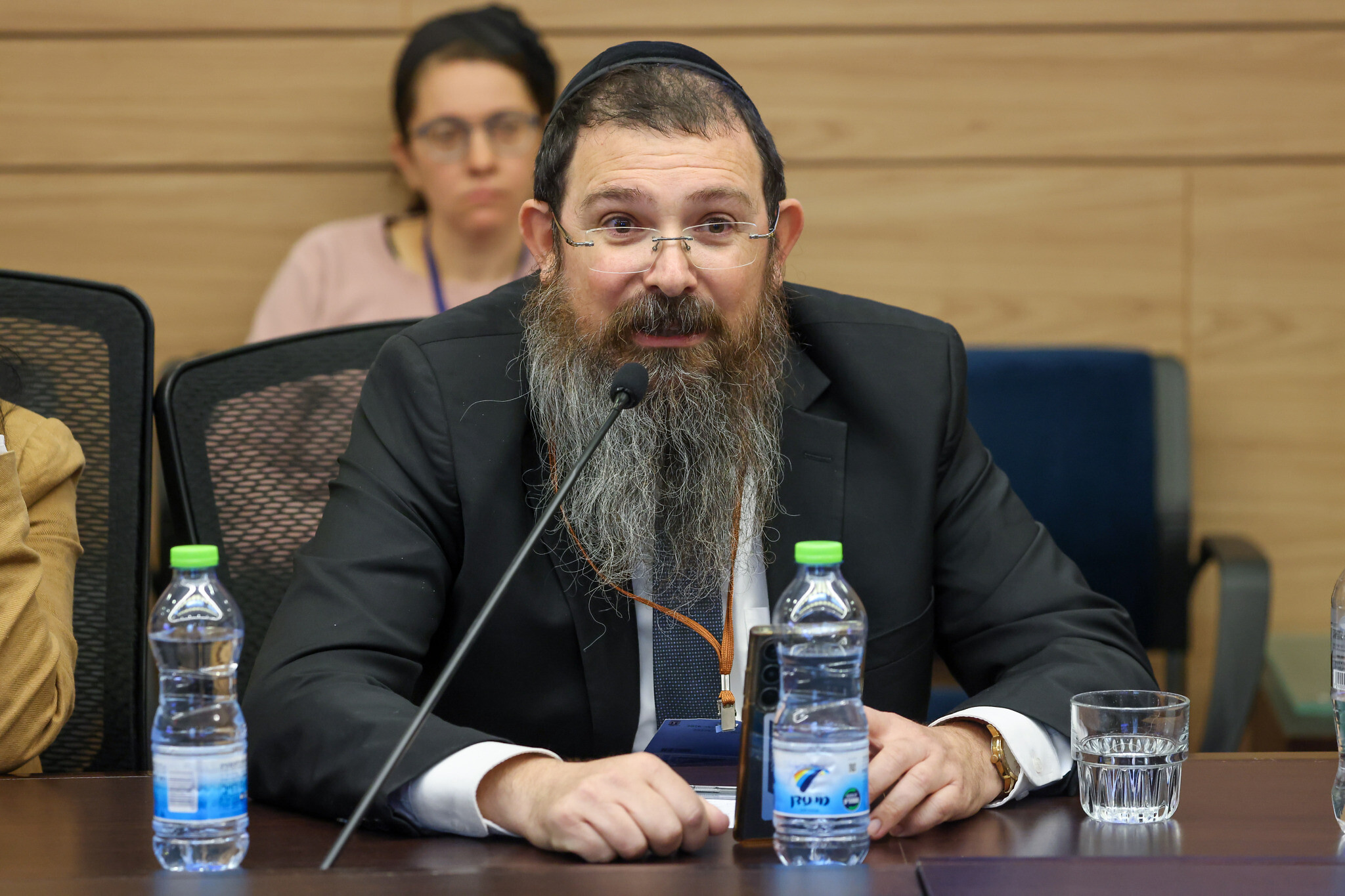
Rabbi Shraga Dahan addresses the Knesset Labor and Welfare Committee, February 22, 2026. (Noam Moskowitz/Office of the Knesset Spokesperson)
IDF reservists and hesder yeshiva students who served at the military rabbinate’s Shura headquarters during the Israel-Hamas war have not yet received proper mental health services, lawmakers on the Knesset Labor and Welfare Committee are told.
Soldiers at the base, the home of the Casualty Identification Unit, were tasked with identifying the remains of the victims of the October 7 massacre, when thousands of Hamas-led terrorists stormed southern Israel to kill some 1,200 people and take 251 hostages, sparking the war in Gaza.
According to former soldiers who served on the base, some 200 hesder students who were on the base for a week were not provided with any psychological assistance, while troops who served in roles that did not require dealing directly with the bodies but that also caused trauma likewise did not receive adequate treatment.
In a statement, the committee says that only those who served for 45 days or more were eligible for the rights of combatants, leaving out many of the hesder troops. They were also ineligible for the so-called “Amit Program,” which assists veterans completing their service who have not received a clinical diagnosis in processing their experiences.
Hesder yeshivas allow observant young men, typically from the national religious community, to combine Torah studies with a shortened military service currently set at one year and five months.
Noam Ron, who served at Shura for 580 days, tells the committee that despite not being tasked directly with handling bodies, his job took him into close proximity with the fallen.
“We saw everything, we smelled everything,” but “I didn’t see a mental health officer until July 2025,” he says.
Addressing the committee, Lt. Col. Uriel Zamir says that 101 out of 209 hesder soldiers were directly involved in handling the fallen and are receiving treatment from their HMOs with the assistance of the IDF and the Defense Ministry.
One hundred and twenty-two such soldiers signed up for a “resilience workshop” held by the IDF, out of which 98 ended up attending, “which is 47% of the hesder soldiers who served there,” he says. “Recently, we have been working on solutions for reservists at Shura, and any response given to them will also be given to hesder soldiers.”
The IDF Medical Corps’ Lt. Col. Uzi Bechor confirms that hesder soldiers, after they return to yeshiva, are not considered on active military service and are cared for by their HMOs, adding that “we must examine whether this response is sufficient and whether we, as the IDF, need to provide more.”
Shraga Dahan, a Chabad hasid and former IDF chaplain who served at Shura base during the war, describes the difficulty of the duty there.
“All of us at Camp Shura entered with one soul and left with another — new, cracked, and aching with the nation’s pain, yet never prouder of its people and heritage,” he says. “Hesder yeshiva students were called to assist in an impossible situation, carrying the honor of the fallen on their young shoulders,” and “also need reinforcement, a hug, and support.”
This includes both those who dealt directly with the bodies and support personnel who cleaned the treatment rooms, drove the refrigerator trucks and took care of logistics, he notes. “They saw the sights, smelled the smells… I call upon this committee: Do not forget them, do not let them cope alone with a soul that has changed forever.”
Earlier this month, the Defense Ministry informed the Knesset Health Committee that it is grappling with a shortage of therapists for IDF combatants suffering from post-traumatic stress following the war in Gaza.
Hamas official says group in final stage of choosing new chief
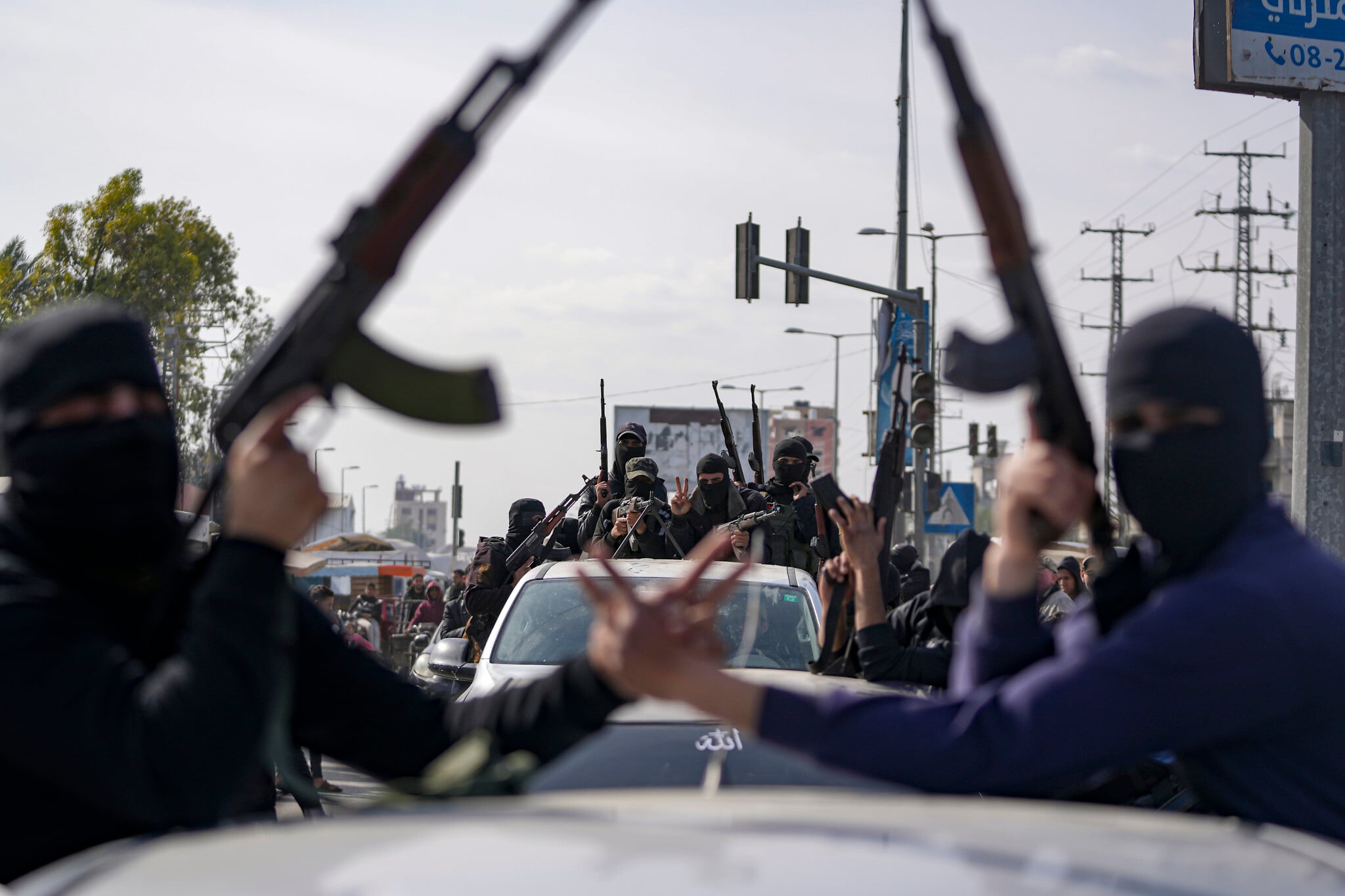
Members of the al-Qassam Brigades, the armed wing of Hamas, take part in a parade as they celebrate a ceasefire agreement between Hamas and Israel in Deir al-Balah, Gaza Strip, on January 19, 2025. (AP Photo/Abdel Kareem Hana, File)
A senior Hamas official tells AFP that the terror group is in the final phase of selecting a new leader, with two prominent figures competing for the position.
Hamas recently completed the formation of a new Shura Council, a consultative body largely composed of religious scholars, as well as a new political bureau.
Members of the council are elected every four years by representatives from Hamas’s three branches: the Gaza Strip, the West Bank and the movement’s external leadership.
Hamas prisoners in Israeli jails are also eligible to vote.
The council subsequently elects the political bureau, which in turn selects the head of the movement.
“The movement has completed its internal elections in the three regions and has reached the final stage of selecting the head of the political bureau,” the official says, speaking on condition of anonymity as he is not authorized to speak publicly.
He adds that the race for the group’s leadership is now between Khaled Mashaal and Khalil al-Hayya.
A second Hamas source confirms the development within the organization, which led a devastating attack on Israel on October 7, 2023, and subsequently fought a two-year sparked by the assault.
Hayya, 65, a Gaza native and Hamas’s chief negotiator in ceasefire talks, has held senior roles since at least 2006, according to the Counter Extremism Project (CEP), a US-based organization.
Mashaal, who led the political bureau from 2004 to 2017, has never lived in Gaza. He was born in the West Bank in 1956.
He joined Hamas in Kuwait and later lived in Jordan, Syria and Qatar. The CEP says he oversaw Hamas’s evolution into a political-military hybrid.
He currently heads the movement’s diaspora office.
Last month, a Hamas source told AFP that Hayya enjoys backing from the group’s armed wing, the Izz a-din Al-Qassam Brigades.
After Israel killed former Hamas leader Ismail Haniyeh in Tehran in July 2024, the group chose its then-Gaza chief Yahya Sinwar as his successor.
Israel accused Sinwar of masterminding the October 7 attack.
He too was killed by Israeli forces in the southern Gaza city of Rafah, three months after Haniyeh’s assassination.
Hamas then opted for an interim five-member leadership committee based in Qatar, postponing the appointment of a single leader until elections, given the risk of the new chief being targeted by Israel.
Times of Israel staff contributed to this report.
Shas, UTJ, Otzma Yehudit to back bill giving Rabbinate full control over Western Wall prayer

Jewish worshipers attend the 'priestly blessing' ceremony at Jerusalem's Western Wall during the Jewish holiday of Sukkot, on October 9, 2025. (Chaim Goldberg/Flash90)
In a joint statement, the parties Shas, United Torah Judaism and Otzma Yehudit announce that they will vote in favor of Noam MK Avi Maoz’s bill giving the Chief Rabbinate full control over prayer at all parts of the Western Wall, in its preliminary reading next week.
“We will support the Western Wall law that will be put to a vote on Wednesday. It was so in the past and it will be so now,” the statement says.
Maoz’s proposal is intended to undercut last Thursday’s High Court of Justice ruling that the state must move forward with the upgrade of the Western Wall egalitarian plaza, which would allow non-Orthodox prayers at a lesser-used portion of the holy site.
This morning, at the direction of Prime Minister Benjamin Netanyahu, Cabinet Secretary Yossi Fuchs called off a meeting of the Ministerial Committee for Legislation to discuss the bill. Netanyahu is reportedly concerned about pushback from Diaspora Jewish leaders.
Following the cancellation, Justice Minister Yariv Levin called on members of the coalition to support the bill in its upcoming preliminary reading, while coalition whip Ofir Katz said that they were free to vote as they wish.
Asked about the cancellation of today’s meeting, a spokesman for Levin told The Times of Israel, “You’ll have to ask Yossi Fuchs why he ordered the cancellation.”
Report: US willing to hold further talks with Iran Friday if it sends nuclear offer
The US is prepared to send negotiators for further talks with Iran in Geneva this Friday, if Tehran presents a new draft proposal for a nuclear deal within 48 hours, Axios reports, citing an unnamed senior US official.
Officials tell the outlet this is likely the last chance for diplomatic resolution, instead of Washington launching a major military operation.
US negotiators have been waiting for a detailed offer from Tehran since their last talks with Foreign Minister Abbas Araghchi on Tuesday.
US Secret Service agents kill armed man trying to enter Trump’s Mar-a-Lago

An aerial view of Donald Trump's Mar-a-Lago club in Palm Beach, Florida, on August 31, 2022. (Steve Helber/AP)
The US Secret Service says its agents shot and killed an armed man who breached the security perimeter of President Donald Trump’s Mar-a-Lago estate in Florida.
Trump was in Washington at the time of the incident, which officials say happened around 1:30 a.m. (0630 GMT).
Secret Service agents fired at a man after they saw him “unlawfully entering the secure perimeter at Mar-a-Lago early this morning,” agency spokesman Anthony Guglielmi says in a post on X.
The suspect, a man in his early 20s, “was observed by the north gate of the Mar-a-Lago property carrying what appeared to be a shotgun and a fuel can,” the agency says in a statement.
Agents confronted the man and fired shots. No US officers were injured, the agency says that no “Secret Service protectees” were present in Mar-a-Lago at the time.
The individual was pronounced deceased.
“The only words that we said to him was ‘drop the items’ which means the gas can and the shotgun,” Palm Beach County sheriff Ric Bradshaw tells reporters.
“At which time he put down the gas can, raised the shotgun to a shooting position,” Bradshaw says. A deputy and two Secret Service agents then shot him.
Trump, who often spends his weekends in Mar-a-Lago, has been the target of several assassination plots or attempts.
Report: Israeli-financed online campaign seeks to improve nation’s image to American right
Haaretz reports on Israeli efforts to improve the nation’s eroding image to the American right, allegedly paying millions of dollars to various public relations firms to create online campaigns.
It focuses specifically on various websites recently set up to push the importance of shared Judeo-Christian values and support the Israeli government’s nationalist agenda. The sites present themselves as “research” and “education” platforms dedicated to advancing Israeli-American ties. The report says the sites support the expansion of West Bank settlements, disparage the Palestinian Authority and push other talking points of the current, hard-right Israeli government.
A paper published by one such website, Culturavia.org, is titled, “Why Palestinianism Conflicts With Christian Moral Teaching.” Another, on the website Innovascope.org, is headlined “Israeli Defense Firms Help Keep US Soldiers Safe With Precision Drone Technology.” Yet another, on Cognitura.org, is titled “The Political Invention of a Palestinian Entity.”
The websites are all structured similarly, and, according to Haaretz, appear built to maximize influence on AI chatbots as they scan web resources to provide answers to users’ questions.
Haaretz identifies Brad Parscale’s PR firm Clock Tower X as being behind the campaign. It says the company and the Israeli Foreign Ministry did not respond to requests for comment.
Over 70,000 tons of rubble said cleared in IDF-controlled part of Gaza
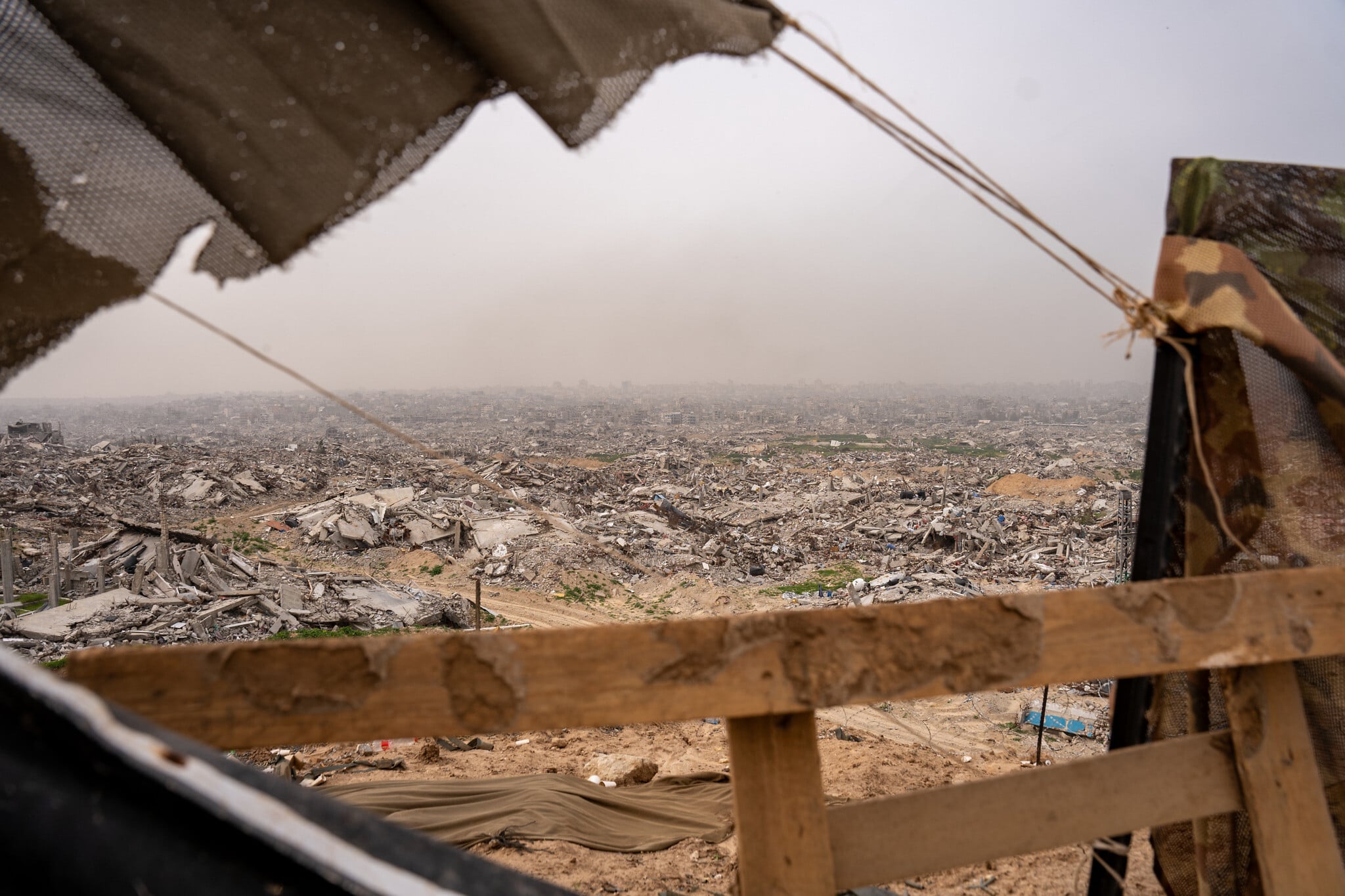
The view of Gaza City's Shejaiya neighborhood from an Israeli army position in the Strip, February 9, 2026. (Emanuel Fabian/Times of Israel)
Preparations for Gaza’s reconstruction are underway on the eastern side of the Yellow Line, which constitutes the 53% of Gaza under IDF control, Channel 12 reports, even as Prime Minister Benjamin Netanyahu asserts that Israel will not allow rebuilding to begin before terror groups in the Strip disarm.
Engineering work is being carried out to clear rubble for the rehabilitation of the Strip, according to the TV report, which cites an internal document from the Civil-Military Coordination Center in Kiryat Gat, which oversees the Gaza ceasefire, assessing that over 70,000 tons of rubble have already been cleared as of the middle of January.
According to the internal document, which the report says summarizes the first 100 days of the ceasefire, the work was done specifically to prepare for the rehabilitation of Gaza, including the building of a housing complex for displaced Palestinians near Rafah in the southern Strip. Senior White House aid Jared Kushner said last month that construction would first focus on building “workforce housing” in Rafah, claiming that rubble-clearing and demolition were already underway there.
Yakir Gabay, a member of the Trump administration’s Board of Peace Gaza Executive Board, said last week that Gaza reconstruction will begin by clearing over 70 million tons of rubble and unexploded ordnance from the territory, along with hundreds of miles of tunnels.
Channel 12 airs footage showing heavy engineering equipment used for the works, as well as satellite imagery revealing areas from which rubble has been cleared.
The IDF tells the network in a statement that the work was carried out “in accordance with the directives of the political echelon. IDF forces are operating in the Strip to neutralize threats and dismantle terrorist infrastructure.”
“In addition, engineering activities are being conducted, such as roadwork and terrain preparation, which were determined in accordance with the operational situational assessment,” the statement adds.
The Prime Minister’s Office and the CMCC decline to comment on the report.
Far-left protest planned at Buchenwald memorial sparks outrage

Visitors queue at the main gate of the former Buchenwald Nazi concentration camp memorial site, on April 3, 2025. (Jens Schlueter/ AFP)
A far-left anti-Zionist group plans to stage a protest at the annual commemoration of the liberation of the Buchenwald concentration camp, drawing sharp criticism across Germany.
The group, Kufiyas in Buchenwald, says it will demonstrate outside the memorial grounds on April 11 after the site banned pro-Palestinian symbols, including the keffiyeh scarf. The campaign, which includes several pro-Palestinian organizations, describes itself as an anti-fascist international movement, and accuses the memorial of “historical revisionism and genocide denial” and of promoting what it calls Israeli propaganda.
Organizers are protesting a 2025 court ruling that upheld the memorial’s right to deny entry to visitors wearing the Palestinian keffiyeh. Participants include activists from Germany’s Left Party youth wing, the German Communist Party and Jewish Voice for a Just Peace in the Middle East.
Germany’s commissioner for combating antisemitism, Felix Klein, denounces the planned demonstration as “a new low in the reversal of roles between victim and perpetrator.”
Buchenwald was one of the largest concentration camps established within Germany’s borders, and has become one of the country’s central Holocaust memorial sites.
Cabinet approves Smotrich VAT exemption — ahead of Knesset vote to overturn it
The cabinet approves Finance Minister Bezalel Smotrich’s order to raise the tax-exemption ceiling on personal imports to $150, ahead of a Knesset vote to overturn the order tomorrow.
“The cabinet has taken another step today in proving that things can be cheaper here. The approval of the order I signed, which has already come into effect, gives it backing and strengthens this move,” Smotrich says in a statement, hailing the decision.
“The impact is already visible: more purchases, more competition, and lower prices. The goal is clear: to turn every citizen into an importer and to expand competition in the market. I thank Prime Minister Benjamin Netanyahu for the partnership,” he continues.
Smotrich’s executive order allows citizens to purchase up to $150 of personal goods from overseas without incurring an additional 18% VAT charge. The previous cut-off was $75.
The Knesset is expected to vote to cancel the order tomorrow, after the Knesset Finance Committee voted last month to move the discussion to the full Knesset, where lawmakers will vote on whether to revoke it. It’s highly unusual for the Knesset to overrule ministerial orders.
Since the order went into effect on December 24, it has been popular among the general public, but drawn sharp condemnation from local business owners, who succeeded in garnering support from other members of the coalition, in particular from Netanyahu’s ruling Likud party.
Likud MK and Knesset Finance Committee chair Hanoch Milwidsky, who has been a strong opponent of the measure, writes in a post on X that he calls on his “friends in the coalition not to support… the destruction of small businesses for the benefit of Chinese platforms.”
Milwidsky, along with other Likud MKs, including Economy Minister Nir Barkat and Eli Dalal, have claimed the measure effectively subsidizes foreign companies at the expense of local industry. Some opponents have accused Smotrich of populist policies ahead of this year’s election.
German minister walks out of film festival after claim of Berlin role in Gaza ‘genocide’
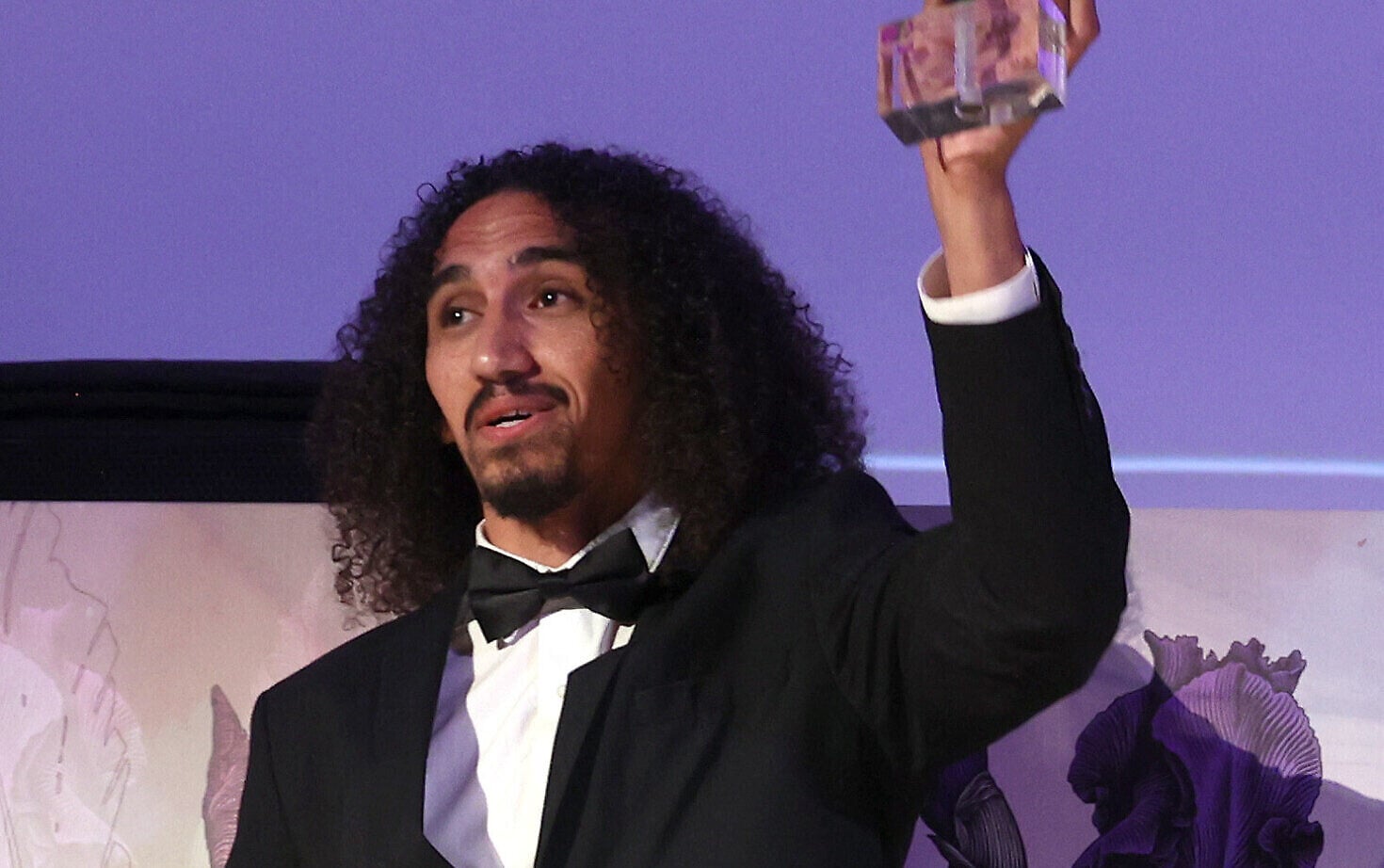
File: Palestinian film director Abdallah Al-Khatib after receiving the Best Feature Length Arab Documentary Award for 'Little Palestine, Diary of a Siege' at the closing ceremony of the 3rd edition of the Amman International Film Festival, on July 27, 2022 (by PATRICK BAZ / Amman International Film Festival (AIFF) / AFP)
A German minister walked out of the awards ceremony of the Berlin Film Festival after a prize-winning director accused Germany of complicity in the “genocide” committed by Israel in Gaza.
Social Democratic Environment Minister Carsten Schneider left the ceremony on Saturday evening because of “unacceptable” remarks, his ministry says.
Syrian-Palestinian director Abdallah Al-Khatib, who picked up a prize for Best First Feature Award with his “Chronicles from the Siege,” said in his speech that the German government “are partners in the genocide in Gaza by Israel. I believe you are intelligent enough to recognize this truth.”
Schneider was the only member of the German government attending the ceremony though he was not representing it, his ministry tells AFP. The Ministry of Culture, contacted by AFP to find out the reason for the absence of its minister Wolfram Weimer, does not respond immediately.
A leading member of Chancellor Friedrich Merz’s conservative party, Alexander Hoffmann, denounces what he says were “repugnant scenes” of “antisemitism” during the ceremony.
“The accusations of genocide, the antisemitic outbursts, and the threats against Germany at the Berlinale are absolutely unacceptable,” Hoffmann, head of the Christian Social Union, the Bavarian party allied with Merz’s Christian Democratic Union, tells the Bundestag.
The CDU mayor of Berlin Kai Wegner tells newspaper Bild, “The open display of hatred towards Israel is in direct contradiction with what this festival represents.”
The backdrop of the conflict in the Middle East led to a tense 76th edition of the festival.
Gunfire continues in Kafr Kanna despite arrests, reported truce between warring families
Despite dozens of overnight arrests and the truce ostensibly declared last night between two warring families in Kafr Kanna, intermittent shooting is still heard throughout the town.
Twenty minutes after a long spate of gunfire, which saw startled pedestrians rush for cover in nearby stores, around a dozen police vehicles are seen trickling into the village on its main road.
Despite supposed truce and arrests, gunfire is still heard regularly throughout Kafr Kanna. Last night, four ppl were injured after assailants set off a grenade in a family's home pic.twitter.com/FnGrFvgVAz
— charlie summers (@cbsu03) February 22, 2026
Last night, assailants set off a grenade by dropping it from a drone onto a private home, wounding four people, including one seriously. The explosion took place as masked, armed men roamed the streets and shot at storefronts.
Residents say the violence is linked to a dispute between the Awawdeh and Taha families. As gunshots rang out last night, Sheikh Kamal Khatib, who runs the reconciliation committee that works to stem the violence in the town, convened elders from both families to reinstate a truce between them.
“In a normal country, we wouldn’t have to do this,” Mansour Dahamshe, another member of Kafr Kanna’s reconciliation committee, tells The Times of Israel. “This is the task of the police, but in the absence of the police, in the absence of legal means, we are forced to do this.”
Police say they arrested 34 suspects overnight linked to the violence, but it is unclear how many remain in custody, and the violence persists unabated.
At around noon, masked gunmen entered a business near the town’s entrance and shot at an employee, wounding him in the torso. He was taken to the hospital with light injuries, Magen David Adom says.
Police have not responded to a request for comment regarding arrests in connection to the shooting today.
Iran’s FM plans to meet Witkoff this week, claims ‘good chance’ of diplomatic solution
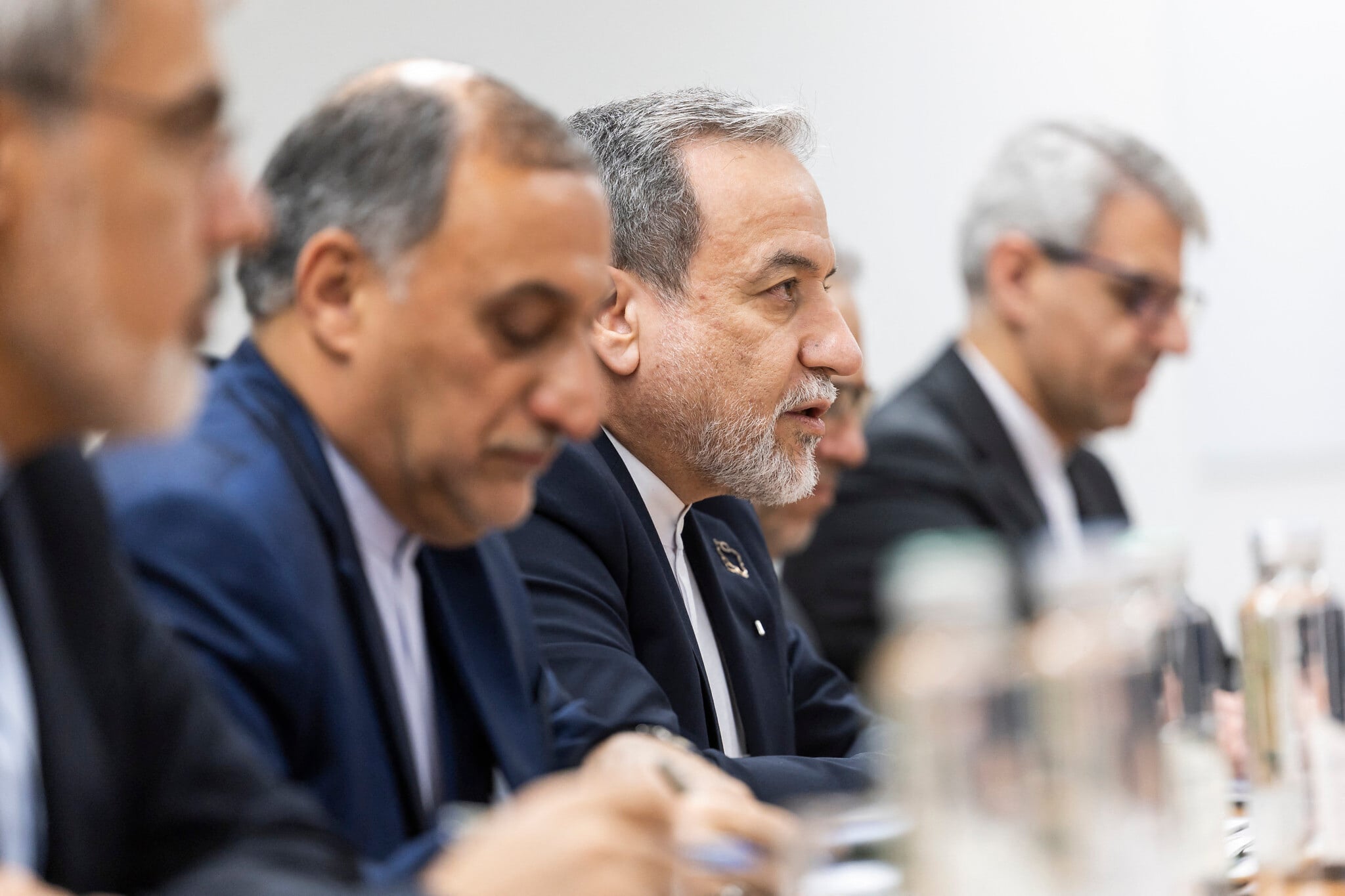
Iran's Foreign Minister Abbas Araghchi speaks during a second round of US-Iranian talks, with Washington pushing Tehran to make a deal to limit its nuclear program, in Geneva on February 17, 2026. (CYRIL ZINGARO / POOL / AFP)
Iran’s Foreign Minister Abbas Araghchi says he will likely meet with US envoy Steve Witkoff in Geneva, Switzerland, on Thursday, noting that there is still “a good chance” of a diplomatic solution on Tehran’s nuclear ambitions.
Araghchi makes the comments during an interview on CBS News’ “Face the Nation” as US President Donald Trump considers strikes on Iran.
Earlier Axios reported that US negotiators are ready to hold another round of talks with Iran on Friday in Geneva if they receive a detailed Iranian proposal for a nuclear deal in the next 48 hours, citing a senior US official.
Border Police trainee killed in apparent accidental shooting by friend
A Border Police trainee has been killed after he was shot by his friend, a soldier, in an apparent case of accidental discharge.
According to Hebrew media reports, the trainee and several others had been playing around with their weapons at a home in Azor, south of Tel Aviv, when one of the guns went off. The young man was pronounced dead on the spot by paramedics after they failed to resuscitate him.
Police say two people who were involved have been detained. One of the detainees is a soldier in the Givati Brigade, Haaretz reports.
IDF says troops in West Bank killed Palestinian who tried to hurl bomb
The IDF says troops shot and killed a Palestinian who tried to hurl an explosive device at Israeli forces in the West Bank last night.
According to the military, during a raid in the village of Beit Furik, east of Nablus, troops of the Samaria Regional Brigade identified two Palestinians approaching them while brandishing explosives.
“The troops opened fire at the terrorists to remove the threat,” the military says, adding that the soldiers “killed one terrorist and neutralized the other terrorist.”
Religious Zionism to support bill to grant Rabbinate full control over Western Wall
Finance Minister Bezalel Smotrich’s far-right Religious Zionism party announces it will vote in favor of Noam MK Avi Maoz’s bill giving the Chief Rabbinate full control over prayer at all parts of the Western Wall in its preliminary reading next week.
“As Religious Zionism chairman Finance Minister Bezalel Smotrich announced immediately after the High Court of Justice ruling, the Religious Zionism faction will vote in favor of a law that will ensure the integrity of the Western Wall and preserve its sanctity,” the party says in a statement.
Maoz’s proposal is intended to undercut last Thursday’s High Court ruling that the state must move forward with the upgrade of the Western Wall egalitarian plaza, which would allow non-Orthodox prayers at a lesser-used portion of the holy site.
The ultra-Orthodox parties Shas and United Torah Judaism, and National Security Minister Itamar Ben Gvir’s far-right Otzma Yehudit party, announced that they would vote in favor of Maoz’s bill earlier in a joint statement.
MK Mansour Abbas’s son hit by car, seriously injured
Mohammad Abbas, the 15-year-old son of Ra’am chairman Mansour Abbas, has been seriously injured after being hit by a car in northern Israel.
The politician’s son was riding his motorized bicycle in his hometown of Maghar, an Arab city in the Upper Galilee, when a car hit him and threw him from the bike.
Paramedics who handled the accident say they found the boy lying in the middle of the road, conscious but suffering from severe wounds. He was taken to the Tzafon Medical Center for further treatment and later transferred to Haifa’s Rambam Health Care Campus. He is in stable condition.
US, Iran to meet again for talks in Geneva on Thursday — report
Senior Iranian and US officials will meet in Switzerland on Thursday for the third round of nuclear talks, a senior US official tells Axios.
Iran’s Foreign Minister Abbas Araghchi said earlier he will likely meet with US envoy Steve Witkoff in Geneva on Thursday, noting that there is still “a good chance” of a diplomatic solution relating to Tehran’s nuclear ambitions.
Iran struck secret shoulder-fired anti-aircraft missile deal with Russia, FT reports
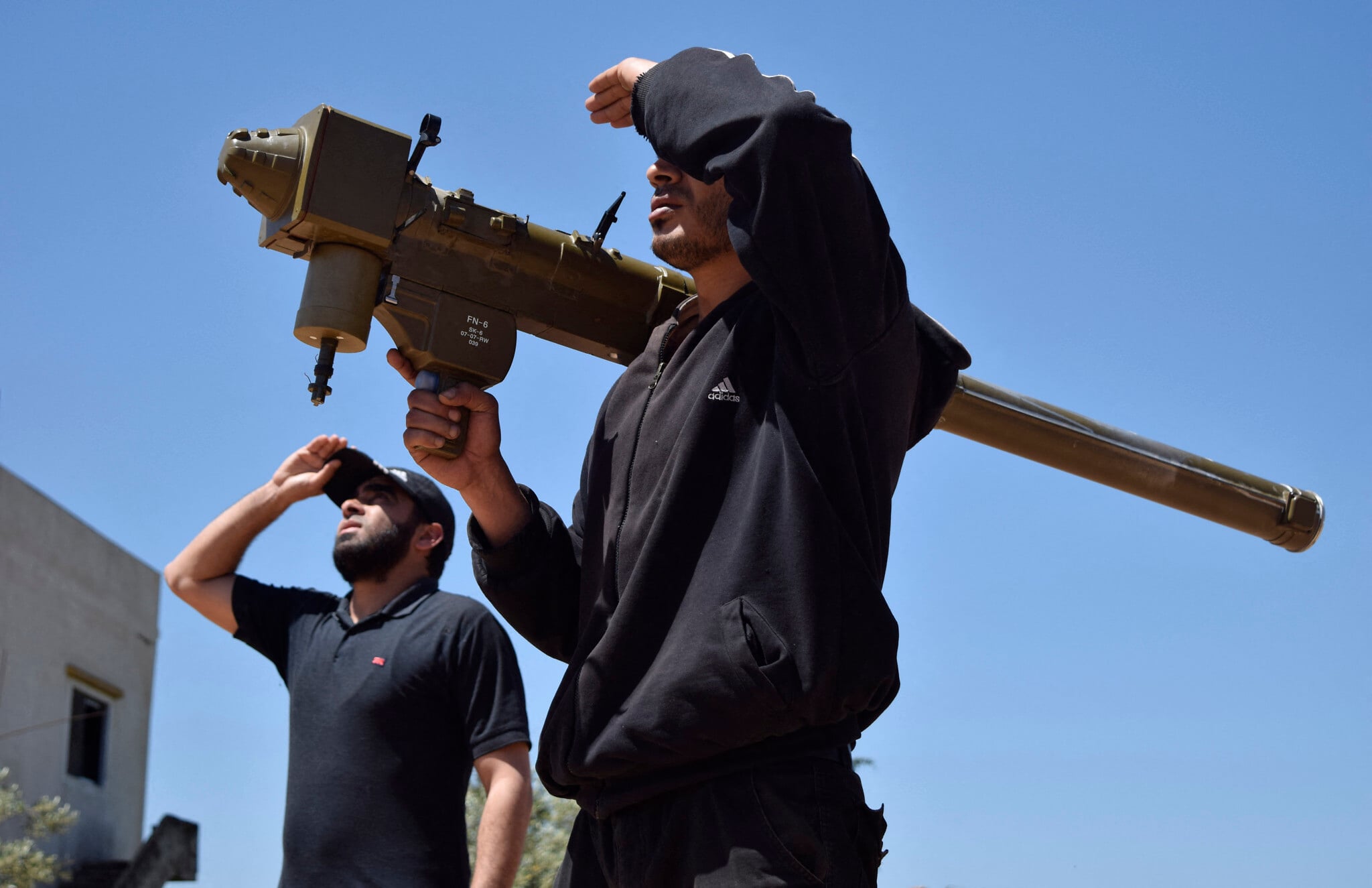
Rebel-fighters monitor the sky holding a FN-6 man-portable air-defense system (MANPADS) in the Syrian village of Teir Maalah, on the northern outskirts of Homs, on April 20, 2016. (MAHMOUD TAHA / AFP)
Iran made a secret 500 million euro ($589 million) arms deal with Russia to acquire thousands of advanced shoulder-fired anti-aircraft missiles, the Financial Times reports.
The agreement, signed in Moscow in December, commits Russia to deliver 500 man-portable “Verba” launch units and 2,500 “9M336” missiles over three years, the FT says, citing leaked Russian documents seen by the FT and several people familiar with the deal.
Under the deal the deliveries are scheduled in three tranches, running from 2027 through 2029, the FT says.
The deal was negotiated between Russian state arms exporter Rosoboronexport and the Moscow representative of Iran’s Ministry of Defense and Armed Forces Logistics (MODAFL), the FT says.
Tehran formally requested the systems last July, according to a contract seen by the FT. In June last year, US forces struck Iran’s three main nuclear sites as the country joined Israel’s military campaign against Iran.
6-year-old child dies of measles, 16th fatality in latest outbreak
A 6-year-old child died of measles today, the Health Ministry says, marking the 16th fatality in a months-long outbreak that has swept through ultra-Orthodox communities and areas with low immunization rates.
The boy arrived in critical condition at a hospital, where, after resuscitation efforts, doctors were forced to declare him dead.
Most of the 15 deaths have been previously healthy children with no underlying conditions who were not vaccinated against measles.
The country is in the midst of its worst measles epidemic since 2018-2019, but the current outbreak has seen significantly more deaths, indicating that the disease is reaching more vulnerable populations and that sick babies may not be getting medical care in time.
According to Health Ministry data, 25 people are currently hospitalized with measles, including seven in intensive care.
Technion ranked 1st in Israel and Europe in international computer sciences index
Haifa’s Technion-Israel Institute of Technology is ranked first in Israel and Europe and 21st worldwide in the international CSRankings index for computer sciences, the university says.
The ranking is based on the number of peer-reviewed conference papers published by Technion researchers between 2005 and 2025 at the world’s leading conferences in a variety of AI subfields, placing it among the world’s top 60 universities in each.
In Machine Learning, the Technion is ranked first in Israel, first in Europe, and 10th worldwide.
“Hundreds of our faculty members apply advanced AI-based methods across a wide range of fields, including data science, medical research, mechanical engineering, civil engineering, architecture, and biology,” says Prof. Danny Raz, Technion’s senior executive vice president.
Bar-Ilan University launches research center to study post-traumatic effects of Oct 7
Bar-Ilan University says it is establishing a groundbreaking multidisciplinary research center dedicated to studying the post-traumatic consequences of the October 7 attacks and the subsequent war in Gaza, Lebanon, and other fronts.
The research in trauma and resilience will be designed for eventual clinical practice. The center will also serve as a major hub for academic and research training in trauma studies.
The center will be headed by Bar-Ilan University researchers Prof. Rivka Tuval-Mashiach, Prof. Danny Horesh, and Dr. Yael Shoval-Zuckerman.
Former Givati commander takes charge of IDF’s Gaza Division from Brig. Gen. Barak Hiram
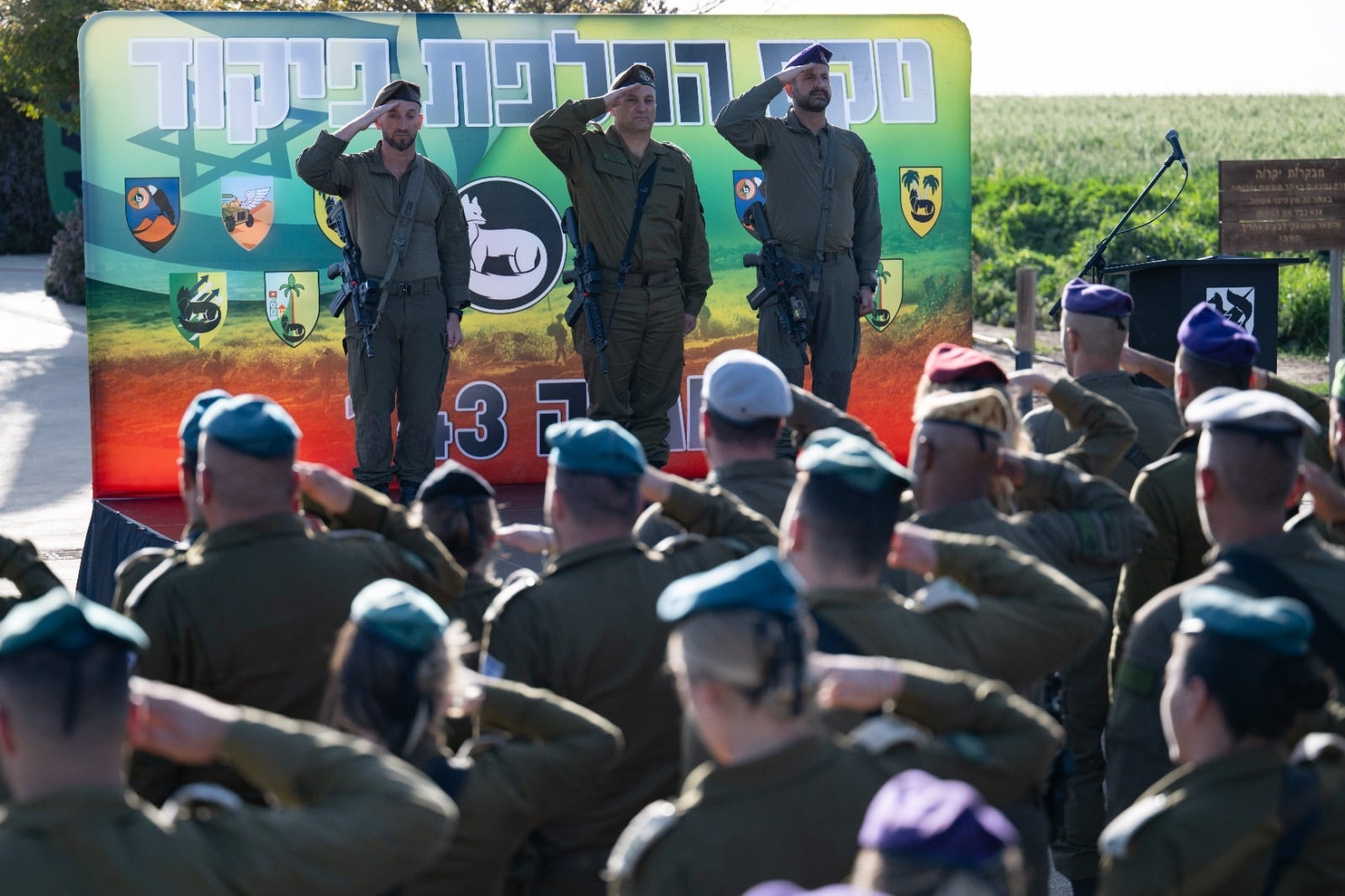
L-R: Outgoing Gaza Division commander Brig. Gen. Barak Hiram, Southern Command chief Maj. Gen. Yaniv Asor, and incoming Gaza Division commander Brig. Gen. Liron Betito, at a handover ceremony near the Gaza border, February 22, 2026. (Israel Defense Forces)
Former Givati Brigade commander Brig. Gen. Liron Betito takes the reins of the IDF’s Gaza Division — the regional division responsible for the border with the Strip — from Brig. Gen. Barak Hiram, who served in the role for the past 16 months.
A handover ceremony took place earlier today near the Gaza border.
Hiram, known for his controversial involvement in the battle at Kibbutz Be’eri during the October 7 onslaught, will soon head the Operations Directorate’s Operations Division.
An IDF tactical investigation into the battle at Be’eri has since cleared Hiram of any wrongdoing.
Security cabinet convenes in Jerusalem
Prime Minister Benjamin Netanyahu convenes his security cabinet in Jerusalem.
The meeting, pushed off from last Thursday, comes amid intensive US preparations for a potential military strike in Iran.
Report: Netanyahu says he’s ‘worried’ about Trump on Iran
After meeting US President Donald Trump in Washington earlier this month, Prime Minister Benjamin Netanyahu told a senior US official that he could not get a handle on what the president wanted to do vis-a-vis Iran, Channel 12 reports.
“Is he still with us?” Netanyahu reportedly asked the US official. “I’m worried.”
Netanyahu holds meeting on Hezbollah – report
Ahead of tonight’s security cabinet meeting, Prime Minister Benjamin Netanyahu held a meeting with a small circle of advisers and security officials on the question of what Hezbollah might do if the US strikes Iran, Channel 12 reports.
There is a disagreement among Israeli official over whether Hezbollah wants to enter a fight with Israel, according to the outlet.
Israel believes that Iran is trying to play for time by submitting draft proposals to the US and then going back and forth on the details, the report says, and assesses that the chances of a deal remain low.
Israel is taking pains not to be seen as pushing for a strike on Iran, but believes that there is an historic opportunity to change the regime and the region for years to come, it says.
Border Police trainee killed in accidental discharge is 18-year-old Ori Mechtaiev
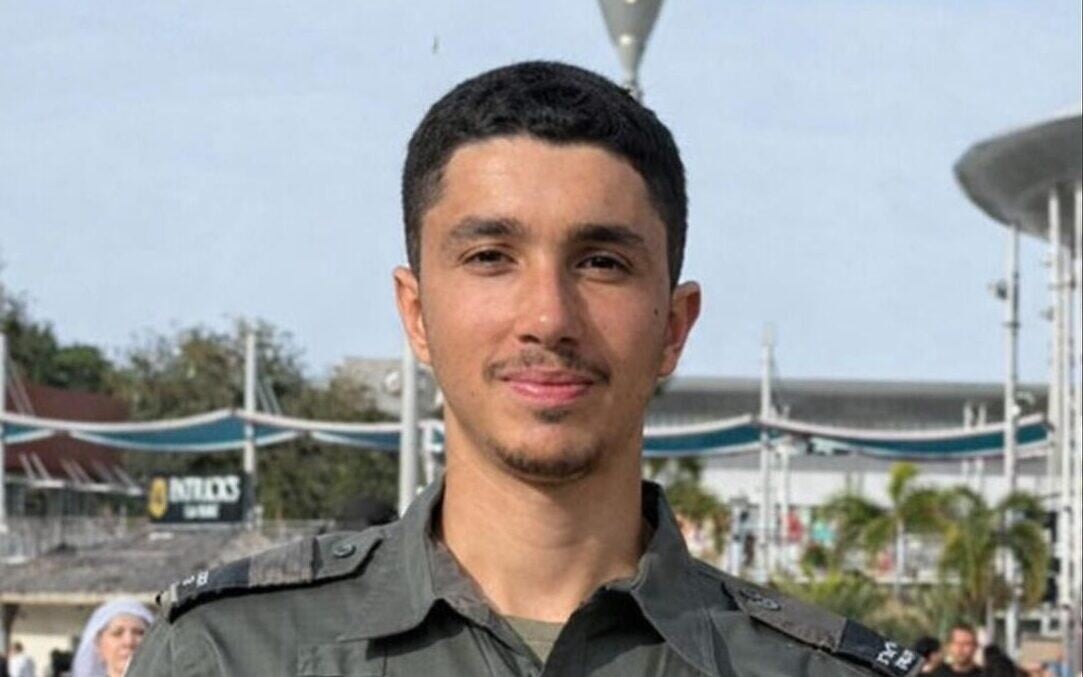
Ori Mechtaiev, 18, a Border Police trainee who was shot and killed in Azor, in an apparent case of accidental discharge, on February 22, 2026. (Israel Police)
The Border Police trainee fatally shot this afternoon in Azor is 18-year-old Ori Mechtaiev, a resident of the central town, police announce.
The teenager enlisted in the Border Police in November and was still in training when he was shot and killed, reportedly by his friend in the army, in an apparent case of accidental discharge.
Mechtaiev leaves behind his parents and two siblings. He is the son of Ronen Mechtaiev, deputy chief of the Fire and Rescue Service.
Earlier, police said that two people involved in the lethal incident were detained. One of the detainees is a soldier in the Givati Brigade, Haaretz reports.
Police and the IDF’s Military Police are investigating the circumstances of the shooting.
Iran’s FM says country’s missiles hit Israel in last war ‘and can do it again’
Iran is a “in a better situation” defensively than in the June 2025 war with Israel and is prepared to strike Israel again with its missiles should it come under attack, Foreign Minister Abbas Araghchi told CBS News.
“Yes, we had problem with our air defense, but Israelis had also problem with their air defense and our missiles were able to hit targets inside Israel,” he said in the interview that aired earlier.
“They started the war, but after 12 days, they asked for a ceasefire, unconditional ceasefire,” he claims. “Why? Because they couldn’t defend themselves against our missiles. So we have a very good capability of missiles, and now we are even in a better situation than previous war.”
Iran’s missiles, he claims, “hit their targets in a very exact way, and they can do it again.”
The Iranian Foreign Minister to Fox News: Although Israel had air superiority over us with planes, we also have air superiority over them with our ballistic missiles that hit.
He does not realize that there is no comparison regarding the regime's pic.twitter.com/XzVUV6wwer
— IdostandwithIsrael???????? Israel news (@idostandwithIL) February 22, 2026
During the 12-day war last June, six missiles are said to have struck military bases, while 36 others impacted elsewhere inside Israel, having evaded interception by Israeli and US air defenses, killing 32 people and damaging 2,305 homes in 240 buildings, along with two universities and a hospital, and leaving over 13,000 Israelis displaced.
Iranian president says recent talks with US ‘yielded encouraging signals’
Iranian President Masoud Pezeshkian says recent negotiations with the US “yielded encouraging signals.”
“We continue to closely monitor US actions and have made all necessary preparations for any potential scenario,” he says in a post on X.
Iran is committed to peace and stability in the region. Recent negotiations involved the exchange of practical proposals and yielded encouraging signals. However, we continue to closely monitor U.S. actions and have made all necessary preparations for any potential scenario.
— Masoud Pezeshkian (@drpezeshkian) February 22, 2026
Iraq-based Kurdish Iranian parties unite to defy Islamic Republic
Several Iraq-based Kurdish-Iranian groups announce a political coalition to seek the overthrow of Iran’s Islamic Republic and ultimately to secure Kurdish self-determination.
Iraq’s autonomous Kurdistan region hosts camps and rear bases operated by several Kurdish-Iranian factions, which have repeatedly faced cross-border strikes from Iran.
Five exiled groups say they formed a coalition to “assert our presence in Iran’s current political situation, where the Islamic Republic regime has lost all political legitimacy but unfortunately remains in power.”
The “Coalition of Political Forces in Iran Kurdistan” includes the Kurdistan Freedom Party (PAK), the Democratic Party of Iranian Kurdistan (PDKI), and the Party of Free Life of Kurdistan (PJAK).
The main goals of the alliance are, the joint statement say, “the struggle to overthrow the Islamic Republic of Iran, and to achieve self-determination for the Kurds.”
They add that they support anti-government protests in Iran and stress the need for “coordinated, joint political and on-the-ground efforts” between Kurdish parties and civil society and opposition groups across Iran.
Coalition to renew work on bill barring High Court from intervening in ministerial appointments
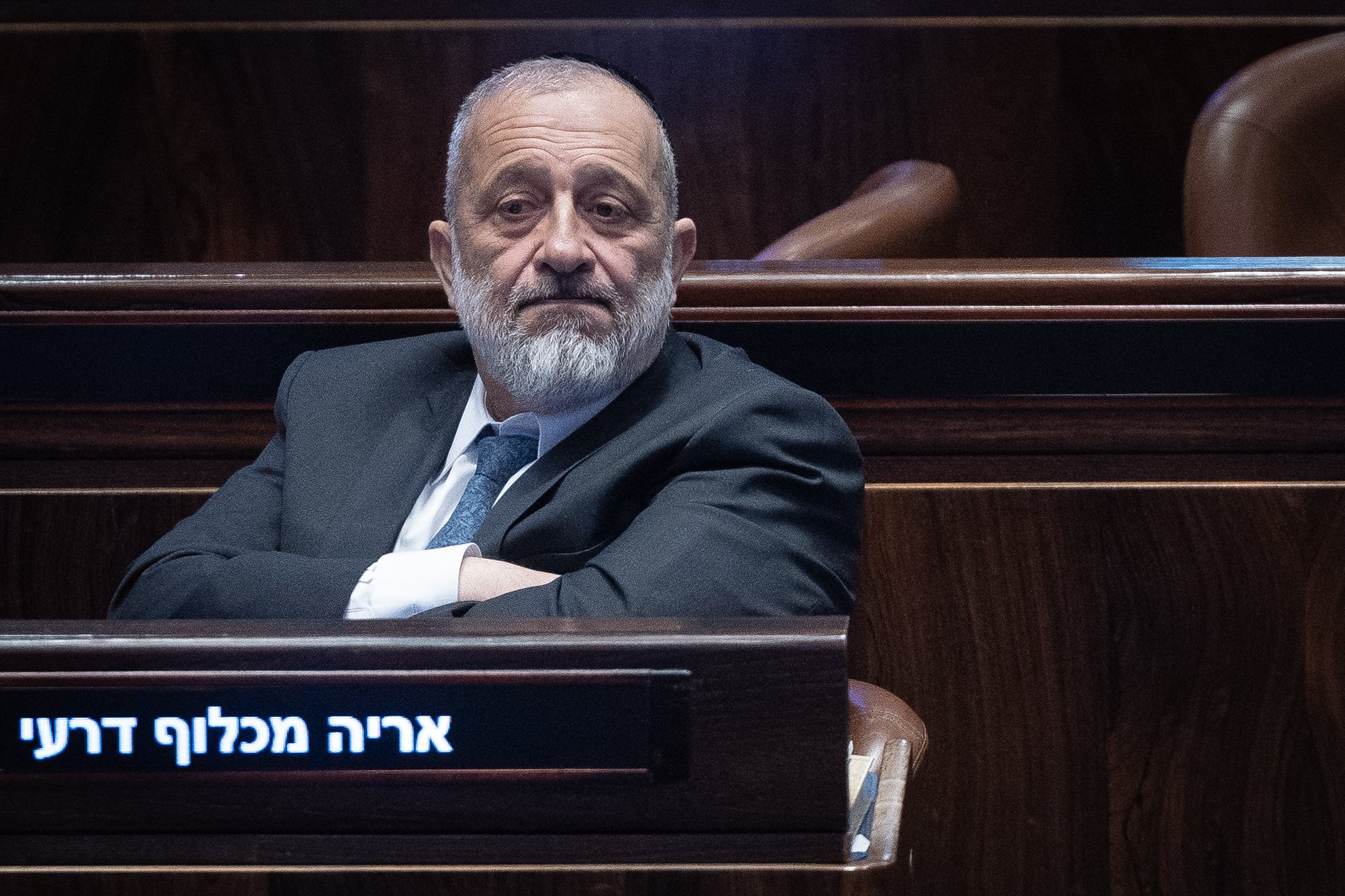
MK Aryeh Deri attends a Knesset session in Jerusalem on February 10, 2025. (Yonatan Sindel/Flash90)
The coalition intends to restart work on a bill to bar the High Court of Justice from intervening in the appointments of ministers, according to multiple reports in Hebrew media outlets.
The bill was last advanced in 2023, after the court barred Shas leader Aryeh Deri from serving as a minister due to his previous criminal convictions, but at the time was halted before being passed into law. The legislative process is now being restarted due to the High Court examining petitions demanding the dismissal of National Security Minister Itamar Ben Gvir.
Earlier this month the court ordered Prime Minister Benjamin Netanyahu to explain why he has not fired Ben Gvir. Attorney General Gali Baharav-Miara has said Ben Gvir should be fired for systematically abusing his powers and inappropriately intervening in police operations through a “continuous (sometimes sophisticated) system of pressure” on police officers. She alleged that Ben Gvir had used his office to pressure police on issues including the treatment of anti-government protesters, the status quo on the Temple Mount, protection for Gaza-bound aid trucks and appointments within police ranks.
Deri’s office, in a statement tonight, says he supports the bill as “the exclusive authority to appoint and dismiss ministers rests solely with the prime minister, as is appropriate in a democracy.”
However, it asserts that he himself “does not need this law and has no interest in being appointed a minister in the current government.”
High Court orders Justice Ministry legal adviser to end delay, advance Tomer-Yerushalmi case
The High Court of Justice instructs the Justice Ministry’s legal adviser Yael Kotik to announce within a week who within the state prosecution she believes should oversee the ongoing case against former military advocate general Yifat Tomer-Yerushalmi and make decisions on the matter.
Tomer-Yerushalmi is under investigation for the leak of a video from the Sde Teiman holding facility in 2024 that purports to show guards at the southern detention facility severely abusing a Gazan inmate. She then allegedly covered up her involvement while feigning an investigation to find the person who leaked the video.
Attorney General Gali Baharav-Miara recused herself from the case due to overseeing Tomer-Yerushalmi’s earlier, fallacious internal probe, amid accusations by coalition officials that she and other figures in the justice system were part of the cover-up. Kotik has been reviewing police’s investigation into the case. Police have said they found no evidence that Baharav-Miara had any knowledge of Tomer-Yerushalmi’s wrongdoing — potentially allowing the attorney general to resume her involvement.
Kotik received police’s findings at the start of the month. She has faced accusations that she is dawdling in issuing her own position on police’s findings at the behest of Justice Minister Yariv Levin, to prevent Baharav-Miara or other prosecution officials from reassuming control over the case.


read more: