

Live updates (closed)
 Add ToI as a Preferred Source on Google
The Times of Israel liveblogged Monday’s events as they unfolded.
Turkish president scraps move to close liberal university in Istanbul
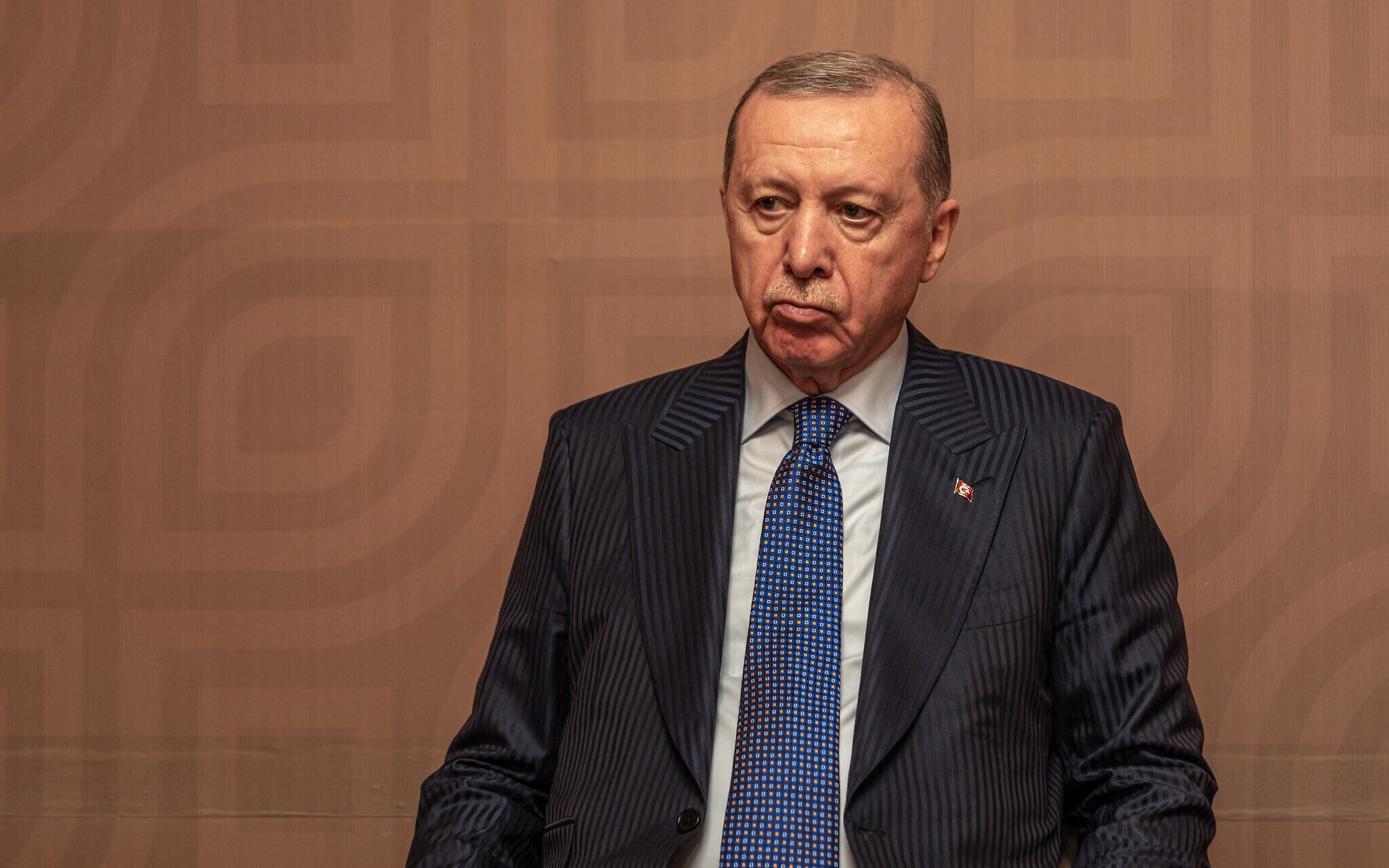
Turkey's President Recep Tayyip Erdogan attends a signing ceremony during his official visit to the National Palace in Addis Ababa, Ethiopia, on February 17, 2026. (Marco Simoncelli/ AFP)
Turkey’s President Recep Tayyip Erdogan reverses his controversial decision to close a liberal private university in Istanbul, according to a decree published in the official gazette.
Hundreds of students and lecturers demonstrated earlier Sunday outside the main campus of Istanbul Bilgi University, which has been closed since Friday, to demand its reopening.
Erdogan on Friday ordered its closure in the middle of the school year, in an official decree.
It cited a law allowing for the closure of a private institution if “the expected level of education and training… is insufficient” — a charge rejected by Bilgi students and staff.
“We will stay here until the university reopens its doors,” says student union activist Emir Aydogan, demonstrating at the university on Sunday.
Erdogan, in office since 2003 as prime minister and then president, has been fiercely criticised by rights groups for authoritarian moves against his opponents.
Oil slips to 2-week low as US and Iran seen moving closer to peace deal
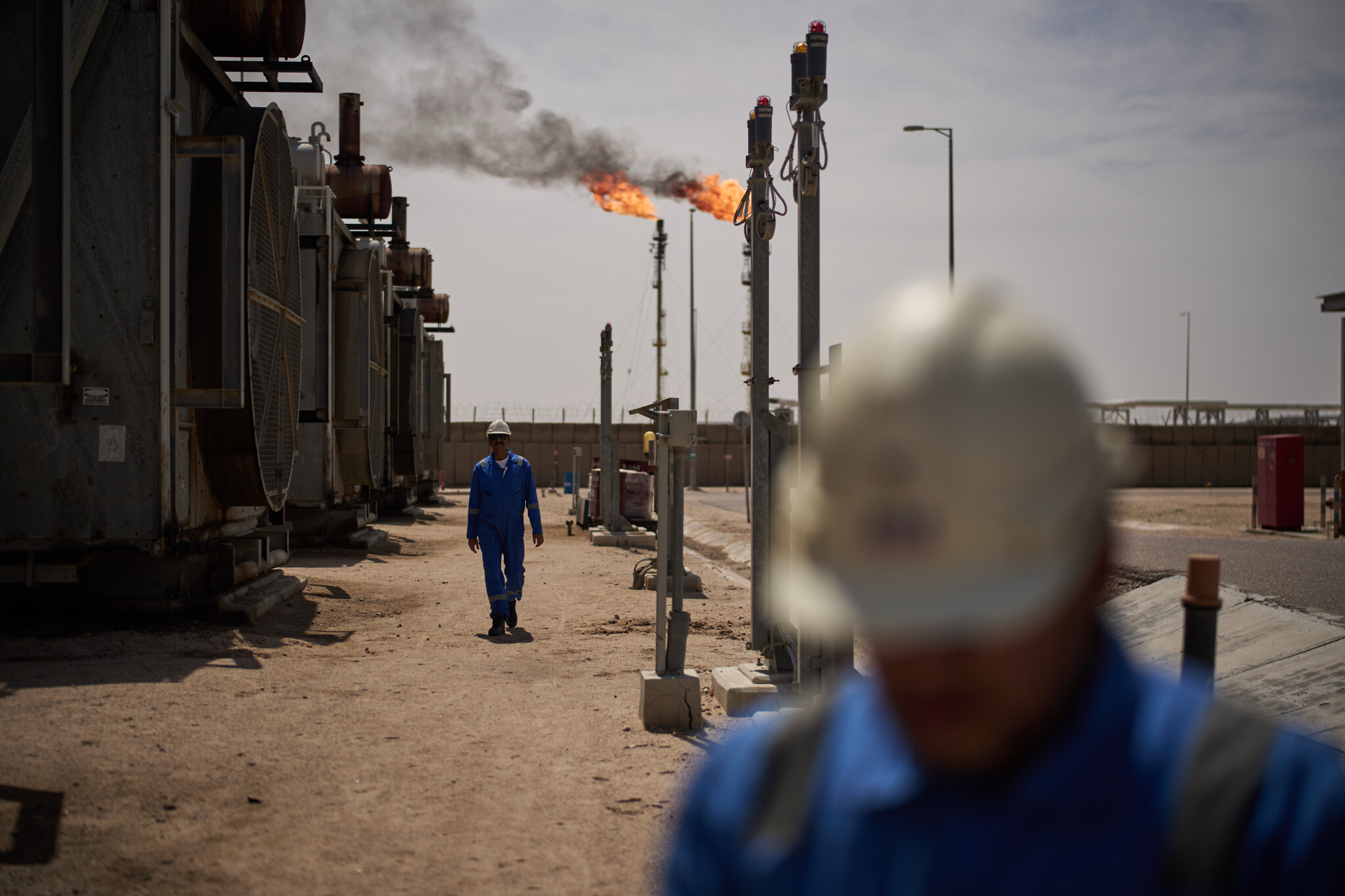
Workers walk in an area at a degassing station in Zubair oil field, whose operations have being reduced due to the Mideast war triggered by the US and Israeli attacks on Iran, near Basra, Iraq, March 28, 2026. (AP Photo/Leo Correa, File)
Oil prices hit two-week lows amid optimism that the US and Iran are moving closer toward a peace deal, even though they remain at odds over key issues, including Iran’s blocking of the Strait of Hormuz, which continues to restrict oil supply from the Middle East.
Brent crude futures fall $4.71, or 4.55%, to $98.83 a barrel by 10:34 GMT (1:34 a.m. Israel time), while U.S. West Texas Intermediate was at $92.03 a barrel, down $4.57, or 4.73%.
Both contracts touched their lowest since May 7.
Iran’s supreme leader hiding in secret location, communicates via network of messengers — CBS
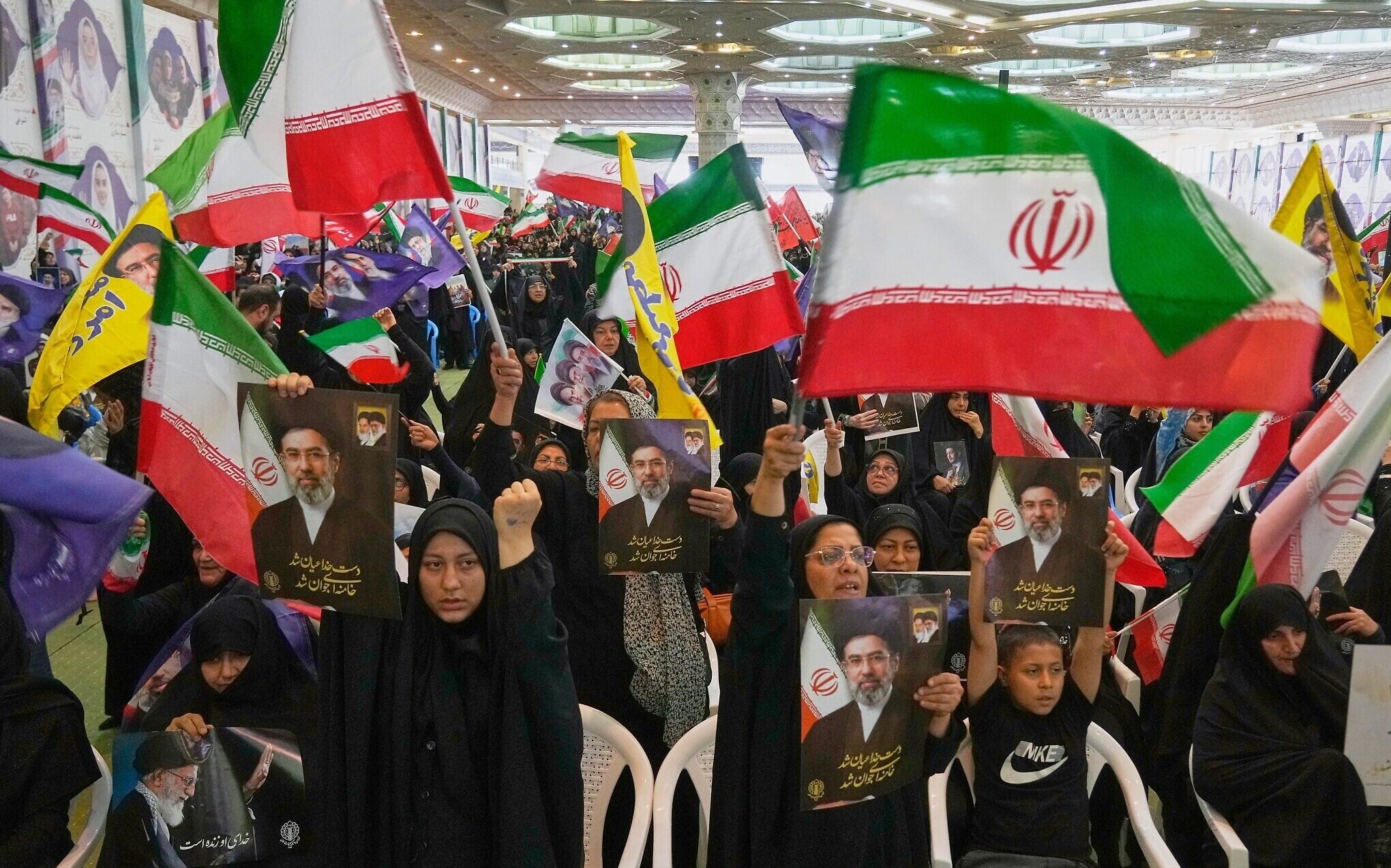
Government supporters hold Iranian flags and pictures of Iran's Supreme Leader Ayatollah Mojtaba Khamenei, during a ceremony honoring the armed forces and those killed in the war with Israel and the US at the Imam Khomeini Grand Mosque in Tehran, Iran, May 24, 2026. (AP Photo/ Vahid Salemi)
Iranian Supreme Leader Mojtaba Khamenei is hiding in a secret location and communicates via an elaborate network of messengers, American officials tell CBS News, citing US intelligence.
The precautionary measures, meant to keep Israel from assassinating Khamenei, are causing delays in US-Iran talks to end the war, the report says. It adds that even senior Iranian officials cannot contact Khamenei directly.
“This is why you see people saying things like, ‘The supreme leader has agreed to the framework,’ or ‘We’re waiting to hear back on the final deal points.’ Every piece of information he receives is dated and there’s a lot of latency to his responses,” one official tells the network.
Khamenei’s father and predecessor, Ali Khamenei, was killed on February 28, the first day of the US-Israeli war with Iran. Mojtaba, who was also injured in the US-Israeli strikes, was appointed to succeed his father in March but has not been publicly seen or heard since then.
He is not the only senior Iranian official who has gone underground, according to the CBS report. The report says the leaders spend weeks in bunkers and try to avoid communicating with each other.
“Watching them try to figure out how to talk to each other is almost like watching a sitcom. They are completely exasperated,” one official says.
Syria holds legislative elections in Kurdish-majority northeast
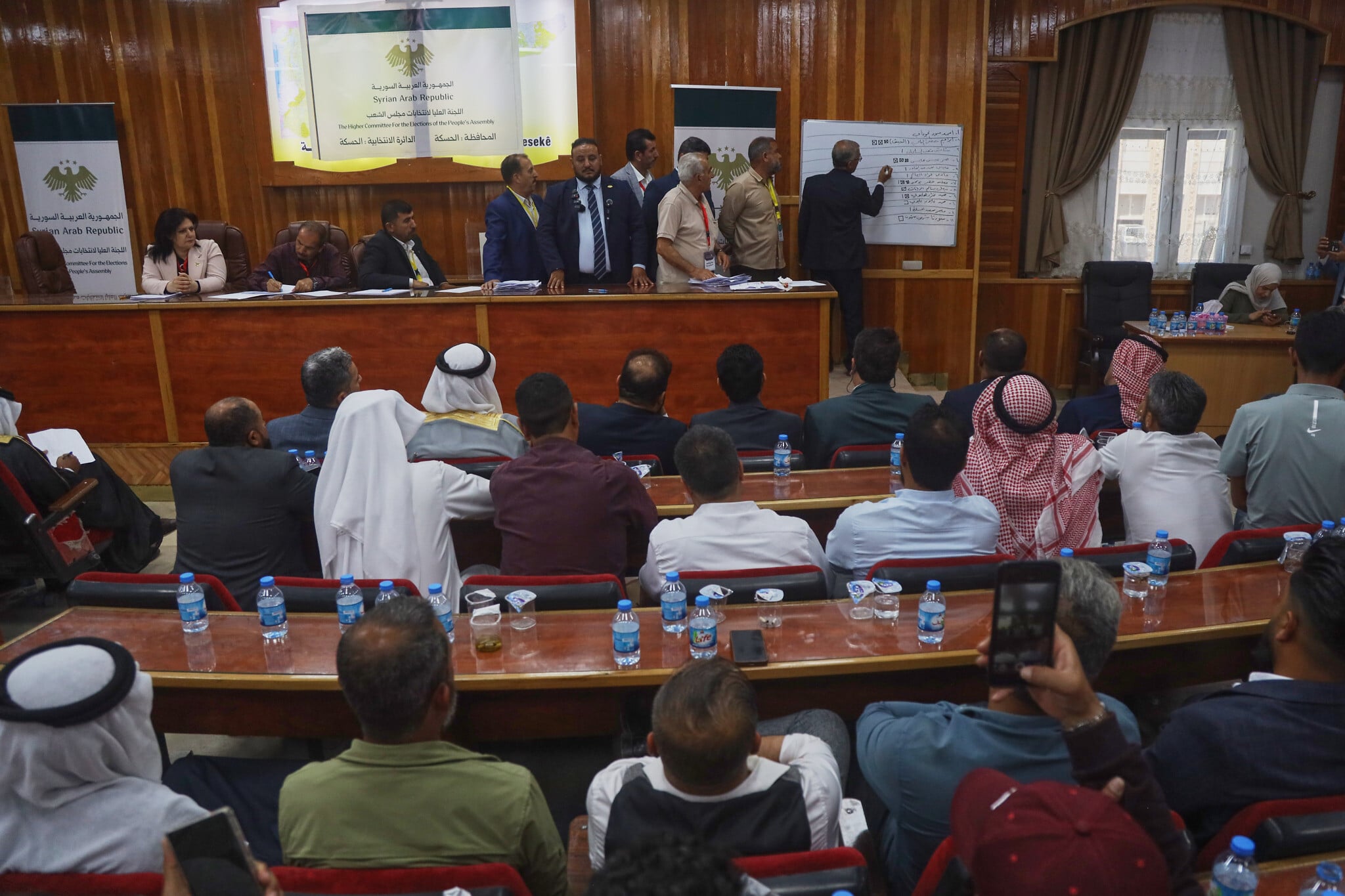
Election officials count ballots during follow-up parliamentary elections in Hassakeh, northeastern Syria, May 24, 2026. (AP/Baderkhan Ahmad)
Syria holds follow-up parliamentary elections in the Kurdish-majority northeastern province of Hassakeh and the town of Kobani, areas that were reintegrated under government control after fighting in January.
Other parts of Syria voted for the People’s Assembly last October, almost a year after longtime dictator Bashar al-Assad was ousted in a rebel offensive. However, at that point, large swaths of country’s northeastern region were still under the control of the Kurdish-led Syrian Democratic Forces, notably Hassakeh and Kobani.
The country is still reeling from the devastating impact of its civil war from 2011 until 2024, as skepticism remains among large segments of its minorities now living under Islamist rule, while millions of Syrians live in poverty.
In January, a government offensive against Kurdish fighters reintegrated that part of the country with Damascus, under interim President Ahmad al-Sharaa’s Islamist-led authorities.
The vote Sunday is for the remaining 11 seats in Syria’s first parliament after the ouster of Assad. Nine of the seats represent Hassakeh and the other two Kobani in Aleppo province.
While parliamentary elections under Assad were not competitive and were ultimately an internal competition between members of the ruling Baath Party, the new model under al-Sharaa is not a fully democratic process either. Most seats in parliament are voted by electoral colleges in each of Syria’s districts, with al-Sharaa directly appointing the remaining one-third of legislators.
Voters, however, appear satisfied with the process as a step in Syria’s transition after years of conflict and dictatorship.
“We want representatives who will amplify the voices of people [in] Hassakeh,” Mukhalaf al-Hatthal, one of the voters in Qamishli, tells The Associated Press. He says the biggest concerns are related to infrastructure, agriculture and maintaining peace. “There is a great democratic atmosphere here.”
But Masoud al-Majeed, another member of the electoral college, says he hopes that the voting process will change, adding the current one does not represent everyone.
Sirens in north warn of potential drone infiltration
Sirens sound in the western Galilee town of Shtula, warning of a potential drone infiltration from Lebanon.
Soldier killed in battle in south Lebanon, IDF says
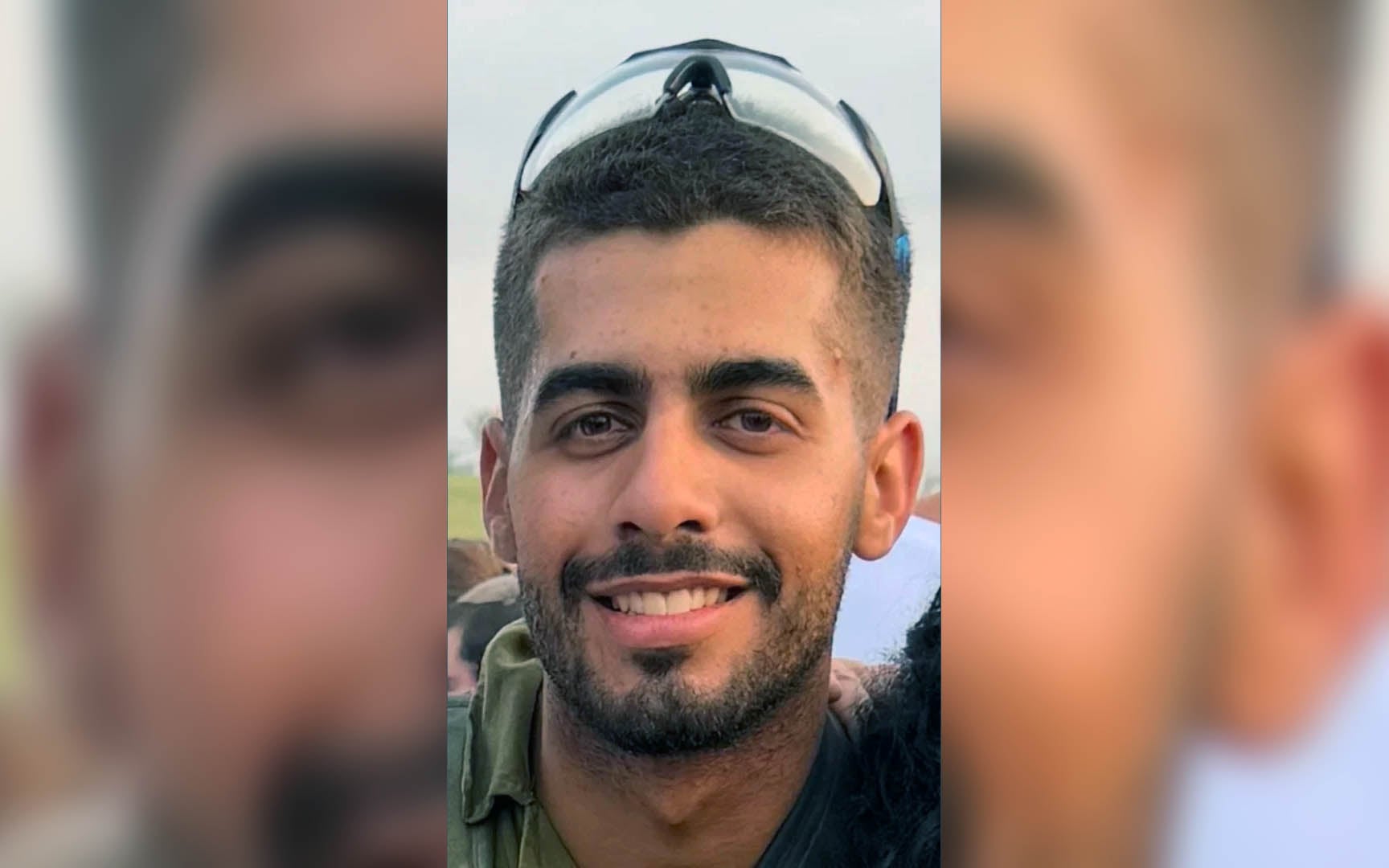
Sgt. Nehoray Leizer, killed in Lebanon May 24, 2026 (Israel Defense Forces)
A soldier was killed in battle yesterday in southern Lebanon, the IDF announces.
Sgt. Nehoray Leizer, 19, from Eilat, was a combat engineer in the 601st Battalion. He was killed by an explosive drone.
Another soldier was seriously wounded in the incident.
Rubio: Iran deal still possible today, ‘Israel always has a right to protect itself’
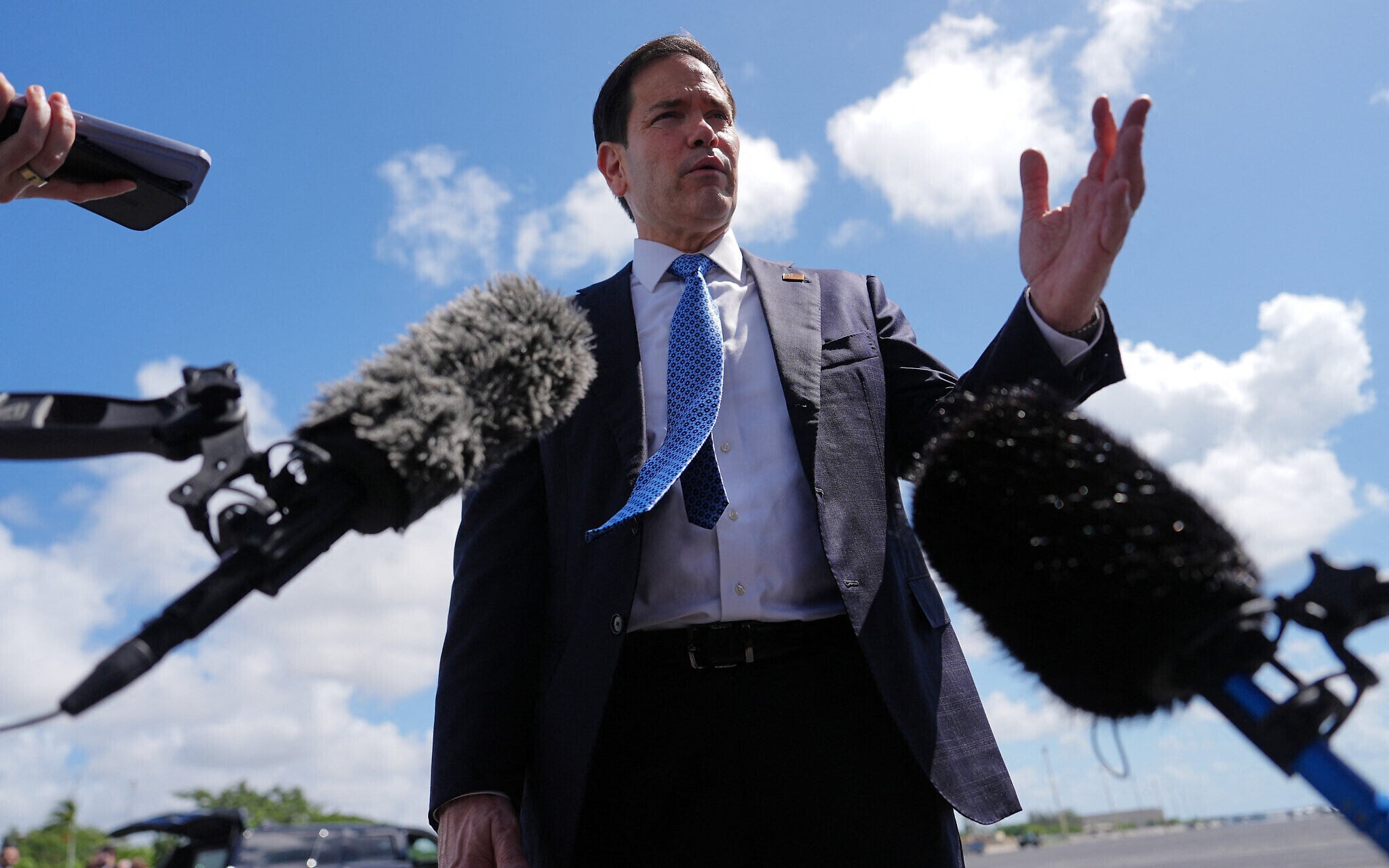
US Secretary of State Marco Rubio speaks to the press before boarding his plane at Homestead Air Reserve Base on May 21, 2026 in Homestead, Florida. (Julia Demaree Nikhinson / Pool via AFP)
US Secretary of State Marco Rubio says that a deal to end the war with Iran could materialize “today,” adding that Israel had the right to defend itself against attack.
“We thought we might have some news last night, maybe today, I wouldn’t read too much into it,” Rubio says in New Delhi, referring to the potential agreement.
“We have what I think is a pretty solid thing on the table in terms of their ability to open up the straits, get the straits open,” he tells reporters as he departs the Indian capital, where he has been on an official visit.
“It has a lot of support in the Gulf… every country that we’ve walked through it [with] understands it’s not just very reasonable, but it’s the right thing for the world to get done.”
Rubio also voices confidence that Iran will “enter into a very real, significant, time-limited negotiation on the nuclear matter.”
Rubio’s remarks came after US President Donald Trump tempered expectations of a deal, saying yesterday he had told his negotiators not to “rush.”
“He’s not in a hurry, he’s not going to make a bad deal, and the president’s not going to make a bad agreement,” Rubio says of Trump.
Rubio tells reporters that “Israel always has a right to protect itself.”
“If Hezbollah is going to launch missiles or launches missiles at them, Israel has every right to respond to that, or to prevent that from happening,” he says. “That’s always been understood. It’s being understood during the ceasefire.”
Iran executes man on charges related to anti-government protests in January
Iran executed a man over charges related to the anti-government protests that took place nationwide in January, state media reports.
The individual was identified as Abbas Akbari, according to state media.
Muslims begin the annual Hajj pilgrimage in sweltering heat
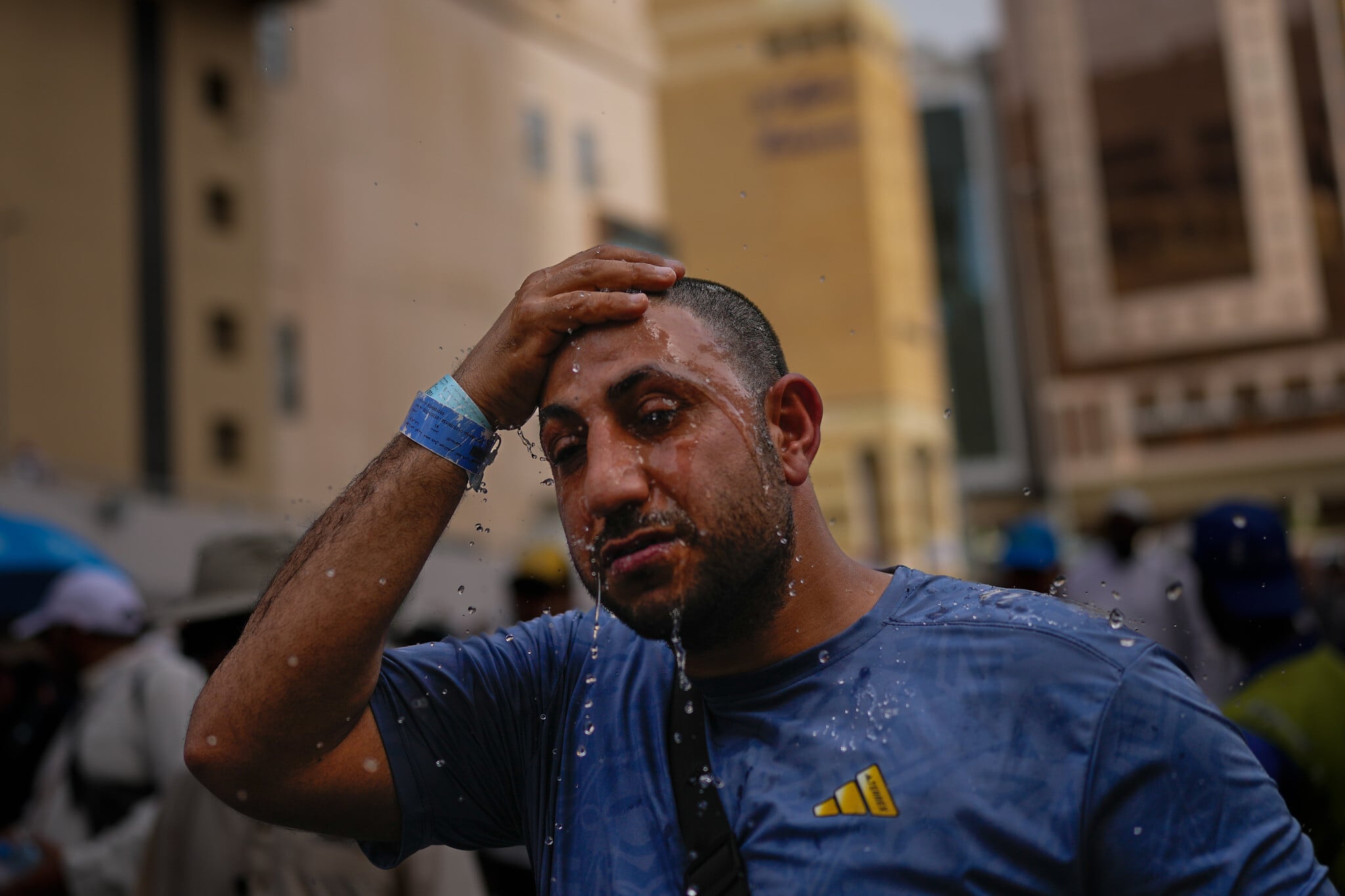
A Muslim pilgrim splashes water over his head too cool down outside the Grand Mosque during the annual hajj pilgrimage at the holy city of Mecca, Saudi Arabia, May 24, 2026. (AP Photo/Altaf Qadri)
The annual Hajj pilgrimage, one of the Five Pillars of Islam, officially begins.
More than 1.5 million pilgrims have arrived in Saudi Arabia from outside the country, Saleh bin Saad Al-Murabba, commander of the Hajj passport forces, said last week. The faithful have been pouring into the country for the Hajj against the backdrop of a tenuous ceasefire in the Iran war and related regional tensions and uncertainty.
Typically on the first day, many pilgrims in Mecca converge on a vast tent camp in the nearby desert. Ahead of that, pilgrims have been circling the cube-shaped Kaaba in the Grand Mosque in sweltering temperatures. For pilgrims, Hajj can be a deeply moving spiritual experience and a chance to seek God’s forgiveness and the erasure of past sins. Pilgrims perform the Hajj rituals over several days.
Some spend many years hoping and praying to one day perform the Hajj or saving up money and waiting for a permit to embark on the trip.
As they brave the intense heat to perform religious rituals, many pilgrims have been using umbrellas for shade and carrying handheld fans. Volunteers hand out water bottles to help them stay hydrated and large fans spray fine mists of water.
Hajj brings together large numbers of Muslims of diverse races, ethnicities, languages and economic classes, creating a sense of unity for many.
Australia’s spy chief says antisemitism was left unchecked after Oct. 7, became normalized
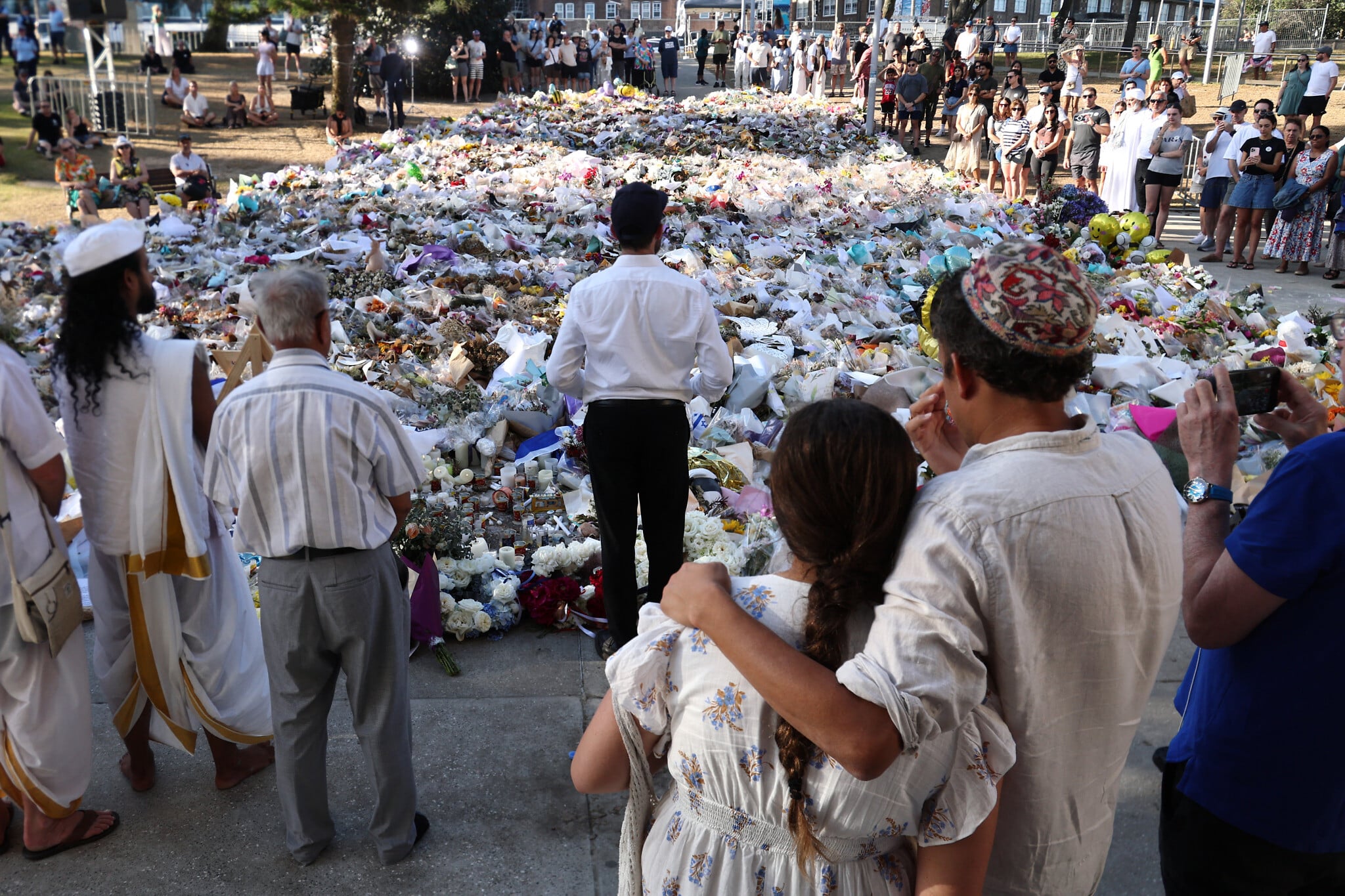
A rabbi (center) delivers a sermon as mourners gather in front of tributes laid in memory of victims of a terror attack on a Hanukkah celebration at Bondi Beach, in Sydney, on December 20, 2025. (David Gray/AFP)
Antisemitism in Australia was left unchecked after the Hamas-led attack on October 7, 2023, that sparked the war in Gaza, fueling violence against Jewish people, the country’s spy chief tells an inquiry into the Bondi Beach terror attack.
The comments come during public hearings in the wide-ranging inquiry known as a Royal Commission that focus on the events leading up to last December’s Bondi attack, in which 15 people were killed in an attack targeting the Jewish community at a Hanukkah celebration.
The spike in antisemitic incidents contributed to the agency’s decision to raise the national terrorism threat level to “probable” in August 2024, says Mike Burgess of the Australian Security Intelligence Organisation.
“There is no doubt that the war in the Middle East invoked a range of emotions in Australia,” adds Burgess, the agency’s director-general of security.
“Some of those violent aspects … and those behaviors, including antisemitism that, in our view, were left unchecked, were therefore normalized and gave more permission for violence … and Jewish Australians were on the receiving end.”
From late 2024, Burgess says, antisemitism also escalated in severity from “threatening, intimidating behavior to direct targeting of people, businesses and places of worship.”
Such incidents included vandalism and arson attacks on homes, schools, synagogues and vehicles in the months before the Bondi attack.
Burgess says the agency concluded that Iran’s elite Islamic Revolutionary Guard Corps was behind two antisemitic attacks on a kosher restaurant in Sydney and Melbourne’s Adass Israel Synagogue.
That finding led to the expulsion of Iran’s ambassador in August.
Iran was probably involved in more attacks, but ASIO “just can’t quite get there” in its assessments to pinpoint responsibility, he adds.
“They use their network of proxies and agents to do their bidding, and that is to bring harm to Jewish people wherever they are in the world.”
The commission’s first block of hearings this month focused on the nature and prevalence of antisemitism, taking testimony from members of the Jewish community.
Ra’am reportedly says it’s willing to join efforts to revive Joint List ahead of elections
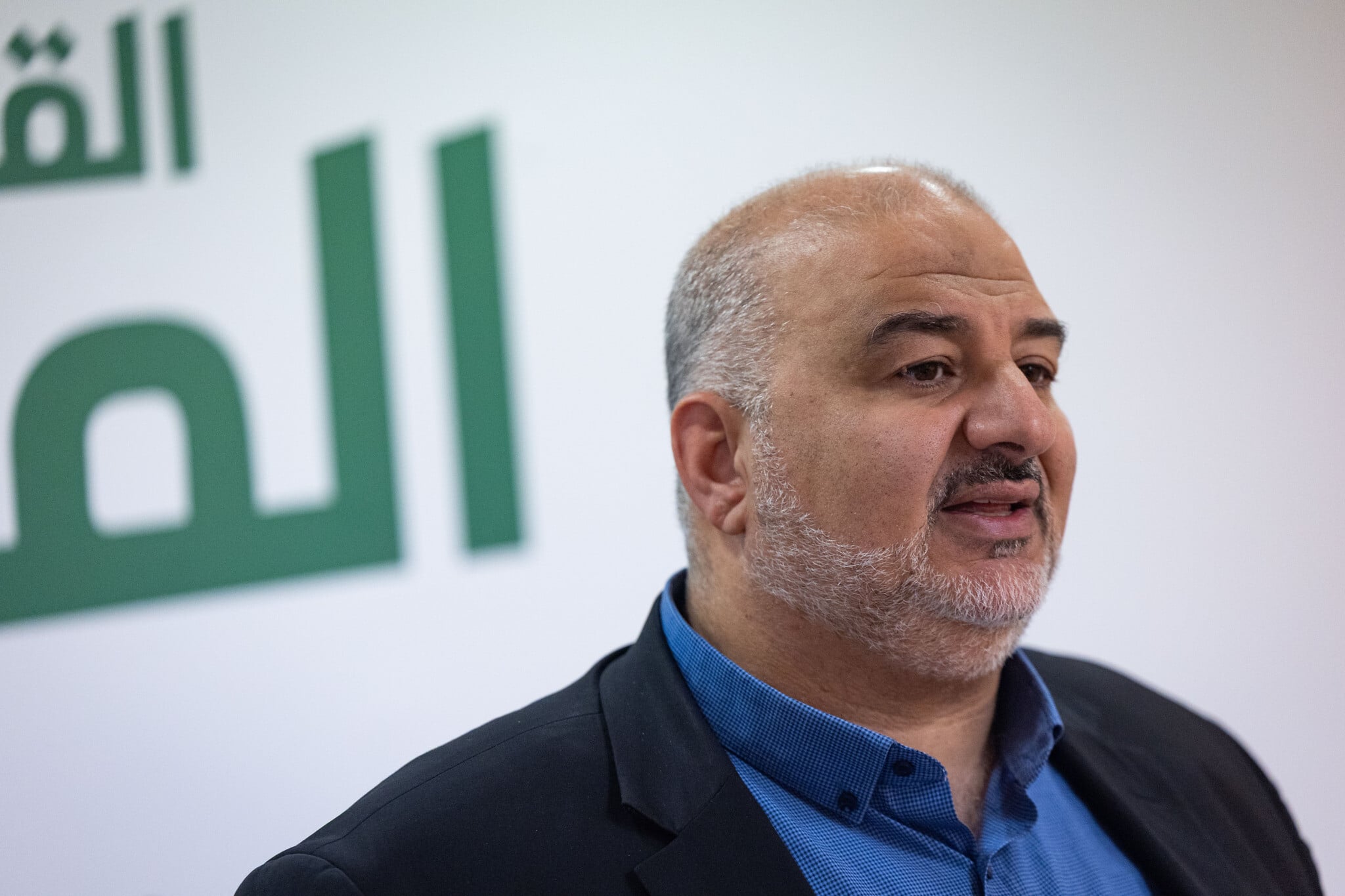
Ra'am party head MK Mansour Abbas leads a faction meeting, at the Knesset on May 11, 2026. (Yonatan Sindel/ Flash90)
The Islamist Ra’am party reportedly says that it is willing to join a technical joint electoral list ahead of the upcoming elections alongside Arab-majority political parties Hadash, Ta’al and Balad.
However, according to Haaretz, Ra’am has emphasized that it must be permitted to maintain its independence.
“A joint-technical list means that each party maintains its platform, freedom and dialogue with its voters without any constraint. Any clause that imposes binding conditions on each of the parties harms the technical nature of the list and turns it into something completely different,” Ra’am says, according to the newspaper.
The party says a technical list “would be the ideal solution that fulfills the aspirations of our voters and preserves the integrity of the parties.”
The statement came after the other three parties called on Ra’am yesterday to join them due to recognition of the “existential dangers” Arab parties are facing. The parties said they wanted to include Ra’am in an agreement forming a new Joint List “to strengthen Arab representation and overthrow the extremist right-wing government.”
Despite uniting sharply dissonant ideological views, the Joint List alliance has a track record of energizing Arab voters and bringing the community unprecedented political influence. At its peak in 2020, it won 15 seats out of 120 in the Knesset, making it the third largest party.
Yesterday, Channel 13 reported that Prime Minister Benjamin Netanyahu’s allies are seeking to outlaw Ra’am as a terror group ahead of the elections. In a post on X, Abbas called the reported plan “anti-democratic” and said his party would answer at the ballot box.
The move would require legislation in the Knesset, as well as opinions from the relevant security agencies, headed by the Shin Bet, Channel 13 says. It is unclear if there would be time to complete those processes before the country goes to the polls by October 27 at the latest.
Sirens in north warn of suspected drone attack from Lebanon
Sirens sound in the northern community of Arab al-Aramshe, warning of a suspected drone infiltration from Lebanon.
The IDF says the details are under review.
IDF says suspected drone attack concluded; no injuries reported
Following the sirens that sounded a short while ago in the northern community of Arab al-Aramshe, warning of a suspected drone infiltration, the IDF says a “suspicious aerial target” was identified but that contact with it was later lost.
The statement implies that the military was no longer able to track the apparent drone on its surveillance systems, possibly after it left the monitored area, or that it fell.
The incident has since concluded, the military says, as an immediate threat is no longer detected. No injuries were reported.
IDF issues evacuation warnings for 10 villages in Lebanon ahead of strikes targeting Hezbollah
The IDF issues evacuation warnings for ten villages and towns in southern Lebanon ahead of airstrikes targeting the Hezbollah terror group.
Residents of Nabatiyeh at-Tahta, Al-Lwaiza, Sajd, Ain Qana, Harouf, Zibdin, Kfar Reman, Doueir, Adshit Al-Shaqif and Meidoun are instructed to evacuate at least a kilometer away.
“In light of the Hezbollah terror organization’s violations of the ceasefire agreement, the IDF is forced to act against it with force and does not intend to harm you,” warns army spokesman Col. Avichay Adraee.
Knesset committee postpones vote on controversial West Bank and Gaza antiquities bill
The Knesset Education, Culture and Sports Committee cancels a meeting set for this morning that was supposed to finish preparing a controversial bill on West Bank and Gaza antiquities for its final votes in the plenum.
The proposal has been described by many as an unprecedented step towards annexation.
A new meeting to continue the discussion on the bill is set for tomorrow. A spokesperson for the committee tells The Times of Israel that it will not include a committee vote on the bill, which is necessary to advance it to the plenum, since the draft requires further examination. A new date for a vote will be set at a later stage.
If passed into law, the bill would establish a “Judea, Samaria, and Gaza Heritage Authority” under the Heritage Ministry, extending Israel’s direct civilian responsibility for archaeology and heritage in the areas covered by the law, marking an unprecedented departure from how Israel currently runs affairs there.
The bill has been criticized by the committee’s legal advisor, the Israel Defense Forces and many in Israeli academia.
Body found at Ashdod beach after 3 days of searches for man missing since he entered water
Police say that a body has been found on the beach in Ashdod after three days of searching for a missing man.
Search operations were carried out by police officers, volunteers, marine police and rescue units.
According to reports, the East Jerusalem resident came to the beach, which has no lifeguards, with two friends.
After one left, two of the men began to have difficulties in the water. One managed to get out, but the third man has not been seen since.
Commission hears Bondi Hanukkah event given lowest security priority, only 4 cops on site
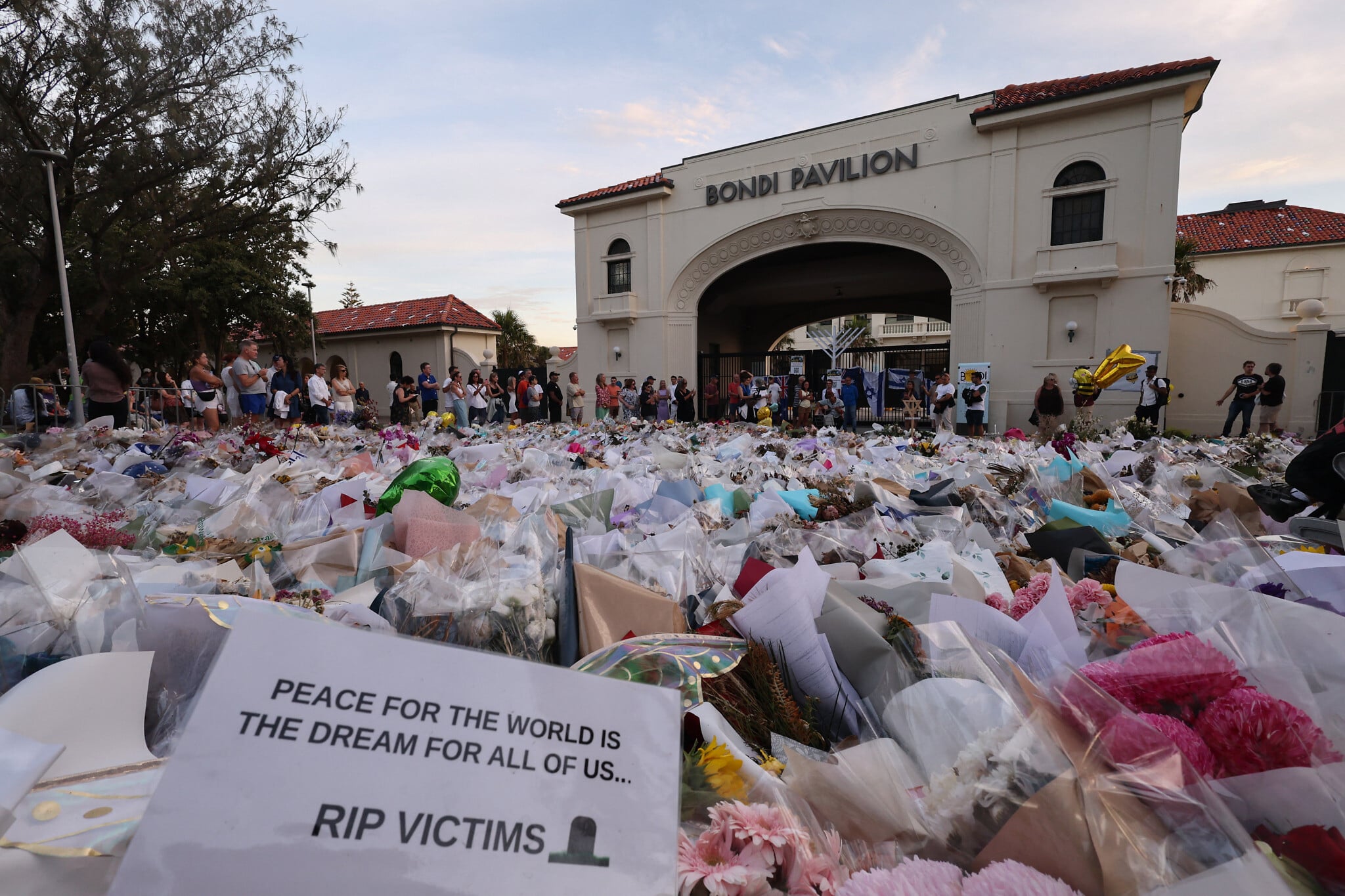
A note is pictured next to floral tributes laid at Bondi Pavilion in memory of the victims of a terror massacre targeting a Hanukkah event days earlier, at Bondi Beach, in Sydney, Australia, on December 20, 2025. (DAVID GRAY / AFP)
A senior lawyer tells the Royal Commission on Antisemitism and Social Cohesion that only four police officers were at the Hanukkah event at Bondi Beach in December when two terrorists opened fire on a crowd of around 1,000 people.
The comments come during public hearings in the wide-ranging inquiry known as a Royal Commission that focus on the events leading up to last December’s Bondi attack, in which 15 people were killed when gunmen targeted the Jewish community at a Hanukkah celebration.
Within 29 seconds of the start of the shooting, 10 people had been fatally shot and an 11th had been wounded, says Richard Lancaster, Senior Counsel Assisting the Royal Commission.
Within five minutes, 11 police officers were at the scene. Three of those officers were wounded, he says.
A Jewish security organization, the Community Security Group, had requested the New South Wales Police Force post officers at the beachfront park for the duration of the Hanukkah event, Lancaster says.
Instead, officers were instructed to attend from time to time.
Police gave the Hanukkah celebration the lowest security priority on a three-tier scale, with police resources managed by a local commander, Lancaster says.
Jewish High Holy Days in September and October were top-tier events in which police resources were managed by the specialized Police Force Major Events Group in liaison with the paramilitary Police Force Counter Terrorism and Special Tactics Command.
“There is no evidence that any intelligence agency or law enforcement agency had any actual knowledge or specific information to suggest there might be an armed attack on the Hanukkah celebration,” Lancaster says.
“In that sense, it was a surprise attack,” he adds.
Herzog’s effort to broker plea bargain in Netanyahu trial ‘frozen’ due to PM’s failure to respond – report
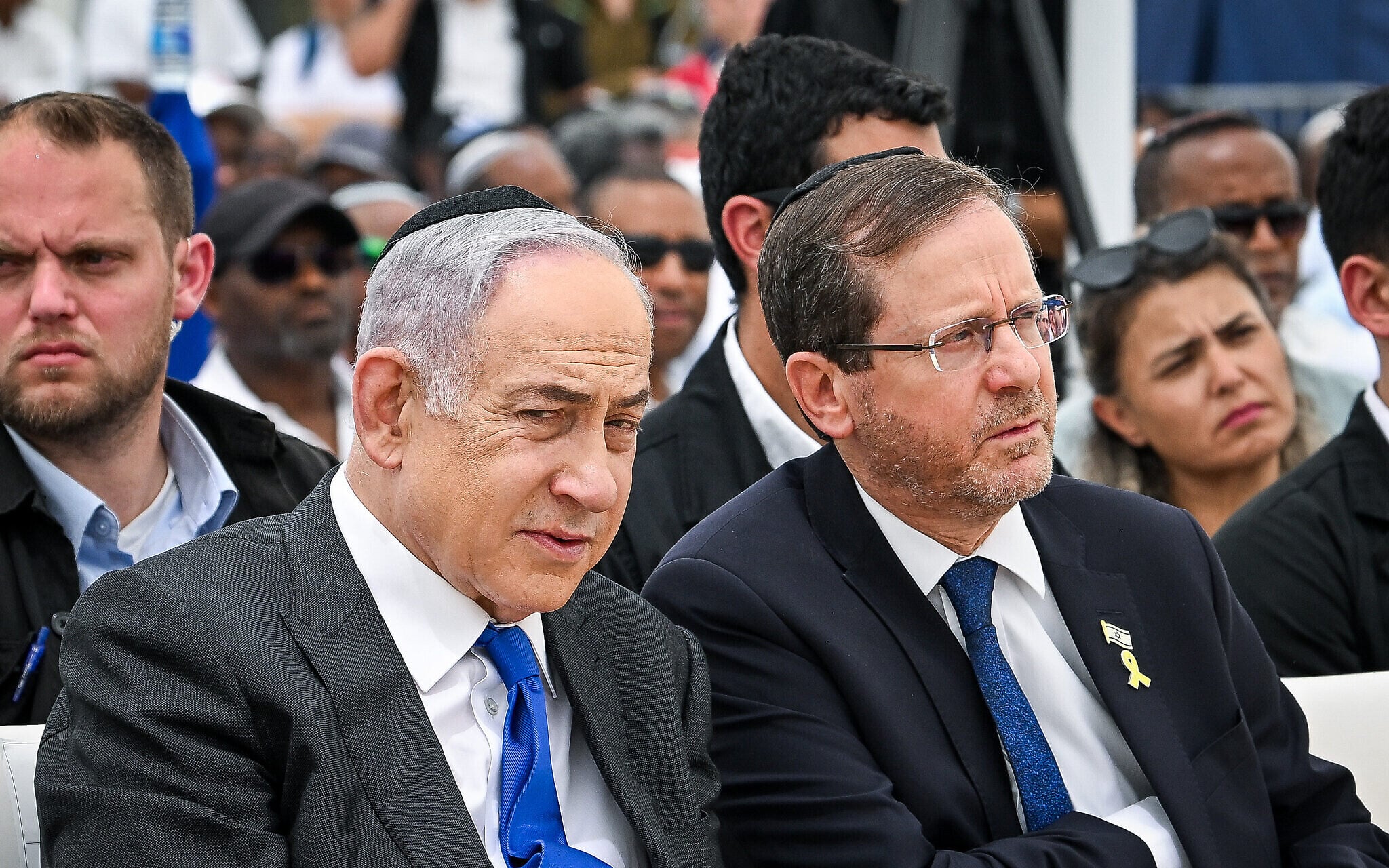
Prime Minister Benjamin Netanyahu, left, and President Isaac Herzog attend a memorial ceremony for Ethiopians who died on their journey to Israel, at Mount Herzl, on June 5, 2024 (Arie Leib Abrams/Flash90)
President Isaac Herzog’s efforts to broker a plea bargain between Prime Minister Benjamin Netanyahu and the attorney general have reportedly foundered due to the premier’s failure to respond to the initiative.
Kan News reports that Herzog has “frozen” his efforts to arrive at a deal, after proposing negotiations in April.
Last month, Herzog said he was initiating a negotiation process in which he would serve as a mediator between the prosecution and Netanyahu’s attorneys to reach a deal over the corruption charges Netanyahu is on trial for. The president said this was the appropriate path to take before considering Netanyahu’s pardon request.
Although Attorney General Gali Baharav-Miara agreed to begin negotiations, Netanyahu failed to respond to the proposal, meaning that Herzog has not been able to advance the initiative.
The president’s office says in response that the report is “incorrect,” without elaborating. But Herzog acknowledged that Netanyahu had not responded to his proposal when he called on the prime minister to “come into the room” during a conference two weeks ago.
Herzog’s offer to broker a plea deal may not be relevant for much longer, since Netanyahu is expected to finish testifying in court in the coming weeks. Netanyahu’s pardon request is based on the claim that it is in the public good that the prime minister not be burdened with spending entire days testifying in court, but if he no longer needs to attend court hearings, the pardon request would become moot, as would Herzog’s mediation offer.
Pakistan’s key US-Iran negotiator in Beijing with Sharif for talks with Chinese leaders
Islamabad’s key negotiator between the United States and Iran, army chief Asim Munir, is in Beijing alongside the country’s Prime Minister Shehbaz Sharif for talks with Chinese leaders, Pakistan television shows.
Munir was in Tehran on Friday and Saturday alongside Pakistan’s Interior Minister Mohsin Naqvi as part of ongoing mediation efforts to formally end the Iran war.
China has said it would work with Pakistan to “make positive contributions to the early restoration of peace and stability in the Middle East.”
Home Front confirms preparations to activate early warnings for rocket attacks from Lebanon
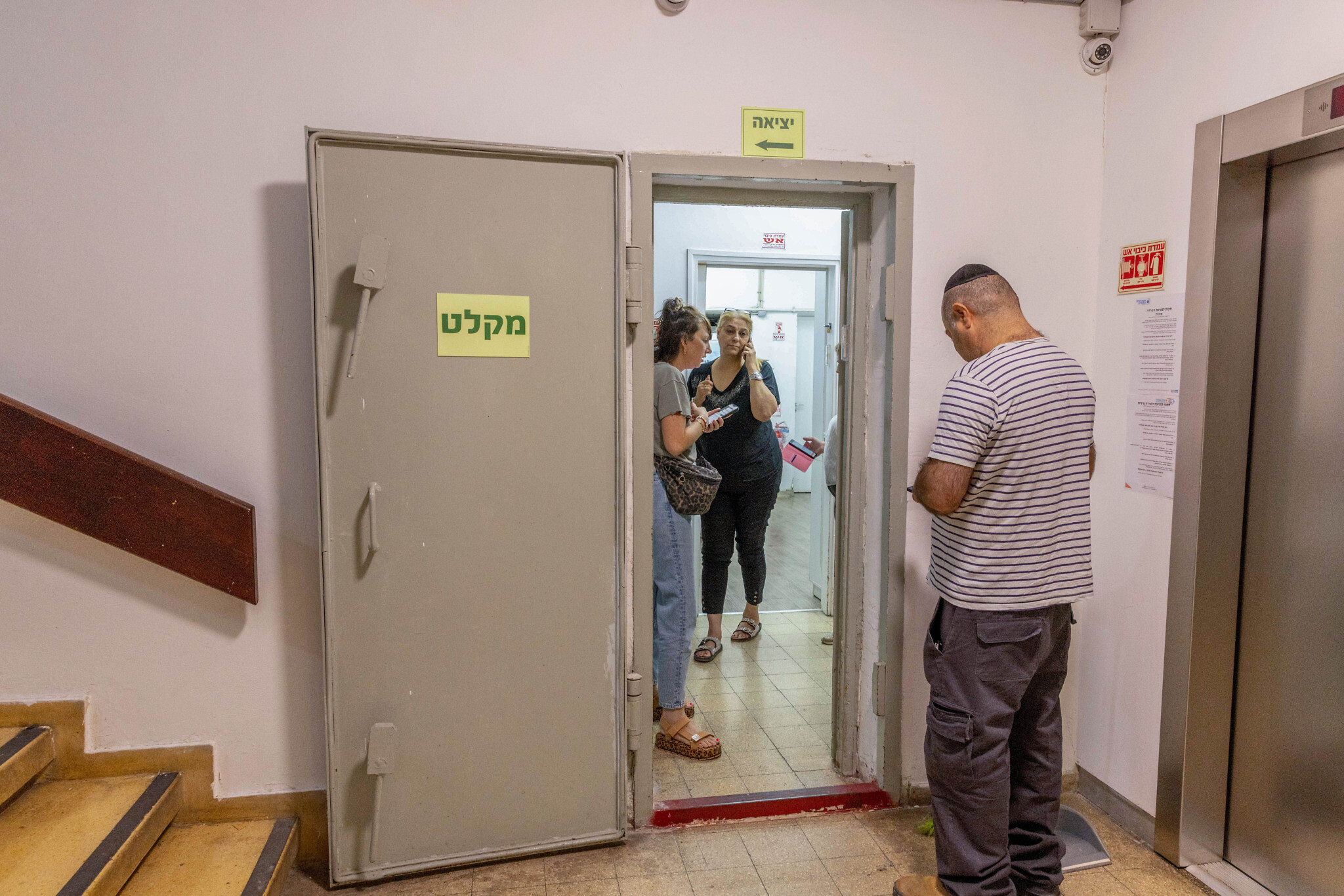
Israelis take cover inside a bomb shelter as a rocket alert siren blares in Tel Aviv, October 1, 2024. (Yossi Aloni/Flash90)
The Home Front Command confirms reports that it is preparing to begin issuing advance alerts ahead of incoming rocket fire from Hezbollah in Lebanon.
In a statement, the military says the Home Front Command has recently been working to implement the broadcast of early warnings for rocket launches from Lebanon “in order to provide the public with additional preparation time wherever possible,” adding that the move is intended “to save lives.”
“Once the process is completed, the public will be updated through the official platforms of the Home Front Command and the IDF Spokesperson’s Unit,” the statement reads.
Channel 12 reported yesterday that the new warning system is expected to go into effect in the coming days and will provide civilians with additional time to prepare before sirens sound, ranging from a few extra seconds in northern border communities to as much as two minutes in more distant areas of the country.
The report said the early warning system will apply only to rocket fire and not drone attacks.
Ghalibaf, Iran’s top negotiator in US talks, reelected as parliament speaker – report
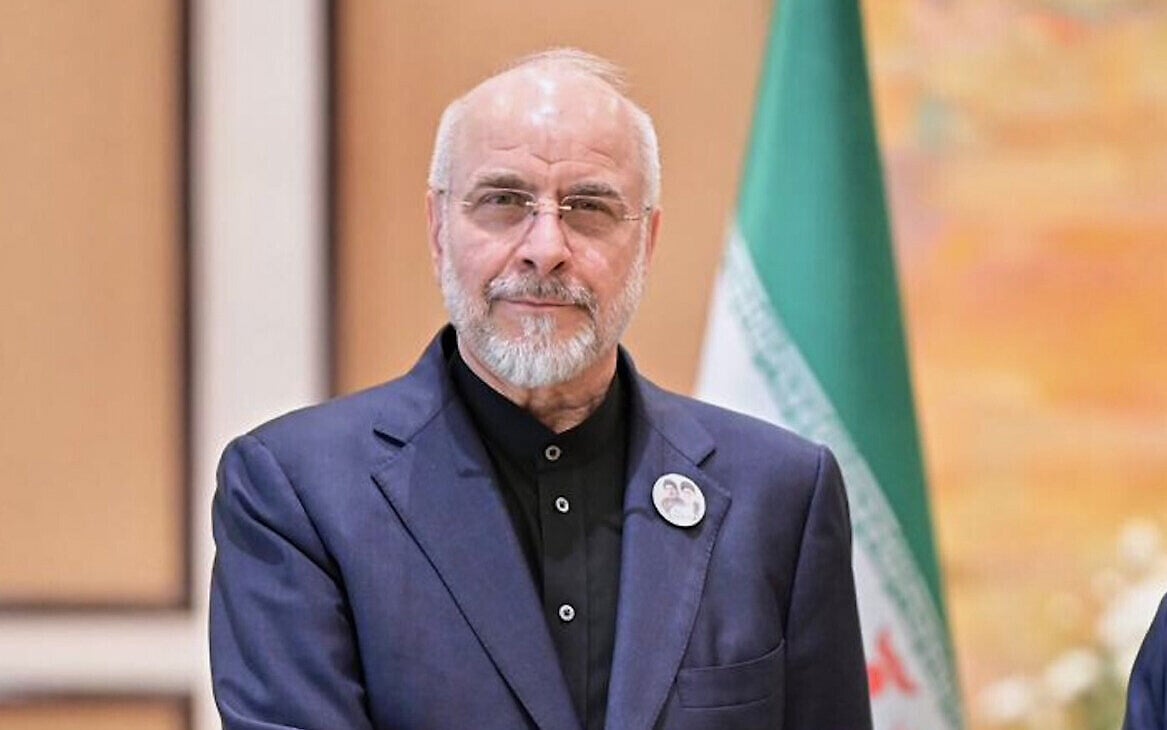
Iran's Parliament Speaker Mohammad Bagher Ghalibaf, in Islamabad, Pakistan, on April 11, 2026. (Pakistan Prime Minister Office via AP)
Iran’s top negotiator in talks with the United States, Mohammad Bagher Ghalibaf, has been reelected as the country’s parliamentary speaker, semi-official Fars news agency reports.
Netanyahu in court to testify as his corruption trial passes 6-year mark
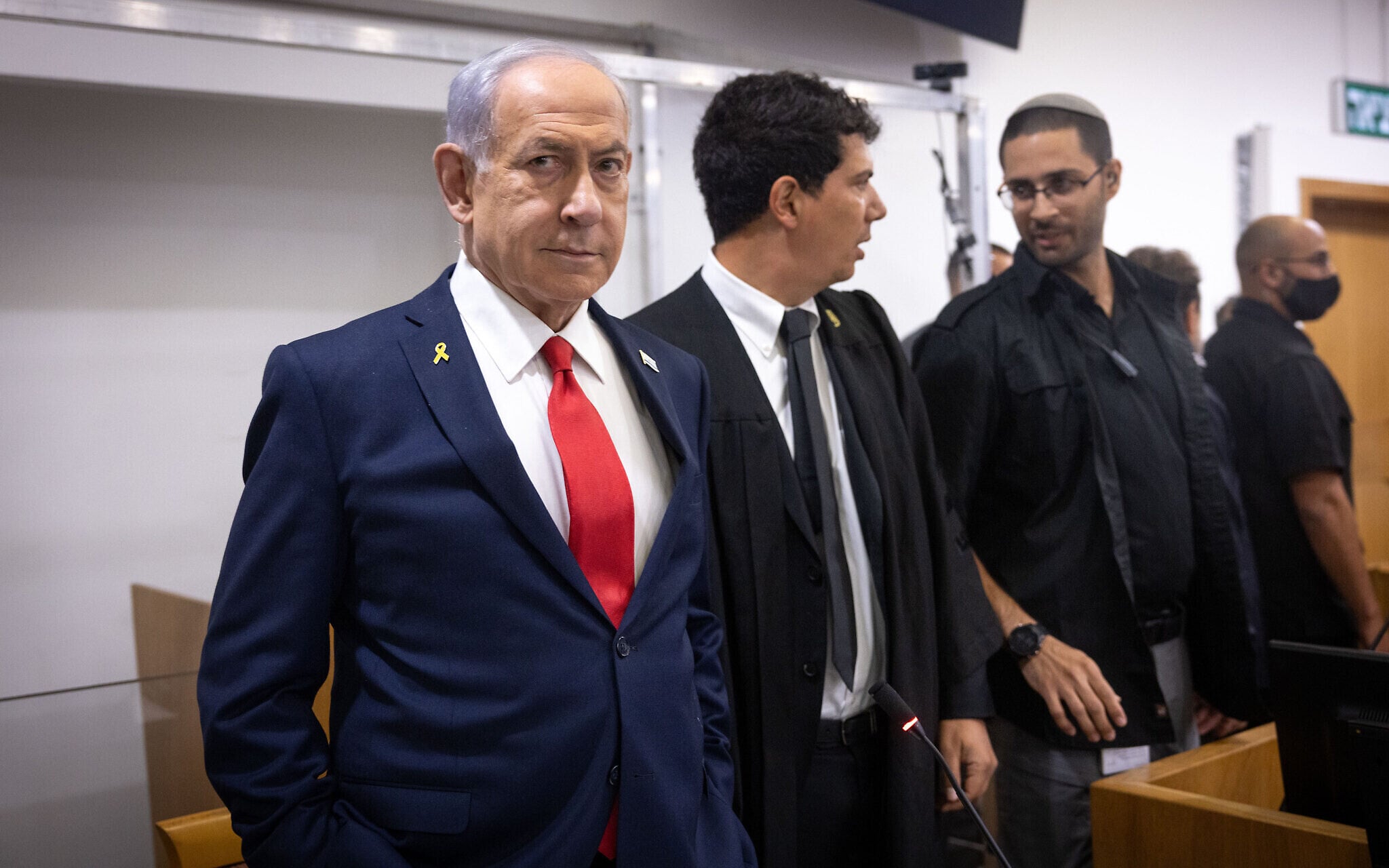
Prime Minister Benjamin Netanyahu arrives at the courtroom at the District Court in Tel Aviv, before the start of his testimony in the trial against him, October 28, 2025. (Miriam Alster/ Flash90/ File)
Prime Minister Benjamin Netanyahu once again takes the stand in his criminal trial on corruption charges, six years after the trial began on May 24, 2020.
Netanyahu’s testimony, which began on December 10, 2024, and which has been beset by numerous delays, is set to conclude in the next two weeks, with prosecutor Yonatan Tadmor telling the judges that the prime minister’s testimony could be completed with four to five full days of testimony. The premier frequently requests that hearings be cancelled or cut short.
Netanyahu is being cross examined today on Case 2000, in which he is charged with fraud and breach of trust over allegations he planned an arrangement with Yediot Aharonot publisher Arnon (Noni) Mozes where he would receive more favorable media coverage from the publication and Netanyahu would in return advance legislation to weaken Yediot’s rival, Israel Hayom.
Iran will only discuss nuclear program when sanctions lifted, senior diplomat says
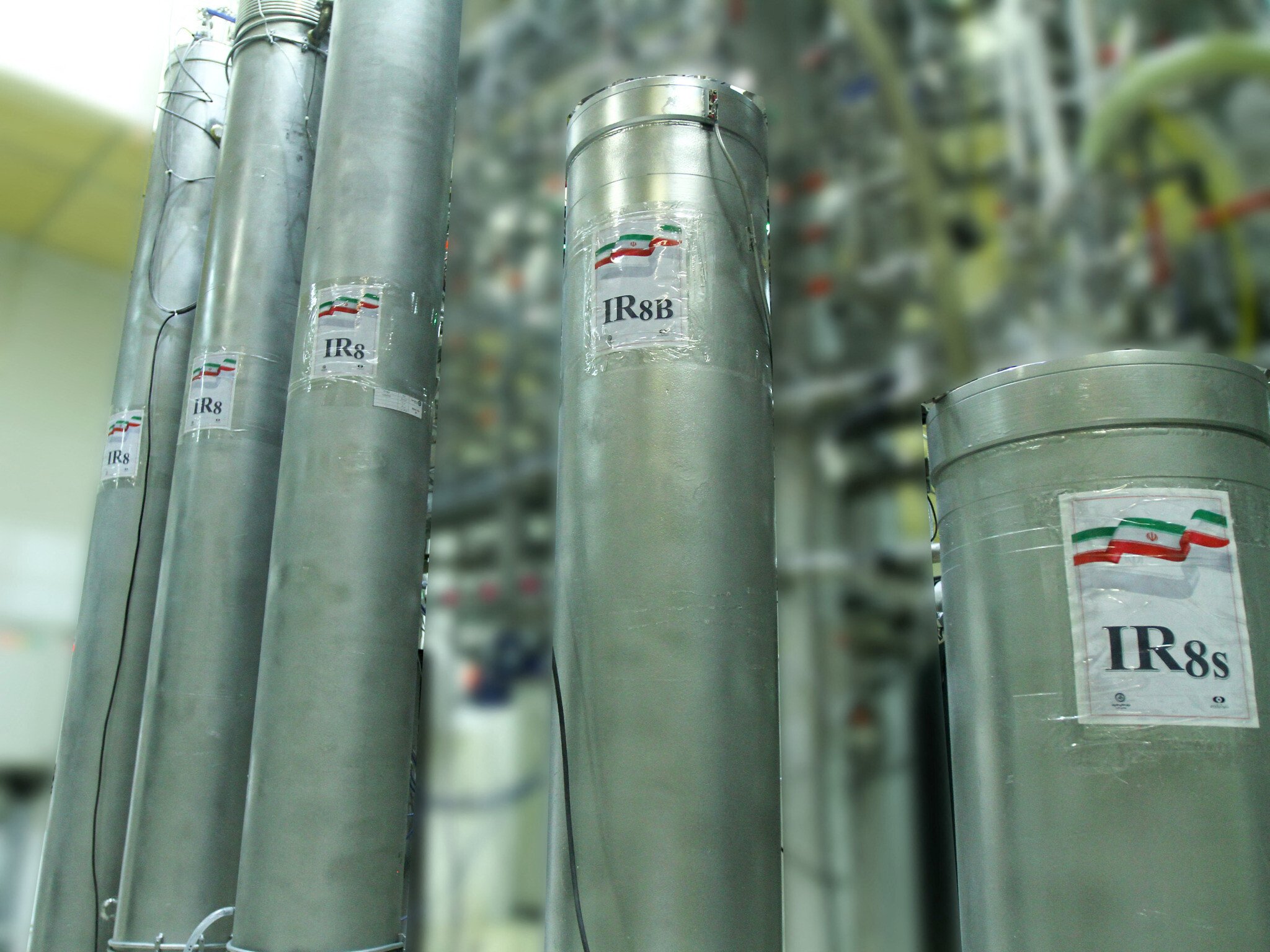
A handout picture released by Iran's Atomic Energy Organization on November 4, 2019, shows the atomic enrichment facilities Natanz nuclear research center, some 300 kilometers south of capital Tehran. (HO / Atomic Energy Organization of Iran / AFP)
Iran will discuss its nuclear program and its highly enriched uranium with the US if Washington fulfills its commitments in a potential memorandum of understanding being negotiated, a senior Iranian diplomat tells ISNA news agency.
These issues would be discussed in 60-day negotiations in exchange for the lifting of sanctions and release of Iranian foreign assets, Hossein Nooshabadi says, according to the agency.
Iran says understandings reached on many issues with US, but deal not imminent
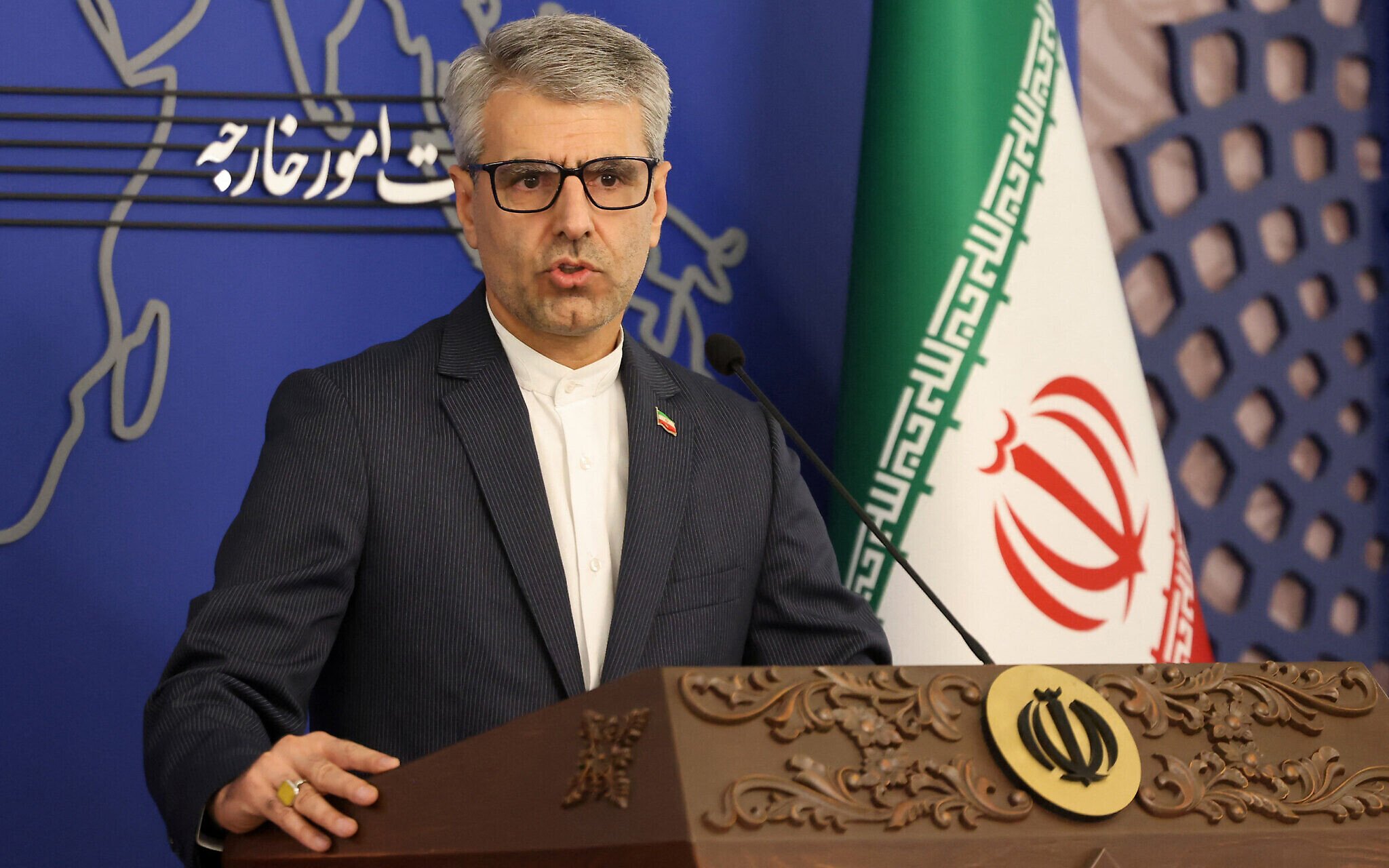
Iran's foreign ministry spokesman Esmaeil Baghaei holds a weekly press conference in Tehran on October 28, 2024. (ATTA KENARE / AFP)
Iran says that Tehran and Washington had reached understandings on many issues in exchanges over a potential deal for ending the war, but warns an agreement is not imminent.
“It is correct to say that we have reached a conclusion on a large portion of the issues under discussion,” foreign ministry spokesman Esmaeil Baghaei says, during a weekly news briefing.
“But to say that this means the signing of an agreement is imminent — no one can make such a claim,” he says, accusing Washington of shifting its positions.
Earlier, US Secretary of State Marco Rubio said that a deal to end the war with Iran could materialize “today.”
IDF drone makes emergency landing in central Israel
An IDF drone made an emergency landing in an open area in central Israel earlier today due to a technical malfunction, the military says.
According to the IDF, the unmanned aerial vehicle (UAV) was recovered by troops following the incident.
The military says there were no injuries.
Earlier this month, another military drone made an emergency landing in the West Bank, also due to a technical malfunction.
Tel Aviv Stock Exchange shares climb, shekel gains amid investor optimism for US-Iran deal
Shares on the Tel Aviv Stock Exchange climb and the shekel gains amid investor optimism that the US and Iran could be close to a deal for a 60-day ceasefire extension, during which the Strait of Hormuz would be reopened.
The Tel Aviv Stock Exchange’s benchmark TA-125 index increases 2.3 percent in morning trading. The benchmark index is up more than 18% since the start of the year.
The TA-35 index of blue-chip companies jumps 1.9%. The TA-Insurance Index advances 3.2% and the TA-Real Estate Index soars 4.4%. The TA-Construction Index gains 5.6%. The shekel appreciates 0.2% and is trading around NIS 2.88 against the dollar.
Sirens in north warn of suspected drone attack from Lebanon
Sirens sound in northern Israel, warning of a suspected drone infiltration from Lebanon.
The IDF says details are under review.
Man shot and killed in Nazareth; 3 injured, one seriously, in Kafr Yasif shooting
A man in his 50s was shot and killed in Nazareth this morning, first responders say.
Paramedics called to the scene found the victim without any signs of life and pronounced him dead on the spot, the Magen David Adom emergency service says.
Meanwhile, three people have been injured in an apparently separate shooting in Kafr Yasif, an Arab village in the western Galilee.
Paramedics took the wounded to the hospital, including one man with serious injuries and two others with moderate injuries.
Police have launched investigations into both shootings. No arrests have yet been reported.
The two shootings are the latest instances of violent crime to rock Arab society, which has seen 113 members of the community killed violently since the start of the year, according to data from the Abraham Initiatives organization.
Ahead of fresh talks, Lebanon president says withdrawal of Israeli troops ‘non-negotiable’
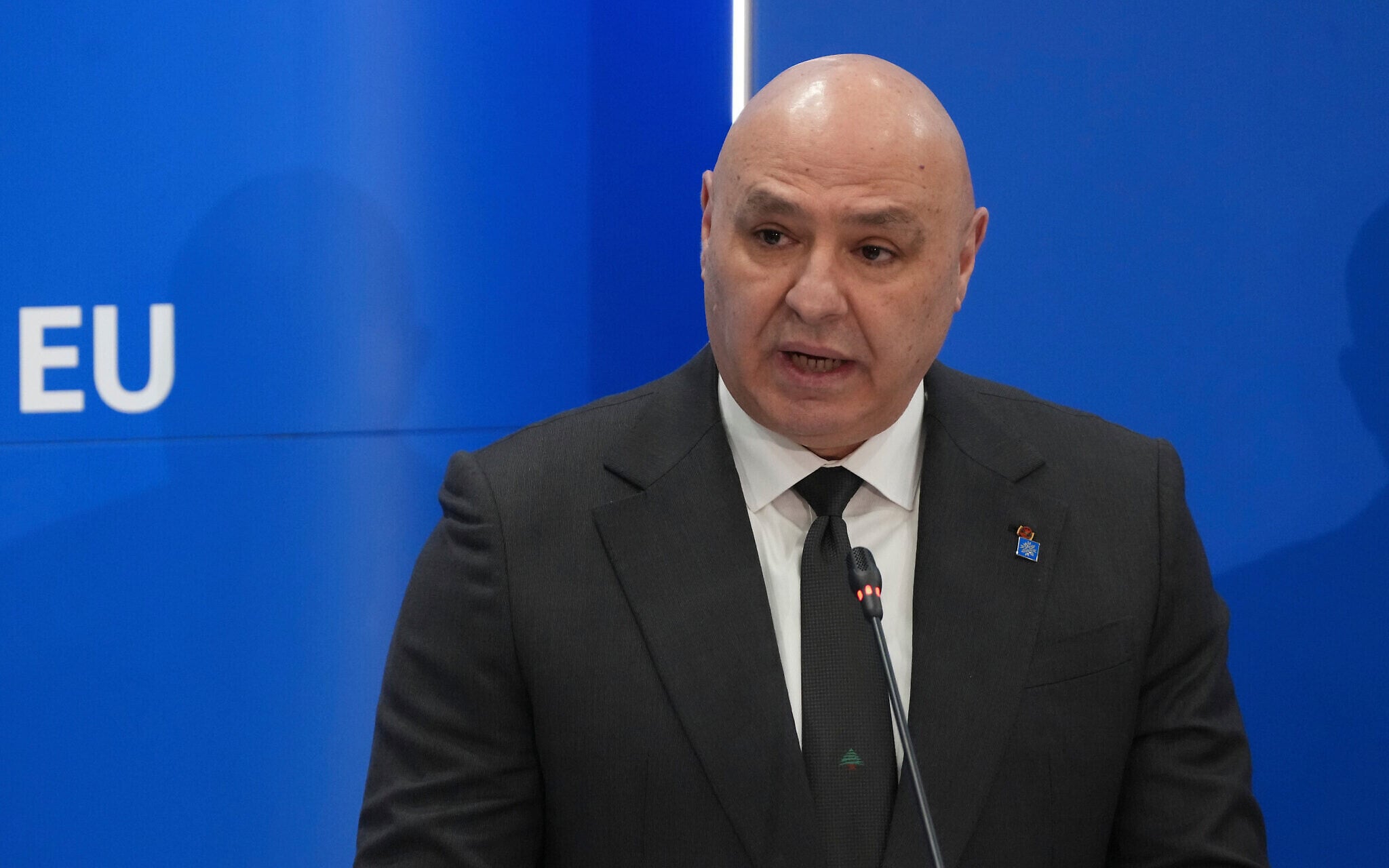
Lebanon's President Joseph Aoun speaks during a press conference after the EU Summit in Nicosia, Cyprus, April 24, 2026. (AP/Petros Karadjias)
Lebanese President Joseph Aoun says Israel’s withdrawal from the country’s south is a “non-negotiable” demand that authorities will pursue through negotiations, days ahead of a new round of talks in Washington.
In a statement commemorating Israel’s previous withdrawal from south Lebanon in 2000, Aoun says that “this year, the anniversary of the liberation comes as Lebanon is weighed down by a painful reality.”
“Israeli attacks have not stopped and our dear southern villages are still suffering under a renewed occupation,” he says.
“Lebanon will not accept this reality,” Aoun says.
“The path to a full Israeli withdrawal will remain an uncompromised, constant national demand that the Lebanese state works to achieve through the option of negotiations,” he adds.
Israeli officials have said troops will remain in south Lebanon until the threat of Hezbollah is removed.
Lebanon and Israel began landmark US-brokered talks last month and are preparing for a fourth round in early June, preceded by a meeting between military delegations at the Pentagon on May 29.
Netanyahu’s testimony in corruption trial to end early again for ‘diplomatic and security reasons’
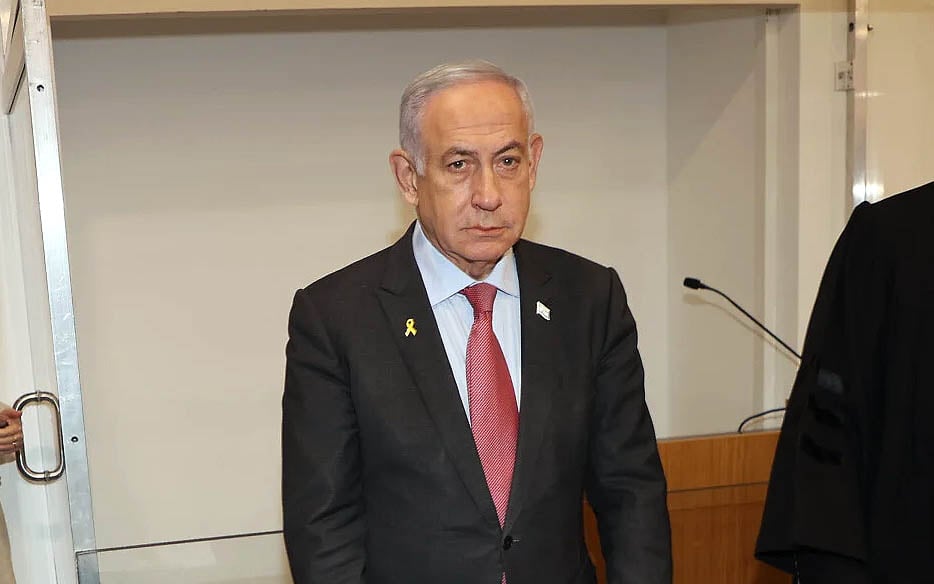
Prime Minister Benjamin Netanyahu arrives at the Tel Aviv District Court to testify in his criminal trial, January 27, 2025. (Yariv Katz/POOL)
Today’s hearing in Prime Minister Benjamin Netanyahu’s corruption trial will end early once again, due to “diplomatic and security reasons.”
The hearing, coming as the trial passes the six-year mark, will now end at 13:45 instead of 16:00.
Netanyahu’s testimony, which began on December 10, 2024, has been beset by numerous delays, with the premier frequently asking for hearings to be cancelled or cut short.
Netanyahu is being cross examined today on Case 2000, in which he is charged with fraud and breach of trust over allegations he planned an arrangement with Yediot Aharonot publisher Arnon (Noni) Mozes where he would receive more favorable media coverage from the publication and Netanyahu would in return advance legislation to weaken Yediot’s rival, Israel Hayom.
Work begins on new Sderot amphitheater amid efforts to rehabilitate Gaza border area

An architect's illustration of the new 5,000-seat amphitheater being built in the southern city of Sderot. (Sderot Municipality)
The Tekuma Directorate tasked with rehabilitating the Gaza border area in the wake of the deadly October 7, 2023 Hamas invasion, announces that work has begun on a new amphitheater at a cost of NIS 30 million ($10 million).
Built on a 20-dunam (five-acre) site, the venue, due to open in January, will host live performances, festivals, municipal ceremonies, and community events.
The amphitheater will seat 2,000 and has lawn space for an additional 3,000.
IDF says drone hit area where troops were operating in south Lebanon; no injuries
The Israel Defense Forces says a drone hit in an area where troops are operating in southern Lebanon.
The military says there were no injuries, and that the incident is under investigation.
The drone attack apparently triggered sirens in some northern border communities.
In ‘troubling’ move, Chief Rabbinate scraps July session of rabbinical tests that must be open to women
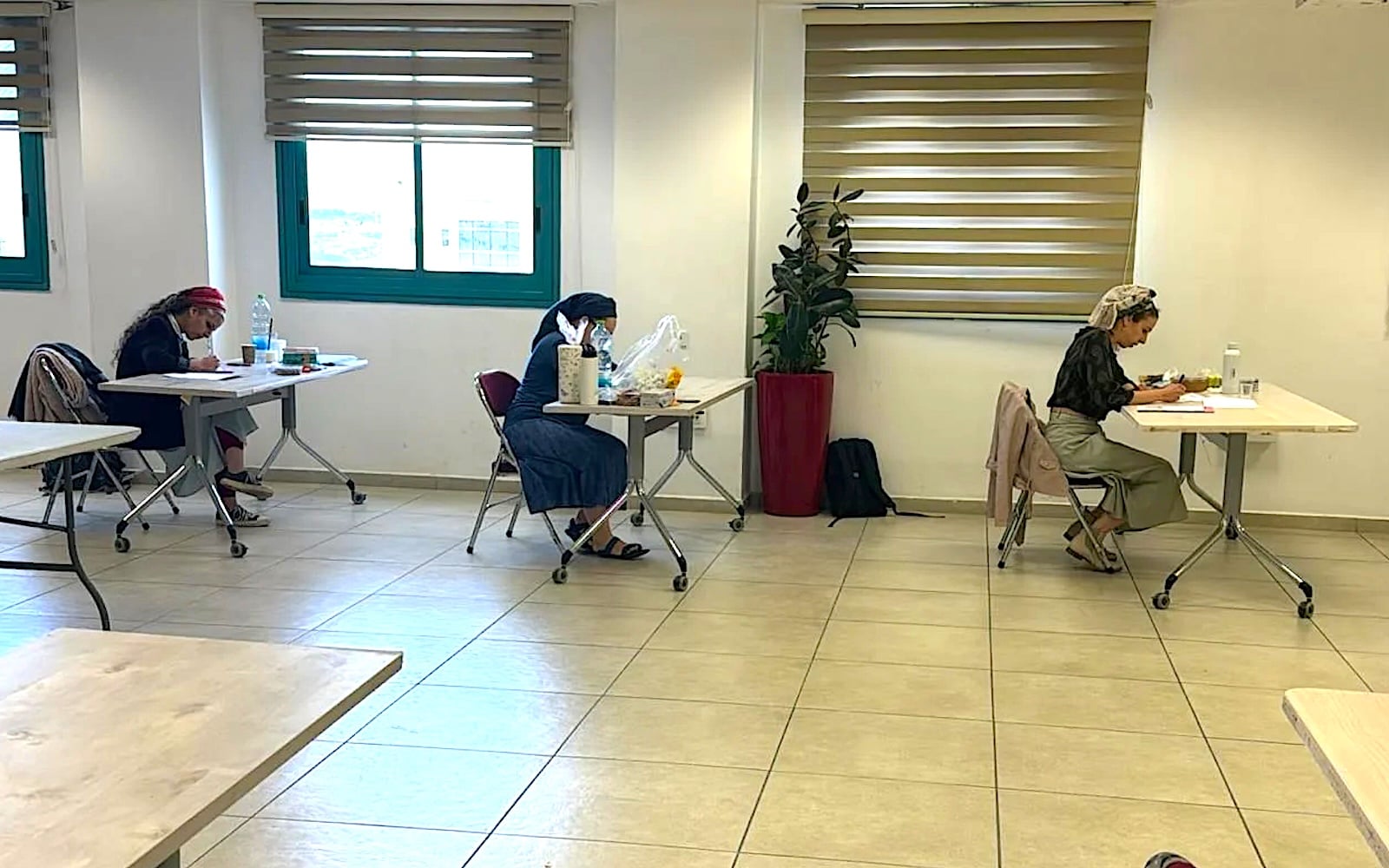
Female candidates take a rabbinical test administered by the Chief Rabbinate at the Religious Services Ministry in Jerusalem on April 27, 2026. (Chief Rabbinate)
The Chief Rabbinate will not offer the rabbinical tests that, according to a landmark 2025 High Court decision, must be open to women, in the upcoming July session, a spokesperson for the Rabbinate confirms to The Times of Israel. The rabbinate will still offer other types of tests.
The spokesperson says that the standard rabbinical exams that must be made available to women will be offered in the fall session, and registration is set to begin next week, but declines to give a reason for the scrapping of the July session.
With some major obstacles in the process, three women took a test offered by the Chief Rabbinate last month, marking the first time in Israel’s history. They have yet to receive the results.
The Chief Rabbinate administers rabbinical tests in the major areas of halacha (Jewish law), including kashrut, niddah (family purity laws), Shabbat, mourning, and marriage laws. Candidates who wish to be eligible to receive rabbinical ordination need to pass a certain number of those tests (six are enough to achieve the level of “neighborhood rabbi,” while the title of “city rabbi” entails 11 tests).
However, the Rabbinate also grants other types of certificates to those who pass the tests, with important economic and social implications. A certain number of tests can be considered equivalent to an academic degree for some public jobs or can guarantee a higher salary.
On this basis, the High Court ruled that women also need to be able to take the standard rabbinical tests to receive the benefits (not the rabbinical ordination itself).
The Rabbinate also administers tests for other positions, such as advanced tests in halacha to become a dayan (rabbinic judge), for kashrut supervisors, ritual butchers and more. Those tests are still going to be offered in July.
All tests are usually offered three times a year, in the spring, summer and fall.
According to Rabbi Seth Farber, director of the religious group ITIM, which is among those who petitioned the High Court on the subject starting in 2019, the Rabbinate’s decision not to offer the type of tests that must be made available to women in July “sends a deeply troubling message.”
“The Rabbinate should recognize that women’s Torah learning and leadership are an important part of the future of Israeli religious life,” he tells The Times of Israel. “Allowing women to take these exams will strengthen Torah and strengthen public trust in the religious establishment.”
Iran says charging fees for ‘navigational services’ through Hormuz, rather than imposing tolls
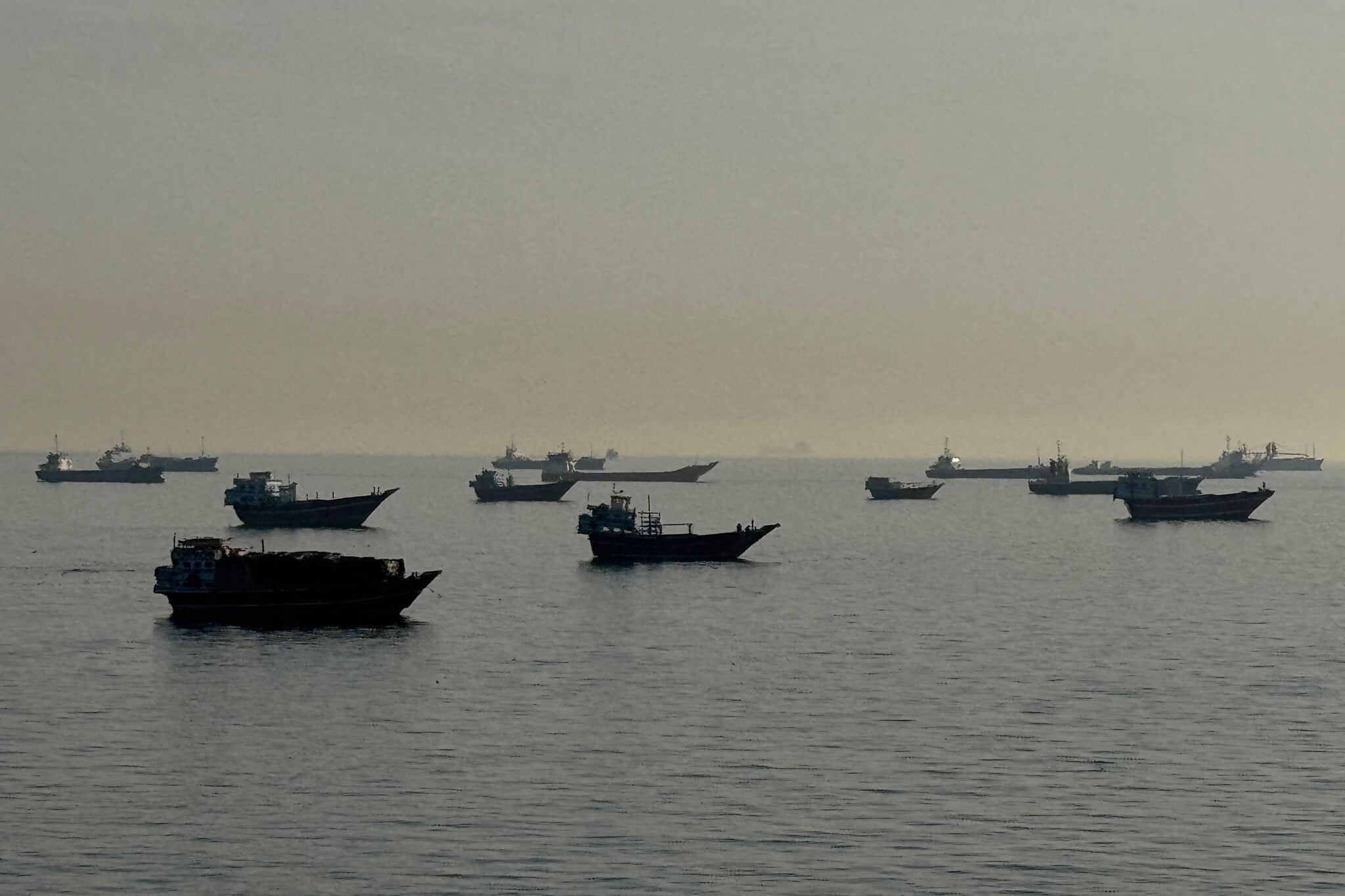
Vessels are seen anchored in the Strait of Hormuz, off the port city of Khasab on Oman's northern Musandam Peninsula on May 17, 2026. (AFP)
Iran’s foreign ministry says that Tehran is collecting fees for “navigational services” on ships transiting the strategic Strait of Hormuz, rather than imposing tolls.
“The services that are provided — navigational services in addition to the measures necessary to protect the environment of the Strait of Hormuz, the Persian Gulf and the Sea of Oman — require the collection of certain fees,” says foreign ministry spokesman Esmaeil Baghaei in a weekly press briefing.
He adds that Iran is “not seeking to collect tolls.”
Sirens in north warn of suspected drone attack
Sirens sound in the northern border community of Metula, warning of a suspected drone infiltration.
The IDF says the details are under review.
Pope says concept of ‘just war’ is ‘outdated,’ warns against use of conflict to distract from domestic issues
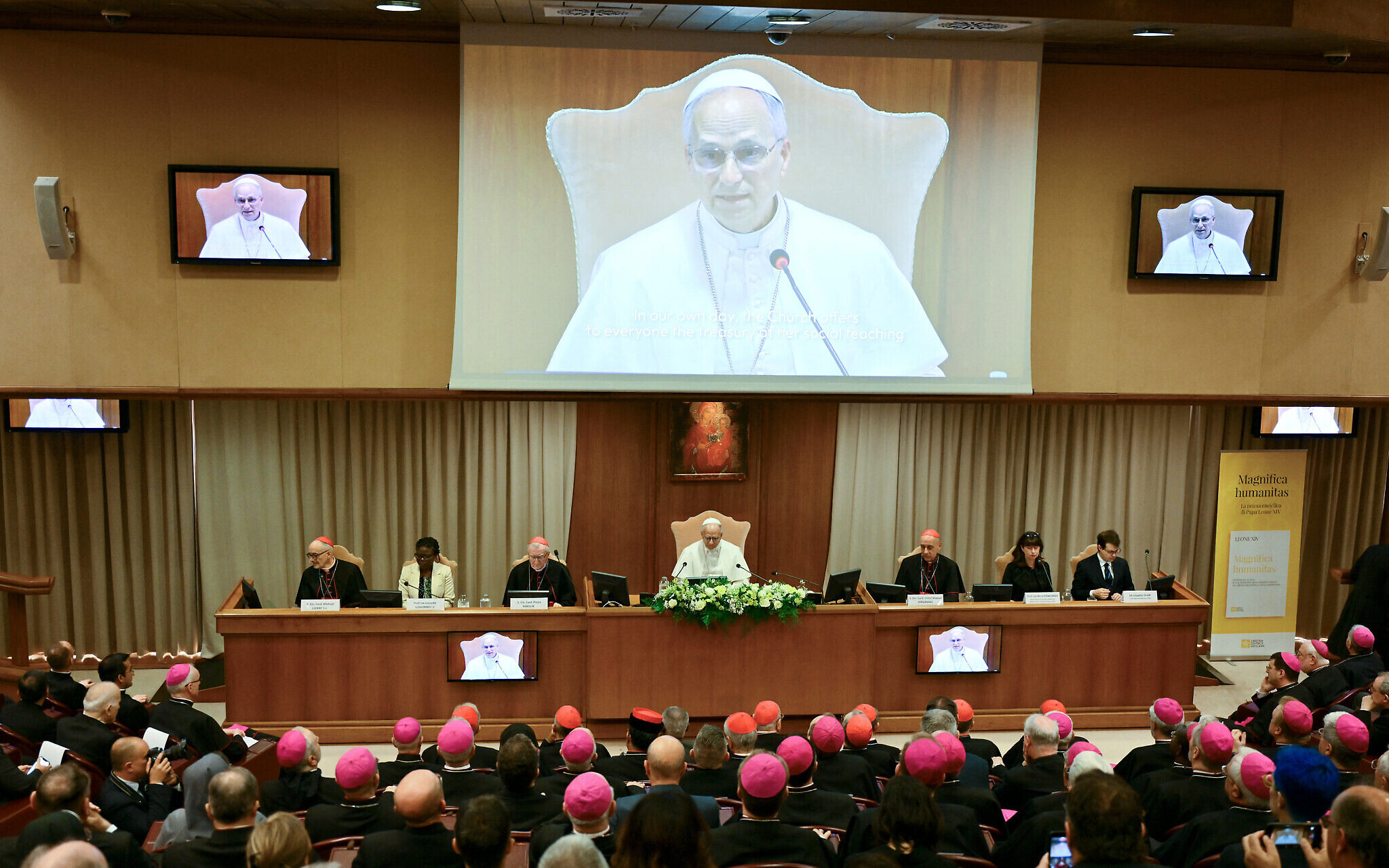
Pope Leo XIV attends the presentation of his first encyclical letter, Magnifica Humanitas, in The Vatican on May 25, 2026. (Alberto PIZZOLI / AFP)
Pope Leo XIV labels as “outdated” the concept of a “just war,” put forward by US President Donald Trump’s administration, warning that “humanity is slipping into a violent culture of power.”
“The past 60 years have been marked by conflicts of astonishing brutality, often affecting civilian populations on a massive scale,” states Leo, in an encyclical, “Magnifica Humanitas” (Magnificent Humanity).
“Humanity is slipping into a violent culture of power, where peace no longer appears as a responsibility to be taken on, but as a fragile interval between conflicts,” he says.
Leo also makes one of the clearest statements yet from a pope repudiating the just war theory, a doctrine the Church has used since at least the fifth century to evaluate global conflicts.
The doctrine, which generally says that wars should only be waged in order to defend against aggression, has also been invoked by Trump administration officials, including US Vice President JD Vance, a Catholic, to defend the Iran war.
“The ‘just war’ theory which has all too often been used to justify any kind of war, is now outdated,” writes Leo.
“The use of force, violence and weapons reflects a relational poverty that always has disastrous consequences for civilian populations.”
Leo also expresses concern that leaders could start wars to distract citizens from domestic issues.
“We cannot rule out the possibility that some leaders may consider armed conflict as an effective way of diverting attention from domestic problems and a cynical tool for managing difficulties,” he states.
Hezbollah explosive drone hits home in Metula; no injuries reported
An explosive drone impacted in the northern border community of Metula, following sirens that sounded a short while ago, the IDF says.
According to Hebrew media reports, the drone exploded on the roof of a home in the community.
There are no reports of injuries.
פגיעה ישירה של רחפן נפץ במטולה. נגרם נזק, עד כה לא דווח על נפגעים בגוף pic.twitter.com/5dVGxeNo8k
— almog boker (@bokeralmog) May 25, 2026
Knesset panel again votes to advance bill to limit AG’s role; could have plenum reading as soon as Wednesday
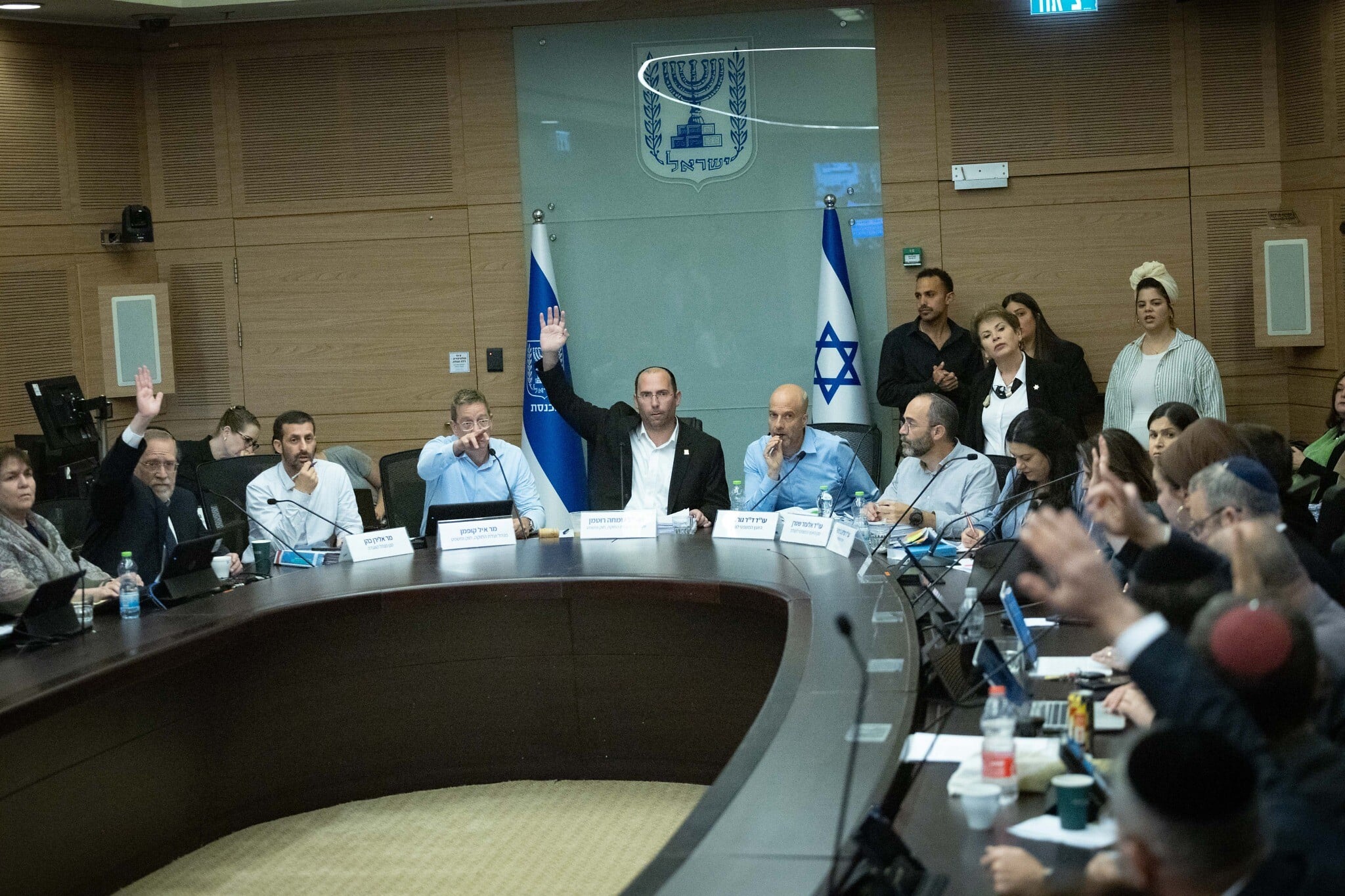
MK Simcha Rothman leads a Constitution, Law and Justice Committee meeting at the Knesset in Jerusalem, May 25, 2026 (Yonatan Sindel/Flash90)
The Knesset Constitution, Law and Justice Committee reapproves the coalition’s bill to curtail the power of the attorney general, voting for the second time in under a week to advance the controversial legislation to its first reading in the Knesset plenum.
Panel chair Simcha Rothman welcomes the committee’s vote, stating that the bill could be voted on in the plenum as early as Wednesday, adding that “as long as the Knesset completes its full term, I hope to pass it in its second and third readings.”
Lawmakers on the committee last week voted 9-0 to advance the bill, which would split the attorney general’s role into three separate positions, effectively draining it of all authority and independence, after opposition lawmakers walked out, claiming that the vote was illegitimate because the Finance Ministry had not produced an updated budgetary analysis of the cost of the bill.
At the time, committee legal adviser Gur Bligh, who has been critical of the bill, said that the vote could continue, although he later recommended reopening the discussion.
During today’s renewed debate, Adv. Avigail Peleg, a representative of the Finance Ministry, states that the bill “does not introduce new activities but rather an internal organizational split,” which does not necessarily indicate an increased cost requiring a new analysis.
She adds that while she is not claiming that there will be no additional cost, “according to the current wording, which is unclear how it will be implemented,” it is possible that there will be no budgetary implication, although “we will be able to provide a more precise budgetary assessment as details become clearer for the second and third readings.”
Opposition lawmakers push back, arguing that splitting the role of the attorney general would entail significant staffing and budget increases, mandating a new Finance Ministry assessment.
The Democrats MK Gilad Kariv accuses the coalition of continuing to push its judicial overhaul agenda despite the hardships of the past several years and pledges that “if, heaven forbid, it passes, this will be the first law to be repealed” by the next government.
Trump insists Iran agreement will be ‘great and meaningful’ or ‘there will be no deal’
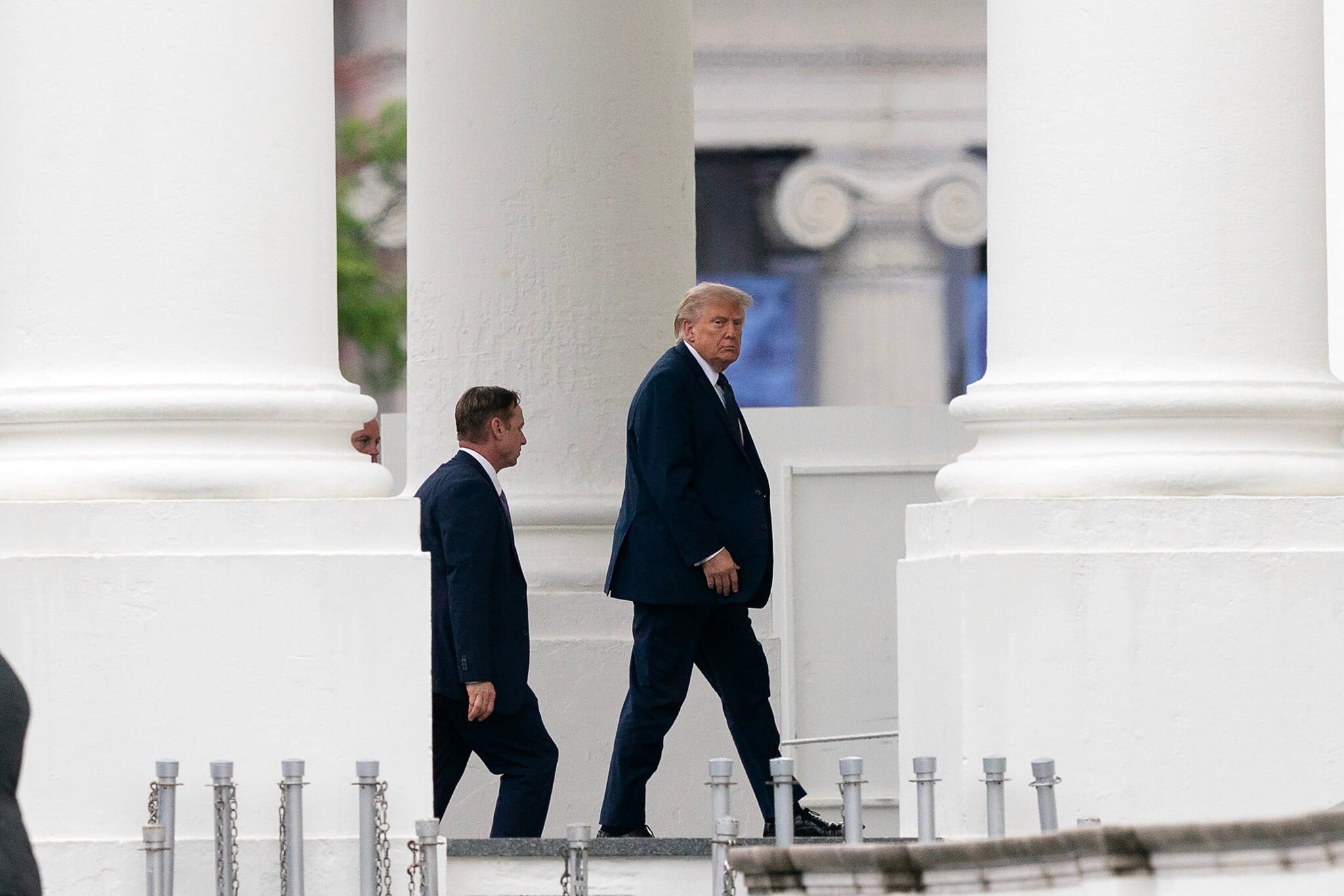
US President Donald Trump arrives at the White House , May 22, 2026, in Washington. (AP Photo/Jose Luis Magana)
US President Donald Trump hits back at Democratic politicians for criticizing his emerging deal with Iran, stressing that the negotiations have not finalized anything and will only result in a “great and meaningful” deal.
“The deal with Iran will either be a great and meaningful one, or there will be no deal,” Trump writes in a lengthy post on Truth Social.
He reiterates that the deal “will be the exact opposite” of the JCPOA negotiated by the Obama Administration that he calls “a direct and open path to a Nuclear Weapon for Iran,” saying, “No, I don’t do deals like that!”
‘Bang on Trump’s desk’: Far-right ministers demand Netanyahu return to war in Lebanon
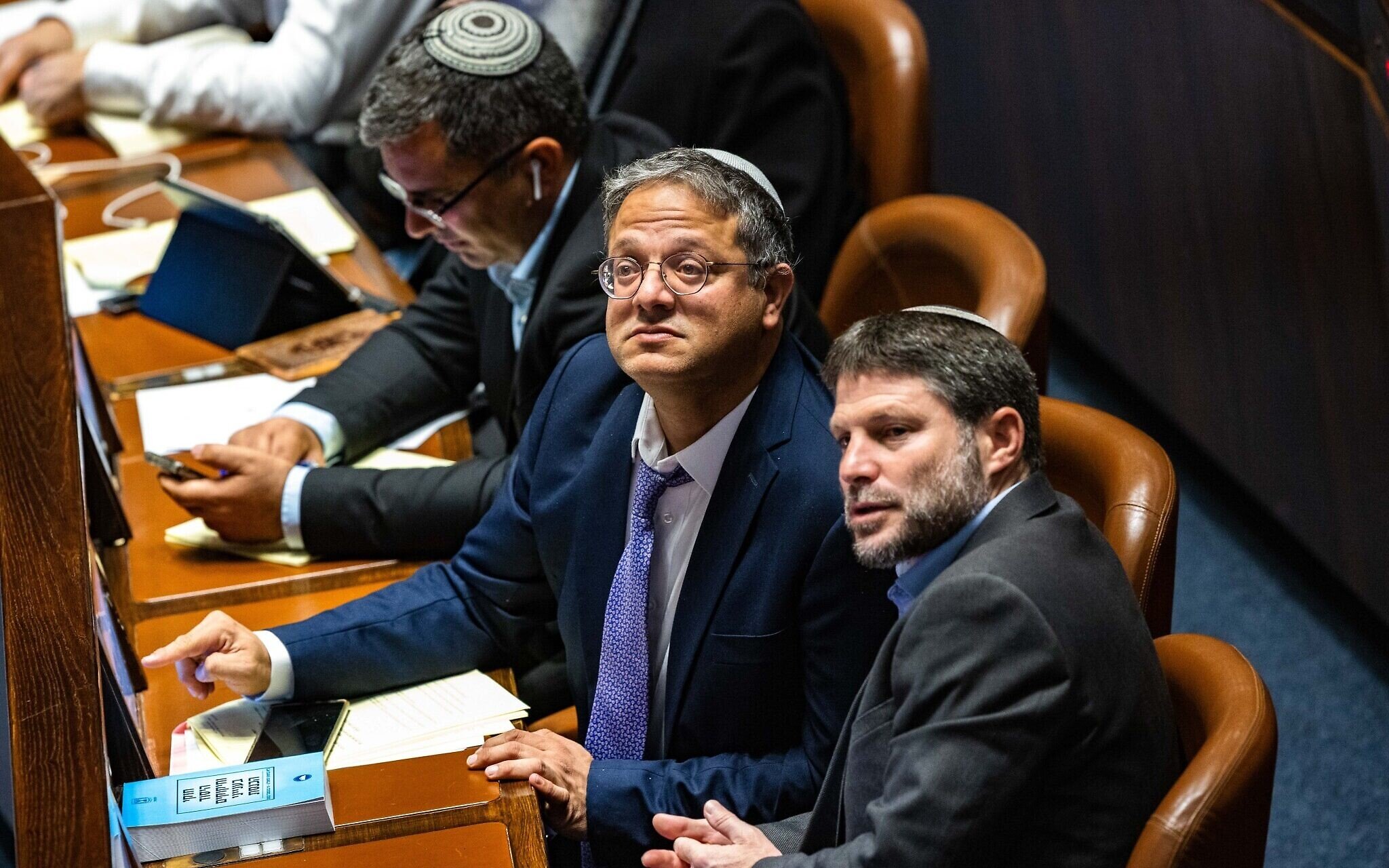
Religious Zionism party party chief Bezalel Smotrich (right) and Otzma Yehudit party chief Itamar Ben Gvir are seen during a vote at the Knesset in Jerusalem, on December 28, 2022. (Olivier Fitoussi/Flash90)
Far-right ministers demand that Prime Minister Benjamin Netanyahu renew military operations in Lebanon in response to Hezbollah explosive drone attacks, ahead of a potential Iran-US deal which could curb Israeli action against the terror group.
National Security Minister Itamar Ben Gvir says that the premier must “inform” US President Donald Trump that the war in Lebanon is being restarted.
“We must not normalize the reality of explosive drones. The time has come for the prime minister to bang on Trump’s desk and inform him that we are returning to war in Lebanon,” Ben Gvir declares in a statement, days ahead of a planned round of Israel-Lebanon talks in Washington.
“We must cut off the electricity in Lebanon, conquer Zahrani, and return to high-intensity warfare,” he adds, referencing a river north of the Litani, indicating a wish to expand the area of the war.
Far right Finance Minister Bezalel Smotrich calls for strikes on Beirut in a separate statement announcing his approval of an NIS 2 billion ($692.8 million) budget for “technological solutions to the drone threat.”
“A strategic threat is not met with defense alone; for every explosive drone, ten buildings in Beirut need to fall,” Smotrich declares.
Iran’s central bank chief heads to Qatar after talks over release of frozen funds
Iran’s Central Bank Chief Abdolnaser Hemmati travelled to Qatar, Iran’s state media reports, saying the visit follows talks with a Qatari delegation in Tehran regarding Iran’s frozen funds.
Iran has been pushing in negotiations for its frozen funds abroad, including in Qatar, to be released.
Likud MK Galit Distel Atbaryan won’t seek reelection, will leave Knesset at end of term
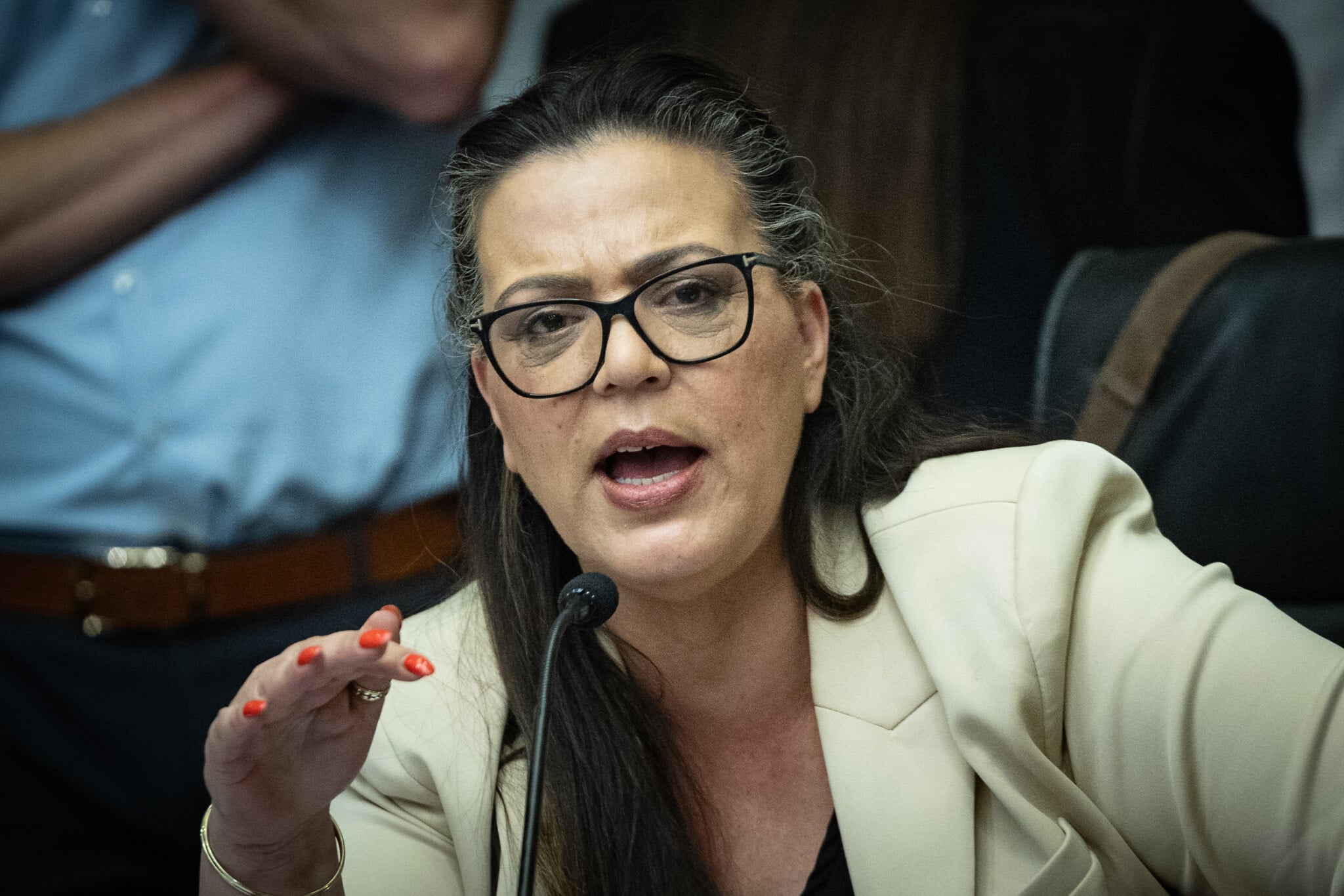
MK Galit Distel Atbaryan leads the Special Committee for the Communications Law at the Knesset, May 25, 2026. (Yonatan Sindel/Flash90)
Likud MK Galit Distel Atbaryan says that she will not run in the upcoming elections and will leave the Knesset at the end of its current term, during a session of the special Knesset panel overseeing Communications Minister Shlomo Karhi’s controversial media overhaul bill.
The announcement comes after months of mounting criticism over the conduct of the committee, which is led by Distel Atbaryan, including allegations that it has bypassed parliamentary procedures, curtailed debate and disregarded legal advice, prompting Knesset Legal Adviser Sagit Afik last month to call for the legislation to be moved to the Economic Affairs Committee, where such bills are normally discussed.
Distel Atbaryan has served in the Knesset since 2022. She briefly served as public diplomacy minister before resigning days after the October 7, 2023 attacks, arguing that her office had been sidelined while other government bodies were tasked with Israel’s international public diplomacy efforts.
The ministry was criticized for failing to release any meaningful explanatory content as Israel suffered the largest single-day loss of Jewish life since the Holocaust and was shuttered.
Ahead of World Cup, Iranian VP urges return to national team for star striker accused of disloyalty

Iran's forward Sardar Azmoun celebrates after scoring his team's first goal during the Qatar 2023 AFC Asian Cup semi-final football match between Iran and Qatar at al-Thumama Stadium in Doha on February 7, 2024 (Karim Jaafar / AFP)
An Iranian vice president calls for striker Sardar Azmoun, who faced allegations of treason from Iran’s state media, to be reinstated to the national team ahead of the 2026 World Cup.
Azmoun was omitted from the initial squad list drawn up by the team’s manager, as the team prepared for a tournament co-hosted by the Islamic Republic’s foe, the United States.
“The need of the homeland is to preserve the threads of connection between its children,” Vice President Abdolkarim Hosseinzadeh writes on X, as the team held a training camp in Turkey.
“Let us not overlook Sardar Azmoun’s action in displaying this bond, and if possible, bring him back to the national team,” he adds.
The call comes after Azmoun, 31, said in an Instagram post he had once rejected “a very large financial offer from another country” and described himself as “a son of Iran.”
Azmoun, who has scored 57 goals for Iran and previously played club football for Bayer Leverkusen and AS Roma, has previously voiced support for anti-government protesters.
He has also faced criticism in Iranian state media, including accusations of treason after a photograph published in March showed him alongside the Emir of Dubai, where he currently plays and resides.
Head coach Amir Ghalenoei has said squad selection was “the most difficult technical decision” of his career, adding that players were chosen solely on technical criteria.
Sirens in north warn of suspected drone infiltration amid ongoing wave of Hezbollah attacks
Sirens sound in the northern border community of Hanita, warning of a suspected drone infiltration.
The IDF says the details are under review.
Court extends detention of 16 teens suspected of involvement in fatal stabbing of Yemanu Zelka

Yemanu Binyamin Zelka, who was stabbed and killed at his Pizza Hut job in the early hours of Independence Day. (Social media, undated; used in accordance with Clause 27a of the Copyright Law)
The Lod-Central District Court has extended the detention of all 16 minors accused in the fatal stabbing of Yemanu Zelka, the State Attorney’s Office announces.
The defendants will remain in custody until another decision is handed down by the court, the statement says.
Zelka, a Pizza Hut employee from Petah Tikva, was stabbed on the night of Independence Day in an attack by a group of teens after he told them not to spray party foam in the restaurant. He was taken to the hospital, where he died of his wounds a day later.
The 16-year-old who allegedly stabbed Zelka was indicted earlier this month on the charge of negligent murder, while the 15 other suspects were charged with causing serious bodily harm with intent.
Knesset panel advances bill allowing government to control budget of Kan public broadcaster
A news microphone for the Kan public broadcaster, October 28, 2025 (Chaim Goldberg/FLASH90)
The Knesset Finance Committee votes to advance legislation giving the government the power to determine the budget of the Kan public broadcaster for its first reading in the Knesset, despite opposition from the Knesset legal department, the Economics Affairs Committee’s legal advisers, and the deputy attorney general, who all say that the legislation does not meet constitutional standards.
The legislation would remove the broadcaster’s guaranteed funding, which contains strict provisions intended to preserve barriers between the broadcaster and political authorities, and instead allow ministers to set and potentially cut the budget of the station, which regularly features reporting critical of those in power.
The move marks a major victory for Communications Minister Shlomo Karhi, who has been engaged in a two-year legislative effort to dismantle the public broadcaster.
Opponents of the legislation, including opposition lawmakers, journalists’ organizations and Kan itself, warn that making the broadcaster dependent on annual government funding would undermine press freedom by discouraging critical reporting.
Supporters of the bill, including Karhi, argue that as a taxpayer-funded public broadcaster, Kan should be subject to the same budgetary oversight as other state bodies.
Finance Committee chair and Likud MK Hanoch Milwidsky says he is open to adding a provision during the legislative process to delay the law’s implementation until after the next national elections, currently slated for October.
Israeli tech giant Wix said to be cutting some 20% of global workforce in coming months
Wix, a maker of do-it-yourself website building software, is said to be embarking on a wave of layoffs to cut as many as 1,000 employees, or 20 percent of its workforce in Israel and abroad, over the coming months, according to reports in the Hebrew press.
The reported job cuts come after the eCommerce platform posted a loss in the first quarter of this year and made investments in AI-related tools amid growing pressure to reduce redundant roles in the AI era.
Over the past year, Wix bought Israeli AI-based app creator startup Base44 and local startup Hour One to bolster its web creator and content offerings with generative AI-based video production and other tools.
Founded in 2006, Wix is one of Israel’s flagship tech firms and is listed on the Nasdaq with a market cap of about $2.2 billion. At the end of March, Wix employed 5,277 people, of whom more than 60% are based in Israel.
Wix declined to comment on the reported workforce downsizing plan.
IDF issues evacuation warning for south Lebanon’s Tyre amid wave of Hezbollah drone attacks
The IDF issues an evacuation warning for the southern Lebanese city of Tyre and surrounding areas ahead of airstrikes targeting Hezbollah infrastructure.
“We call on residents whose buildings will be marked in red on the known maps, which will be published later, to immediately evacuate their homes for their own safety, as the IDF does not intend to harm them,” warns army spokesman Col. Avichay Adraee, citing “Hezbollah’s violation of the ceasefire.”
Earlier today, an explosive drone struck a home in the northern border community of Metula amid a wave of attacks. No injuries were reported.
Top Iranian officials in Qatar for talks on Strait of Hormuz and highly enriched uranium, official says
Iranian top negotiator Mohammad Bagher Ghalibaf and Foreign Minister Abbas Araghchi are in Doha for talks with Qatar’s prime minister on a potential US-Iran deal to end the conflict, an official briefed on the visit says.
The discussions are focused primarily on the Strait of Hormuz and Iran’s stockpile of highly enriched uranium, the official tells Reuters.
Iran’s central bank governor is also part of the delegation to discuss the potential release of frozen Iranian funds as part of a final agreement, according to the official.
Lapid says Iran deal taking shape is ‘a disaster,’ as opposition leaders slam Netanyahu for failure to achieve victory over Iran, Hezbollah
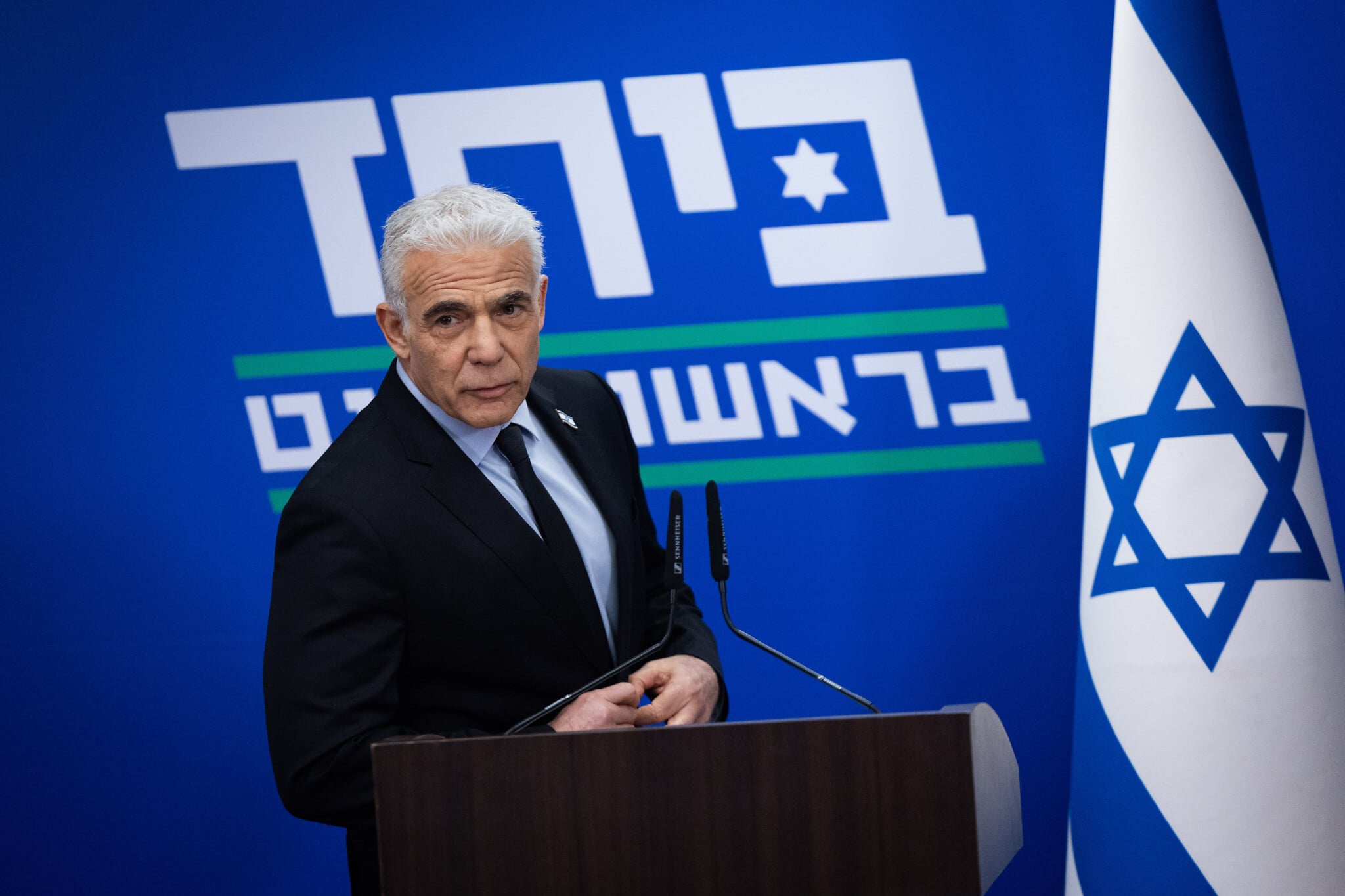
Opposition Leader Yesh Atid MK Yair Lapid leads a faction meeting at the Knesset on May 25, 2026 (Yonatan Sindel/Flash90)
Addressing reporters ahead of his Yesh Atid party’s weekly faction meeting in the Knesset, Opposition Leader Yair Lapid calls the agreement currently shaping up between Washington and Tehran a “disaster,” noting that “the regime did not fall, it grew stronger” and highlighting that the emerging agreement does not deal with the Iranian ballistic missile threat.
“The deal is bad for Israel, bad for the region, bad for the citizens of Iran,” Lapid says.
Lapid and other opposition party leaders also slam Prime Minister Benjamin Netanyahu over his failure to achieve victory over Iran and Hezbollah, and insist that Jerusalem must retain its freedom of action regardless of what the United States decides to do.
It is “absurd” that the deal was written without Israel at the table, Lapid charges, declaring that “time and again the Netanyahu government sets goals and fails to meet them.”
“The current situation is the result of a continuous failure of government. Benjamin Netanyahu is a man blessed with talents, but he has grown old and tired and is surrounded by the least suitable people to run a country.”
Lapid says that Israel is a “sovereign country” and not an American protectorate and, as such, the prime minister should tell US President Donald Trump that “we reserve our freedom of action and are not committed to things that go against our security.”
Similarly, Yisrael Beytenu chair Avigdor Liberman tells reporters ahead of his own faction meeting that it is “only a matter of time” before Hezbollah drones hit Jerusalem and Tel Aviv and that Israel “must achieve a decisive victory” against the Iran-backed terror group.
“Our soldiers’ hands are simply tied in Lebanon,” the hawkish former defense minister asserts.
Blue and White chairman Benny Gantz, another former defense minister, likewise argues that Israel must take action against Hezbollah to halt the threat, telling reporters that “the best defense against Hezbollah is an attack. If explosive drones continue to crash in Israel, no plane should take off in Beirut.”
When Israelis in the north celebrate the Shavuot holiday in shelters “buildings should fall in Dahieh,” he adds, referring to a Hezbollah stronghold in Beirut.
“I was the first to come out in favor of normalization with Lebanon even when it sounded like a fantasy to people. This will not happen if we allow Hezbollah to become the protector of Lebanon and Tehran to be the patron of Beirut,” he says.
Turning to Iran, Gantz insists that Israel “should end the campaign only after the destruction of [Tehran’s] uranium or its extraction, the cessation of production of long-range ballistic missiles and the cessation of funding for proxies” and that “at the very least, Israel must preserve for itself freedom of action in any agreement.”
Liberman reiterates Yisrael Beytenu could partner with post-Netanyahu Likud
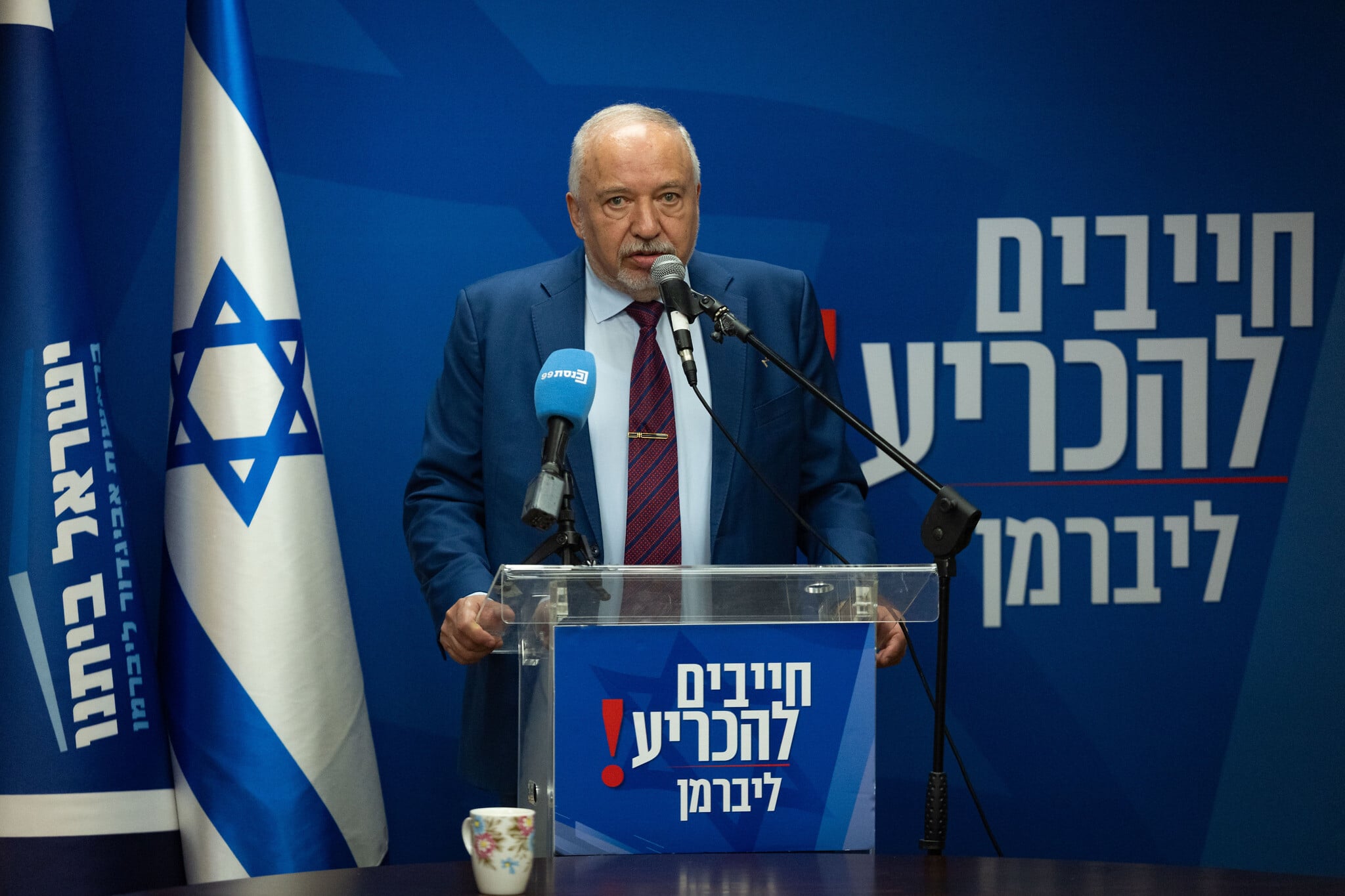
Yisrael Beytenu chair Avigdor Liberman leads a faction meeting at the Knesset on May 25, 2026 (Yonatan Sindel/Flash90)
A post-Netanyahu Likud could be a viable coalition partner for Yisrael Beytenu, chair Avigdor Liberman reiterates to reporters ahead of the hawkish opposition party’s weekly faction meeting in the Knesset.
Insisting that there is no way he could sit with Prime Minister Benjamin Netanyahu, nor with the ultra-Orthodox Shas and United Torah Judaism parties — an “unholy” alliance which is “is leading the State of Israel to the destruction of the Third Temple” — Liberman says that he assumes that “at least a part of Likud will be a partner in the next government.”
Liberman made similar comments during a press conference in Tel Aviv earlier this month, stating that in order for him to sit with with Likud sans Netanyahu, the party would have to accept key parts of his platform, which includes prime ministerial term limits, a prohibition on running for prime minister while under indictment, a state commission of inquiry and public transportation on Shabbat.
Asked about Yashar chairman Gadi Eisenkot’s willingness to hold talks with the Haredim and even exempt several thousand men from military service, Liberman says excusing them from service “is a disgrace to the Torah” and a “desecration of God’s name.”
Blue and White chairman Benny Gantz also tells reporters that the next government must conscript the Haredim, arguing that “only a broad, Zionist unity government can do this.”
“I also suggest to my friends in the opposition parties, who I have no doubt understand this need, to put the welfare of our soldiers before their political welfare,” he says.
IDF says aircraft that hit Metula home was UAV, not explosive drone
Following an investigation, the IDF clarifies that the aircraft that struck a home in the northern town of Metula earlier today was an unmanned aerial vehicle (UAV) and not an explosive-laden drone as previously suspected.
The IDF says troops were dispatched to the scene alongside additional security forces.
UAVs typically refer to larger, military-grade remotely piloted aircraft, whereas drones often refer to smaller, commercially available quadcopters that can be modified to carry explosives.
According to the military, Hezbollah apparently launched three UAVs in the incident. One crashed in Metula, another fell inside Israeli territory near the Lebanese border, and a third crashed in an area where troops were operating in southern Lebanon.
No injuries were reported in any of the incidents.
Girl said killed in Israeli strike in southern Gaza Strip
Hamas-affiliated media outlets in Gaza report that earlier today the
IDF struck a tent sheltering displaced people in Khan Younis, killing a 6-year-old girl, Mana Abu Labda.
The IDF has not yet commented.
Medics said at least 17 people were also wounded in the strike, which witnesses said was carried out by two helicopters.
Iranian health official says Supreme Leader Mojtaba Khamenei suffered only ‘superficial’ wounds in Israel strike
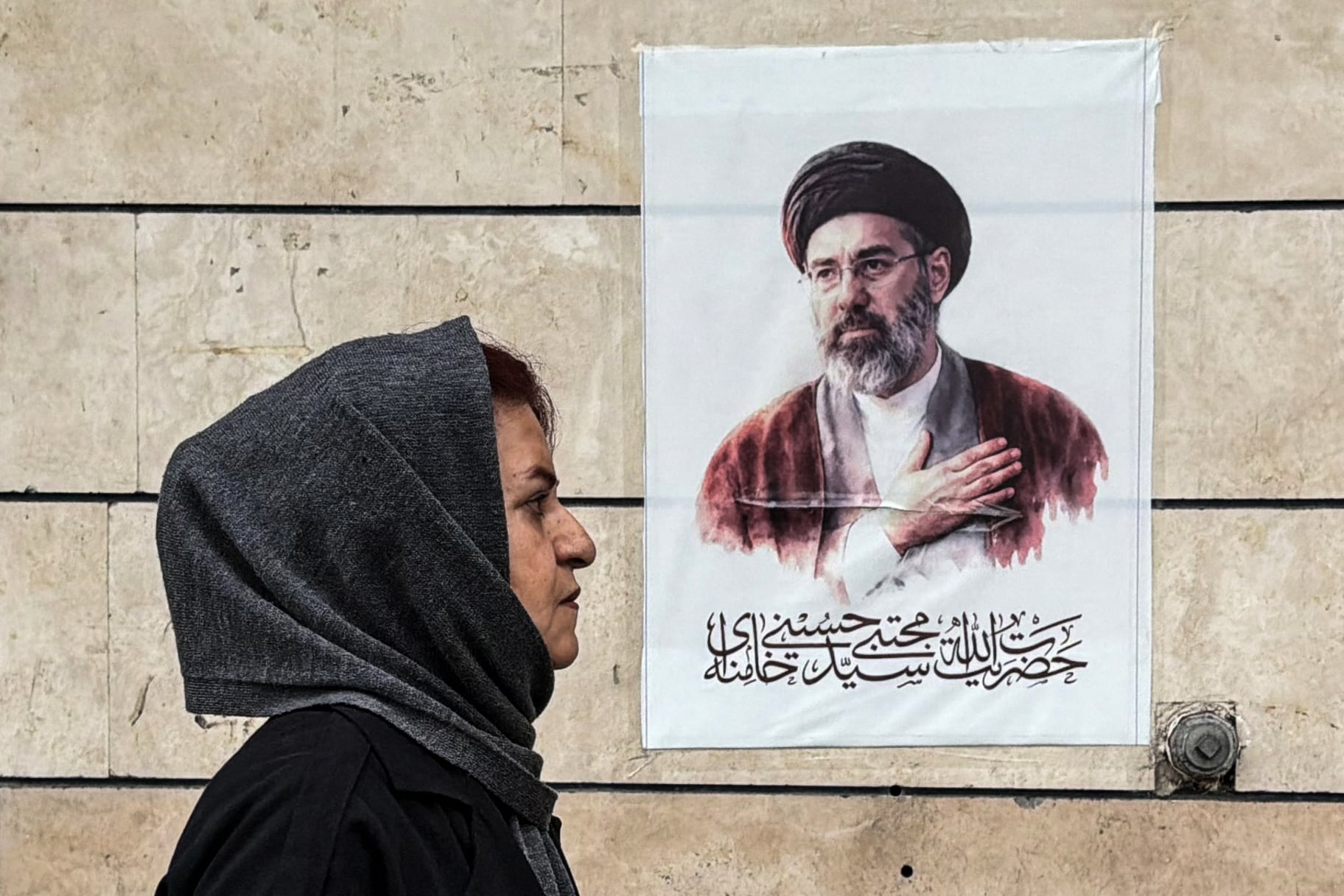
An Iranian woman walks past a poster featuring a portrait of Mojtaba Khamenei, Iran's new supreme leader, in the capital Tehran on April 13, 2026. (ATTA KENARE / AFP)
An Iranian health ministry official says the injuries suffered by Supreme Leader Ayatollah Mojtaba Khamenei in US-Israeli strikes in late February were only “superficial,” offering a rare account of the day he was wounded.
The 56-year-old has not appeared publicly since he was named as Iran’s supreme leader on March 8, issuing only written statements, fuelling speculation about his health.
In March, US Defense Secretary Pete Hegseth said Mojtaba was “believed to be alive, wounded and disfigured.”
Mojtaba succeeded his father, Ali Khamenei, who was killed in US-Israeli strikes on February 28 that triggered retaliatory Iranian attacks across the region.
Today, health ministry spokesman Hossein Kermanpour describes the day Mojtaba was wounded and his arrival at a hospital, which he did not identify.
He says Mojtaba arrived at the hospital around 1:00 pm Tehran time on February 28 and “entered the operating room along with several other wounded individuals.”
“Apart from superficial injuries to the face, head and legs, which caused neither amputation nor any particular medical problem, nothing major had happened,” Kermanpour tells ILNA news agency.
“From my perspective as a physician these were not considered serious injuries and required no special procedures apart from one or two stitches.”
Trump links Abraham Accords to Iran deal, says joining should be ‘mandatory’ for 6 Muslim nations, tells Saudis and Qataris to go first
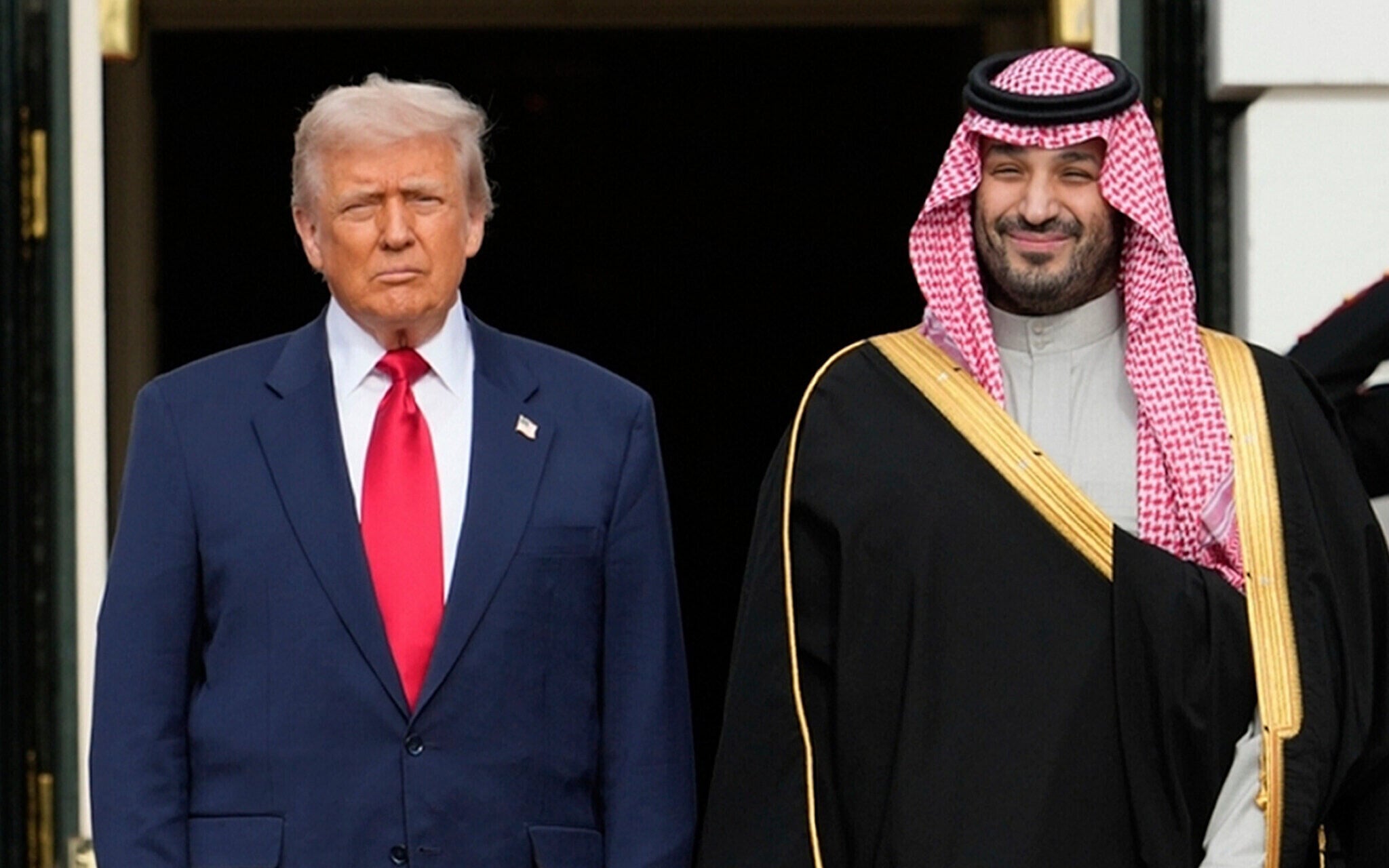
US President Donald Trump stands with Saudi Arabia's Crown Prince Mohammed bin Salman on his visit to the White House, November 18, 2025, in Washington. (AP/Mark Schiefelbein)
US President Donald Trump ties the emerging Iran deal with the Abraham Accords normalization agreements with Israel and says joining it should be “mandatory” for six Muslim nations, telling Saudi Arabia and Qatar to sign up first.
“Negotiations with the Islamic Republic of Iran are proceeding nicely! It will only be a Great Deal for all or, no Deal at all,” Trump writes on Truth Social, reiterating that if no deal is reached it will mean “Back to the Battlefront and shooting, but bigger and stronger than ever before.”
During discussions on Saturday with leaders of eight Muslim-majority and Middle Eastern countries, Trump says he stated that “after all the work done by the United States to try and pull this very complex puzzle together, it should be mandatory that all of these Countries, at a minimum, simultaneously, sign onto the Abraham Accords.”
He specifies those countries as Saudi Arabia, Qatar, Pakistan, Turkey, Egypt, and Jordan, and also lists the UAE and Bahrain while noting they are already members.
Egypt and Jordan signed peace deals with Israel in 1979 and 1994, respectively, while Turkey and Israel have diplomatic relations, although ties are severely strained.
Trump does not mention Israel whatsoever in the lengthy post. It is not immediately clear whether Trump refers to traditional accession to the Abraham Accords — the US-brokered normalization agreements launched during his first term to establish formal relations with Israel — or envisions a larger political framework built around broader aims.
Trump says this expansion “should start with the immediate signing by Saudi Arabia and Qatar, and everybody else should follow suit. If they don’t, they should not be part of this Deal in that it shows bad intention.
“It may be possible that one or two have a reason for not doing so, and that will be accepted, but most should be ready, willing, and able to make this Settlement with Iran a far more Historic Event than it would, otherwise, be,” he adds.
He says that “numerous” of the leaders he spoke with “would be honored, as soon as our Document is signed, to have the Islamic Republic of Iran as part of the Abraham Accords.” Trump suggested yesterday that Tehran, which is sworn to Israel’s destruction, could “perhaps” join the agreements after a deal is reached.
“The Abraham Accords have proven to be, for the Countries involved (The United Arab Emirates, Bahrain, Morocco, Sudan, and Kazakhstan), a Financial, Economic, and Social BOOM, even during this time of Conflict and War, with the current Members never even suggesting leaving, or taking so much as even a pause,” he continues.
“Nothing in the past, or in the future, will surpass” such a framework, Trump says, declaring, “Therefore, I am mandatorily requesting that all Countries immediately sign the Abraham Accords, and that, if Iran signs its Agreement with me, as President of the United States of America, it would be an Honor to have them also be part of this unparalleled World Coalition.”
“The Middle East would be United, Powerful, and Economically Strong, like perhaps no other area, anywhere in the World! By copy of this TRUTH, I am asking my Representatives to begin, and successfully complete, the process of signing these Countries into the already Historic Abraham Accords. Thank you for your attention to this matter!” Trump concludes.
Knesset panel votes to split media overhaul bill despite legal opposition
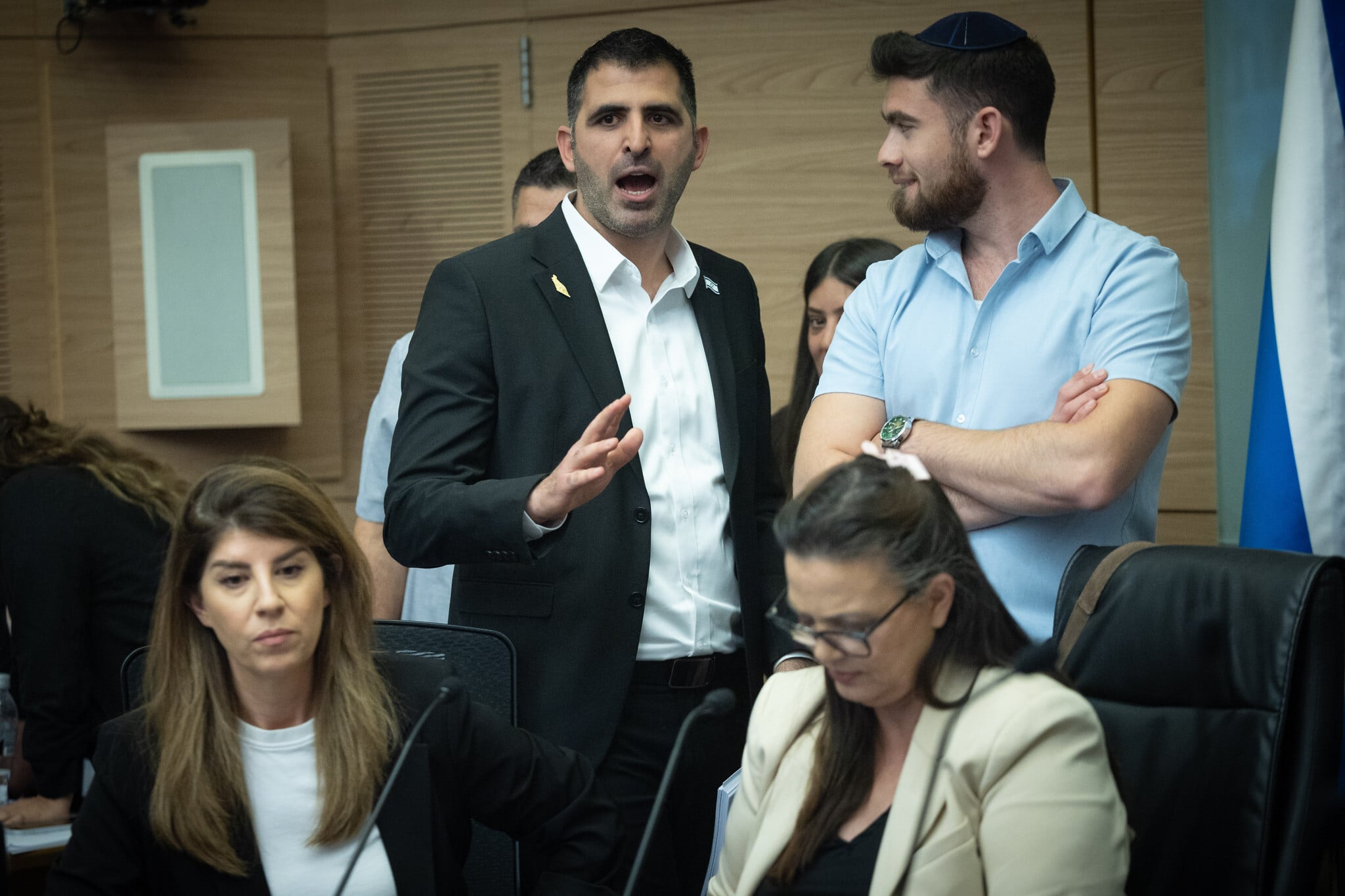
Communications Minister Shlomo Karhi attends a hearing in the Special Committee for the Communications Law at the Knesset on May 25, 2026. (Yonatan Sindel/Flash90)
The special Knesset committee established to deliberate Communications Minister Shlomo Karhi’s controversial media overhaul bill votes to split the legislation into separate bills, despite objections from both the committee’s legal advisers and Knesset Legal Adviser Sagit Afik.
The move allows the coalition to push forward parts of the overhaul that would establish a new broadcasting regulator, while postponing contentious provisions dealing with news providers, oversight and enforcement, and obligations of international streamers.
Under the proposed framework, the Second Authority for Television and Radio would continue, for the time being, to oversee all entities currently under its jurisdiction, and plans to shut it down would not move forward at this stage. Its core powers would remain intact, except for oversight of original productions, which would be transferred to the new authority.
The vote is held following a heated session and amid an uproar from opposition lawmakers who call the vote illegal and accuse the coalition of rushing through major legislation without adequate scrutiny.
Coalition lawmakers argue the split legislation is necessary because rapid changes in the media market have left streaming services largely unregulated and because there is insufficient time to complete work on the entire bill before upcoming elections.
Legal advisers, however, warn that the proposed split violates accepted legislative practice by removing core sections of the bill simply because the committee has not finished debating them.
Appearing before the committee, Afik says she has opposed the move since March and argues that the remaining legislation cannot stand as a coherent law on its own without provisions governing news providers and enforcement.
“I am not familiar with a case in which provisions were separated simply because there was not enough time to discuss them,” she says.
Bank of Israel cuts interest rates amid surging shekel, hopes for end to Iran war

A man walks past the The Tel Aviv stock exchange, May 25, 2026. (Miriam Alster/FLASH90)
The Bank of Israel decides to lower interest rates to 3.75 percent in the face of a strong shekel, moderating inflation, and mounting prospects for a deal to end the war with Iran.
The central bank trims borrowing costs from 4% to 3.75%, marking the second rate cut this year. In its previous two rate decisions in March and February, the Bank of Israel left borrowing costs on hold, after two cuts in January and November, respectively.
“There is still significant geopolitical uncertainty, both domestically and globally,” the central bank says in a statement, noting that the war with Iran “had an impact on real economic activity, and the most recent data show a recovery.”
The central bank notes that “inflation in Israel remains around the midpoint of the target.” Annual inflation in April was steady at 1.9% and remained well within the government’s target range of between 1% and 3%.
The shekel has surged to a 33-year high and was trading today at around 2.89 per dollar.
Hezbollah drones strike Shomera, military zone amid wave of launches on north; no injuries
The IDF says a Hezbollah explosive drone struck the northern border community of Shomera a short while ago amid a wave of drone launches at northern Israel.
“The moshav is in chaos. Children are locked in the kindergarten, drones are in the air, and live fire [can be heard],” a Shomera resident tells the Kan public broadcaster.
According to the military, additional drones also fell inside Israeli territory, with some landing in a military zone near the Lebanese border.
The IDF says it also identified several “suspicious aerial targets” during multiple drone infiltration alerts across the north, but later lost contact with them, suggesting that they either left the monitored airspace or crashed.
No injuries were reported in any of the incidents, which the military says are under investigation.
Ben Gvir appears to rule out joint run with fellow far-right leader Smotrich
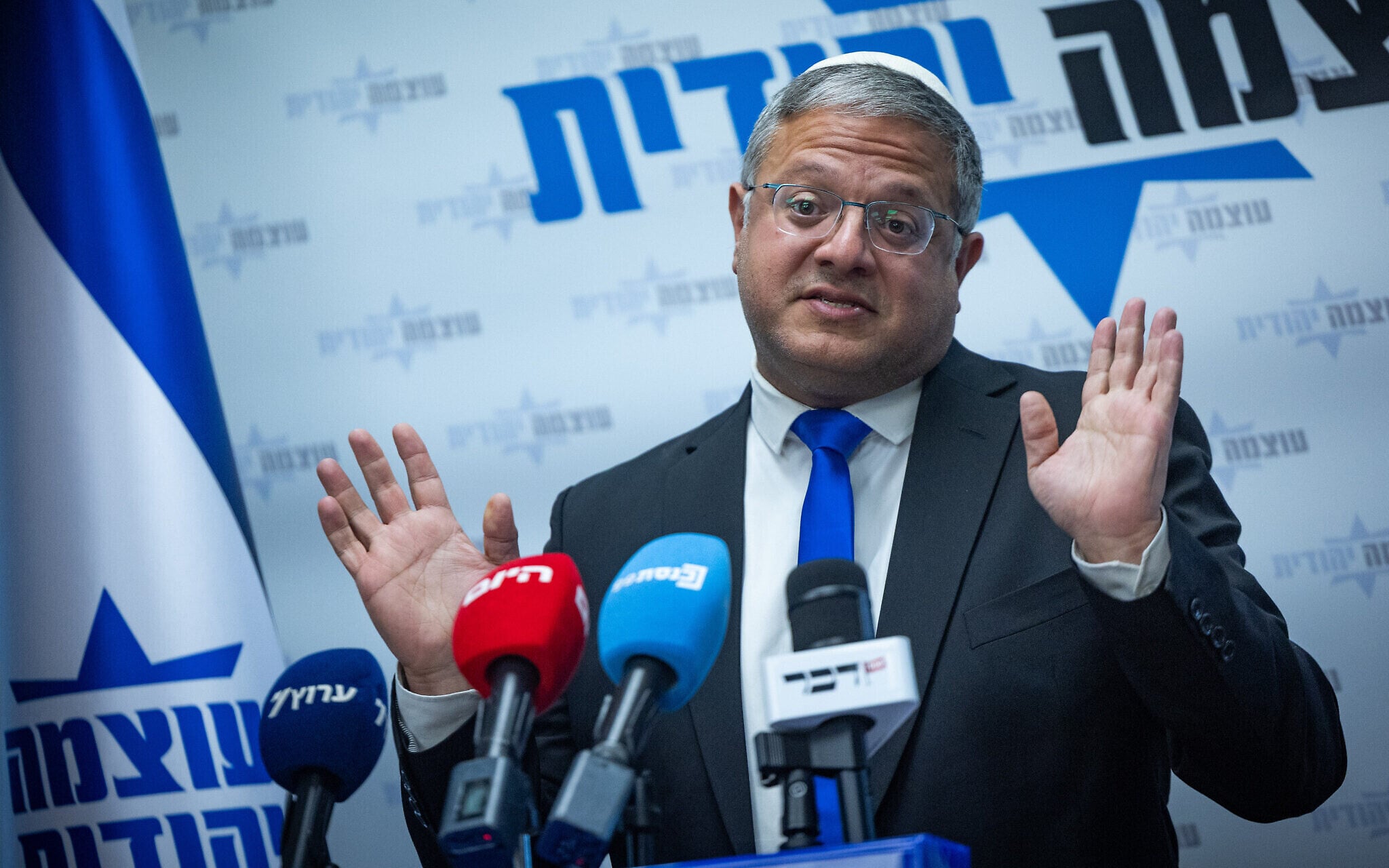
National Security Minister Itamar Ben Gvir leads a faction meeting of his Otzma Yehudit party at the Knesset in Jerusalem on May 25, 2026. (Yonatan Sindel/Flash90)
National Security Minister Itamar Ben Gvir appears to rule out a joint Knesset run with Finance Minister Bezalel Smotrich, telling reporters that it is important that his fellow far-right leader, with whom he partnered in the last election, run on his own.
Asked if he plans on running on a joint list with Smotrich’s Religious Zionism, Ben Gvir tells reporters ahead of his party’s weekly faction meeting that he thinks “we need to maximize the right-wing votes so that there will be a right-wing government here once again, and Otzma Yehudit has a very, very important role. Otzma Yehudit is not a sectarian party” and has supporters “from all sectors: secular, traditional, Haredi.”
“I think Bezalel needs to run in the format of a religious Zionist party. God willing, I believe and know that he can pass the electoral threshold, and Otzma Yehudit needs to bring a lot of mandates, and we can bring a lot of mandates to the right-wing bloc so that there will be a right-wing government here.”
Religious Zionism is currently polling just above or just below the electoral threshold and it is widely believed that Prime Minister Benjamin Netanyahu will again attempt to broker a joint run between Smotrich and Ben Gvir ahead of this year’s election.
Ben Gvir also dismisses Netanyahu’s criticism of his recent video showing him taunting detained activists from a Gaza flotilla, an action which led to international condemnation as well as several travel bans.
“I love the prime minister…but we sometimes have disagreements,” he says.
“I think that given the reactions from all over the world, one thing can be understood: Israel has stopped being the Middle East’s punching bag, and I am proud that the policy I lead is not the policy of giving them sandwiches and flowers,” Ben Gvir declares.
“The message is sinking in,” he says, praising Spain after its police beat returning flotilla activists upon their return. “I won’t enter Poland, I won’t enter France. I won’t enter any of the countries that said I couldn’t enter them. It’s fine, I don’t buy my wife clothes in London. Everything is okay.”
Austrian police restrain, arrest returning Gaza flotilla activist
Austrian police are filmed restraining and arresting a returning Gaza flotilla activist at Vienna Airport.
The incident occurred last night and comes a day after Spanish police were filmed beating returning activists.
Footage from the incident in Austria shows the activist chanting “From the river to the sea, Palestine will be free,” a phrase interpreted by many as calling for Israel to be wiped out.
He was then accosted by police who ended up restraining him on the floor and dragging him out of the terminal.
The Austrian police force defended their actions, telling the Daily Mail they used “proportionate force.”
Spanish police on Saturday detained four people at Bilbao airport following clashes that broke out after activists from a Gaza-bound flotilla returned home, according to officials in Spain.
Police were filmed hitting people with batons and dragging them across the floor, before detaining them.
Israel detained the activists as sea before deporting them.
The incident came after National Security Minister Itamar Ben Gvir sparked a diplomatic incident on Wednesday over a video he released showing him taunting the activists as they were forced to kneel on the floor with their hands bound. The video triggered an international outcry, with dozens of countries condemning Israel’s treatment of the detained activists.
An Austrian Flotilla member was just assertively ARRESTED as soon as he landed in Vienna airport. Seems he’s been a very naughty boy. pic.twitter.com/DUxZ0Yl7av
— Heidi Bachram (@HeidiBachram) May 24, 2026
Report: Iran rebuilding missile production faster than expected
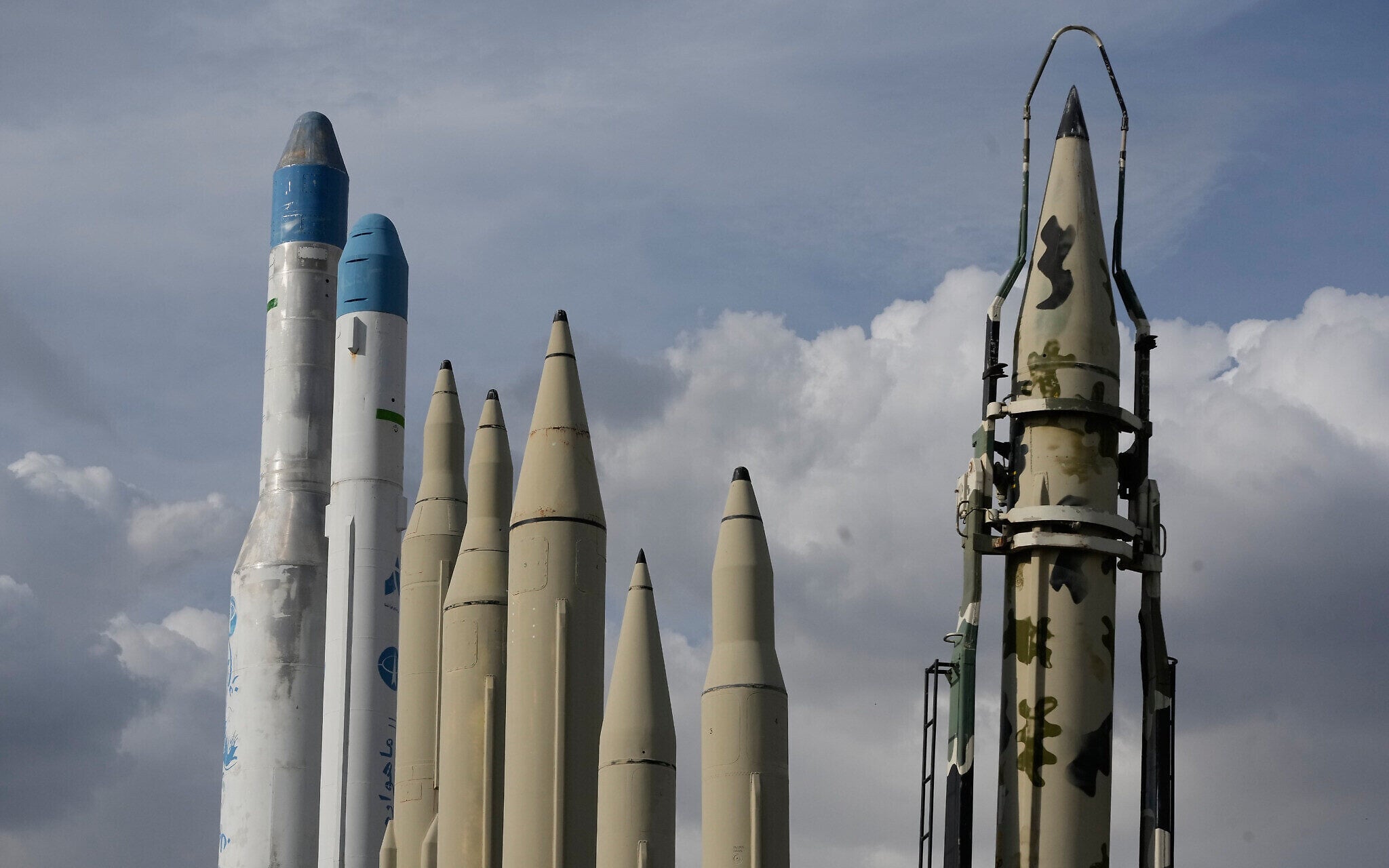
Iran's domestically built missiles and satellite carriers are displayed in a permanent exhibition at a recreational area in northern Tehran, Iran, March 24, 2026. (AP Photo/Vahid Salemi)
Iran has resumed production of ballistic missiles, launchers and other critical weapons systems far faster than initially expected following the recent war with Israel and the United States, according to a report by Channel 12 citing updated US intelligence assessments and a senior Israeli official.
According to the report, Tehran has restarted manufacturing using surviving components, improvised underground facilities, and partially restored production lines, with assistance from Russia and China.
The report says Israeli defense officials now assess Iran could rebuild its drone capabilities within months and significantly ramp up ballistic missile production within about a year, or possibly sooner.
Channel 12 reports that updated intelligence assessments also indicate that roughly two-thirds of Iran’s missile launchers remain operational, contradicting earlier wartime estimates that about half had been destroyed.
The report adds that US and Israeli intelligence officials are divided over how long Iran’s broader military reconstruction will take, though current estimates range from several months to a few years – rather than decades, as some officials previously claimed.
Yesterday, Channel 12 reported that senior Israeli officials warned that the proposed peace agreement between the US and Iran, which is reportedly expected to be announced in the coming days, does not address Tehran’s missile program or its regional proxy network.
Hezbollah drone that struck Shomera landed near school bus stop
The explosive drone that struck the northern border community of Shomera earlier today detonated near a school bus stop, Hebrew media reports.
Images circulating online show the damage caused to the bus stop, which is reportedly located on the community’s main road.
No injuries were reported.
מלחמת הפסקת האש: פגיעה של כטב"ם נפץ ליד תחנת הסעה של ילדים בכביש הראשי של הישוב שומרה. pic.twitter.com/tERguCJhgd
— זירת החדשות (@ZiratNews) May 25, 2026
Golan says Netanyahu ‘not functioning’ as Israel seen as sidelined in Iran talks
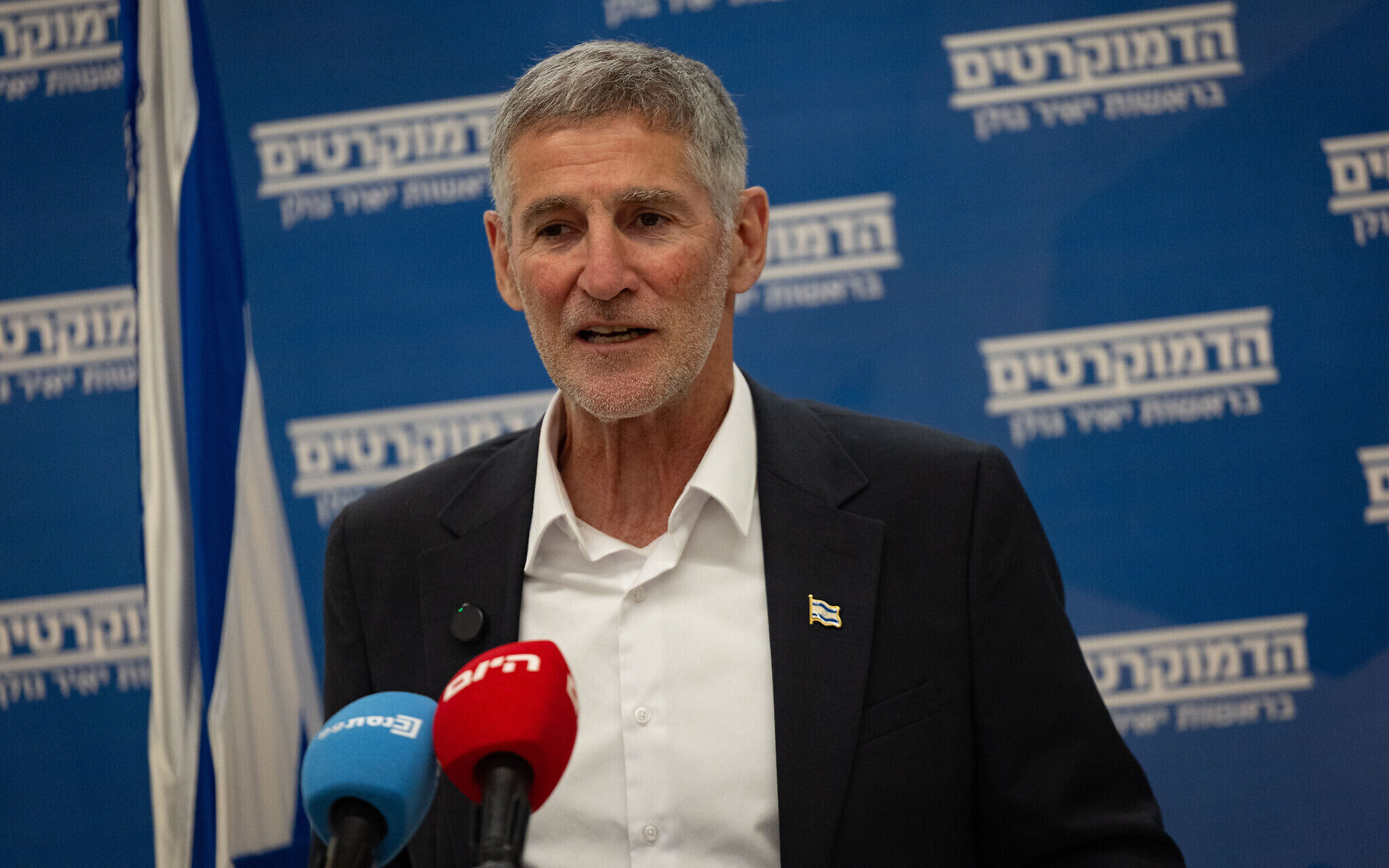
Leader of the Democrats party Yair Golan leads a faction meeting at the Knesset in Jerusalem, on May 25, 2026. (Yonatan Sindel/Flash90)
Democrats chairman Yair Golan says Prime Minister Benjamin Netanyahu is “not functioning” as US-Iran negotiations proceed without Israeli input, criticizing the premier for allowing Israel to lose influence over critical regional developments.
“The fact that the arrangements most critical to Israel’s security are being finalized without us, and that Israel will likely learn the details of the agreement only after the fact, is an unimaginable disgrace,” the left-wing leader says to the press ahead of a faction meeting at the Knesset, calling it “the clearest evidence of the loss of control over our security under Netanyahu’s rule.”
“Netanyahu is not functioning,” Golan continues. “His health does not allow him to withstand the pressure. His legal situation does not allow him to govern the country, and his political condition has turned Israel into a regional and global weakling.”
Claiming that “everyone understands that [US President Donald] Trump, the international community and regional leaders do not take Netanyahu into account,” Golan says that talks on Iran are taking place “over his head” and that Israel is repeatedly “reacting to the decisions of others instead of leading them.”
Golan’s remarks come as Netanyahu continues to testify in his ongoing corruption trial, in which he faces charges of fraud and breach of trust, and a month after the premier disclosed that he had undergone treatment for prostate cancer, but had held off on informing the public, claiming Iran would have used the information to spread propaganda against Israel in the middle of the recent war.
IDF says two Hezbollah drones crashed in northern Israel; rocket intercepted
The IDF says two more explosive drones launched by the Hezbollah terror group fell inside Israeli territory near the border with Lebanon a short while ago after sirens sounded in several northern border communities. There are no reports of injuries.
Additionally, the IDF says the air force intercepted a Hezbollah rocket launched a short while ago at Israel.
WATCH: Trump set to give a statement on US Memorial Day
US President Donald Trump is participating in a wreath-laying ceremony and is set to deliver remarks at Arlington National Cemetery as part of a Memorial Day observance.
Israel objects to Ukrainian reburial with state honors of Nazi collaborator
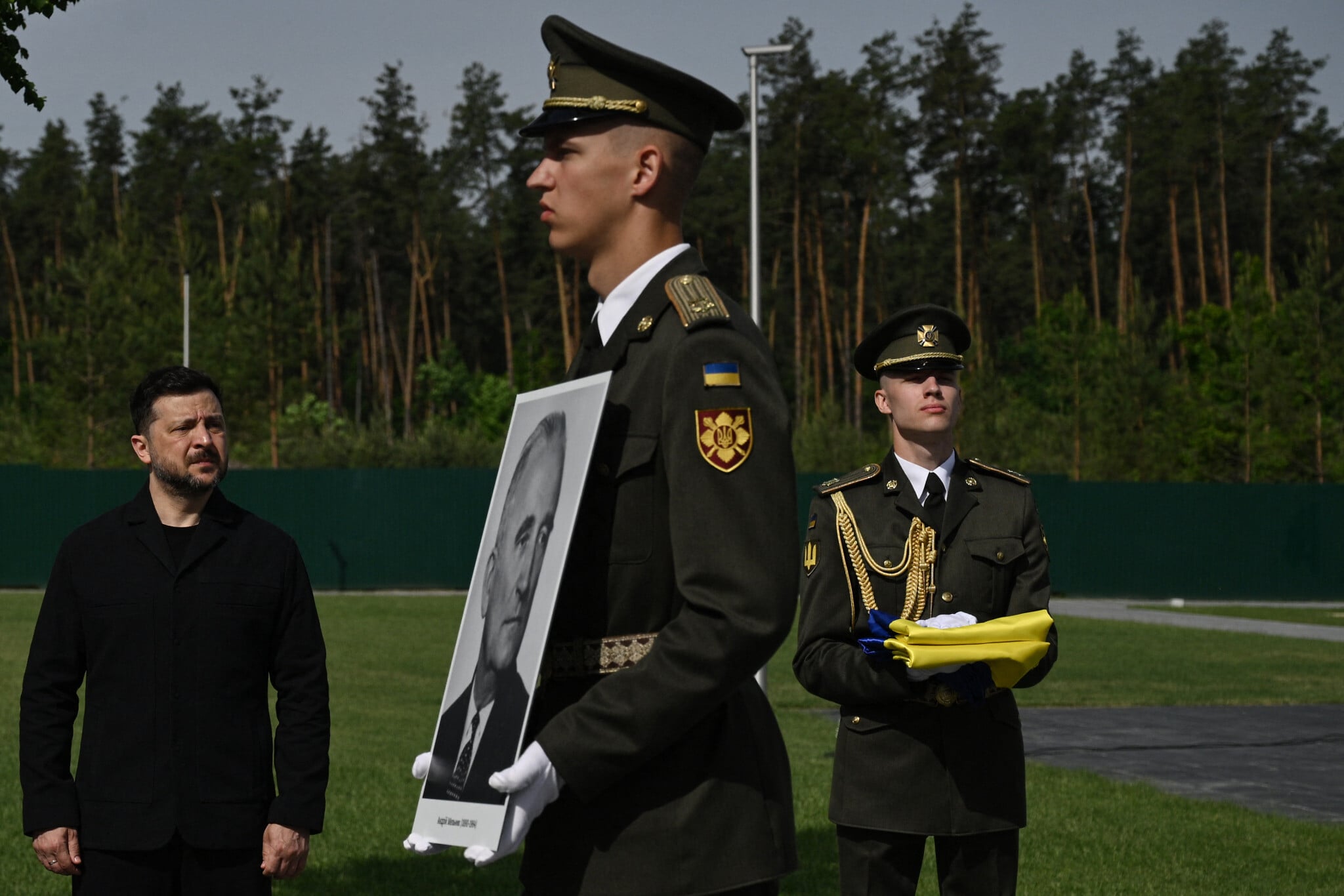
Ukraine's President Volodymyr Zelensky (L) attends the reburial ceremony of Nazi collaborator Andriy Melnyk, who died in 1964 and was the leader of a branch of the Organisation of Ukrainian Nationalists (OUN), along with his wife Sofia, at the National Military Memorial Cemetery near Kyiv on May 25, 2026 (Photo by Genya SAVILOV / AFP)
The Foreign Ministry expresses Israel’s objections to an official Ukrainian state reburial of a Ukrainian political and military leader who was connected to military units that collaborated with the Nazis.
Ukrainian President Volodymyr Zelensky provided full state honors for the reburial ceremony.
“We regret the decision to hold an official state reburial ceremony for OUN leader Andriy Melnyk, who collaborated with the Nazis. There is no place for ignoring historical truth and the memory of the victims murdered by the Nazis and their collaborators,” the Foreign Ministry says in a statement on X.
The Yad Vashem Holocaust memorial center similarly writes on X: “The reinterment of Andriy Melnyk for a state burial in Ukraine raises serious concerns. Honoring the leader of a movement that supported and collaborated with Nazi Germany during the persecution and murder of millions of Jews undermines the moral integrity essential to Holocaust remembrance.”
Melnyk, who died in 1964, was the leader of a branch of the Organisation of Ukrainian Nationalists (OUN), a prominent independence group that challenged Soviet rule, including by working with the Nazis.
The OUN was mainly active between the 1930s and 1950s, and its members took part in the deportation and massacres of Jews and Polish people.
The reburial was held at the National Military Memorial in the Kyiv region, a cemetery opened last year for soldiers killed in Russia’s invasion of Ukraine.
Registration for schools in war-ravaged northern city plummets
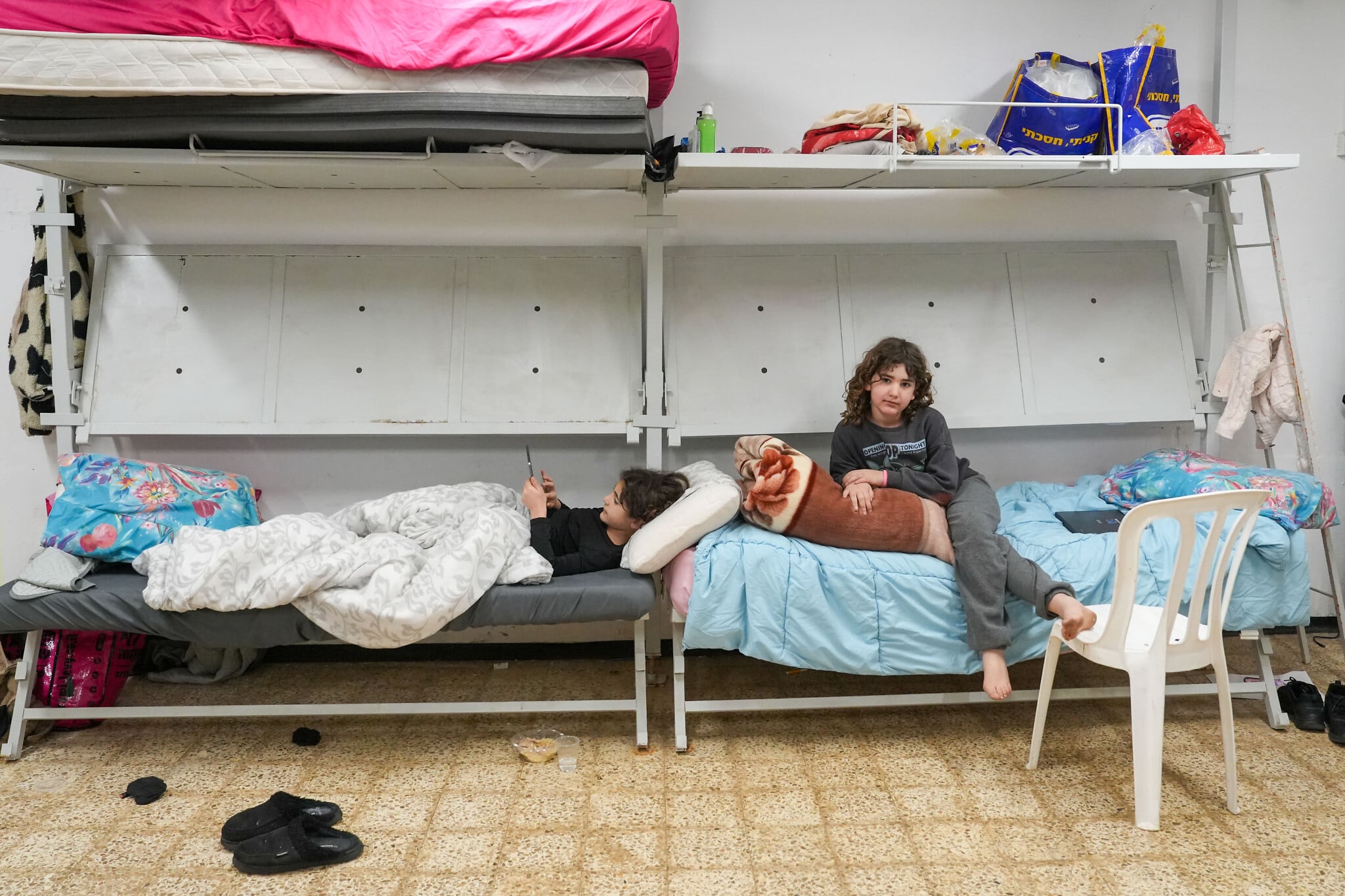
People live inside a bomb shelter in the northern city of Kiryat Shmona amid the ongoing war with Iran and Hezbollah and missile fire toward Israel, March 12, 2026. (Ayal Margolin/Flash90)
The number of children registered to start kindergarten in the war-ravaged northern city of Kiryat Shmona has dropped from 1,000 children in 2023 to 600, according to Channel 12 news.
Only eight first-grade classes are expected to open, compared to 13 classes that opened before the war began on October 7, 2023, when Hezbollah opened fire on Israel in support of Hamas.
Out of 300 middle school students, only 200 are expected to return to the Kiryat Shemona school system.
There are 55 new students enrolled in the school system for next year, all in the national religious public school system.
IDF says key Hamas weapons production operative killed in Gaza strike
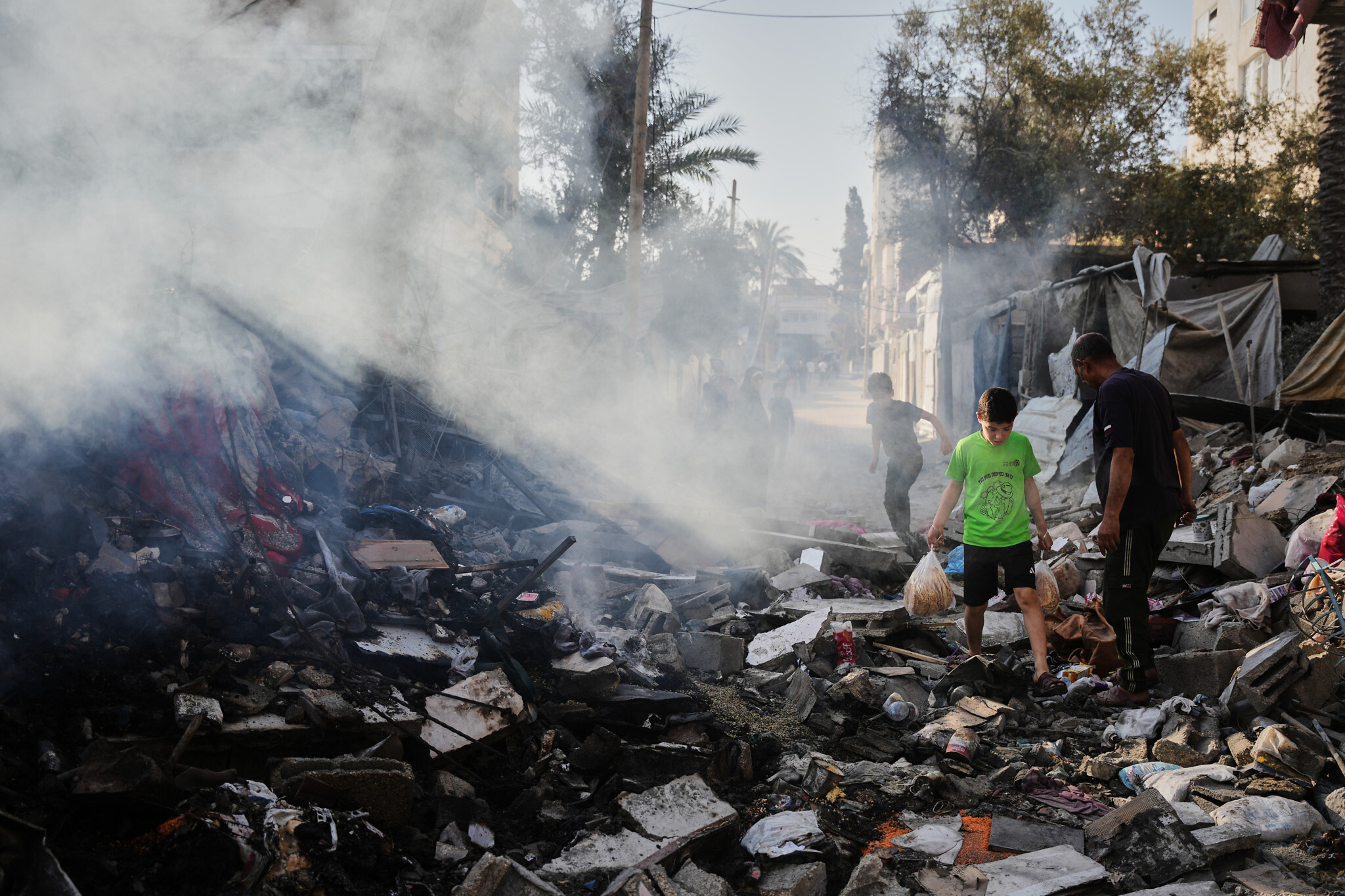
Palestinians walk through the rubble of a home, destroyed in an Israeli airstrike in Deir al-Balah, central Gaza Strip, Sunday, May 24, 2026. (AP Photo/Abdel Kareem Hana)
The IDF says it killed a key Hamas operative involved in weapons production during a strike in central Gaza yesterday.
According to the military, Mohammad Abu Mallouh was a senior figure in Hamas’s weapons production headquarters and served as a major source of technical expertise for the terror group.
The IDF says Abu Mallouh manufactured weapons during the ongoing ceasefire, which posed a threat to troops operating in Gaza and to Israeli civilians.
The military notes that steps were taken to mitigate civilian harm, including the use of precision munitions and aerial surveillance.
להסרת האיום: צה"ל חיסל אתמול מחבל מרכזי במטה הייצור של ארגון הטרור חמאס
כוחות צה"ל בפיקוד הדרום תקפו אתמול, במרכז רצועת עזה וחיסלו את מחמד אבו מלוח, מחבל מרכזי במטה הייצור של ארגון הטרור חמאס.
אבו מלוח היווה מוקד ידע מרכזי בארגון הטרור חמאס, ובזמן הסכם הפסקת האש ייצר כלי נשק… pic.twitter.com/P74zlB62eD
— צבא ההגנה לישראל (@idfonline) May 25, 2026
Drone infiltration warnings sounding in Rosh Hanikra and Shlomi
Sirens sound in the northern border communities of Rosh Hanikra and Shlomi, warning of a suspected drone infiltration.
The IDF says the details are under review.
Deri said to to give up on passing ultra-Orthodox draft law before elections
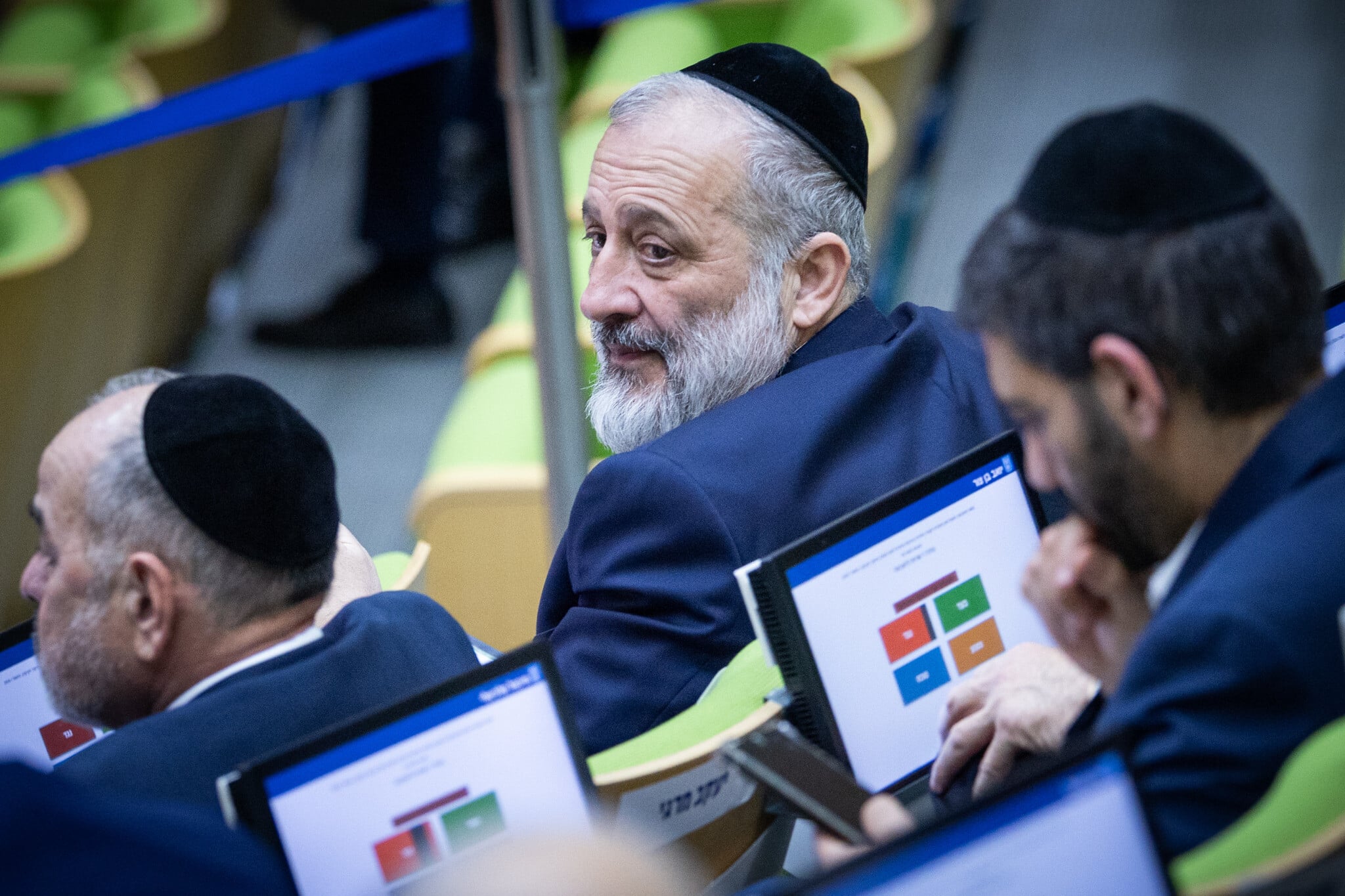
Shas chairman Aryeh Deri attends a vote on the 2026 state budget in the Knesset, March 29, 2026. (Yonatan Sindel/Flash90)
Shas chairman Aryeh Deri appears to have given up on passing the coalition’s controversial Haredi draft exemption bill before the upcoming elections, telling members of his Sephardic ultra-Orthodox party during their weekly faction meeting that “we understand that the conscription law will not pass in the current term,” Channel 13 reports.
According to the network, Deri stated that he is okay with a September 15 election date and needs “to reach an agreement with the prime minister on a date.”
The legislation — which would ostensibly increase military conscription in the Haredi community, but ultimately would enable continued exemptions for full-time yeshiva students — is widely seen as legally dubious and laden with loopholes.
On Sunday, Channel 12 reported that the Knesset’s Ashkenazi United Torah Judaism party had rejected the latest draft of the bill, calling the future of the controversial legislation into question.
Israeli Navy left several intercepted flotilla vessels abandoned at sea amid stormy weather

Boats belonging to the Global Sumud Flotilla depart for Gaza from the port of Marmaris, Turkey, May 14, 2026, in an attempt to break the Israeli naval blockade. (AP/Murat Kocabas)
The Israeli Navy left several boats from the recent Gaza-bound Global Sumud Flotilla drifting at sea after intercepting them and detaining the activists onboard, potentially endangering other vessels and creating an environmental hazard, Army Radio reports.
According to the report, the boats were marked on maritime navigation maps, but stormy weather caused them to drift abandoned and without anchors in open waters.
During previous flotillas, the IDF towed some of the vessels to Israel, but this time the boats were allegedly left at sea.
In response to the report, a military source tells The Times of Israel that “there is no legal obligation to tow the vessels to Israel.”
“The vessels were marked as navigational hazards. Due to the storm and highly restrictive operational conditions, it was not possible to tow them to shore,” the source adds.
Culture minister interrogated by police for third time in corruption probe
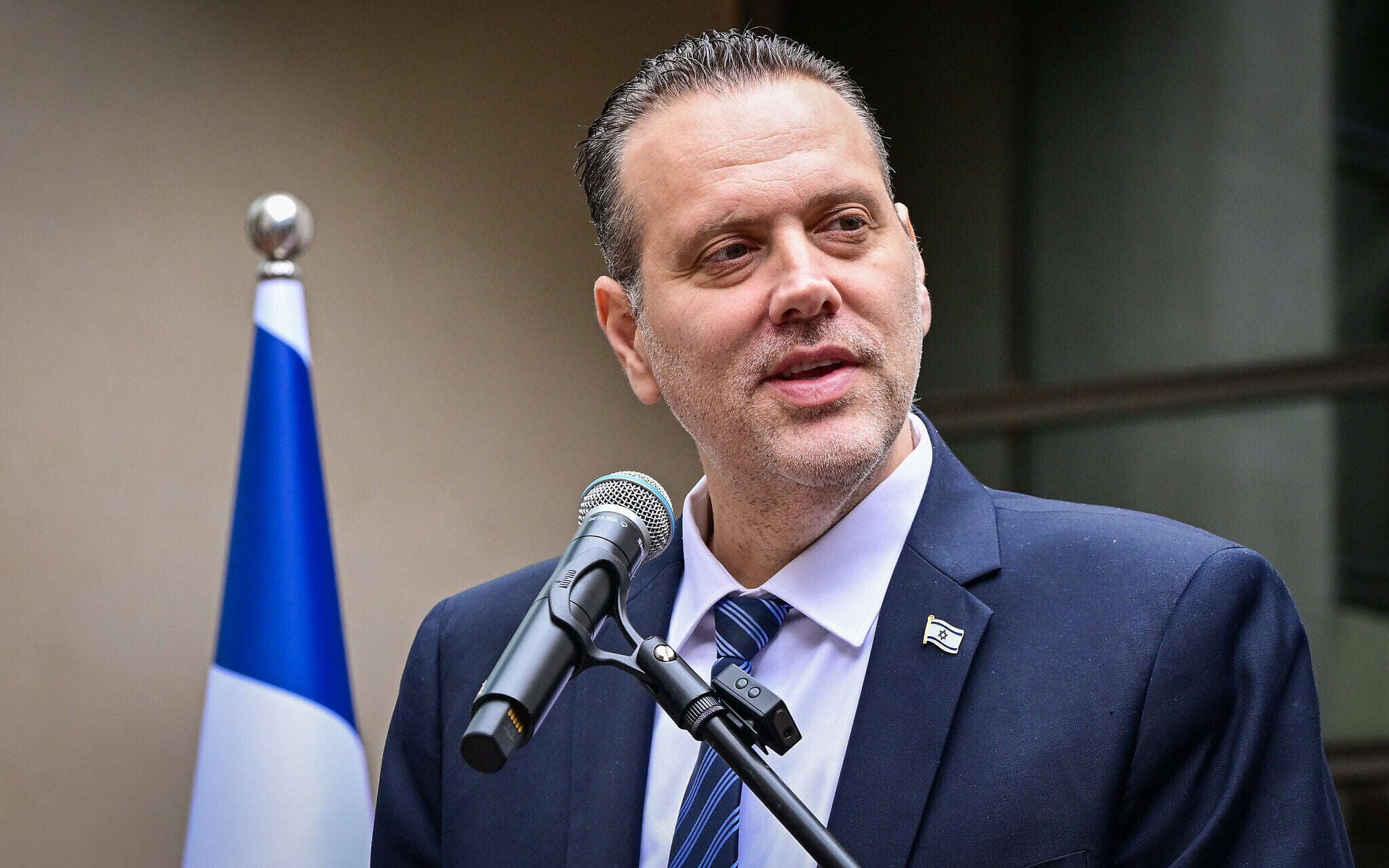
Culture and Sports Minister Miki Zohar at the opening of the Israeli Cartoon Museum in the city of Holon, February 10, 2026. (Avshalom Sassoni/Flash90)
Culture and Sports Minister Miki Zohar is once again questioned under caution by police as part of a major corruption investigation into the Histadrut, Israel’s main labor federation, Hebrew outlets report.
The Likud minister was first interrogated last month by investigators in the police’s Lahav 433 major crimes unit about his ties to the main suspect in the case, Ezra Gabay.
According to Haaretz, Zohar is suspected of receiving a bribe from Gabay, an insurance agent and veteran Likud activist.
Police suspect Gabay of exploiting his close connections to Histadrut chairman Arnon Bar-David and Likud party officials to procure jobs and hand out senior positions in government-owned corporations and local authorities, in exchange for securing insurance contracts with labor unions and municipalities and their workers.
Zohar’s lawyer, Tal Gabay, confirms the summons to several Hebrew outlets, saying that he arrived today at Lahav 443’s headquarters to complete his interrogation. “Minister Zohar reiterates that he is not related to the Histadrut affair in any way,” the lawyer tells Haaretz.
Police have not yet put out a statement announcing the summons.
Mexico to host Iran’s soccer World Cup team after US refusal, president says

Iran's national soccer team players stand onstage as they are greeted by a crowd during a pro-government gathering before their departure for training and friendly matches in Turkey ahead of the World Cup at Islamic Revolution Square in Tehran, Iran, May 13, 2026. (AP/Vahid Salemi)
Mexican President Claudia Sheinbaum says her government agreed to allow the Iranian national soccer team to stay in Mexico during the World Cup, adding that the United States did not want to host the team.
Sheinbaum says soccer’s governing body FIFA approached her government after the US said it did not want Iran’s squad to stay in the country throughout the tournament, despite Iran playing all three of its group matches there.
“We have no reason to deny them the possibility of staying in Mexico,” Sheinbaum says during her daily press conference.
The White House and the State Department did not immediately respond to a request for comment.
Mehdi Taj, head of Iran’s football federation, said on Saturday the team’s base would be moved from Arizona to the Mexican border city of Tijuana during the tournament.
Taj added that the move would help avoid visa-related complications and that the squad would be able to travel directly to Mexico aboard Iran Air flights.
The Iranian team’s participation in the June 11-July 19 tournament had been in question since the US and Israel attacked Iran in late February.
Iran will play its first two Group G matches in Los Angeles against New Zealand on June 15 and Belgium on June 21, before facing Egypt in Seattle on June 26.
IDF announces wave of strikes on Hezbollah in southern Lebanon after warnings
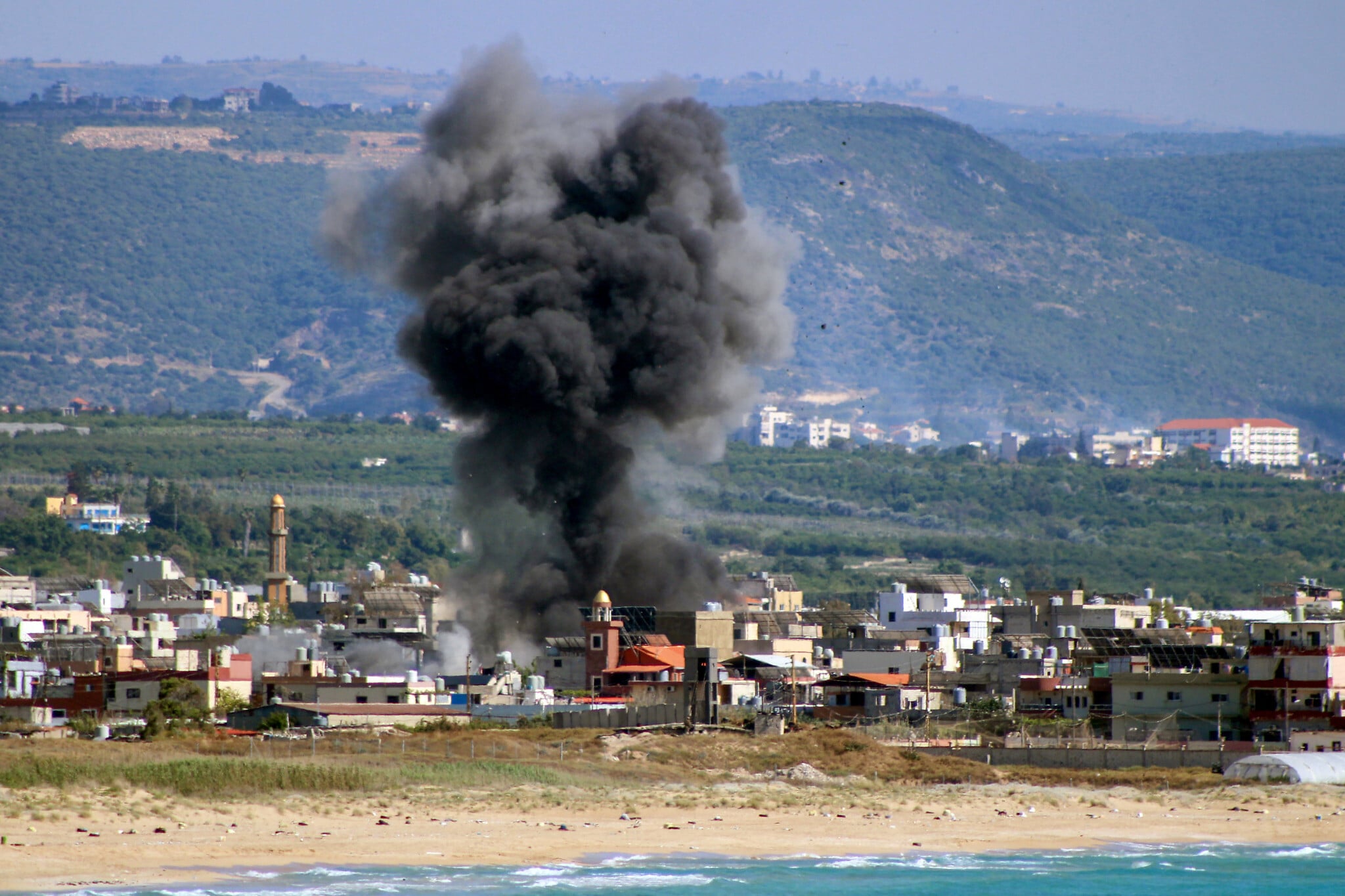
Smoke rises following an Israeli airstrike on the Rashidieh Palestinian refugee camp in the Tyre district of southern Lebanon on May 25, 2026. (Photo by KAWANT HAJU / AFP)
The IDF says it launched a wave of airstrikes on Hezbollah infrastructure in the city of Tyre and other areas in southern Lebanon.
Earlier, the military issued evacuation warnings for Tyre and surrounding areas.
The strikes come amid an uptick in Hezbollah drone attacks on northern Israel in recent days. Earlier today, a Hezbollah UAV struck a home in Metula, while an explosive drone damaged a school bus stop in Shomera. No injuries were reported in either incident.
IDF Northern Command chief says Israel ‘at war’ in Lebanon amid escalating Hezbollah drone attacks
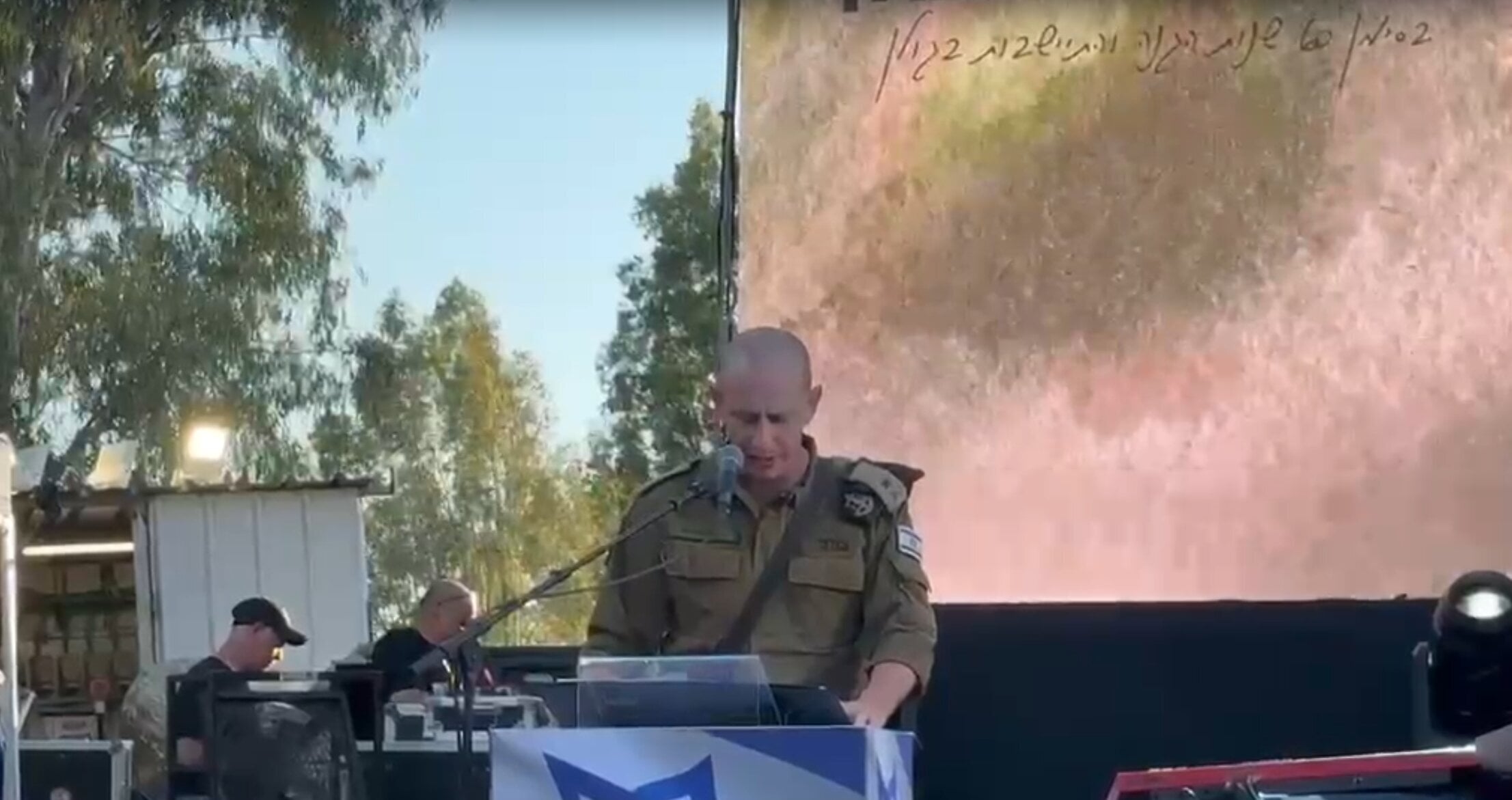
Chief of the IDF Northern Command Maj. Gen. Rafi Milo speaks at a ceremony for the 474th 'Golan' Regional Brigade in Katzrin, May 25, 2026. (Screen capture: Israel Defense Forces)
Chief of the IDF Northern Command Maj. Gen. Rafi Milo says the command is “at war” in Lebanon and that the military “will not tolerate fire on the home front,” following an uptick of Hezbollah drone attacks on northern Israel in recent days.
Speaking at a ceremony for the 474th “Golan” Regional Brigade in Katzrin, a city in the Golan Heights, Milo says that Israeli forces are operating “deep inside Lebanese territory” against Hezbollah infrastructure and operatives.
“On the Lebanese front, the Northern Command is at war,” Milo says.
“Harm to civilians and the civilian sphere is not a reality we can accept or treat as routine,” Milo says, accusing Hezbollah of deliberately escalating the security situation in the north through direct attacks on civilians.
His comments come after a Hezbollah UAV struck a home in Metula and an explosive drone damaged a school bus stop in Shomera earlier today. No injuries were reported.
After Trump call, Saudi source says no normalization with Israel without ‘irreversible pathway’ to Palestinian state

Saudi Crown Prince Mohammad bin Salman walks to his seat after speaking during the US-Saudi Investment Forum at the Kennedy Center, November 19, 2025, in Washington, DC. (Brendan Smialowski / AFP)
Saudi Arabia will only normalize relations with Israel if an “irreversible pathway” to Palestinian statehood is established, a Saudi source tells international outlets, following US President Donald Trump’s insistence that Riyadh and other Muslim-majority and regional states join the Abraham Accords.
Trump called on Saudi Arabia, Qatar, Egypt, Jordan, Turkey, and Pakistan earlier today to join the Abraham Accords normalization agreements “immediately,” ahead of any US agreement with Iran.
The Trump administration has long viewed Saudi-Israeli normalization as the crown jewel of the Abraham Accords, though efforts toward that end largely stalled during Israel’s war against Hamas in Gaza. Riyadh has since repeatedly insisted that such an agreement follow meaningful movement on the Palestinian issue.
Senior Israeli official: ‘We are defenseless’ against Hezbollah drone threat
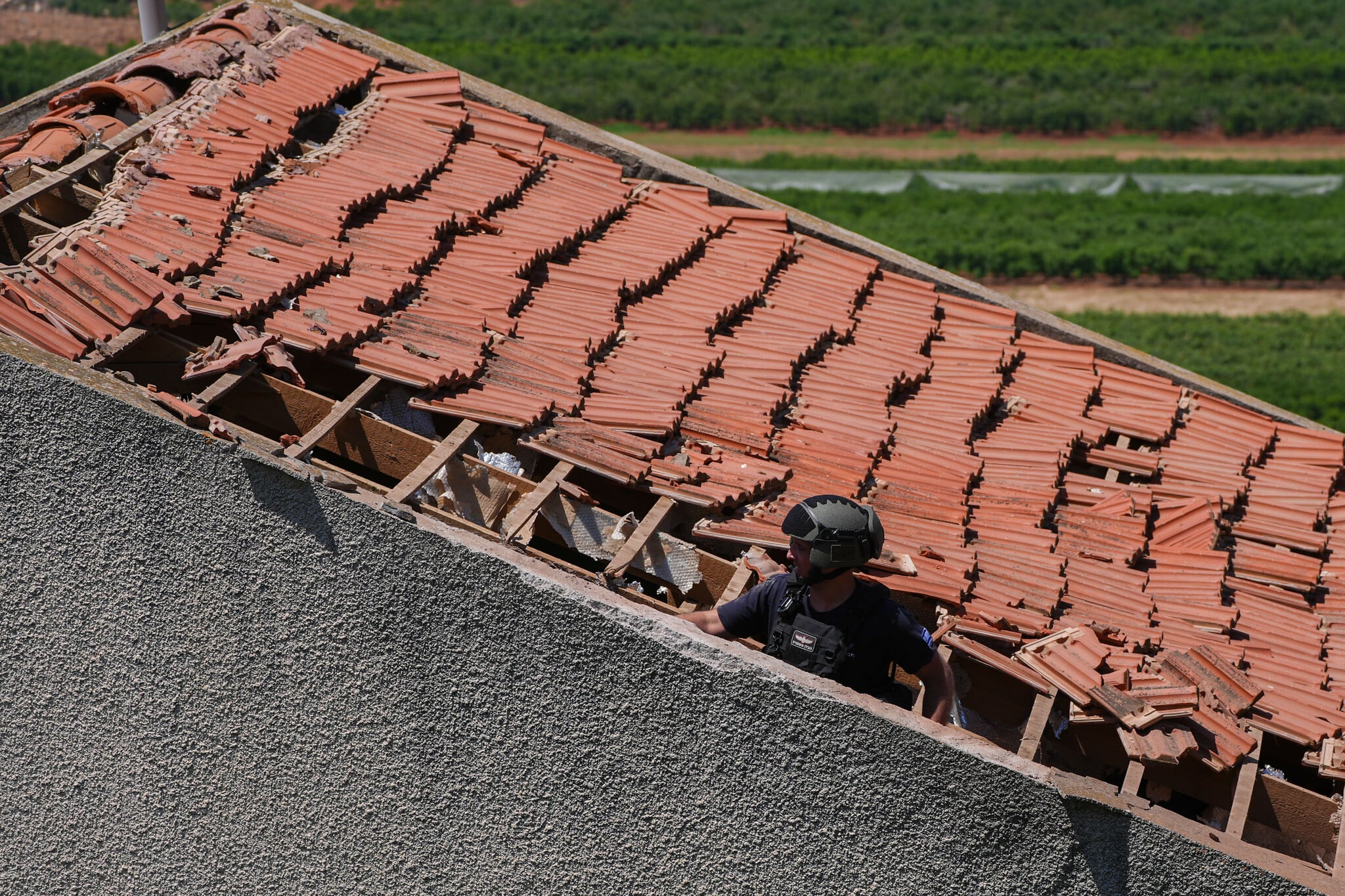
Israeli security forces are seen at a home in Metula, near the Israel-Lebanon border, that was hit by a Hezbollah unmanned aerial vehicle on May 25, 2026. (Ayal Margolin/Flash90)
A senior Israeli official tells Channel 12 that Israel is currently “defenseless” against the drone threat from Hezbollah.
“At the moment, we are defenseless in the face of this deadly reality,” says the unnamed official, who Channel 12 describes as someone involved in security cabinet discussions.
The official says that Israel is using makeshift methods to defend against the surge in drone use and “without solutions on the diplomatic stage,” a reference to Israel being limited in its ability to carry out widespread offensive operations in Lebanon due to pressure from the US due to the talks with Iran.
“The truth is our hands are tied and that needs to change soon,” the official says, adding that civilian area are sitting ducks to the cheap Hezbollah attack drones.
Channel 12 also reports that the IDF has thinned out troops in southern Lebanon to avoid exposing them to the drones.
The report says the IDF is pushing the government to authorize a wider operation.
Netanyahu, Smotrich said to clash over response to Hezbollah drones
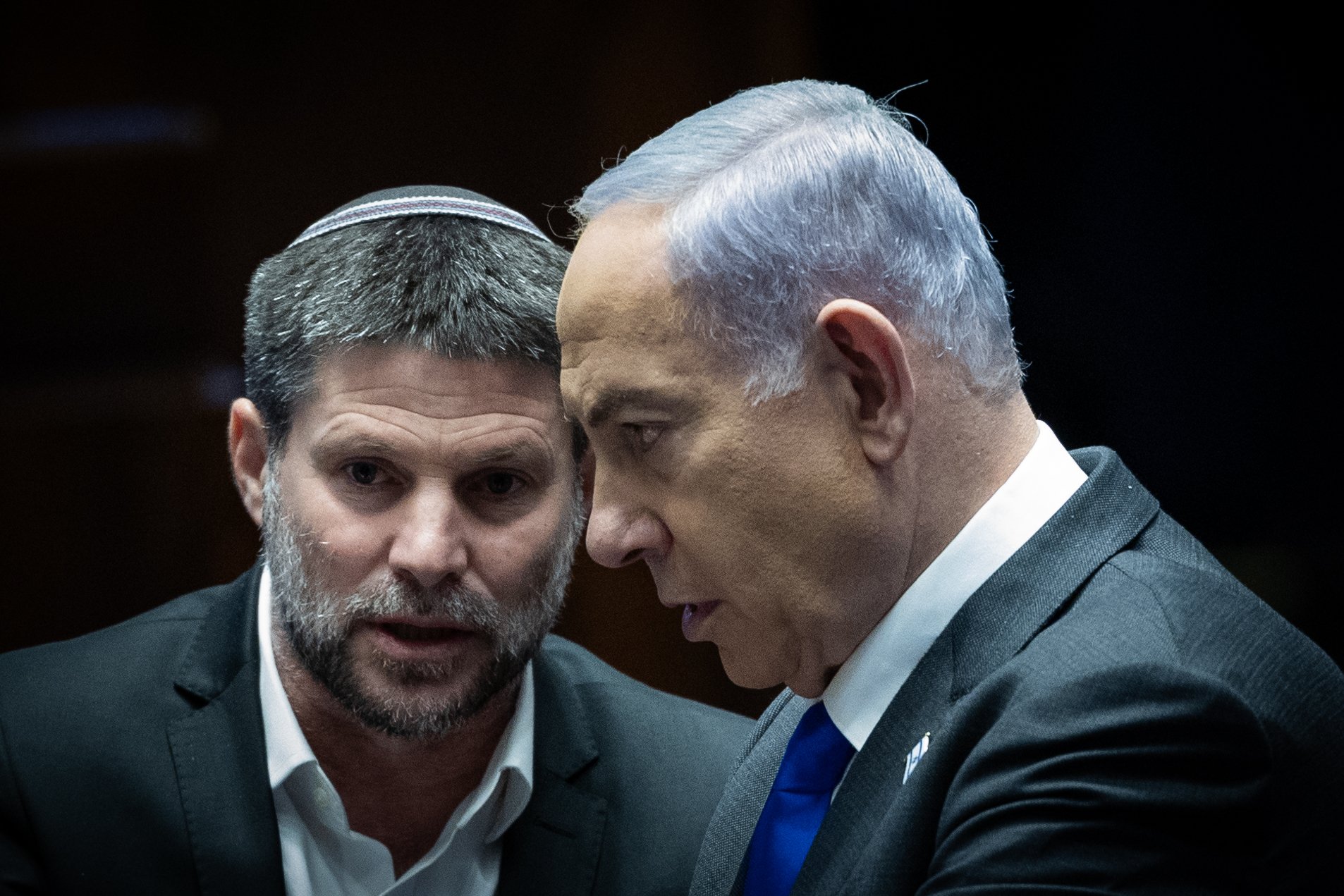
Prime Minister Benjamin Netanyahu, right, and Finance Minister Bezalel Smotrich in the Knesset, February 7, 2024. (Yonatan Sindel/Flash90/File)
Prime Minister Benjamin Netanyahu and far-right Finance Minister Bezalel Smotrich clashed over a response to the growing drone threat from Hezbollah during last night’s security cabinet meeting, Channel 12 reports.
Smotrich reportedly demanded of Netanyahu that the IDF take down 10 buildings in Beirut for every explosive drone fired into Israel.
According to the report, Netanyahu mocked Smotrich, asking what he would do after 30 drones were fired, take down 30 buildings?
The report also says that IDF Chief of Staff Eyal Zamir also pushed for greater freedom to operate, saying they could not operate with a “tweezer.”
Israel is largely restrained in the scope of its operations due to pressure from the US during talks with Iran.
US likely to greenlight larger Israeli operation against Hezbollah amid surge in drone attacks
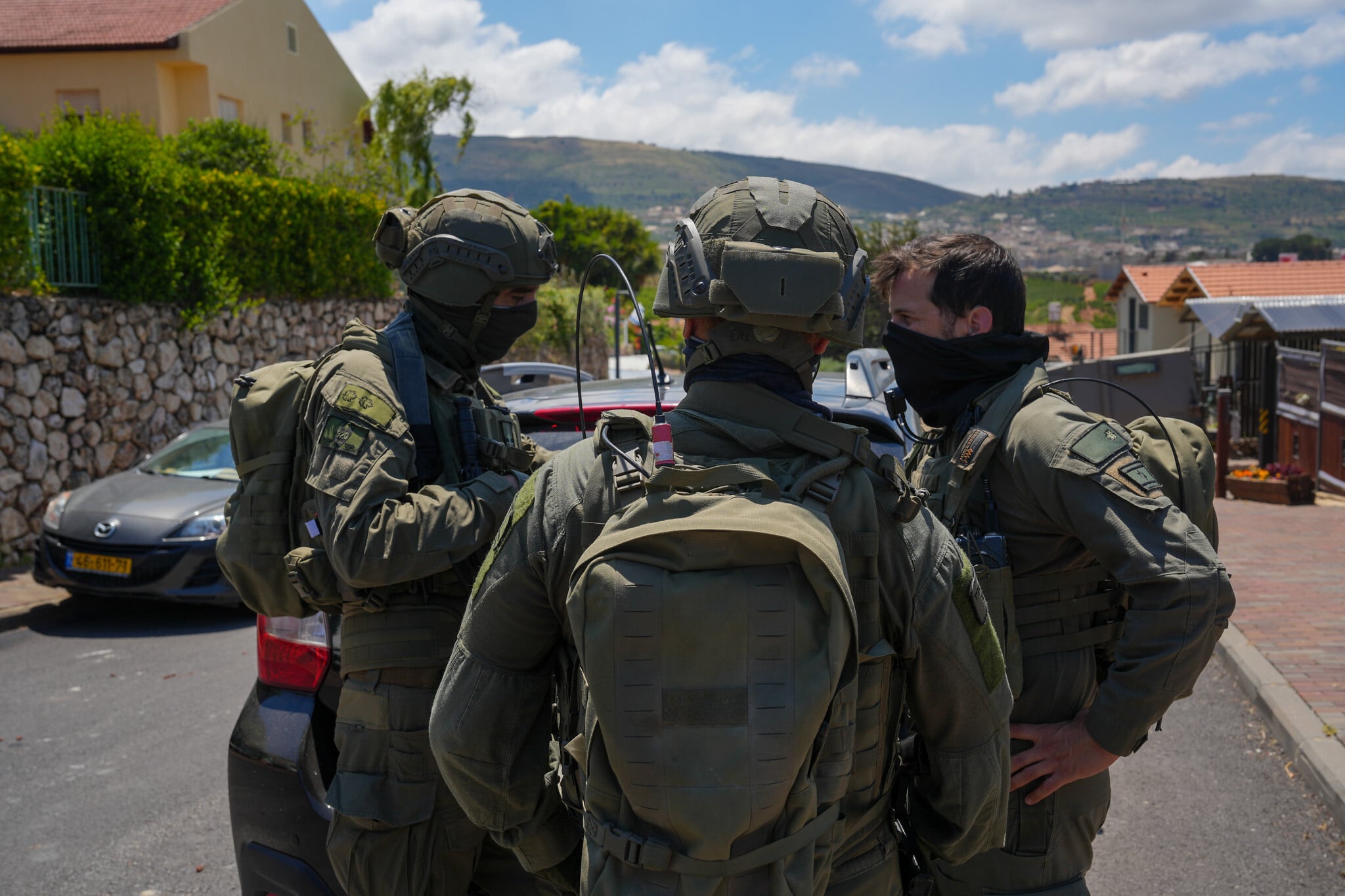
Israeli security forces are seen outside a home in Metula, near the Israel-Lebanon border, that was hit by a Hezbollah unmanned aerial vehicle on May 25, 2026. (Ayal Margolin/Flash90)
A senior US official indicates that the US could greenlight a larger Israeli operation against Hezbollah in Lebanon, amid a surge in drone attacks on Israel.
“Hezbollah has ignored repeated requests to stop firing at Israel, including a recent ultimatum. Israel will never be expected to passively absorb attacks on its forces and civilians,” the official tells the Times of Israel. “This is not the Biden administration.”
The official notes that over the past eight days, Hezbollah has fired over a thousand drones and over 700 rockets at Israel, in an apparent bid to derail talks between Israel and Lebanon.
“It broke the ceasefire on March 2 and is now intent on denying the Lebanese people a path to peace and reconstruction,” the official says, adding that the Iran-backed terror group sees the talks as “an existential threat.”
“A successful ceasefire led by the government of Lebanon would strip Hezbollah of their power and their narrative,” he says.
Explosive drone impacts in north near Lebanese border, no injuries
Yet another explosive drone fell in Israeli territory near the Lebanese border a short while ago, following sirens that sounded in the communities of Rosh Hanikra and Shlomi, the IDF says.
The military adds that no injuries were reported.
‘Lost faith in British society’: UK Jewish community leader says he’s moving to Israel amid rising antisemitism
Jeremy Jacobs, a former head of the UK’s United Synagogue, says he is leaving Britain for Israel after losing faith in British society amid rising antisemitism since the October 7, 2023, Hamas attacks on Israel.
In a letter submitted to The Telegraph, Jacobs says he has “lost faith in British society” and recently put his family home up for sale and is “making arrangements to start a life in Israel” with his wife, Karen.
“When I walk around London with my kippah on I’m always fearful,” Jacobs says, adding that he no longer believes most people would come to the defense of Jews facing harassment.
Antisemitism in Britain had intensified in universities and public spaces, says Jacobs, whose family has lived in Britain since the 1850s. He recalls being verbally harassed near University College London while walking with his grandchildren shortly after the October 7 attack, and says his grandchildren are “suffering” because they go to Jewish schools.
In spite of concerns about security in Israel during wartime, Jacobs says he feels a stronger sense of safety in Israel than in Britain.
“When I walk in Israel, even in a war zone, I feel at home,” he says. “In London, where we live, that feeling has gone.”
'Ik heb mijn vertrouwen in de Britse samenleving verloren': Voormalig Joods leider van het VK emigreert naar Israël vanwege toename van antisemitisme
Temidden van een golf van antisemitisme vertrekt Jeremy Jacobs, voormalig CEO van de Britse koepelorganisatie voor orthodox-joodse… pic.twitter.com/z23v22hBWw— Joop Soesan ???????????????? (@JoopSoesan) May 25, 2026
Iran’s president orders reopening of international internet access, state media reports

A person holds a phone after activating a virtual private network (VPN) service to access the internet while in Tehran on September 11, 2023. (ATTA KENARE / AFP)
Iran’s President Masoud Pezeshkian has issued an order to reopen international internet access, Iranian state media reports, citing an official after a near-90-day blackout in the wake of the war against the US and Israel.
The report cites the head of public relations at Iran’s Communications Ministry.
The mechanism for how and when Iran would reconnect to the global web following the decision was unknown.
Most Iranians have been unable to access the World Wide Web for 87 days according to the internet observatory NetBlocks, with only a few citizens having access to expensive and advanced VPNs that circumvent the restrictions.
Authorities initially imposed an internet blackout from January 8 in response to nationwide anti-government protests, with connections gradually getting back to normal in February, before a new blackout was initiated following the start of US and Israeli strikes against Iran on February 28.
In normal times, access to the global internet remains heavily restricted via censorship of many websites, while authorities are increasingly relying on an intranet to provide connected services without relying on the Web, notably for schools that are currently following an online curriculum.
Iranian officials in Qatar said seeking earlier access to frozen funds in US deal
Iranian officials in Qatar are pushing to revise the wording of a potential agreement with the United States in an effort to secure the earlier release of some frozen Iranian assets, Channel 12 reports, citing a US source.
Iranian top negotiator Mohammad Bagher Ghalibaf, Foreign Minister Abbas Araghchi, and Iran’s central bank governor are in Doha for talks with Qatar’s prime minister on the potential US-Iran deal, in part hoping to discuss the potential release of frozen Iranian funds as part of a final agreement, an official told Reuters earlier today.
According to Channel 12, Tehran is seeking to introduce the last-minute changes in order to present tangible achievements on the domestic front.
In a separate report that did not cite sources, Channel 12 says Qatar has also proposed extending Iran a $12 billion loan earmarked for humanitarian purposes, which, according to the report’s framing, would effectively function as an economic grant for Tehran.
Senior US envoys Jared Kushner and Steve Witkoff plan to visit Israel if an agreement is ultimately reached, the Hebrew network adds, citing a US official, who says that they would come ahead of the deal for consultations and briefings with Prime Minister Benjamin Netanyahu.
Northern mayor warns residents ‘the war will intensify tonight’

Shlomi Mayor Gabi Naaman points to Shlomi on a map of the northern border area on July 31, 2025. (Diana Bletter/ Times of Israel)
Gabi Naaman, the mayor of the northern town of Shlomi, warns residents that “the war will intensify even more tonight and in the coming days, so we must be more vigilant than usual.”
Naaman posts the warning on Facebook after a meeting between northern council heads and mayors with IDF Northern Command Maj. Gen. Rafi Milo.
Naaman says he requested that the Home Front Command and Education Ministry shut down the education system and move to distance learning following the surge in drone attacks from Hezbollah.
Netanyahu says he told IDF to ‘intensify blows’ against Hezbollah amid surge in drone attacks
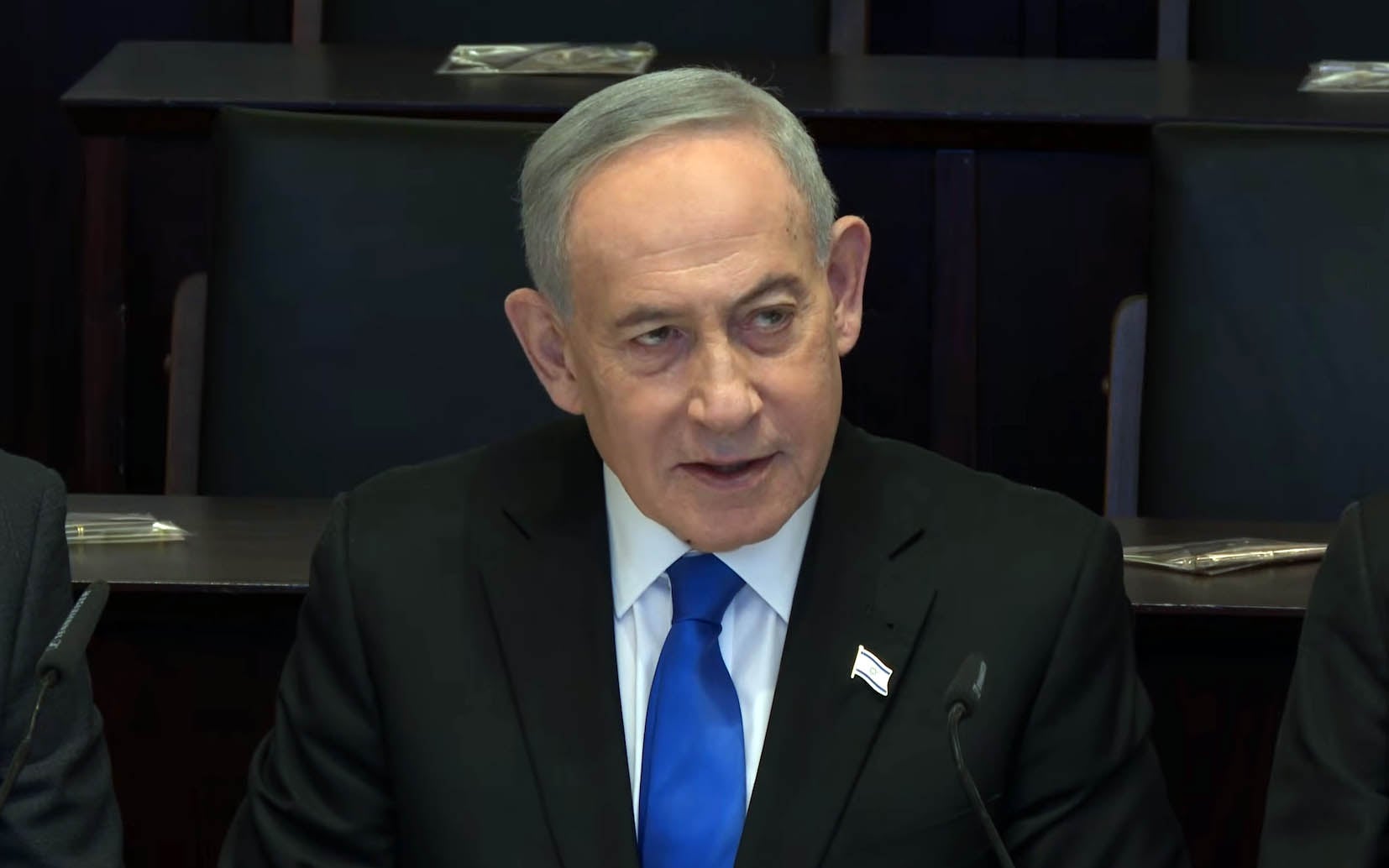
Prime Minister Benjamin Netanyahu leads the weekly cabinet meeting on May 17, 2026. (Screenshot/GPO)
Prime Minister Benjamin Netanyahu says he instructed the military to “press the pedal even harder” against Hezbollah, after a US official signaled that Washington would approve a larger operation against the Iran-backed terror group amid a surge in drone attacks.
“We are at war with Hezbollah. Just in recent weeks, our brave fighters have eliminated more than 600 terrorists,” Netanyahu says in a video statement. “But we are not taking our foot off the gas. On the contrary, I have instructed them to press the pedal even harder.”
“We will strike them. Yes, they are attacking us with drones, cyber-enabled drones, and we have a special team working on this — and we will solve that too…But what this requires from us now is to intensify the blows, increase the force. We will strike them decisively,” the premier says.
IDF announces wave of strikes in Beqaa Valley targeting Hezbollah infrastructure
The IDF says it launched a wave of aristrikes on Hezbollah infrastructure in the Beqaa Valley and other areas in Lebanon.
Earlier, the military said it was striking infrastructure belonging to the terror group in the city of Tyre and surrounding areas.
Paying tribute to soldiers slain in Iran war, Trump vows Tehran ‘never’ to have nuclear weapon
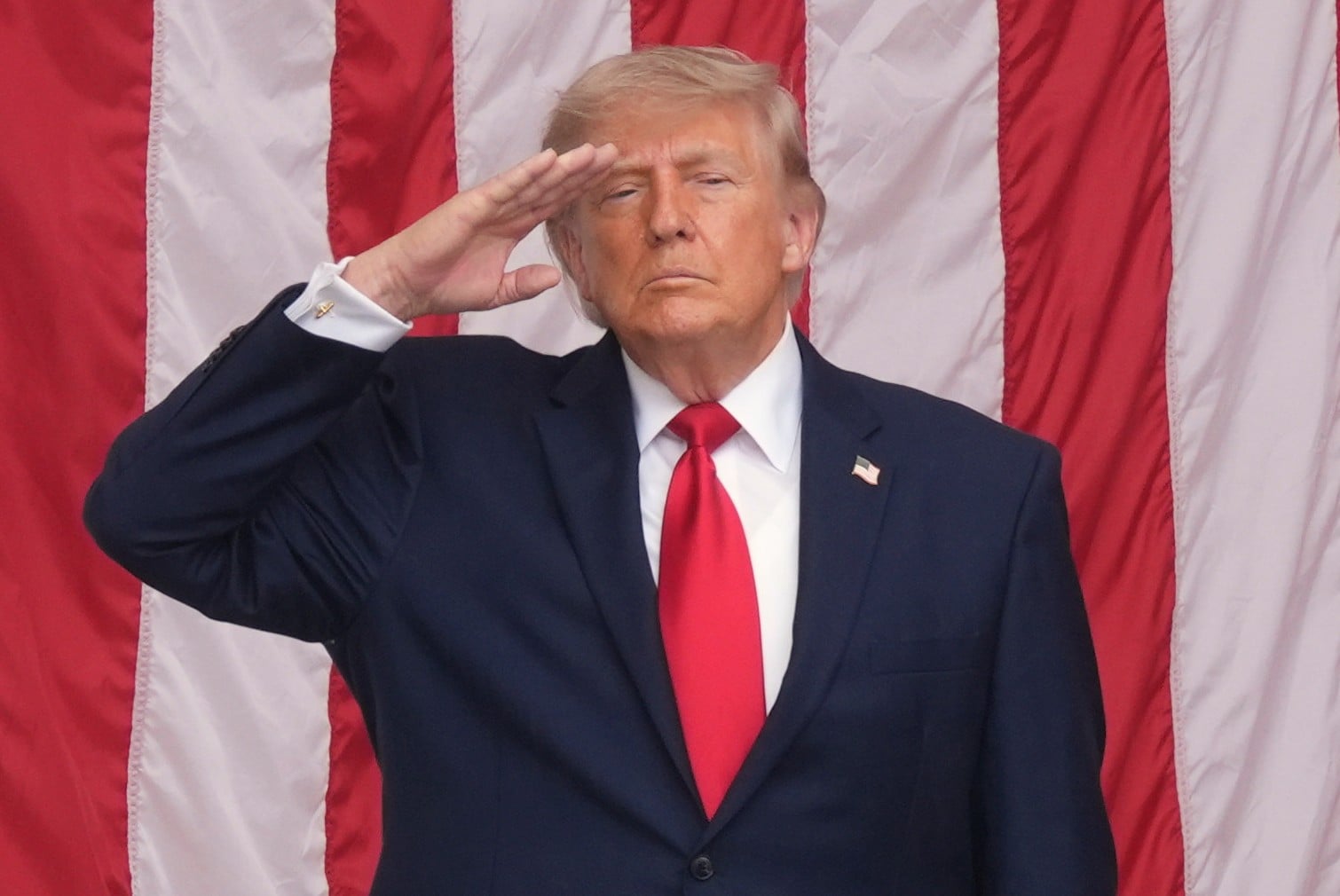
US President Donald Trump salutes during the playing of 'Taps' at the 158th National Memorial Day Observance coinciding with the nation's 250th anniversary, at the Memorial Amphitheater in Arlington National Cemetery, May 25, 2026, in Arlington, Virginia. (AP Photo/ Alex Brandon)
Speaking at Arlington National Cemetery on Memorial Day, US President Donald Trump pays tribute to the US troops killed in the campaign against Iran, vowing again that Tehran “will never have a nuclear weapon.”
“In Operation Epic Fury, we lost 13 wonderful souls, wonderful, special people. These incredible men and women gave their lives to ensure that the world’s number one state sponsor of terror will never have a nuclear weapon,” Trump says as the US pursues an agreement with Iran to end the conflict.
“Oh, and they won’t. They will never have a nuclear weapon, I’m sure you know that,” Trump says.
Karhi’s media overhaul bill would exempt right-wing Channel 14 from content-sharing requirement, in benefit worth millions

Illustrative. Channel 14 in Jerusalem on June 2, 2024. (Chaim Goldberg/Flash90)
Lawmakers say the latest version of Communications Minister Shlomo Karhi’s controversial media overhaul bill includes a last-minute amendment that would exempt the pro-government Channel 14 news outlet from a new requirement obligating broadcasters to provide certain content to television platforms free of charge.
The provision was added over the weekend before the special Knesset panel that deliberates the legislation meets today and stipulates that only channels generating more than NIS 600 million ($208 million) in annual revenue would be subject to the requirement, a threshold that would exempt Channel 14 while applying to Channels 12 and 13.
The exemption is estimated to be worth roughly NIS 40 million ($13.8 million) annually.
“Suddenly in the new draft, anyone with more than NIS 600 million in annual revenue has to provide content for free? Who does that serve? Come, everyone let’s all act surprised,” says Yesh Atid MK Shelly Tal Meron sarcastically to Karhi during a Knesset panel session discussing the legislation.
“Do you think we’re stupid? We know that you intervened and decided this on your own, contrary to your ministry’s professional staff, because you want to give Channel 14 special treatment!” she continues.
The amendment concerns so-called catch-up television services, which allow viewers to watch broadcasts shortly after they air. Under the revised proposal, large broadcasters would be required to provide up to 90 minutes of catch-up content to multichannel television platforms free of charge.
Karhi has openly framed the legislation as a response to what he describes as “the left’s monopoly over public awareness through the major channels,” telling Channel 14 in April that the station had already “broken part of that monopoly.”
The legislation, which would give the government significant control over broadcast media, news sites, and other media by establishing a new regulatory council, with a majority of members chosen by the communications minister, has drawn sharp opposition from both the committee’s professional legal staff and Attorney General Gali Baharav-Miara, who have warned that the current draft undermines press freedom and allows for political interference in media.
Netanyahu taken to a Jerusalem hospital; his office says it’s for dental work
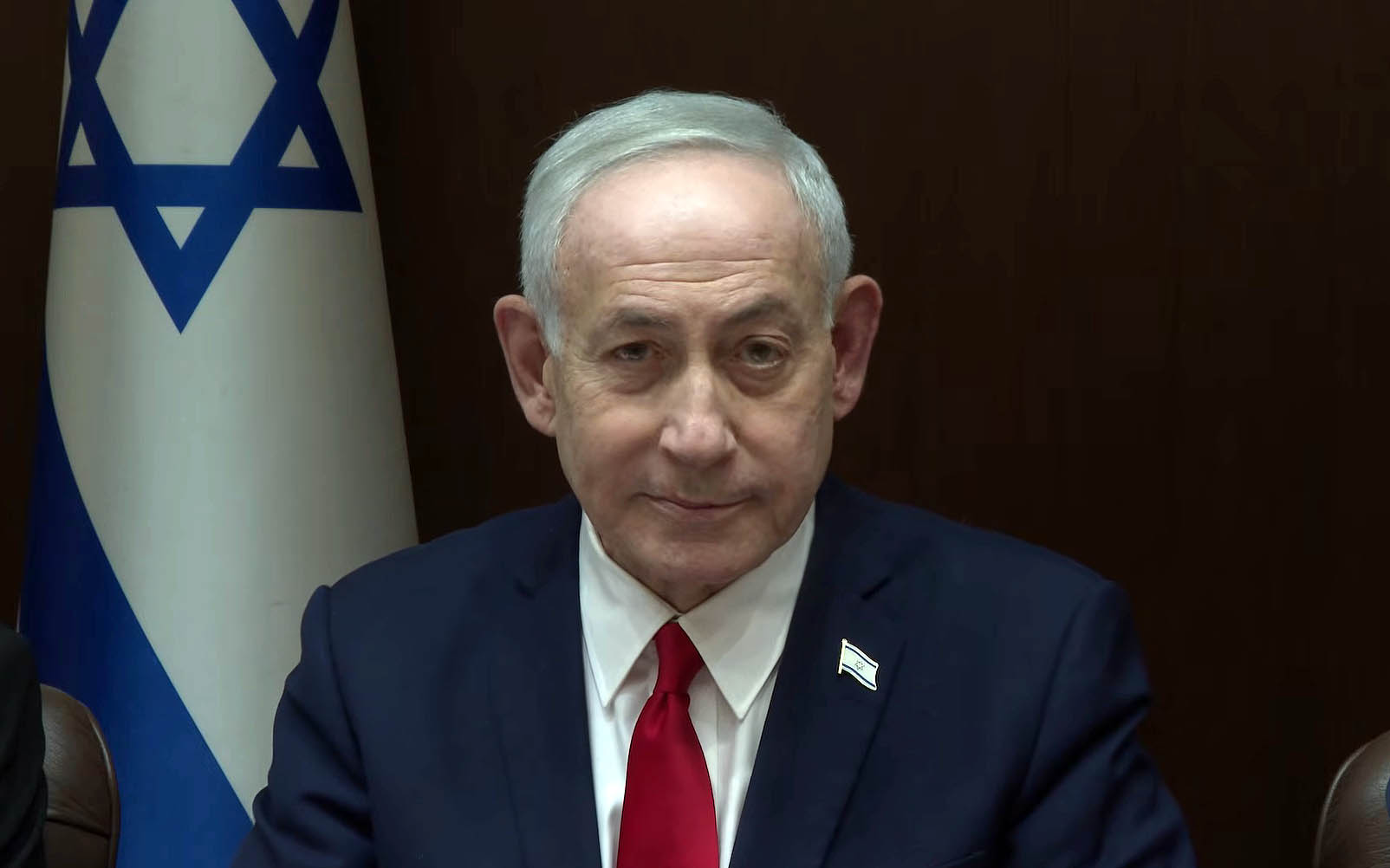
Prime Minister Benjamin Netanyahu delivers a statement at a security cabinet meeting, on May 6, 2026. (Screenshot/GPO)
Prime Minister Benjamin Netanyahu was taken to Hadassah Ein Kerem hospital late this evening, his office says, adding that the premier was receiving unspecified dental treatment.
The statement is issued after Hebrew media reported that he was taken to the hospital.
The health of the 76-year-old premier has become a major focus after last month, when he revealed that he had recently undergone successful treatment for prostate cancer, but had held off on informing the public, claiming Iran would have used the information to spread propaganda against Israel in the middle of the recent war.
Netanyahu had a pacemaker implanted in July 2023. The procedure was one of several medical incidents the premier has experienced in recent years, including the December 2024 prostate removal surgery and hernia surgery in March 2024.
Both the pacemaker and the hernia episodes exposed Netanyahu to criticism for withholding information from the public regarding his health.
IDF says over 70 Hezbollah targets struck across Lebanon in past day
The IDF says it struck more than 70 Hezbollah infrastructure sites across Lebanon over the past 24 hours, including around 10 command centers and weapons depots in the city of Tyre.
The military says it used more than 85 munitions to target the sites, which were “used by Hezbollah to advance terror attacks against IDF troops and Israeli civilians.”
The IDF also says the air force struck and killed Hezbollah operatives riding motorcycles in an area where troops are operating in southern Lebanon.
Earlier, the military said it had launched strikes on Tyre, the Beqaa Valley and other areas of southern Lebanon, after issuing an advanced warning.
The strikes come amid a recent escalation in Hezbollah drone attacks on northern Israel.
חיל האוויר תוקף באזור צור ונבטייה pic.twitter.com/u4twBeD2LG
— איתי בלומנטל ???????? Itay Blumental (@ItayBlumental) May 25, 2026
Northern mayors cancel school amid escalation in fighting with Hezbollah
Mayors and regional council heads in communities along the northern border announce that schools will be closed tomorrow and until further notice, given an escalation in fighting with Hezbollah.
The announcements are taken independently and without instruction to do so from the IDF Home Front Command.
Most studies will shift to distance learning.
Residents flee southern Beirut after Netanyahu orders escalation against Hezbollah
Following Prime Minister Benjamin Netanyahu’s call for escalation in strikes against Hezbollah, an AFP correspondent reports residents fleeing the southern suburbs of Beirut, a Hezbollah stronghold.
Lebanese security sources also tell Reuters that residents are evacuating.
Except for a strike targeting a Hezbollah commander in the area earlier this month, there have been no strikes on Beirut or its surroundings since the April 16 truce.
Netanyahu did not say in his video message whether Israel planned to resume broader attacks in Beirut.
— ????????/???????? Evacuations in Beirut pic.twitter.com/i0nda7tiVN
— brane mijatovic (@brane_mija64426) May 25, 2026
Trump says Iran’s enriched uranium must be handed to US or destroyed under IAEA oversight
US President Donald Trump insists that Iran’s enriched uranium stockpile will either be turned over to the US or destroyed at another location with International Atomic Energy Agency oversight, amid ongoing talks on an agreement with Iran.
“The Enriched Uranium (Nuclear Dust!) will either be immediately turned over to the United States to be brought home and destroyed or, preferably, in conjunction and coordination with the Islamic Republic of Iran, destroyed in place or, at another acceptable location, with the Atomic Energy Commission, or its equivalent, being witness to this process and event,” Trump writes on Truth Social.
Trump does not specify whether he is concerned only with the 440kg of highly enriched uranium in Iran’s possession or its full stockpile of enriched uranium, though US officials have reportedly claimed the full stockpile would need to be removed.
Iranian officials have stressed that they are unwilling to discuss the nuclear issue until a potential 60-day ceasefire for the deal under discussion begins.
Explosions heard in Iran’s Bandar Abbas, outlet says situation under control
Explosions were heard earlier in Iran’s Bandar Abbas city and coastal areas near the Strait of Hormuz, Iranian media reports, adding that the cause is unknown.
Iran’s Mehr news agency says the situation in Bandar Abbas is under control and there is no cause for concern after the explosions were heard east of the city. It says official sources have not yet commented.
The Tasnim news agency says three explosions were heard in Bandar Abbas, while the Fars news agency says similar sounds were heard close to Sirik and Jask near the strategic waterway.


read more: