

 From the Liveblog of
Tuesday, April 14, 2026
From the Liveblog of
Tuesday, April 14, 2026
Tracking service shows Strait of Hormuz largely empty amid US blockade
 Add ToI as a Preferred Source on Google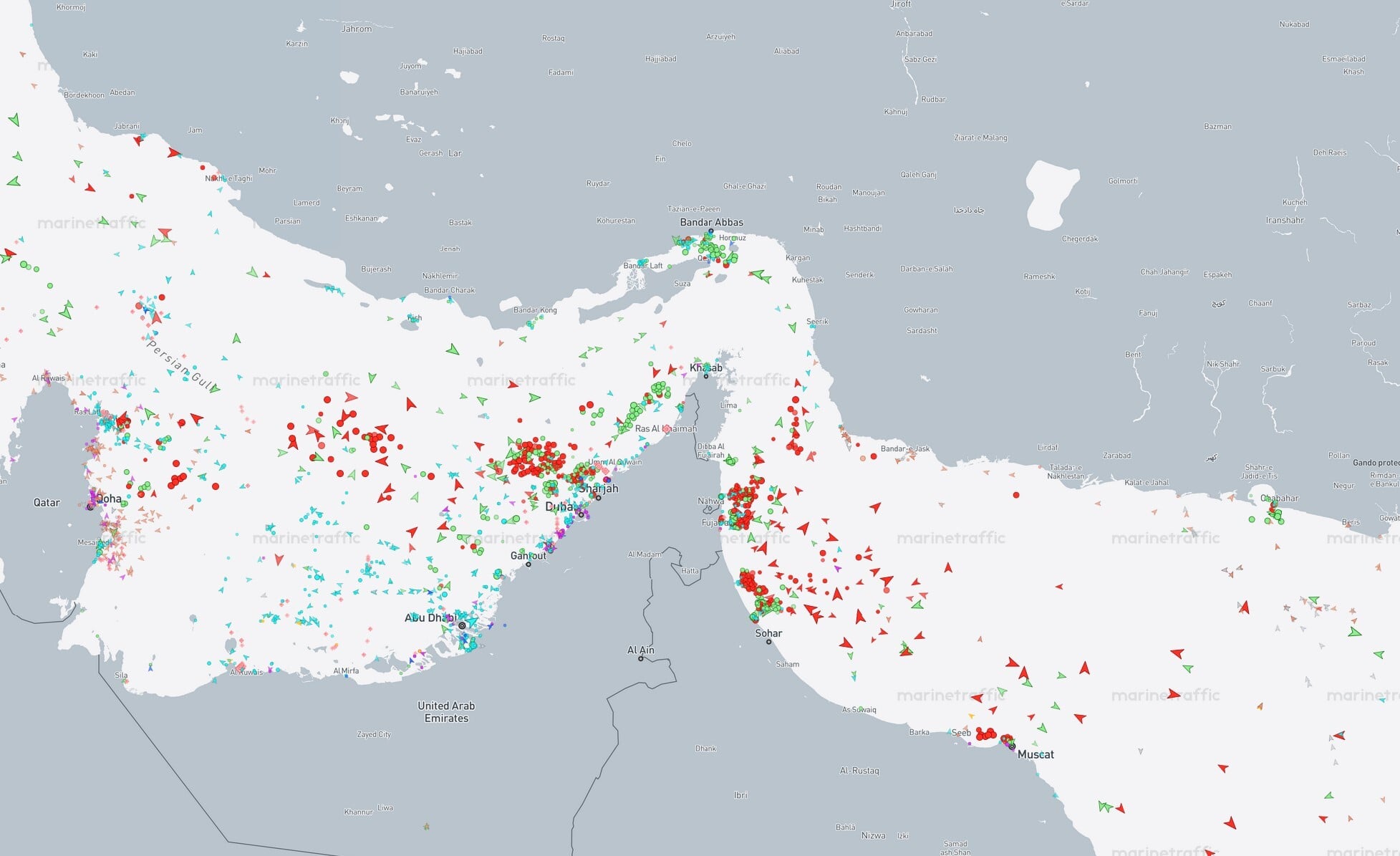
The MarineTraffic tracking service shows a largely empty Strait of Hormuz as the American military enforces a naval blockade on Iran.
There is a large concentration of vessels on both the west, in the Persian Gulf, and to the east, in the Gulf of Oman, with few boats in the strait itself. Some vessels are seen near the Iranian coast.
The Strait of Hormuz is about 90 nautical miles (104 miles or 167 kilometers) long and with a width varying from 52nmi (60 miles or 97km) to 21nmi (24 miles or 39km) at its narrowest point, with Iran on the north and Oman’s Musandam Peninsula and the United Arab Emirates on the south.
Just as the US blockade began yesterday, tanker Rich Starry, which departed Sharjah anchorage off the coast of Dubai heading for China, turned back minutes after approaching the strait, as did a second vessel, the Ostria, according to MarineTraffic.
However, Rich Starry later crossed the strait overnight from Monday to Tuesday via the Iranian-approved vetting route south of Larak Island. Leading shipping journal Lloyd’s List interpreted the Chinese ship’s passage as a “test” of US President Donald Trump’s blockade.
Two tankers turn away from Strait of Hormuz after US blockade begins
At least two tankers reversed course near the Strait of Hormuz shortly after the start of the US blockade, highlighting the immediate impact on vessel movements. According to #MarineTraffic data, the 188-metre… pic.twitter.com/dRNi7yEgJI
— MarineTraffic (@MarineTraffic) April 13, 2026
Meanwhile, at least two ships using Iranian ports passed through the strait yesterday despite the US military blockade, data from maritime tracking firm Kpler indicates.
Maritime analysts have cautioned during the recent weeks of conflict around the strait that ships’ signals in the region have been disrupted and manipulated, making precise tracking difficult.
Trump announced the blockade following the breakdown of weekend talks to end the six-week-long war between the US and Iran, sending oil prices back above $100 a barrel.
In a note to seafarers about the blockade that seeks to take control of the strait away from Iran, the US Central Command said: “Any vessel entering or departing the blockaded area without authorization is subject to interception, diversion, and capture.”
“The blockade will not impede neutral transit passage through the Strait of Hormuz to or from non-Iranian destinations.”
The blockade began at 10 a.m. US Eastern Time yesterday.






The Times of Israel Community.