

 From the Liveblog of
Thursday, November 3, 2016
From the Liveblog of
Thursday, November 3, 2016
US, Europe at odds over Revolutionary Guard-backed airline
 Add ToI as a Preferred Source on Google
An Iranian airline, backed by the country’s notorious Revolutionary Guard and used to ferry weapons and fighters to support Syria’s government, is aquiring rights to fly commercial routes in more than a dozen European and Asian countries in spite of US terror-related sanctions.
Mahan Air, the country’s second-largest carrier, is under terror-related sanctions. The US acuses the company of providing “transportation, funds transfers and personnel travel services” to the Revolutionary Guard’s elite Quds Forces, flying them and weapons to Syria to train Hezbollah militants, Syrian army troops and others.
A US Treasury official tells The Associated Press that the US has been trying to get these countries to cooperate with US efforts to block the airline’s financial network, but has met with stiff resistance.
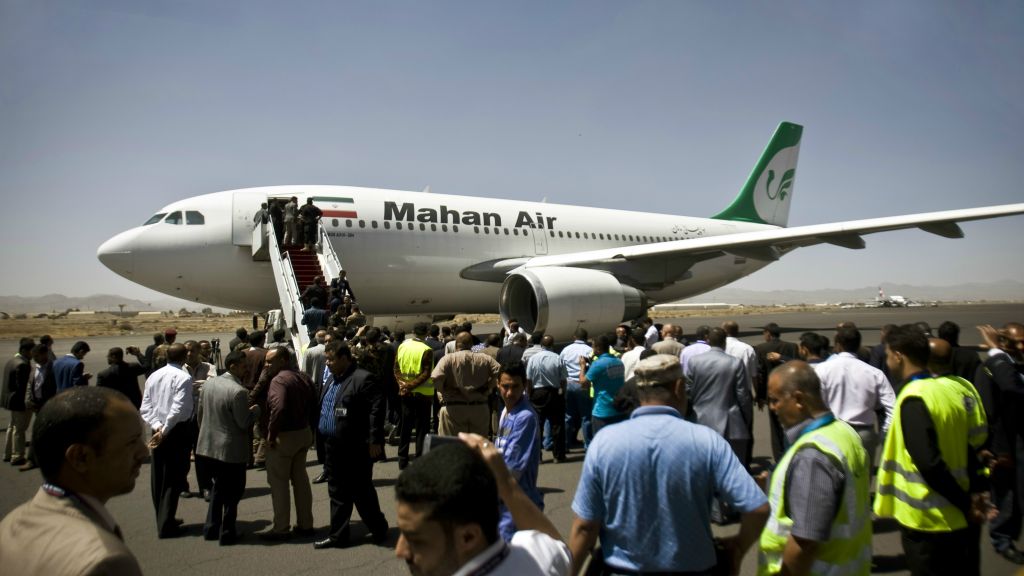
Washington doesn’t want to restrict travel to and from Iran, the official says, noting that the country’s main carrier, Iran Air, can fly around the world since the nuclear deal was implemented in January. The official was not authorized to discuss the issue publicly and spoke on condition of anonymity.
But the US has no leverage to change EU laws allowing Mahan in. All it can do is ask the countries to ban Mahan and go after companies providing services to the airline, including banks, baggage handlers and cargo and freight companies.
The agreement Iran and six other world powers signed last year ended some of the sanctions that had punished and isolated Iran for its nuclear program. But sanctions for ballistic missile research, terrorism, human rights violations and money laundering remain in place.
Iran’s Revolutionary Guard Corps, or IRGC, is a vast, powerful military conglomerate, with naval, air and ground components organized in parallel to the conventional Iranian military. It is the country’s biggest economic player, with a hand in virtually every sector, from oil and gas to auto-making, telecommunications, construction, farming and beyond.
— AP



The Times of Israel Community.