

No wonder Nasrallah is nostalgic for May 2000
The Hezbollah chief was an Arab hero when Israel left Lebanon. Now he’s fighting a losing battle alongside Bashar Assad

 Add ToI as a Preferred Source on Google
Avi Issacharoff, The Times of Israel's Middle East analyst, fills the same role for Walla, the leading portal in Israel. He is also a guest commentator on many different radio shows and current affairs programs on television. Until 2012, he was a reporter and commentator on Arab affairs for the Haaretz newspaper. He also lectures on modern Palestinian history at Tel Aviv University, and is currently writing a script for an action-drama series for the Israeli satellite Television "YES." Born in Jerusalem, he graduated cum laude from Ben Gurion University with a B.A. in Middle Eastern studies and then earned his M.A. from Tel Aviv University on the same subject, also cum laude. A fluent Arabic speaker, Avi was the Middle East Affairs correspondent for Israeli Public Radio covering the Israeli-Palestinian conflict, the war in Iraq and the Arab countries between the years 2003-2006. Avi directed and edited short documentary films on Israeli television programs dealing with the Middle East. In 2002 he won the "best reporter" award for the "Israel Radio” for his coverage of the second intifada. In 2004, together with Amos Harel, he wrote "The Seventh War - How we won and why we lost the war with the Palestinians." A year later the book won an award from the Institute for Strategic Studies for containing the best research on security affairs in Israel. In 2008, Issacharoff and Harel published their second book, entitled "34 Days - The Story of the Second Lebanon War," which won the same prize.
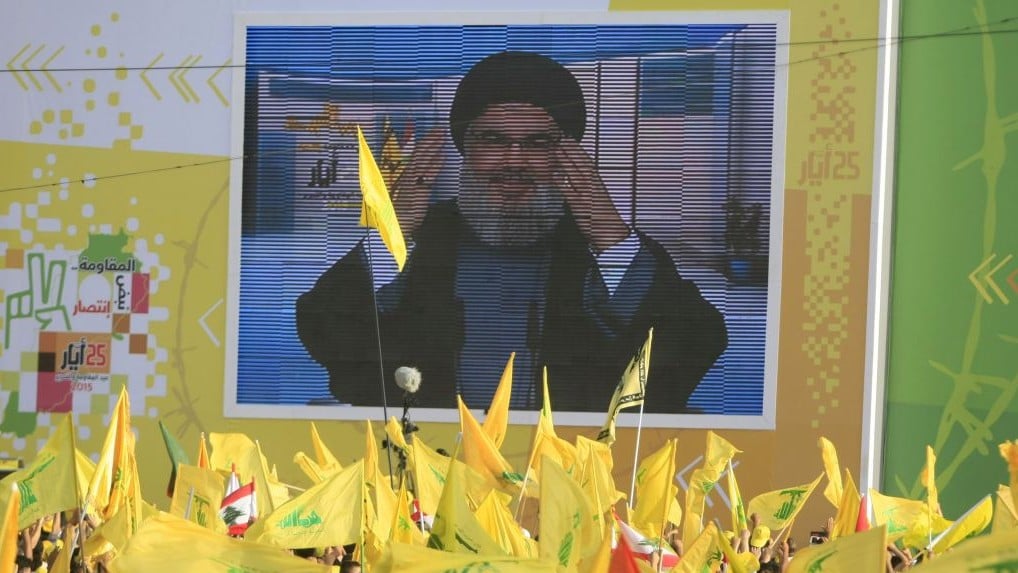
If only Hezbollah chief Hassan Nasrallah could go back in time 15 years to his moments of glory, when the Arab world crowned him with victor’s laurels and all of Lebanon knelt at his feet. As the Israeli army completed its withdrawal from Lebanon in May 2000, Nasrallah became the hero of the Arab world, and definitely of Lebanon, almost overnight.
But much has happened since then. The Second Lebanon War in 2006 ended in a defeat for him (even though he claimed at first that Hezbollah had won). The Arab Spring brought with it the civil war in Syria, in which he intervened. Once again he was transformed overnight; only this time, he went from being the darling of the nation to the Arab world’s Public Enemy No. 1, a tool in the Iranians’ hands in their war against the Sunnis.
Fifteen years after the “victory” over the Zionist foe, Nasrallah now finds himself fighting against a completely different kind of enemy — the Sunnis — with Israel mere background scenery in the intra-Islam war between the Sunnis and the Shiites. Worst of all for Nasrallah, the survival of Bashar Assad, his most important ally in the war against Israel and against the Sunnis, is more in doubt than ever.
Nasrallah’s latest rhetoric should not surprise anyone. We have seen his waves of speeches any number of times in recent years, particularly when he was under pressure in the Arab world and in Lebanon. In two speeches he just gave within 48 hours, Nasrallah repeated statements he has made countless times before: Israel knows our strength, we can hit it hard, and so on and so forth.
The more significant content of his speeches (even taking into account a pro-Hezbollah TV station’s report revealing Hezbollah’s tunnels in southern Lebanon) had to do with the fighting in Syria. Nasrallah gave more than a broad hint to the Lebanese, and mainly to the Lebanese Shiites, that Hezbollah intends to increase its involvement in Syria soon. “This is an existential war,” he said, adding that soon Hezbollah would announce a general call-up, even though it is not clear where and among whom. (He cannot declare an obligatory draft in Lebanon).
The bottom line is that Nasrallah’s gamble on Assad (which was, among other things, the result of Iranian pressure applied to him) has not paid off. The fighting in Syria is only becoming more complicated. Assad’s regime is shaky, and not only because Islamic State has taken Palmyra, though the Western media was swept along following that local success and the sensational announcement by human-rights groups that roughly 50 percent of Syria’s territory was now under Islamic State’s control. The purpose of such an explosive and frightening headline is, among other things, to spur the coalition to act against Islamic State with greater force. Most of that territory is actually desert, with no military presence of any kind.
For Hezbollah and Assad, the main problem is the coalition of groups and forces that formed recently to fight the Syrian president’s troops in Jisr al-Shughur, Idlib, Homs, and other places where Assad has managed to hold on so far.
At the same time, Islamic State is shelling Damascus and its suburbs almost every day, and even the Presidential Palace is taking gunfire. For many months, the Syrian Golan Heights have been in the hands of the Syrian opposition (the secular opposition and the Al-Nusra Front, without Islamic State), and it is not clear anymore how much longer the Syrian army can hold on.
With no alternative, Nasrallah will have to send many more thousands of his people to Syria to “save Private Bashar.” Such a move will have implications for Lebanon’s internal affairs regarding the number of Shiites who will be coming back home in coffins and Hezbollah’s status in Lebanon. At the same time, Nasrallah will have to compromise, if even partially, his own preparations for a possible conflict with Israel.
With all due respect to the Jews (which, in Nasrallah’s case, is not much), they can wait. First he has to deal with his real troubles — the radical Sunnis of Islamic State, Al-Nusra Front and the various Saudi-backed groups.







The Times of Israel Community.