

Palestinian Authority expects 4 million doses of Russian vaccine in coming weeks
Announcement comes as Palestinian Authority records 33 deaths from coronavirus in past 24 hours, the highest number since start of pandemic
 Add ToI as a Preferred Source on Google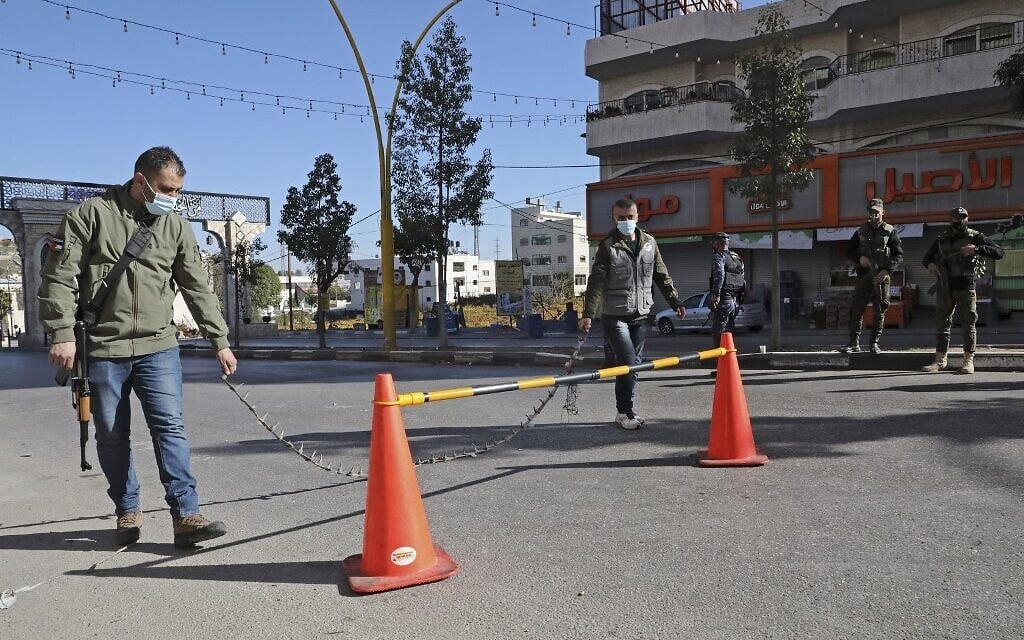
Palestinian Authority senior health official Osama al-Najjar announced on Saturday that four million doses of the Russian coronavirus vaccine would be delivered in the coming weeks, as Palestinians witnessed the highest daily death toll as a result of COVID-19 since the start of the pandemic.
“Four million doses of the Russian coronavirus vaccine are expected to arrive soon…by the end of the year or the start of 2021, we will begin to inoculate those most at risk [for the coronavirus],” al-Najjar said in an interview with Voice of Palestine Radio on Saturday morning.
Russia began a large-scale public vaccination drive last week offering its vaccine, the Sputnik V, initially to medical workers, teachers, and high-risk groups. Russian authorities boasted that Sputnik V was the world’s “first registered COVID-19 vaccine” after the government gave it regulatory approval in early August.
The move drew criticism from international experts, who pointed out that the vaccine had only been tested on several dozen people at the time. Jerusalem’s Hadassah Medical Center has already secured an order for 1.5 million doses of the vaccine and has said it is considering becoming a regional distributor for the shots.
An initial shipment of 150,000 vaccines is expected to arrive shortly for use by Palestinians, PA Health Minister Mai al-Kaila told Palestine TV on Saturday.
“Priority will be given to medical teams, the security forces, and journalists,” al-Kaila said.
Al-Kaila also reiterated that officials had been in touch with Chinese authorities over their vaccine, as well as the Moderna and AstraZeneca companies.
“We are close to the end of our discussions with these companies,” al-Kaila said.
Health authorities in the West Bank had determined that the Pfizer vaccines’ exacting storage and transportation requirements made it a poor choice for the Palestinians, al-Kaila said.
Pfizer doses must be stored at -70° C (-94° F) and used within five days of their removal from cold storage. The AstraZeneca vaccine — the preferred candidate of the world’s poorer countries, and one of the vaccines the Palestinians are most likely to get — can be kept at normal refrigerator temperatures.
According to Health Ministry figures released on Saturday, Palestinians recorded their deadliest day since the start of the pandemic with a total of 33 reported deaths in the previous 24 hours: 17 in the West Bank, 13 in the Gaza Strip. An additional three deaths were reported among East Jerusalem’s Palestinian residents, who receive health care from Israeli authorities.
While the number of identified coronavirus cases among Palestinians has dropped slightly, relatively little testing is being done. Around 31 percent of coronavirus tests came back positive in the Gaza Strip on Saturday, as did around 21 percent of tests conducted in the West Bank. Such high figures — combined with the death rate — indicate that the virus is likely continuing to spread undetected.
The announcement of the imminent arrival of doses came days after al-Kaila said Palestinians may not see their first coronavirus vaccinations until March.
The first shipment of doses of the Pfizer vaccine arrived in Israel on Wednesday to test the logistics of storing and transporting the shots, with a second larger shipment landing a day later. Inoculations are expected to begin by the end of December.
To ensure that the Palestinian Authority receives its share of coronavirus vaccines, the PA has also filed an application for the Covax initiative, a UN-backed program that hopes to provide up to 20 percent of low-income countries’ coronavirus vaccines for free.
The Covax timeline is likely to be slower than the Israeli rollout, as vaccines will be distributed proportionally to all 92 governments participating in the program as supplies become available. Each country will receive shipments in tranches: An initial 3% of vaccines to inoculate first responders, followed by additional stages as all countries progress together toward the 20% limit.

After one-fifth of the population is inoculated, the free doses run out. Countries will be able to purchase additional subsidized doses through the program, depending on how many doses are available and when.
According to al-Kaila, medical responders will receive priority access to those vaccines as they arrive, followed by members of the Palestinian security services and those deemed to be in at-risk groups.
“According to Covax guidelines, the first priority ought to go to medical first responders. We told them that we wanted to also prioritize the security services who work alongside us in the field, the elderly, pregnant women, and the chronically ill,” al-Kaila said on Tuesday.
There are currently 24,015 confirmed active coronavirus cases in the West Bank and Gaza Strip. Around 1,062 Palestinians have died from COVID-19 since the beginning of the pandemic in March, according to the PA Health Ministry.
Agencies contributed to this report.







The Times of Israel Community.