

Settler leaders insist industrial zone shooting won’t sink isle of coexistence
While some right-wing activists respond to Barkan terror attack with calls to halt Palestinian employment at Israeli factories, most local leaders double down on its importance

 Add ToI as a Preferred Source on Google
Settler leaders have long touted West Bank industrial zones as beacons of coexistence, where Israelis hire and work alongside Palestinians, providing them with a decent livelihood.
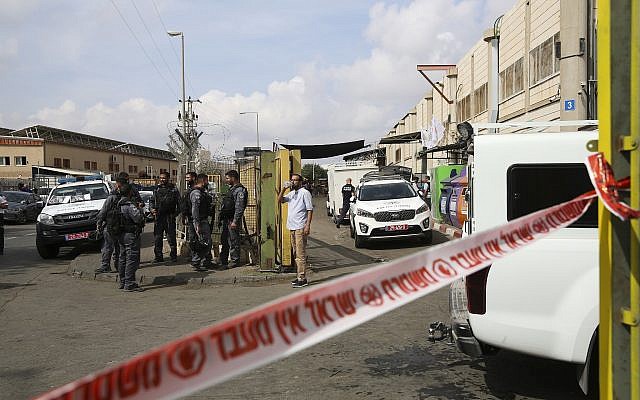
But the gunning down of two Israelis by their Palestinian coworker at the Barkan Industrial Park on Sunday morning threatened to chip away at that narrative, forcing supporters of such partnership to defend the practice.
“We will not let this break us,” said Samaria Regional Council chairman Yossi Dagan, minutes after the terror attack that claimed the lives of 28-year-old Kim Levengrond Yehezkel and 35-year-old Ziv Hajbi.
“The blessed coexistence that takes place here every day will continue,” he added.

Just last month, Dagan talked proudly to members of the European Union Parliament in Brussels about Barkan in particular, where roughly half of the 7,200 workers at the site’s 164 factories are Palestinian, and half are Jewish.
“There has never been a terror attack there,” he said at the time. (In 2015, a Palestinian stabbed two Israeli security guards at the gate of a different northern West Bank industrial zone neighboring Barkan).
Even after Sunday’s shooting, Dagan’s stance remained firm. Similarly, not a single elected Israeli official in the West Bank took a public position against the hiring of Palestinians at industrial zones.

The sites are frequently mentioned by politicians on the right in their rebuttals of peace plans seeking Israeli separation from the West Bank’s roughly 3 million Palestinians.
According to the Yesha settlement umbrella council, there are 20 industrial zones throughout the West Bank that employ roughly 28,000 workers, of whom some 18,000 are Palestinian.
Supporters of the industrial zones argue that the broad satisfaction of workers there demonstrates that Palestinians are more interested in earning respectable wages than statehood, and that efforts to divide Israelis and Palestinians in the West Bank will only leave the latter population without a source of a respectable income.

Opponents of the settlement movement counter the claim by arguing that Israeli limits on Palestinian businesses in the West Bank stagnate economic growth to the point where many Palestinian workers are forced to rely on Israeli industrial zones for viable economic wages.
In the current government, Dagan and other settler leaders have found a receptive audience to their cause, which has led to the investment of millions of shekels in industrial zones over the Green Line.
This was also evident after Sunday’s attack, when Economic Minister Eli Cohen arrived at Barkan and pledged to expand the industrial zone by 150 dunam (37 acres), calling the coexistence that they help instill a “security and economic interest.”
Far-right, left wing activists in rare agreement
But while no elected officials took the more hawkish stance against the hiring of Palestinian workers, a number of far-right settler personalities voiced frustration over the policy, calling for levels of separation that those on the opposite side of the political spectrum have long backed.
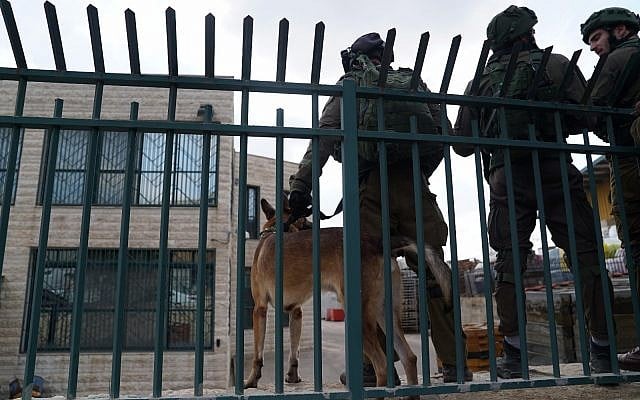
Former director of the Peace Now settlement watchdog Yariv Oppenheimer tweeted, “There is no coexistence in the settlements. There is an occupier and the occupied. Boss and employees. Whoever thinks this is a recipe for peace is mistaken.”
Of all people, Oppenheimer’s words appeared to have resonated with Tzvi Succot, the director of the far-right Otzma Yehudit organization, who retweeted the left-wing activist’s post, saying that Oppenheimer “is one who gets [it].”
Far-right activist-attorney Itamar Ben Gvir, meanwhile, called Dagan’s comments in favor of coexistence following the attack “mistaken and misleading.”
“That ‘coexistence’ blew up in Barkan today and only Yossi along with a handful of people in the Eztion Bloc continue to mislead themselves and the public,” Ben Gvir said.
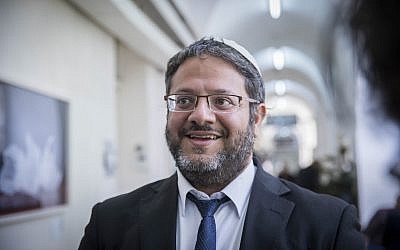
He called on settlement heads to conduct a “serious a follow-up” and demand that the Palestinian workers “pronounce their loyalty to the Jewish state.”
In a conversation with The Times of Israel, Ben Gvir acknowledged that no other regional or local council chairman in the West Bank was taking a similar stance, but he suggested that their motivations were economic, given that the industrial zones draw in significant cash to their settlements.
Moreover, the Hebron resident claimed that many others in the settlement movement held similar views.
Yael Ben Yashar, who is running for mayor in the central West Bank settlement of Beit El toed the line set by other settler leaders and defended the employment of Palestinians in the West Bank.
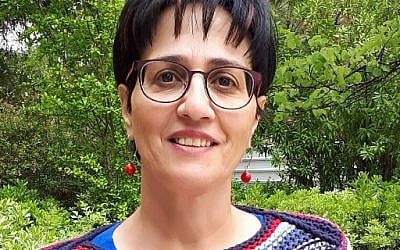
“The majority of them are interested in simply making a living,” she said, rejecting the implication that the actions of the Barkan terrorist meant all Palestinians should no banned from Israeli industrial zones.
At the same time, she acknowledged that patience for such projects may be running thin.
“We would like to live in coexistence, but every time, the other side breaks our trust,” the candidate and former municipal official said.
That “trust” that Ben Yashar and other settler leaders have been willing to offer Palestinians at the economic level has never been elevated to the political level.
David Ha’ivri, who works with the Samaria Regional to bring hundreds of international groups to the northern West Bank on tours that regularly stop at Barkan, explained that the issue is “not with trusting the Palestinian people but rather their leadership in the corrupt Palestinian Authority.”
“There will not be a Palestinian state… and the way to dispel that dream is to allow their economic situation to improve,” argued Beit Aryeh local council chairman Avi Na’im, who suggested that national aspirations and economic ones were inversely connected.
‘Palestinian employees are more distraught… than the Israelis’
As for those that will most directly be impacted by the Barkan attack, there appeared to be widespread consensus among the industrial zone employees — both Jews and Arabs — against altering the status quo there.
“We are shocked, but not afraid,” said Yohan Cohen, a Barkan worker and resident of the northern West Bank settlement of Bruchin. “I will continue coming to work here at the industrial zone every day with my Israeli and Palestinian friends.”
Amjad Mughar, who has been working at Barkan for the past three years, expressed concern over what he expected to be an increase in daily security checks of Palestinian workers, as well as the possibility that he might lose his work permit altogether.
“I don’t know how I will be able to support my six kids without this job. I really don’t know why someone would do something like this,” Mughar added.
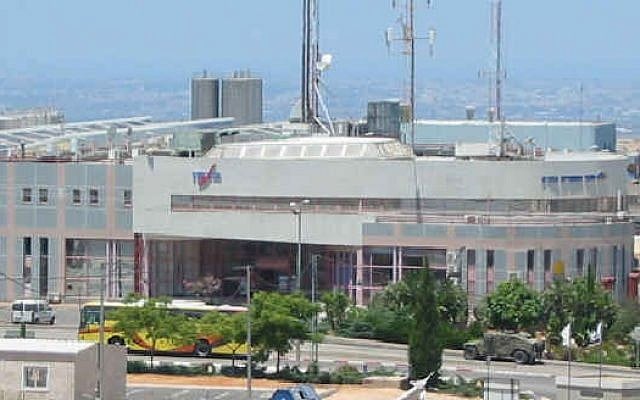
According to Moshe Levran, who works as an export manager at Twitto Plus, one of the Barkan factories, “The Palestinian employees are more distraught over the incident than the Israelis ones are.”
“I sat them down and explained to them that they might go through an extra security check every day, but that will die down eventually and things will return to normal,” he said.
For now, settler leaders are standing behind what has become a go-to talking point in selling Israeli presence in the West Bank.
Even before the two victims were pronounced dead, Dagan pointed out that Sunday’s attack had been the first one at Barkan since the site was established in 1982.
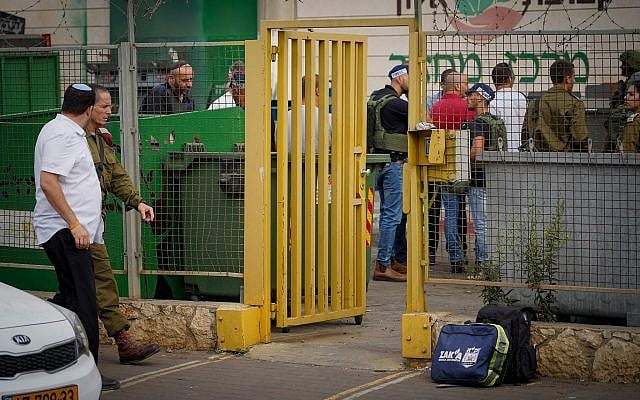
With defense officials currently under the assumption that the 23-year-old assailant, Ashraf Walid Suleiman Na’alowa, acted as a “lone wolf,” supporters of continued Israeli-Palestinian economic cooperation in the West Bank appear to have little to worry about.
But if copycats spring up, calls for the type of separation that is seen in West Bank residential areas will likely overpower those calling for coexistence at the workplace.



The Times of Israel Community.