

Some high-infection cities push back against restrictions, others welcome them
Gamzu says strictest rules will only be imposed on 8 towns; Bnei Brak municipality says it won’t work; mayors of Kafr Qassem, Umm al-Fahm welcome possible lockdown
 Add ToI as a Preferred Source on Google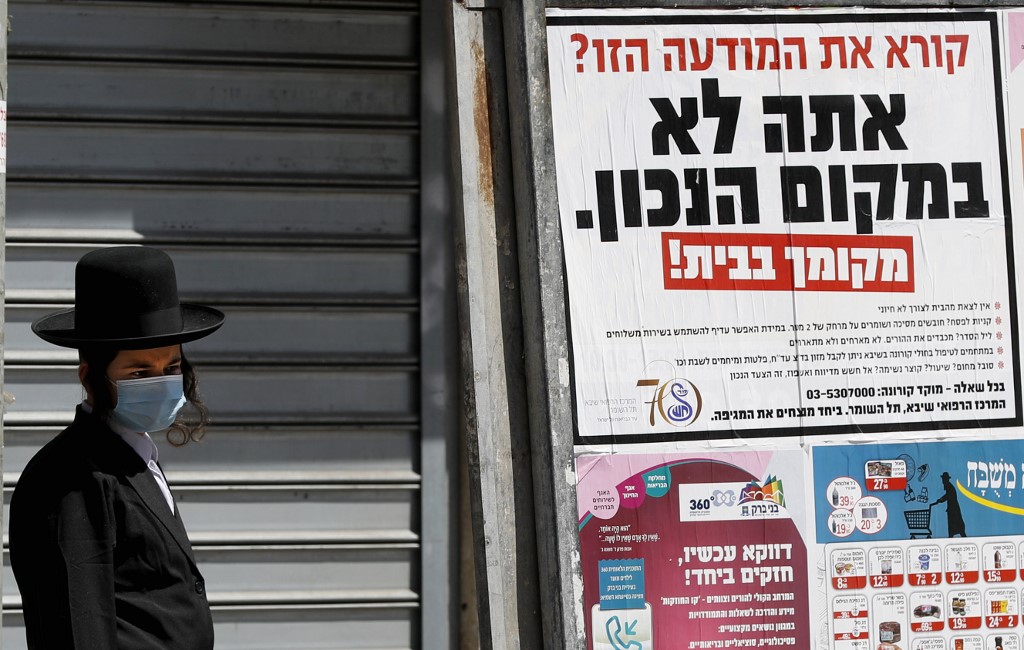
Local officials in a number of cities with high coronavirus infection rates that are slated for restrictions claimed on Thursday the categorization was incorrect and the tactic would fail, while others welcomed the decision to impose regulations to help reduce the spread of the virus.
Coronavirus tzar Prof. Ronni Gamzu said Friday that the strictest restrictions would probably only be imposed on eight cities, without providing further details.
“[The] proposal to the cabinet was to impose a closure on eight cities with particularly high morbidity and impose traffic restrictions on all red cities,” Gamzu told the Kan public broadcaster.
The mainly ultra-Orthodox city of Bnei Brak issued a statement claiming that a previous lockdown imposed on the town earlier in the year, had been ineffective and that the imposition of rules would cause further distrust between residents and the authorities.
“As proved in the first wave, a closure is not the solution. Instead of imposing collective punishment on the entire city, we expect the government to fight alongside us and not against us. The decision to impose a closure on the city is a disappointment and increases the distrust of the ultra-Orthodox public in the decisions of the coronavirus tzar and decision-makers,” the municipality said.
Elad Mayor Israel Porush told the Walla news site that he believed his city had been incorrectly classified and that a closure would result in people being crowded into tight living arrangements.

“They are not checking it correctly, they are causing our public to lose trust,” he said. “We have small apartments and families with many children. What is happening in the closure is that there are 300 people in one building, so we need to sit down and see how we carry out the cabinet’s decisions. We need to prepare for that.”
The mayor of Taibe told the Ynet news site that it was an “irresponsible decision” by the government that would further damage the education system, but told residents they had to stop holding weddings and other gatherings.
“[The students] are currently studying the material they lost last year,” Shuaa Mansour Masarwa told residents. “I call for the weddings to be stopped. Do not hold them, do not attend them, break them up. The situation is not suitable for weddings. Wake up and do not underestimate [the situation].”
However the mayor of Kafr Qassem, a central city with a majority Arab population, welcomed the decision to designate the locality as in need of restrictions.
“We agree with Prof. Ronni Gamzu’s position, and informed him that even if they did not impose a closure, we, Kafr Bara and Jaljulya would impose a self-closure,” Adel Badir told the Walla news site.
“We trust our residents to be smart and to live in the shadow of the corona with all the guidelines of the Health Ministry. I trust the conduct of Gamzu — he and his staff are professional and matter-of-fact,” Badir said.
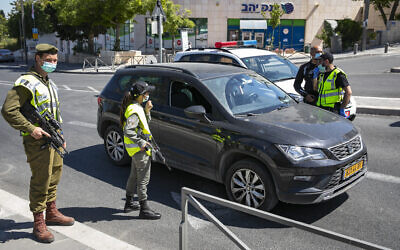
Samir Mahamid, the mayor of the northern city of Umm al-Fahm, also told the news site there was a need for localized restrictions.
“I agree with the measures they are taking, there is no choice but to tighten the restrictions. I want the students to come back [to school] as soon as possible. I hope it does not take long and we will get out of this mess as soon as possible,” Mahamid said.
“Unfortunately, in our Arab society, the increase in morbidity is due to two factors: failure to maintain isolation, and gatherings, especially at weddings held in the backyards of houses,” Mahamid said. “I agreed with the idea of closure, I did not object.”
Ministers voted Thursday to impose lockdowns over 30 “red” cities that have high coronavirus infection rates, a day after Israel’s infection numbers reached a new record of over 3,000 daily cases.
Many of the towns are predominantly ultra-Orthodox and Arab, two segments of the population that have been hit hard by the virus.
Though there is no official word yet on which cities will be locked down, the 30 cities and towns currently designated as “red” are: Nazareth, Bnei Brak, Tiberias, Abu Snan, Umm al-Fahm, Elad, Aabalin, Buqata, Beit Jann, Jaljulya, Jatt, Daliyat al-Karmel, Zemer, Taibe, Tira, Kasra-Samia, Ka’abiyye-Tabbash-Hajajre, Kafr Bara, Kafr Kanna, Kafr Qassem, Lakiya, Sheikh Danun, Maale Iron, Ein Mahil, Assafiya, Arara, Fureidis, Qalansawe, Rechasim, and Kfar Aza.
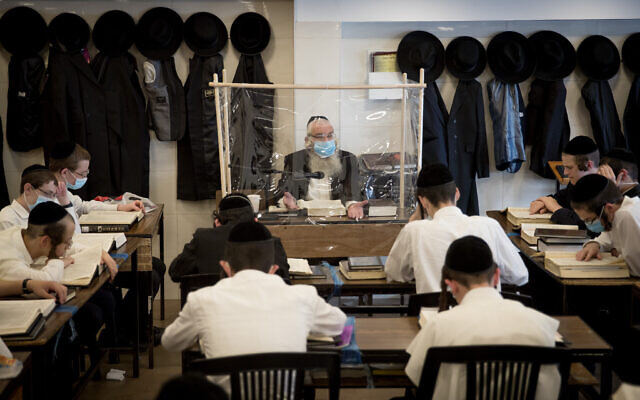
Members of the so-called coronavirus cabinet, a limited forum of ministers, decided that lockdowns would take effect on Monday, according to widespread Hebrew media reports.
The restrictions under discussion for the 30 municipalities included banning entry and exit, keeping residents within 500 meters of their homes, stopping public transportation, and closing non-essential businesses and all schools save for day care facilities and special education programs.
Addressing the country’s spiraling situation in a press conference shortly after the cabinet meting, Gamzu, visibly distraught, implored the public to start treating the situation seriously.
“This is a message to all of Israel: No weddings! No mass gatherings! No dismissal [of guidelines] at any restaurant or anywhere!” he said, his voice rising. “I’m sorry to be emotional. This is a pivotal moment… All of Israel is at war. Illness numbers that climb from 2,000 to 3,000 in one day should worry us all.
“Anyone who doesn’t put on a mask and who disregards [instructions] is spitting in the face of doctors and nurses who are working 24 hours a day in coronavirus wards,” Gamzu added.
The closures were to be dependent on the ability of police to devote enough manpower to enforcement in all 30 cities — otherwise the number of locked down cities could be brought down. Defense Minister Benny Gantz on Thursday instructed the military to prepare to send thousands of soldiers to aid police.

Gamzu emphasized the infection rates in the Arab and ultra-Orthodox communities as those that most concerned him, noting “a lack of internalization” by some of the seriousness of the situation.
Gamzu warned that while the Arab and Haredi communities were at the “forefront” of the “war,” cases were trickling into all towns and none were immune.
The Health Ministry reported over 3,000 new daily cases on Wednesday, a record high, apparently contributing to the drastic measure decided upon by ministers.








The Times of Israel Community.