

Trump claims ‘it looks like’ Hamas will disarm; Witkoff: They’ll give up their AK-47s
Assessment comes hours after senior member of terror group insisted otherwise; 15 Palestinian bodies held by Israel transferred to Gaza after IDF returned last hostage’s Ran Gvili’s remains
 Add ToI as a Preferred Source on Google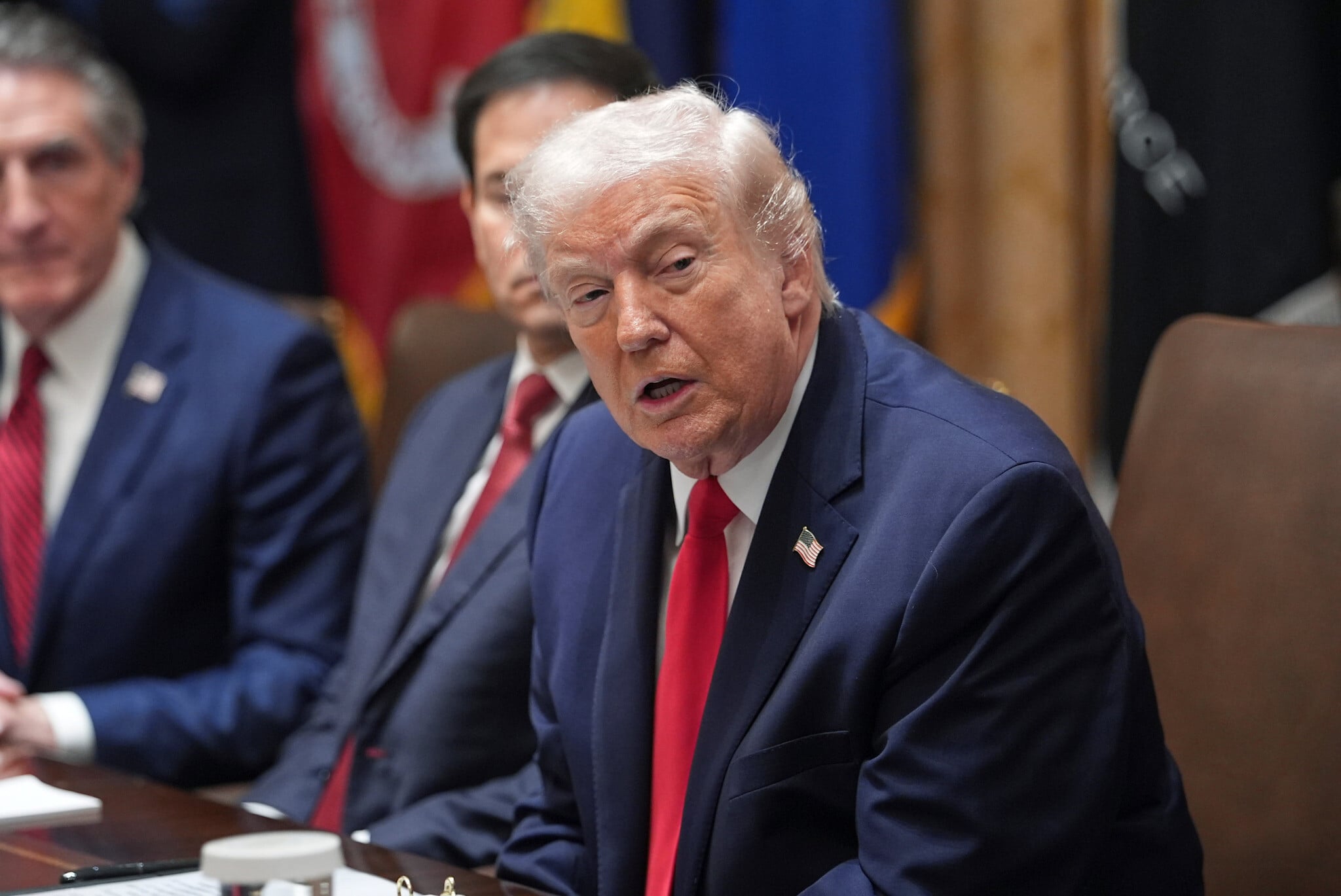
US President Donald Trump claimed Thursday that “it looks like” Hamas is “going to disarm,” despite a senior Hamas official insisting otherwise hours earlier.
Trump did not provide any proof for the claim, which he made during a cabinet meeting.
Chiming in, his special envoy Steve Witkoff also insisted that Hamas will demilitarize. “They will because they have no choice. They’re going to give up their AK-47s.”
US Ambassador to the UN Mike Waltz said Wednesday that Hamas will also be urged to cede its weapons via an international buy-back program, providing new details regarding the program Washington plans to advance to disarm the terror group.
Waltz’s remarks confirmed The Times of Israel’s reporting from recent months about plans to institute a “buy-back” program where participants would be given funds or jobs and amnesty if they agree to hand over their weapons.
It is part of a broader decommissioning initiative that the Gaza ceasefire mediators are pushing that would see Hamas gradually hand over its arms, starting with its heavy weaponry, Arab diplomats have told The Times of Israel. Israel is unlikely to accept this gradual process that prioritizes heavy weaponry over light weaponry, given that the latter category has also been used by Hamas to maintain its grip on Gaza.
Trump, during the cabinet meeting, touted the assistance Hamas provided in locating the bodies of the last deceased hostages still held in Gaza — help that Israel has yet to confirm. Israel recovered the body of Ran Gvili, the last hostage held in Gaza, earlier this week.
“Hamas was a big factor in getting all of the hostages back. They found the dead hostages,” Trump said. “Between Israel and Hamas working together, they got them back.”
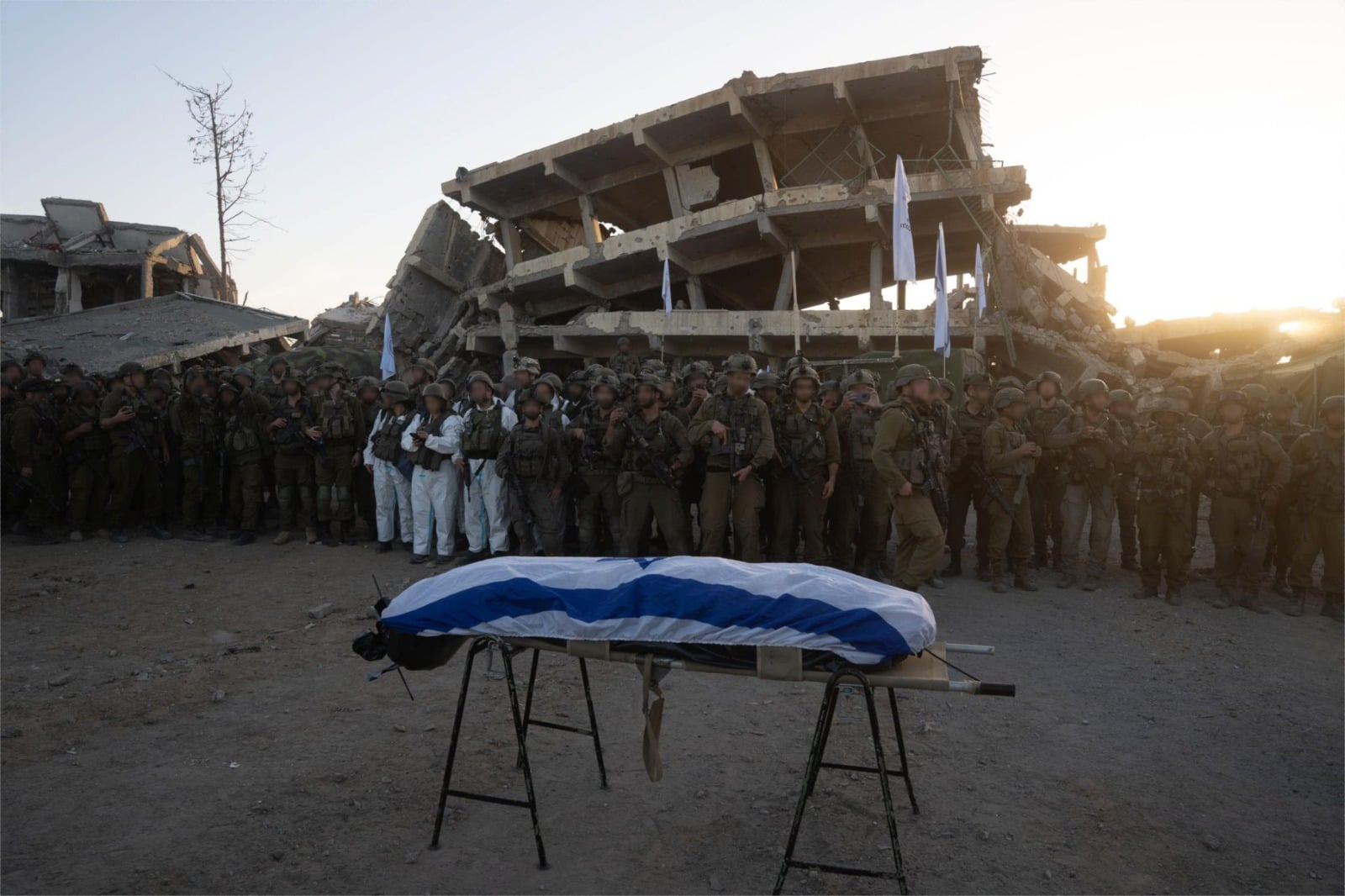
With Gvili’s return, the International Committee of the Red Cross on Thursday transferred the bodies of 15 Palestinians held by Israel to the Gaza health ministry.
The handover took place at Shifa Hospital in Gaza City, The Times of Israel learned.
The ratio of Palestinian bodies handed over for every hostage body returned during the Gaza ceasefire has been 15:1.
“This marked the completion of a months-long operation that led to family reunifications and supported the implementation of the ceasefire agreement,” said the ICRC in a statement. “The operation began in October, with the release and return of 20 living hostages and 1,808 Palestinian detainees.”
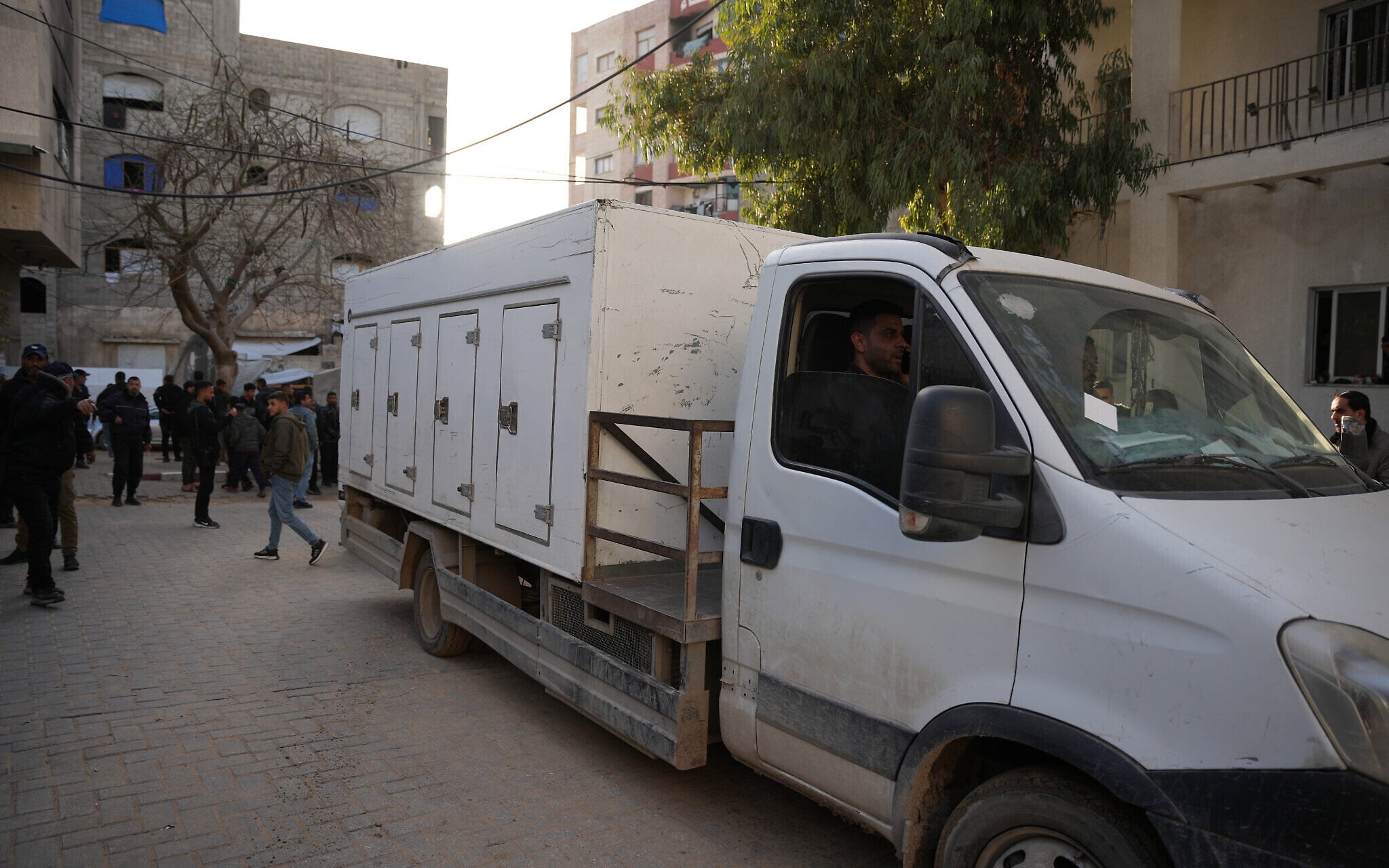
The ICRC noted that it continued to facilitate the return of bodies, including 27 of the 28 slain hostages and 360 dead Palestinians.
“Since October 2023, the ICRC has helped facilitate the return of 195 hostages, including 35 who were deceased, and 3,472 Palestinian detainees,” added the ICRC.
“We feel relieved to have helped reunite families with their loved ones. For families whose loved ones did not return alive, we hope they can now grieve fully,” said Julien Lerisson, head of the ICRC delegation in Israel and the Palestinian territories.
“The opening of the Rafah Crossing plays a significant role in addressing the urgent needs of the population,” Lerisson continued. “The ability to bring in larger quantities of specialized equipment — essential for reconstruction work and for locating and identifying remains in a dignified manner — is crucial in this regard.”
Rafah is expected to be reopened next week for pedestrians, after Israel confirmed earlier this week that it had agreed to do so.
Strike in central Gaza
Also Thursday, the Israel Defense Forces confirmed carrying out an airstrike in the Maghazi camp area of central Gaza, saying it targeted a Hamas operative who planned to attack troops stationed in the Strip’s south.
The strike took place on the Hamas side of the ceasefire line, and according to Palestinian media, it killed at least two people.
According to the military, the operative was planning an imminent attack against troops in southern Gaza.
“The terrorist posed an immediate threat to IDF troops and was therefore targeted in a precise strike to remove the threat,” the army said.
The IDF said it took steps to mitigate civilian harm in the strike, including by using a precision munition, aerial surveillance and other intelligence.
Emanuel Fabian and Times of Israel staff contributed to this report.









The Times of Israel Community.