

UK government lawyers defend Palestine Action terrorism ban at court challenge
Rebutting anti-Israel group’s claim that criminalization is excessive, attorneys say policy is proportionate and is needed to protect the public and ‘maintain national security’
 Add ToI as a Preferred Source on Google
LONDON, United Kingdom — Lawyers for the UK government on Tuesday defended a contentious ban under anti-terror laws of anti-Israel activist group Palestine Action, as three days of hearings challenging the move concluded.
The government’s legal team argued the decision to criminalize the direct action organization, announced in July, was proportionate following an “escalation” in its activities.
The move makes being a member of the group or supporting it a serious criminal offense punishable by up to 14 years in prison.
That has resulted in at least 2,300 arrests of demonstrators, according to protest organizers Defend Our Juries, and sparked concerns over free speech and civil liberties.
Six members of the group went on trial last month for aggravated burglary, criminal damage, and violent disorder over a raid on Israeli defense firm Elbit Systems, with one also charged with causing grievous bodily harm by hitting a police officer with a sledgehammer.
United Nations human rights chief Volker Turk, the Council of Europe rights watchdog, and a number of nonprofit organizations have criticized the ban and the “excessive limits” on the right to protest.
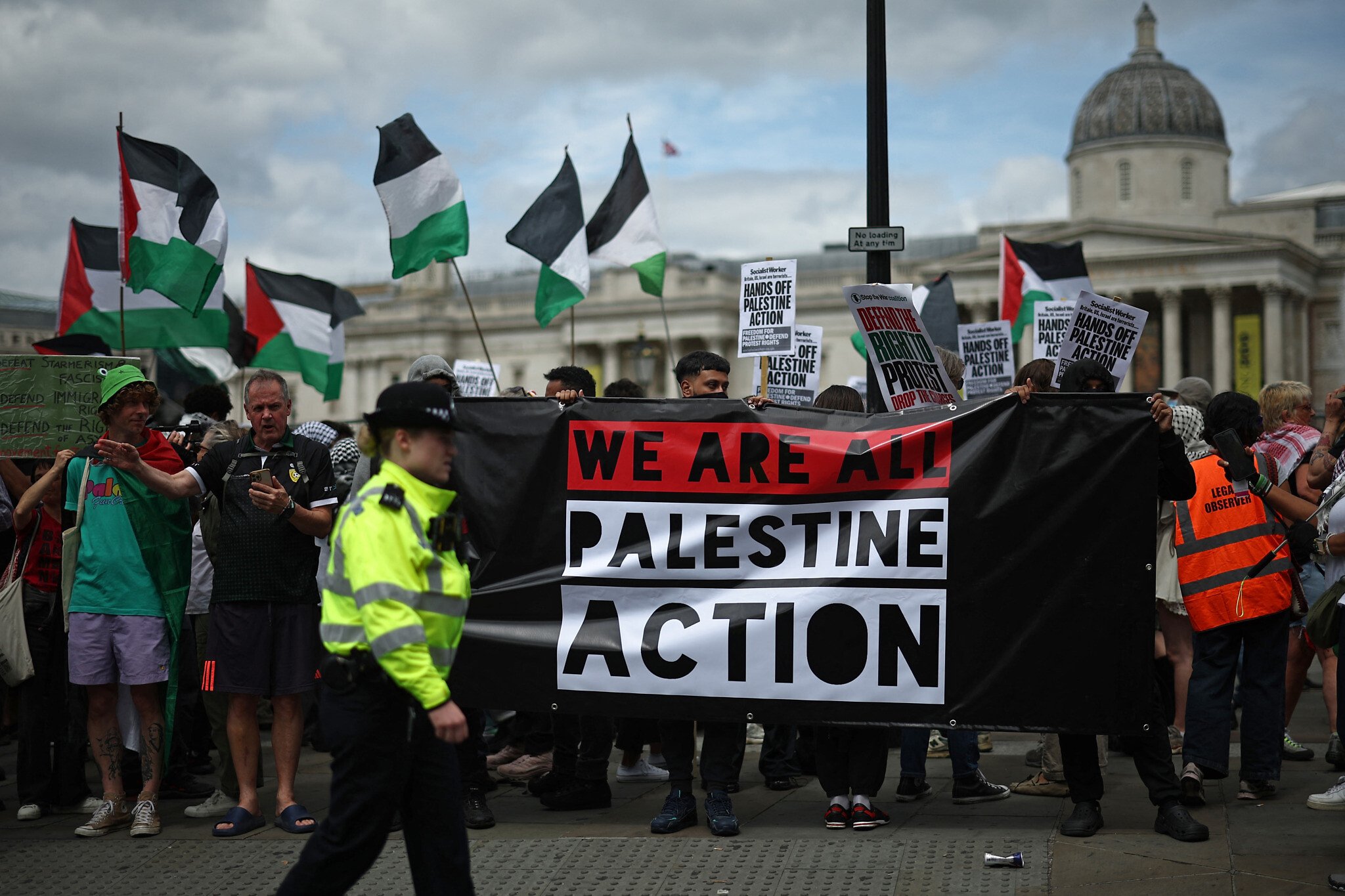
Palestine Action co-founder Huda Ammori challenged the ban at the High Court in London, and hearings in front of a three-judge panel got underway last week.
Giving evidence on Tuesday, Stephen Kosmin, a lawyer representing the government, defended “the proportionality of the policy,” saying it was needed “in order to protect the public” and “maintain national security.”
The government outlawed the group days after activists, protesting the war in Gaza, broke into an air force base in southern England and caused an estimated £7 million ($9.3 million) of damage to two aircraft.
Ministers have been criticized for taking too broad a view of the definition of what constitutes “terrorism.”‘
But in written court submissions, the ministry argued that actions “can constitute terrorism if it involves serious damage to property even if it does not involve violence against any person or endanger life.”
“Proscribed organizations are deprived of the oxygen of publicity as well as financial support,” the statements noted.
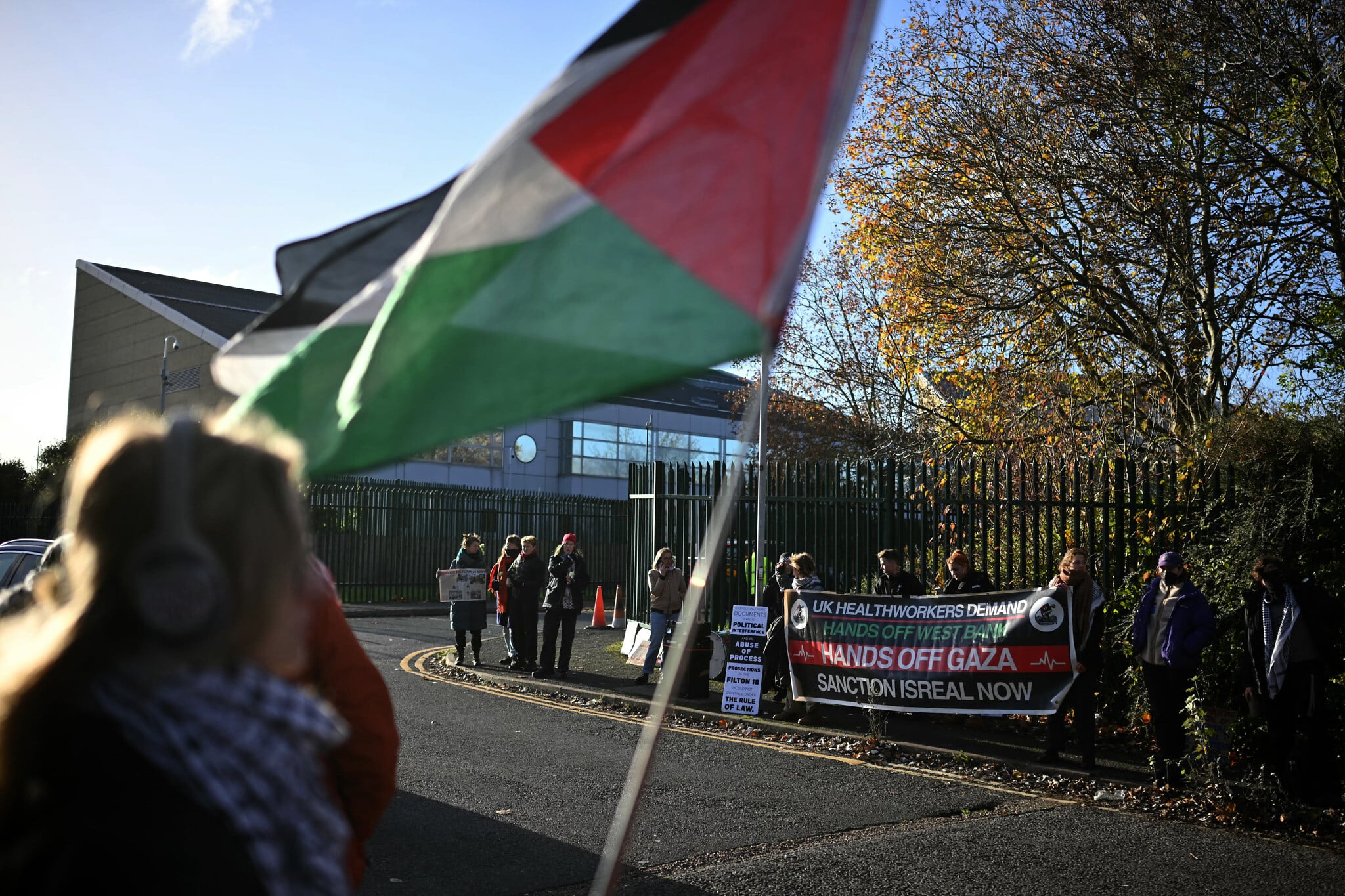
Meanwhile, interior minister lawyer Natasha Barnes argued the ban “has not prevented people from protesting in favor of the Palestinian people or against Israel’s action in Gaza.”
Part of the discussions regarding Palestine Action’s activities took place behind closed doors, with the judges imposing some restrictions on journalists reporting on the case.
A decision will be handed down at an unspecified date.
Group’s actions escalated amid war in Gaza
Palestine Action was founded in 2020 and gained prominence with protests targeting Israeli defense companies and British firms linked to them. It stepped up its actions during the Gaza war, sparked by the Hamas massacre in Israel on October 7, 2023.
Six members were arrested on suspicion of plotting to disrupt the London Stock Exchange in January 2024.
Britain’s then-interior minister Yvette Cooper moved to ban the group shortly after the military planes were targeted in June.
But the decision has been criticized by groups including Amnesty International and Liberty, which have intervened in the case.
Case could end dozens of prosecutions
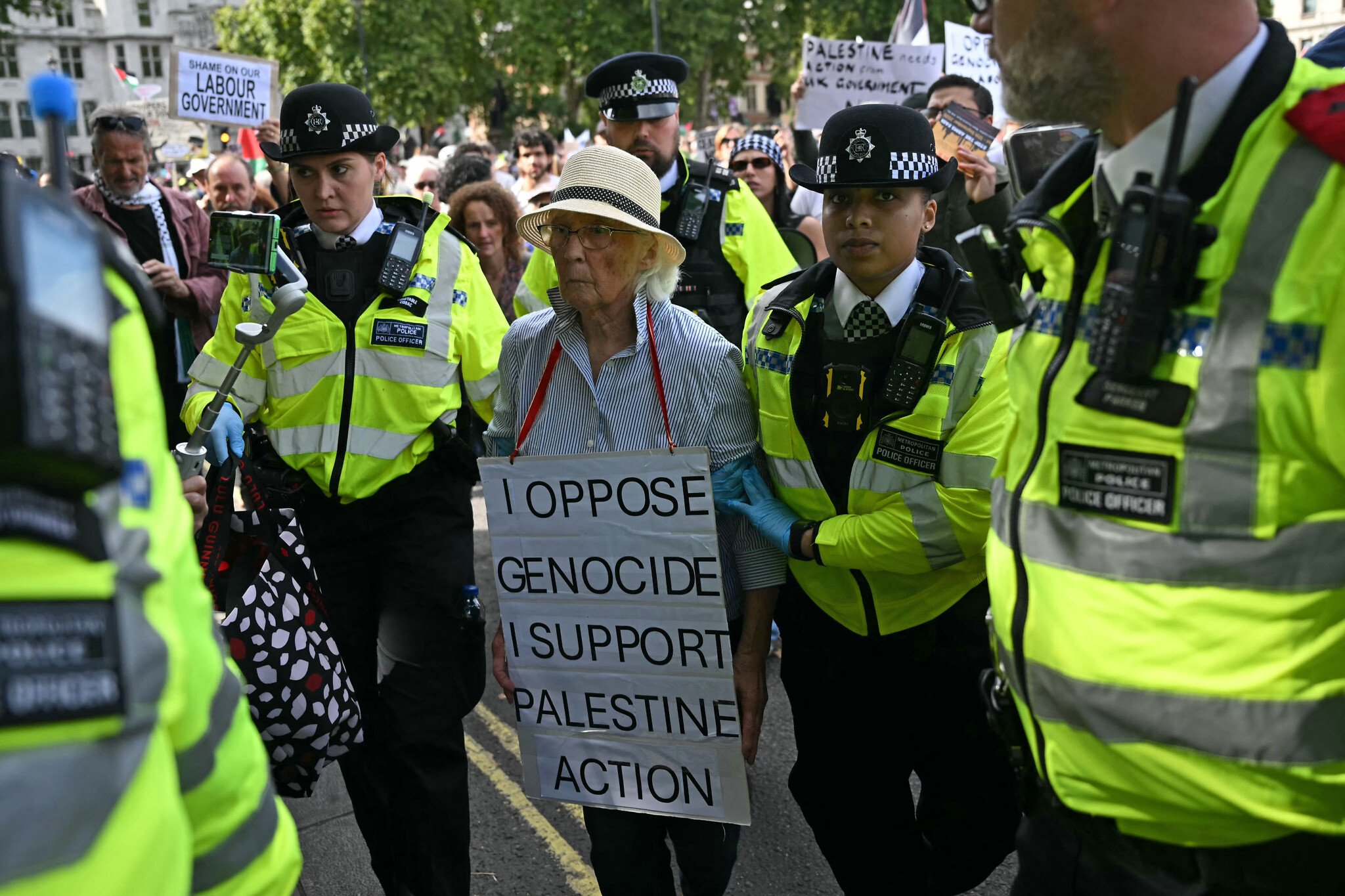
More than 2,000 people have since been arrested for holding signs in support of the group, with over 200 charged for expressing support for a proscribed organization with placards reading: “I oppose genocide, I support Palestine Action.”
Six people have also been charged with organizing support for Palestine Action, with prosecutors alleging they arranged meetings to encourage “mass civil disobedience.”
But if the legal challenge is successful at London’s High Court, those charged will be able to defend themselves on the basis that Palestine Action’s proscription had been ruled unlawful.







The Times of Israel Community.