

UK Jews hardly leaving Labour in droves, say insiders
The highly pragmatic British Jewish community is biding time, waiting to work with whoever wins England’s general elections in May
 Add ToI as a Preferred Source on Google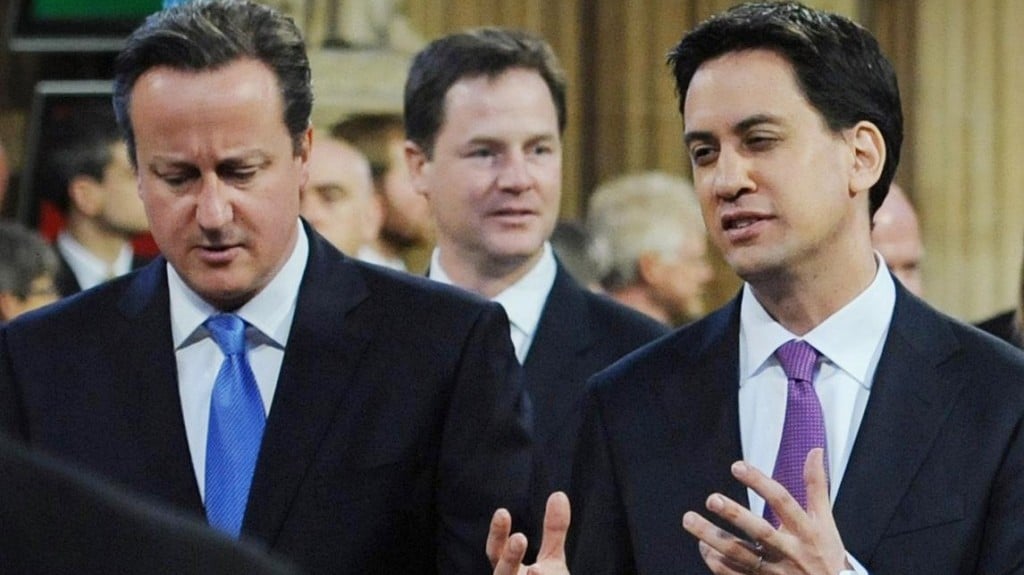
LONDON — Is Britain’s Labour Party “toxic” for the Jewish community? Yes, according to last weekend’s Independent on Sunday. And no, according to Jewish Labour Party insiders.
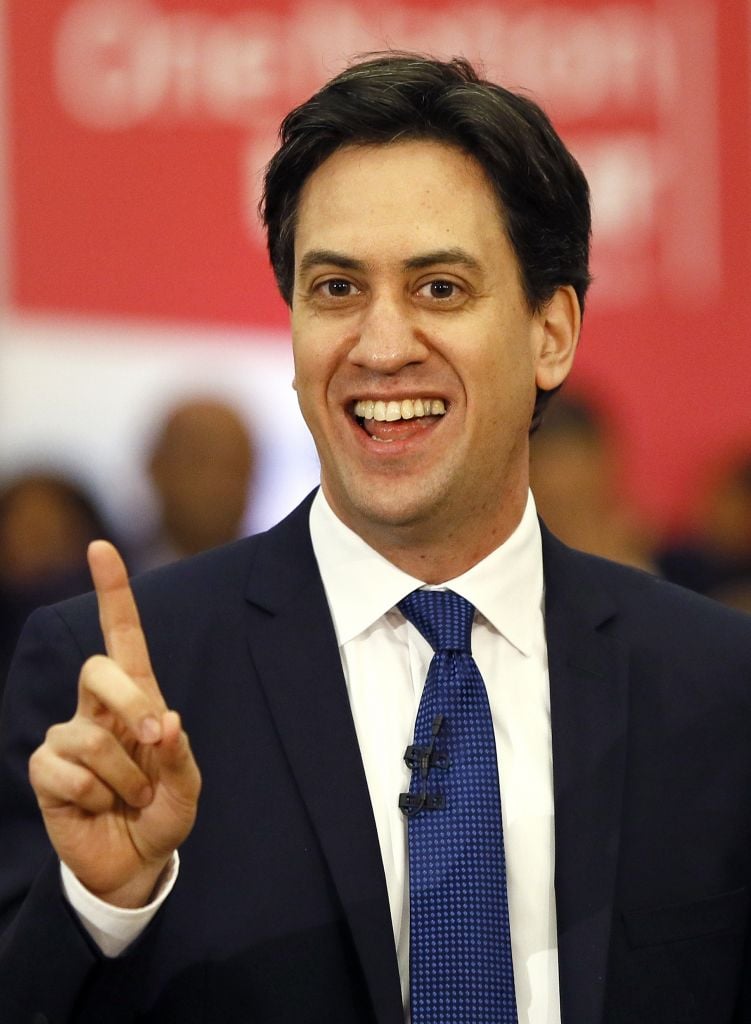
Exactly six months away from next May’s general election, a slew of negative rhetoric against Jewish Labour Party leader Ed Miliband has become overlaid with unverifiable claims that Jews are deserting his party in droves. Such claims, however, have been dismissed as “white noise” by Jewish Labour Party insiders in conversations with The Times of Israel.
Almost the only person prepared to put his head above the parapet – British Jews have traditionally operated behind closed doors when discussing national politics – has been veteran Jewish actress Maureen Lipman, who, in a trenchant broadside in the political magazine, Standpoint, declared that after five decades of near-tribal loyalty to Labour, she could not bring herself to vote for it because of the party’s statements over Gaza during Operation Protective Edge.
This week Lipman told the Times of Israel that she had had “a great response” from the community and “nothing adverse yet, although Standpoint kept all the anti-Semitic [responses] away from me.”
But those people who might have been expected to speak up for Labour – not least its Jewish parliamentarians in both the House of Commons and House of Lords – are deeply reluctant to go on the record. One reason is the implications of a new law passed in January, the Lobbying Act.
The Lobbying Act’s provisions are stringent on how charities – where much of the Jewish community devotes its energies – may or may not spend funds in “qualifying public activities that could reasonably be regarded as intended to influence voters.” In practice, no one wants to breach the act by suggesting that Jews should or could have a preference for one party over another.
Britain’s Jews plainly see the forthcoming election as a gladiatorial two-hander between David Cameron’s Tories and Miliband’s Labour Party. Nick Clegg’s Liberal Democrats, part of the current coalition, are receiving scant attention: A poll of 1,300 readers in last Friday’s London free newspaper, the Jewish News, said that only three percent would be ready to give the LibDems their vote, less than the eight percent ready to throw their lot in with Eurosceptic UKIP (United Kingdom Independence Party). A decision by UKIP leader Nigel Farage to sit with an openly anti-Semitic party in the European Parliament has not gone down well with Jewish voters.
54% of the JN readers polled said they were less likely to change their vote as a result of the Labour Party’s remarks during Operation Protective Edge
Intriguingly, 54% of the JN readers polled said they were less likely to change their vote as a result of the Labour Party’s remarks during Operation Protective Edge. Forty-eight percent of those polled, however, said they would back the Conservatives, with a relatively paltry 19% ready to vote Labour.
Last weekend’s Independent on Sunday story – which has become part of a feeding frenzy of negative coverage of Ed Miliband’s leadership – was discussed on a BBC news review on Saturday night. Presenter Tim Willcox, almost inevitably, referred to a “Jewish lobby” and suggested that prominent British Jews would not want to pay the Labour Party’s much-derided “mansion tax” which it has promised to bring in if it wins next May’s election. (Bigger homes will be taxed more highly.)
Though such a suggestion has brought predictable howls about prejudice from bodies such as the Campaign Against Antisemitism, what was almost as significant was the Independent on Sunday’s complete failure to get anyone to go on the record.
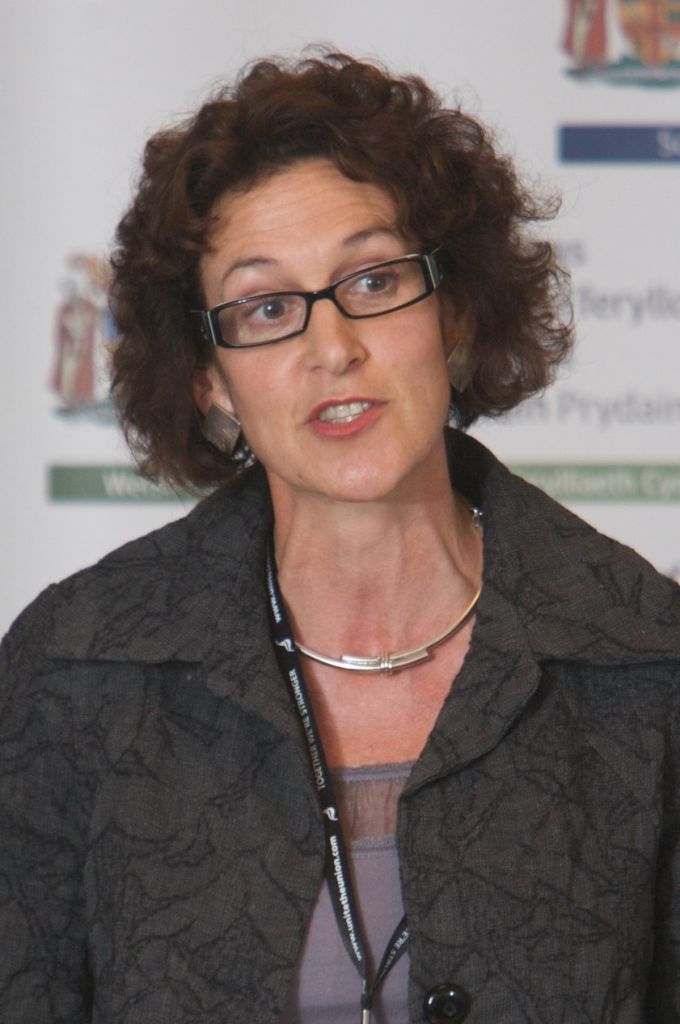
One of the very few ready to speak is the chief executive of the Board of Deputies, Gillian Merron, herself a former Labour MP and only in post at the Board since May. In an undeniably bland statement, Merron told the Times of Israel: “Jews support and are elected representatives of each of the main political parties in the UK, and the Jewish community, and Israel, has friends and allies in all of them. It would be both inappropriate and unwise to seek to align the community with any one party or against another.
“During Operation Protective Edge, a number of parliamentarians made incendiary Israel-related comments and we raised our concerns directly with the relevant parties as well as making our views known publicly.
“The Board’s job is to work with whichever party is in government. As we approach the general election we will work with all the political parties to help them understand the interests and concerns of the Jewish community. To this end we have published an election manifesto for the community, which has been greeted positively by the community as well as a number of MPs and parliamentary candidates.”
Of the big issues of primary concern to British Jews – kosher slaughter, circumcision, anti-Semitism and boycott – both Labour and the Conservatives, have taken ‘robust’ positions
Informed sources in the community say that of the big issues of primary concern to British Jews – kosher slaughter, circumcision, anti-Semitism and boycott – both Labour and the Conservatives, have, broadly speaking, taken “robust” positions, expressing support for the continuation of the first two religious practices, and vigorously condemning boycott and anti-Semitism, which all respectable politicians insist have no place in British society.
One such source told the Times of Israel: “I don’t believe the Jewish community can afford to be short-sighted. We have to have contacts with politicians across the spectrum, government and opposition, and shouldn’t be perceived to be burning bridges.”
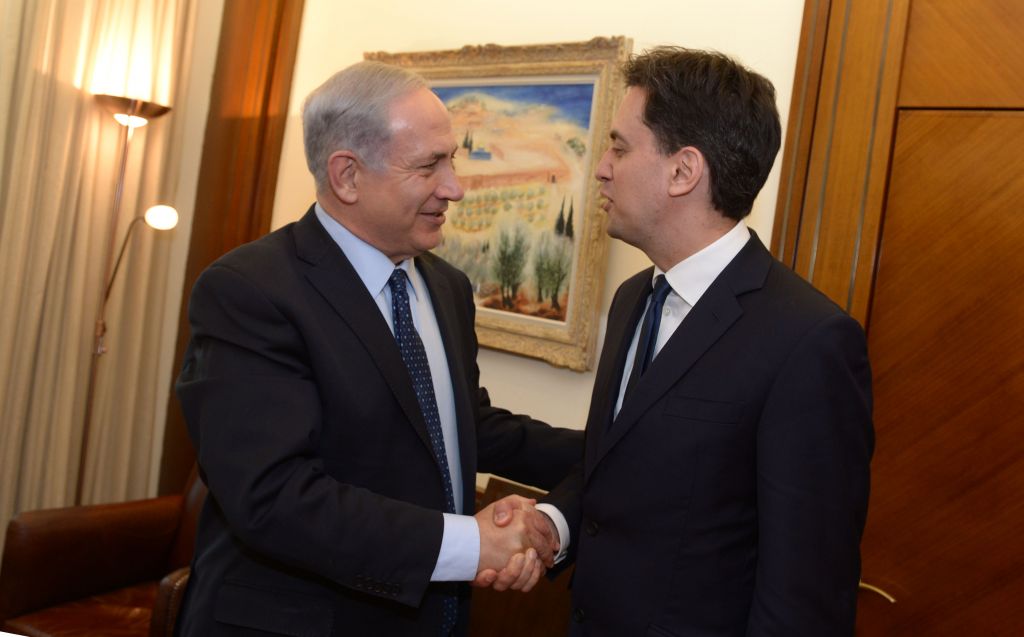
But it ain’t over until the fat lady sings, and those inside Labour’s inner circle are still sanguine about the party’s prospects in 2015. A senior figure in the Jewish community who is very familiar with the Labour Party’s inner workings told the Times of Israel: “If you look at the actual positions being taken, [on Israel] most of those are broadly speaking in the center of public opinion in Israel itself. There is a heightened sensitivity in the British Jewish community, and it is grading politicians – are you for, or against? But the reality is that Labour’s position of backing for a two-state solution, and a warning that time is running out, is one that most of mainstream Israel agrees with.
“There is absolutely no doubt in my mind that if Labour forms a government in May 2015, the Jewish community and Labour will work together. These current attacks [on Miliband] are all part of the febrile white noise that is always experienced before a General Election. Everything else is commentary.”








The Times of Israel Community.