

UNESCO site in Uruguay points to a forgotten Jewish past
The small historical city of Colonia del Sacramento is slowly unearthing remnants of Port Jews who fled persecution on the Iberian peninsula and slowly assimilated in the New World
 Add ToI as a Preferred Source on Google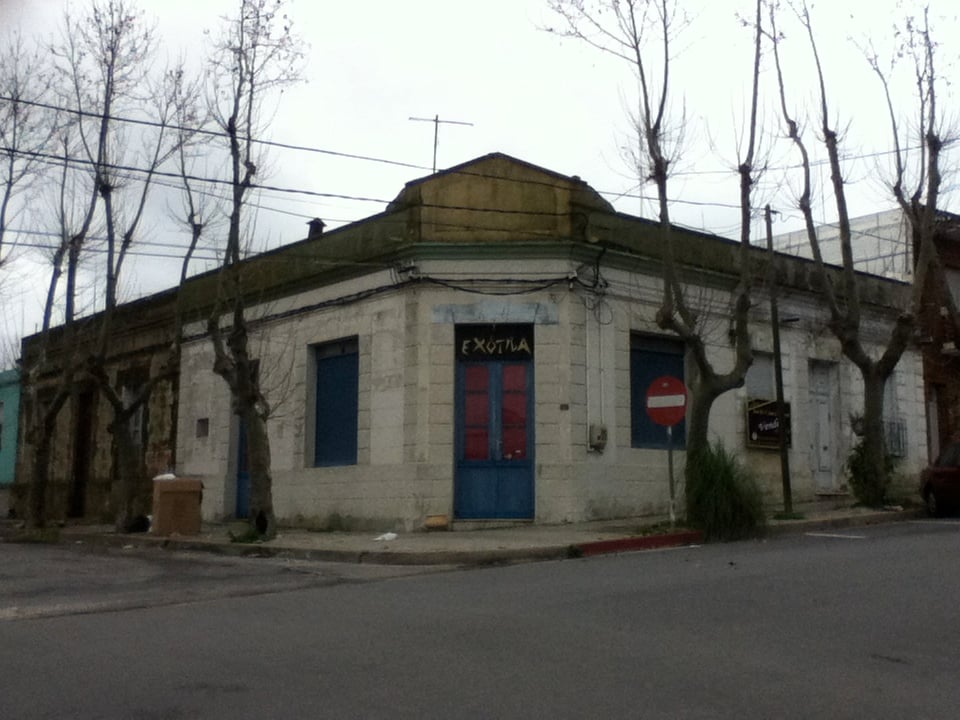
COLONIA DEL SACREMENTO, Uruguay — On the southwestern edge of Uruguay, the small historical city of Colonia del Sacramento sits upon cobblestone roads and looks out upon the Rio de la Plata estuary with a tranquility only acquired with age.
After its foundation in 1680 Portugal and Spain wrangled over the enterprising center of trade for more than a century. Today, its UNESCO world heritage status pays homage to its former greatness.
In the same area as the fortress walls and tourist-traversed drawbridge though, some vestiges of the past suggest that the settlement not only established the regional presence of colonial powers afar, but actually played a role in Jewish history.
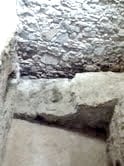
Underneath a staircase at the Posada Plaza Mayor Inn of the old city, various rabbis and visitors have confirmed the existence of a stone mikveh that dates back to approximately 1722.
Although the Jewish roots of Colonia have not been explored as thoroughly as those of other South American or Caribbean cities, Dolores Sloan, President of the Society for Crypto-Judaic Studies, acknowledges that the findings make sense considering the history of Sefardi Port Jews in the Atlantic world.
“When ruins are unearthed, the presence of what could be a mikveh often identifies the site as having been a synagogue,” says Sloan.
Port Jews, a term originally used by Lois Dublin to describe Jewish merchants who lived in key Mediterranean and Atlantic port cities, played a strategic role in overseas commerce and helped forge networks of trade and movement throughout the 16th century. Amsterdam Jews settled Recife, a well-known port city in Brazil, for example, as a Dutch colony in the 1630s and maintained close connections to their hometown.
In Colonia, says Fabricio Prado, a professor of colonial Latin American history at The College of William and Mary, Port Jews were both New Christians, or ancestors of Spanish and Portuguese Jews who had converted to Catholicism during the Inquisitions of the Iberian Peninsula, and Crypto-Jews who practiced Judaism in secret and never completely assimilated.
‘Port Jews went to Colonia primarily because they had more freedom to take on prominent social positions’
“Port Jews went to Colonia primarily because they had more freedom to take on prominent social positions,” says Prado, and mentions that Jewish merchants played a key economic role in shipping the silver that had been mined in the interior of South America around the globe.
Commercial correspondence also indicates that the viceroy-governed colony maintained strong ties with Jewish communities in London and Amsterdam, where Sefardi Jews had sought refuge from religious persecution in Spain and Portugal.
As Nelsys Fusco-Zambetogliris explains in a study published in the Journal of American Archaeology, ceramics excavated in Colonia del Sacramento mirror those found in the Jewish quarter of Amsterdam between the seventeenth and eighteenth centuries.
“There was always a part missing to the historical puzzle and that piece was the presence of Jews,” says Alberto Gustavo Pintos Lareo, a historian and tour guide in Colonia who has been researching the topic for more than a decade.
‘There was always a part missing to the historical puzzle and that piece was the presence of Jews’
Lareo reveals that the upper-part of a doorpost on the well-known Calle de los Suspiros, or Street of Sighs, bears the outline of a mezuza, and an informational sign might mistake the remnants of a second mikveh in front of the ruins of the governor´s house as the base of a watchtower.
In Colonia del Sacramento, or Colony of the Sacrament, however, Crypto-Jews slowly began to assimilate with New World Christians and Sefardi identities and traditions faded with passing generations until more tolerant laws in Uruguay attracted another wave of immigrants to the Rio de la Plata region in the 19th century.
As a testament to the wave of immigrants, one quiet block boasts a synagogue whose property deed dates back to 1880.
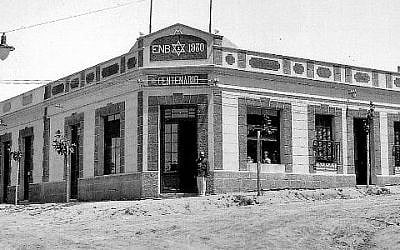
But the vacant building whispers the latest chapter in the long coming-and-going narrative of Colonia´s Jews. Despite the second influx of immigrants, there hardly seems to be a trace of Jewish life in the city. The synagogue doors remain locked and a bakery, clothing store and bar named Exotica have all occupied the space in the last few decades.
Centuries after this gateway to the Atlantic was conquered and re-conquered and ships set sail from its port, some neighbors of the former synagogue only know Colonia’s Jewish history as legend.










The Times of Israel Community.