

US free-speech lawyer: Government legislation a threat to First Amendment rights
In his new book ‘The Fight for Free Speech,’ author, professor, and ABC News legal counsel Ian Rosenberg cites 10 contemporary cases that highlight how fragile that freedom is
 Add ToI as a Preferred Source on Google
Reporter at The Times of Israel
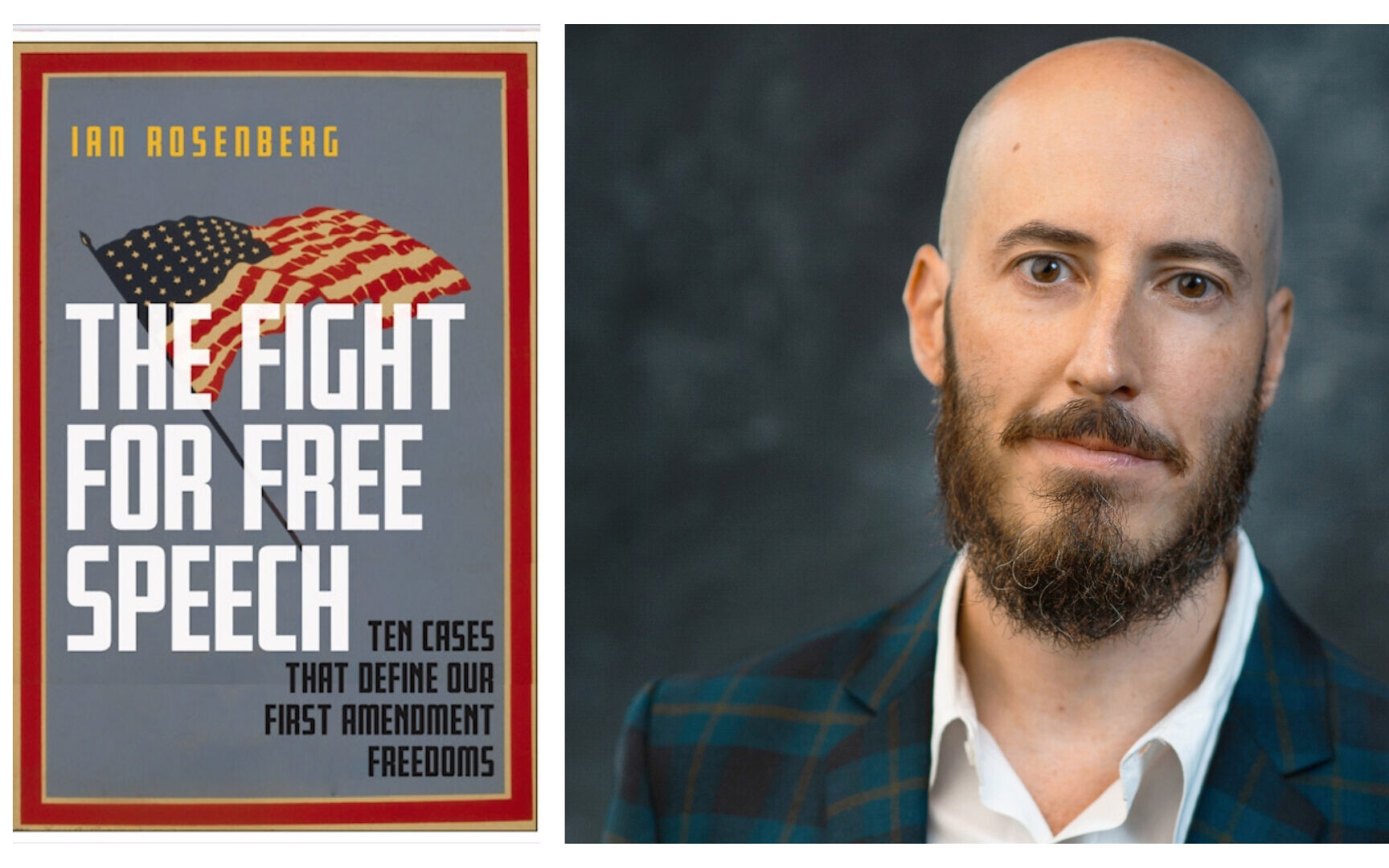
NEW YORK — Ian Rosenberg would much prefer that Nazis didn’t march through the streets of American cities — but he also wouldn’t want to see their right taken away.
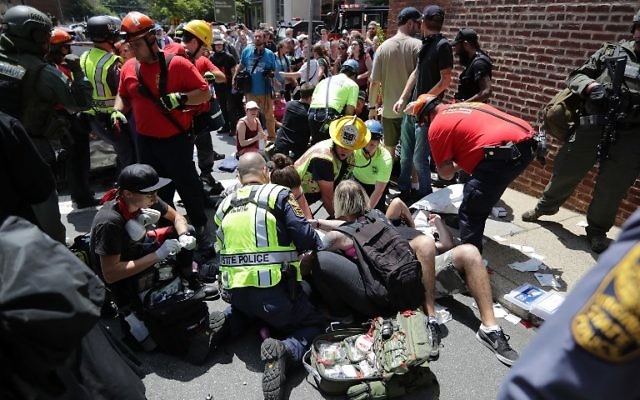
In his newly published book, “The Fight for Free Speech: Ten Cases that Define Our First Amendment Freedoms,” Rosenberg examines First Amendment law through the lens of contemporary free speech issues, including student walkouts for gun safety, political comic Samantha Bee’s expletives, Nazis marching in Charlottesville and the muting of adult film star Stormy Daniels.
But more than being a primer, Rosenberg’s book is his clarion call to citizens.
“If the last four years have shown us anything, it’s that our democracy is fragile. We do need to worry about government interference,” Rosenberg told The Times of Israel in a recent interview. “If we don’t understand our rights they will be taken away and it will be eroded.”
If the press can’t publish vital information, be it election coverage or COVID-19 related data, democracy will stumble, Rosenberg said. If people don’t understand why former NFL quarterback Colin Kaepernick should have the right to take a knee or why students can walk out of class to protest gun violence, then democracy will falter.
As legal counsel for ABC News, Rosenberg said the 2018 mass shooting at Marjory Stoneman Douglas High School inspired him to write the book. At the time he and his family discussed news coverage about student survivors turned activists. His children started asking questions about what consequences they might face if they left school during the day to join the National School Walkout protests.

Aside from his job at ABC, 47-year-old Rosenberg also teaches media law at New York’s Brooklyn College. After graduating magna cum laude from Cornell Law School he began his legal career clerking for a United States district court judge in the Eastern District of New York.
The Racine, Wisconsin-born author is also a founding member of Ovo, an arts collective in New York, for which he directed “Love Research,” a performance art piece written and performed by Karen Sorensen, which was staged in New York in 2002 and 2003.
Rosenberg spoke with The Times of Israel from his apartment in Manhattan, not far from where demonstrators exercised their right to assemble during last summer’s Black Lives Matter protests.
The following interview was edited for brevity and clarity.
The Times of Israel: Before we dig into the issues, knowing that you were born in Racine, Wisconsin, I have to ask you about Kringle [a filled circular Scandinavian pastry] and whether O&H Bakery really has the best one?
Ian Rosenberg: There are two correct cultural touchstones to bring up about Racine. One is the Frank Lloyd Wright houses and the other is Kringle, a favorite delicacy. It’s at every open house, every party, every PTA meeting. I like apple, my mom likes apricot, my dad likes almond, my son likes blueberry. Sometimes my kids ask for it for a birthday treat. I could go on and on about Kringle.
Can you explain the concept of United States free speech laws for international readers?
There are two primary differences between the American free speech approach and the European, or international, model. The first difference is the First Amendment was written and interpreted to prevent government interference with speech. That’s very different from Europe. In Germany, Angela Merkel criticized Twitter when they de-platformed Trump saying a private company shouldn’t be allowed to restrict the speech of the president of the United States; that only the government should be allowed to do that. That’s the inverse of the American model.
The second major difference is that — even though many Americans get confused by this — the First Amendment protects hate speech. We cannot restrict speakers’ speech because we hate the message they espouse. That is why Nazis marching in Charlottesville are allowed. That is why the Westboro Baptist Church can protest outside military funerals.
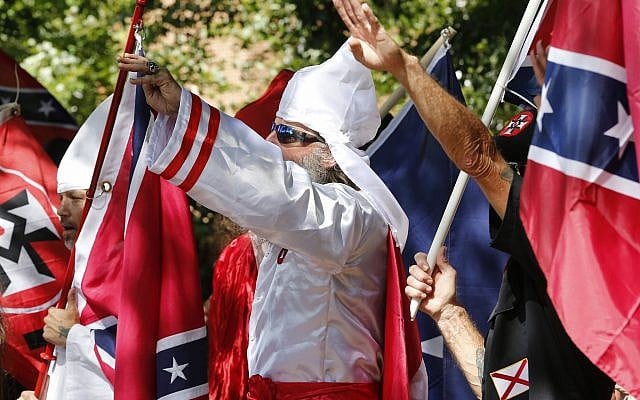
Tell us about grappling with the fact that Nazis can march in this country from the perspective of a Jewish person who works on free speech issues.
As a Jewish person this was certainly the most difficult free speech issue to embrace. Hearing Nazis in Charlottesville say, “Jews will not replace us” was certainly the most frightening reemergence of Nazi speech in my adult lifetime. It’s a very difficult thing to discuss with one’s loved ones. I had to talk about it with my children at the dinner table. One thing that I had to convey was that even when we disagree with everything a person or group says, even when we know it to be false and hateful, we don’t want government intrusion.
However, I do think that for too long free speech advocates have glossed over the harm that hateful language can inflict. In my book I talk about critical race theorists and equity theorists who question how speech by the Nazis has enriched Jews, or how speech by the Klan has enriched Blacks. These are very important points to raise. Still, I strongly believe the government should not be the arbiter of what is true or hateful.
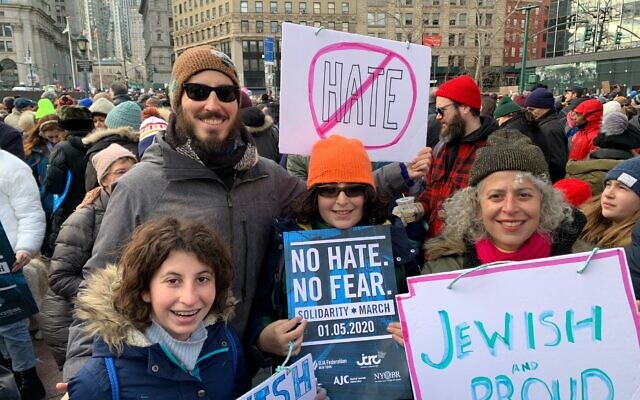
Why are counter-speech and protests — the right to peaceably assemble — important?
Just because something is constitutionally permitted doesn’t mean that we throw up our hands and give up and say there’s nothing we can do. One of the goals of the book is to give people guidance for when the First Amendment is an appropriate tool to make change.
I believe it is necessary for us as Jews to be involved in counter speech. That’s why in January 2020 I participated in a solidarity march against hate speech and why my family and I participated in a Muslim solidarity march four years ago. It’s why we recently participated in a march to protest against Asian-American Pacific Islander hate.
An Oklahoma Senate committee passed a bill, 8-1, granting drivers immunity for hitting protestors. What does this say to you?
For too long academia invested in the First Amendment has acted like we are past the amendment’s original needs. It’s not true that the days where we had to worry about government acting against our right to protest are long gone.
It’s not true that the days where we had to worry about government acting against our right to protest are long gone
If the last four years have shown us anything, it is that we are not beyond that. As President [Joe] Biden says, our democracy is in fact fragile. We do need to worry about government interference at the state and federal level and I am deeply concerned about the practical legislative efforts to restrict speech, protest and dissent.
You’ve worked in theater and film. Tell us a bit about the importance of free speech and the arts.
Arts are often at the vanguard of expressing political and social dissent in this country. Art advocacy is important because of the change it can bring about, but also because it can’t exist without the free speech protections of the First Amendment.
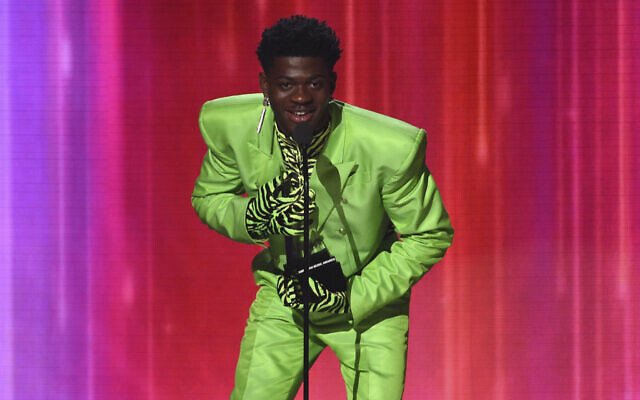
Without protection, artistic freedom is the next to go. I’m thinking of Lil Nas X talking about gay rights in his new incredible video and Cohen v. California, a case during the Vietnam era when a man wore a jacket that said “Fuck the draft.”
One man’s vulgarity is another man’s lyric
As the Supreme Court so beautifully said, “One man’s vulgarity is another man’s lyric.” That applies to both political protest and literally to someone like Lil Nas X. What the Christian right might view as vulgar is literally a lyric in his song.
What are the free speech issues peeking over the horizon that we should be concerned about?
I think the two most talked about issues of free speech in the next five to 10 years will be free speech online and student speech.
Online speech is absolutely a component of our free speech rights today, even though it was not one contemplated by the Founding Fathers.
The other worrisome issue is that the Supreme Court took up a case involving a young high school student. The student cursed out her cheerleading squad and administrators on Snap Chat, on the weekend, and only to people who followed her Snapchat. She was kicked off the squad.
Although the appellate court upheld her right, it’s very worrisome the Supreme Court has taken it up. It would be a fundamental reconceptualizing of student speech rights to say that speech outside the classroom, on a non-school day, is something administrators can punish.
This article contains affiliate links. If you use these links to buy something, The Times of Israel may earn a commission at no additional cost to you.




The Times of Israel Community.