

US virus death toll surges again as push to reopen ramps up
Over 2,400 fatalities tallied in single day; Trump says briefings are a waste after coming under fire for touting bleach cure
 Add ToI as a Preferred Source on Google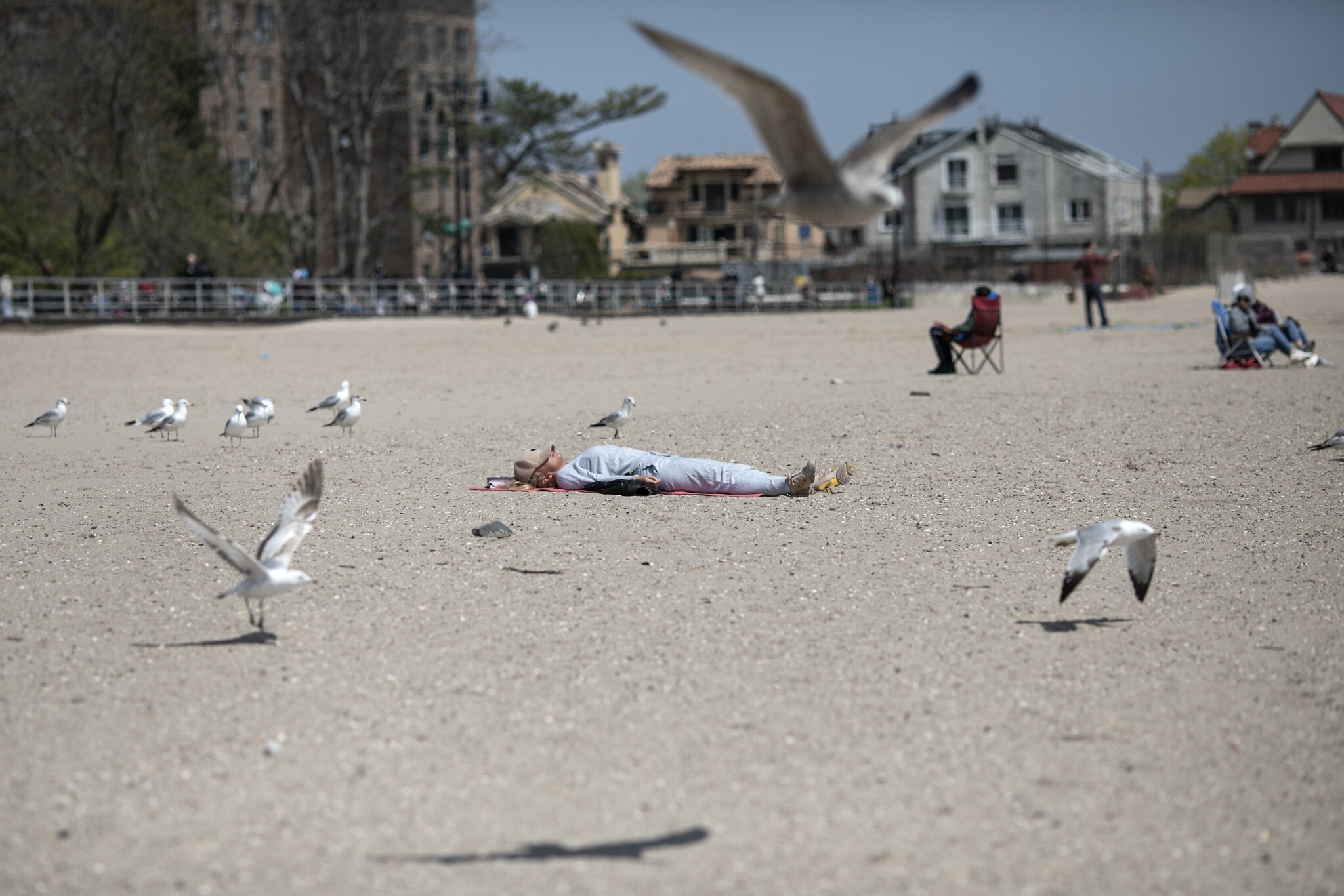
The US death toll from the novel coronavirus rose by almost 2,500 on Saturday, reversing a single-day drop, as states continued to gingerly pull back restrictions amid mounting concern over a possible resurgence of the disease.
Meanwhile, US President Donald Trump indicated he may shelve his appearances at daily briefings on the disease, days after he came under fire for appearing to recommend that injecting bleach could work as a treatment for humans.
The US recorded 2,494 new coronavirus deaths over 24 hours, according to figures reported Saturday night by Johns Hopkins University, bringing the total death toll across the country to 53,511.
The toll of 2,494 was a jump from Friday, when the US recorded the lowest number of virus deaths — 1,258 — in nearly three weeks.
It added some 46,000 new confirmed cases bringing its tally to over 936,000, about a third of the total confirmed cases worldwide.
Globally the death toll reached 202,000 and the World Health Organization warned against the idea of immunity “passports” for the approximately 800,000 people who have recovered thus far, saying there was no evidence they had become immune.
“There is currently no evidence that people who have recovered from #COVID19 and have antibodies are protected from a second infection,” the UN health body said in a statement.
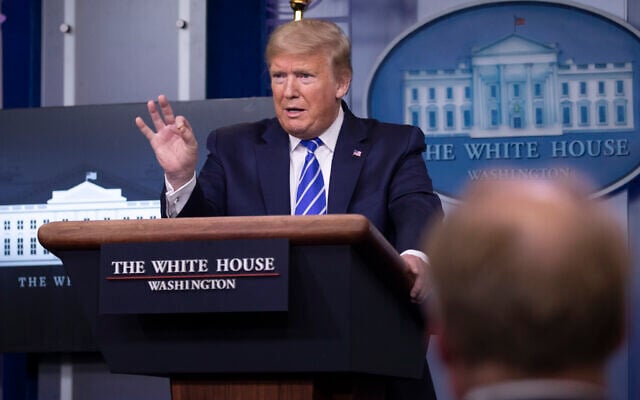
In Washington, Trump skipped conducting a press briefing on the coronavirus response and later tweeted that the near-daily briefings were “not worth the time & effort” because of what he claimed was negative and erroneous media coverage.
What is the purpose of having White House News Conferences when the Lamestream Media asks nothing but hostile questions, & then refuses to report the truth or facts accurately. They get record ratings, & the American people get nothing but Fake News. Not worth the time & effort!
— Donald J. Trump (@realDonaldTrump) April 25, 2020
Trump lashed out at the media two days after using a briefing to muse about the injection of chemical disinfectants, which drew warnings from manufacturers and the nation’s top medical professionals.
His tweet questioning the value of press briefings also came as White House aides were developing plans to shift the president’s public emphasis from the virus to addressing the economic crisis it has caused and the government’s plans for reopening the economy.
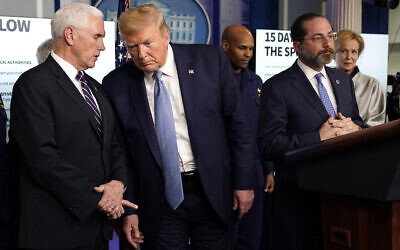
Discussions at the White House were also taking place to decide on the possibility of replacing Health and Human Services Secretary Alex Azar, CNN reported.
The network reported that Trump had expressed frustration at Azar’s lack of communication.
While word of the virus was included in several of the president’s intelligence briefings, Trump wasn’t fully briefed on the threat until Azar called with an update on January 18 while the president was at his private Mar-a-Lago club in Florida.
Trump spent much of the conversation wanting to talk about vaping; he was considering a new policy restricting its use. White House officials now believe Trump didn’t fully grasp the magnitude of the threat to the US in part because Azar, who was feuding with several members of Trump’s inner circle, did a poor job communicating it.
Attention across the world has shifted to how to reopen economies, amid concerns over the virus rebounding as people begin to interact more.
Dr. Anthony Fauci, infectious diseases chief at the National Institutes of Health, on Saturday stressed a step-wise approach, with restrictions gradually lifted as areas reach certain milestones.
“Any attempt to leapfrog over these almost certainly will result in a rebound, and then we can set ourselves back,” Fauci told an online meeting of the National Academy of Sciences.
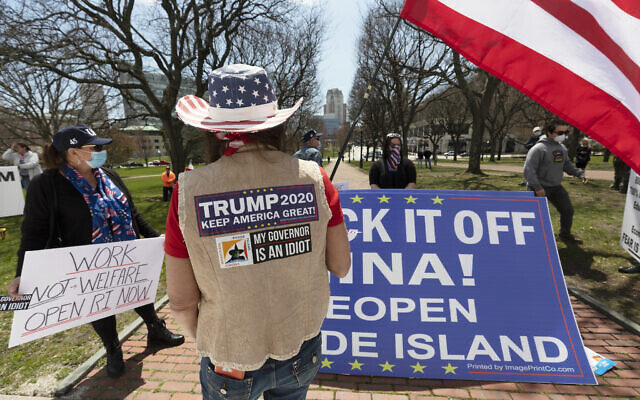
Pressure in the US and elsewhere has built in recent weeks as citizens frustrated by stay-at-home orders and broken economies push to open back up.
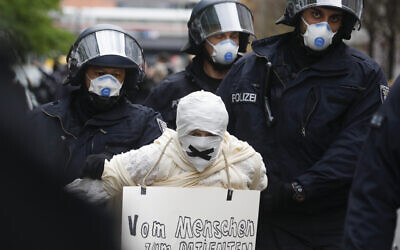
German police arrested dozens of protesters in Berlin on Saturday for flouting the coronavirus lockdown measures they were demonstrating against.
The governor of the US state of Georgia rejected warnings from top disease experts and allowed businesses like hair dressers, nail salons and bowling alleys to reopen.
On Saturday many Georgians embraced the return to something resembling normalcy by flocking to the beach.
“It feels great — like it’s supposed to feel,” mother and housewife Rachel Lilly, 39, told AFP, barely lifting her head from her watermelon-themed towel as she relaxed under a cloudless sky on Tybee Island.
“I’m not concerned” about catching coronavirus, “as long as it’s not packed,” she said. “But if everyone does what we’re doing, that’s a problem.”
In southern California thousands flouted policies to stay indoors and headed to beaches amid a heat wave.

On Friday, Belgium’s Prime Minister Sophie Wilmes announced a staggered plan for reopening businesses and schools in mid-May and restaurants beginning on June 8.
“The spread of COVID-19 has been slowed down, but the virus has not disappeared,” she warned.
Italy, nearing the end of the world’s longest active lockdown, announced plans Saturday to set price limits on face masks and ramp up antibody testing.
Italians are awaiting a decision this weekend about which restrictions will be lifted. They will probably be allowed to leave their homes freely for the first time since March 9 by early May.
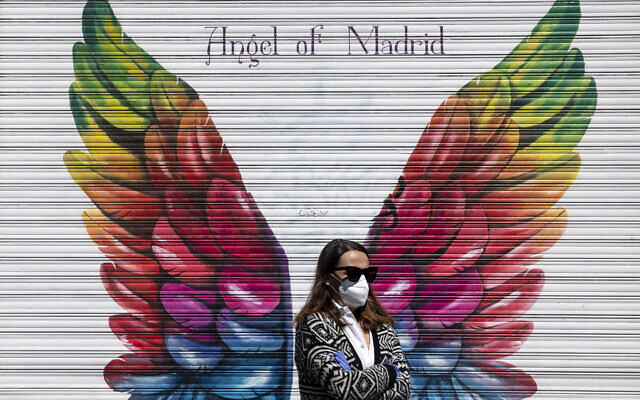
Spaniards will be allowed out for exercise and to take walks starting next weekend, Prime Minister Pedro Sanchez announced Saturday.
The government will on Tuesday unveil its broader coronavirus exit plan that will likely be put into action in the second half of May, he said.
“If the pandemic keeps evolving positively as it has been doing until now, from May 2, individual physical activity will be permitted and walks with the people you live with,” he said.



The Times of Israel Community.