

Vessel struck in Hormuz; Iran vows to keep waterway shut until US complies with June deal
Crew casualty reported in attack on ship; data shows Hormuz crossings rose slightly from weekend, but remain in single digits
 Add ToI as a Preferred Source on Google
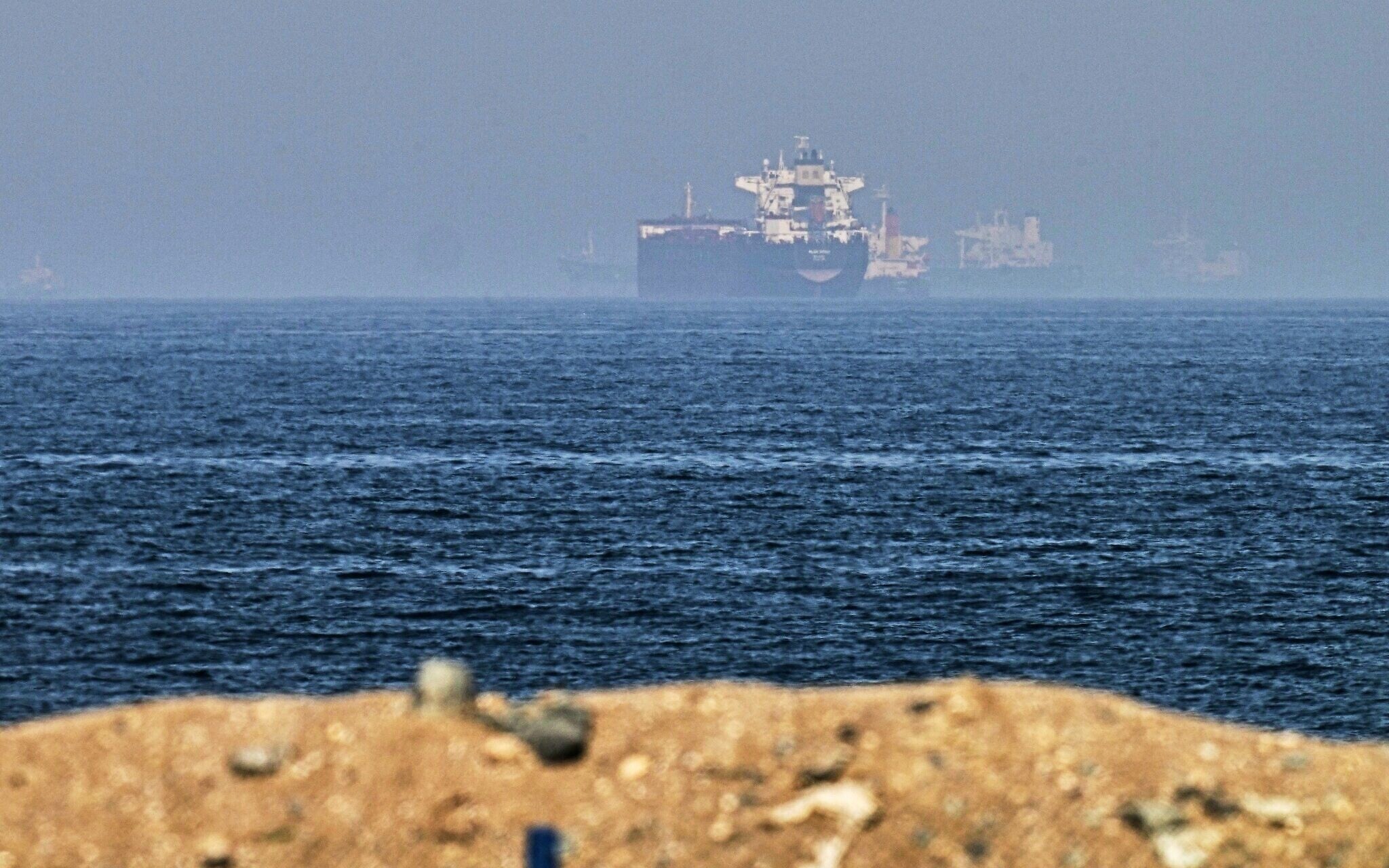
Britain’s Maritime Trade Operations on Tuesday said it received a report that a vessel was struck by an unknown projectile while transiting outbound in the Strait of Hormuz, causing engine room damage and a crew casualty, as Iran vowed to keep the waterway shut until the US meets the terms of June’s interim deal.
The UKMTO did not specify the nature of the reported casualty from the vessel. The Omani Coast Guard was assisting remaining crew, and authorities were investigating, UKMTO said, adding that there was no environmental damage.
The incident comes as shipping through the Strait of Hormuz remains severely disrupted, with vessel crossings still in the single digits, down from more than 130 on February 27, the day before Israel and the US launched the war on Iran in a bid to destroy its nuclear program.
Iranian state media cited Iran’s parliament speaker and top negotiator Mohammad Bagher Ghalibaf as telling lawmakers Tuesday that the strait would stay shut until the US meets the conditions of the June memorandum of understanding between the sides.
The US has responded to Iran’s closure of Hormuz with a blockade on Iran-linked shipping. As part of the MOU reached with Iran on June 17, the US committed to lifting its blockade, scrapping Iranian oil sanctions, releasing frozen Iranian funds and ending threats and military operations against Iran.
A senior Iranian official also told Reuters on Monday that Iran would now shift to a “fully offensive” posture due to the stalled diplomatic efforts to secure a permanent end to the conflict.
Iran blockaded the strait early in the war, choking off about 20% of the world’s commercial oil shipments and sparking a global rise in energy prices.
The MoU — which Israel was not a party to — opened a 60-day window to negotiate a deal on Iran’s nuclear program. But the agreement quickly unravelled over a dispute about control of Hormuz. The 60 days ended on Monday.

Amid the stalemate, preliminary shipping data on Tuesday showed that the previous day’s crossings in the Strait of Hormuz were still in single digits, despite rising slightly from the weekend.
Six commodity ships transited the strait on Monday, of which three were exiting the Gulf and three were entering, Kpler shiptracking data showed.
Three ships transited on Saturday, while two moved through the waterway on Sunday.
There were no very large crude carriers (VLCC) or tankers carrying liquefied natural gas passing through.
Some vessels could be passing through the strait with their transponders switched off, and they are not considered in the tally.
The very large gas carrier (VLGC) Xavia entered the strait via the Iranian route under ballast, meaning empty of cargo, according to the data. VLGCs are typically used to ship liquefied petroleum gases such as propane and butane.
A medium-range fuel tanker and an intermediate-range tanker also entered the Gulf, the data showed, while a medium-sized LPG carrier, a Panamax bulk carrier and a Panamax-sized fuel tanker exited the Gulf.
Meanwhile, in Bab el-Mandeb, 19 commodity vessels transited on Monday, Kpler data showed, lower than a 10-day moving average of 26 and Sunday’s 33 crossings. Out of the 19 ships, five were entering the Red Sea and 14 were exiting.
Of the 14 exits, one was the VLCC Norns laden with 2 million barrels of oil, according to the data.
Of the ships entering, two were the liquid tankers Admiral and Portofino, with the Portofino loaded with diesel bound for west of Suez markets.
Times of Israel staff contributed to this report.








The Times of Israel Community.