

Wednesday the rabbi was murdered: What the press is saying on August 27
Fatal stabbing of Shai Ohayon, 39, apparently brings a year of no terrorism deaths in Israel to an abrupt, tragic end
 Add ToI as a Preferred Source on Google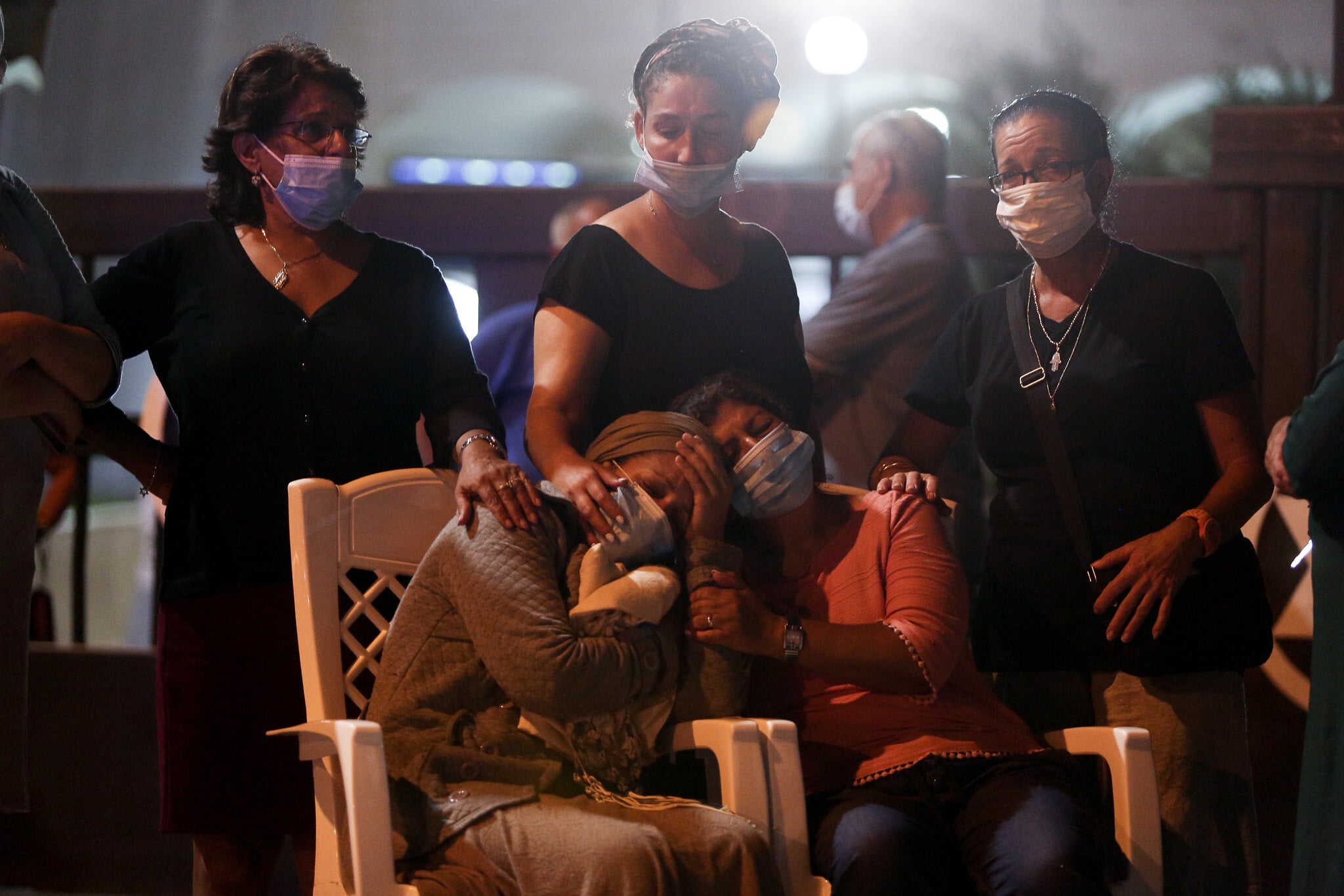
1. Terrorism crashes an anniversary of no terrorism deaths: Rabbi Shai Ohayon, 39, was stabbed to death on Wednesday afternoon in an apparent terrorist attack, which if the motive is confirmed would end a yearlong streak of no terrorism deaths in Israel.
- The suspected killer, a Palestinian father of six from the West Bank, had a permit to work in Israel and no history or terrorist activities. The Shin Bet security service said it was looking into the possibility that he had a history of mental illness, but that it was “too soon to tell” if that could explain the attack. Chilling footage from the scene of the attack shows the stabber calmly walking away.
- Ohayon’s broad-daylight murder at Segula Junction in Petah Tikva makes the front pages of all of Israel’s dailies.
- In a late-night burial, Ohayon is mourned as a dedicated father of four — the youngest just four years old — and husband, and devout Torah scholar. A photo of his widow, Sivan, kneeling and sobbing on his fresh grave is widely shared on social media.
- Yedioth Ahronoth quotes an eyewitness, Avraham Sayag, who chased the stabber with a bat after the Petah Tikva attack. “After he was informed that Ohayon was no longer alive, Sayag broke out in tears. ‘I don’t believe it,’ he said. ‘I couldn’t help him in the end. I saw him stand on his feet and I asked, ‘brother, are you okay? I just can’t process this. I have no words.'” Ohayon, who was stabbed repeatedly, had initially brushed himself off and insisted he was fine, said Sayag.
- The killing came hours after Prime Minister Benjamin Netanyahu touted on social media that Israel has seen no terrorism deaths in a year, for the first time in 56 years. Jinx.
2. Law and disorder: The Yedioth Ahronoth daily plays up an upcoming weekend interview with former police commissioner Roni Alsheich, in which the ex-top cop who oversaw the investigations into Netanyahu opines that the premier will be convicted. The interview is part of Alsheich’s efforts to promote his new book.
- The upcoming interview stokes fury in the pro-Netanyahu Israel Hayom daily, which plays up a complaint against Alsheich for interviewing for Yedioth and allegedly releasing his book through its publishing house. The complaint to the attorney general notes that Alsheich oversaw the criminal investigation and indictment of Yedioth’s publisher, Arnon Mozes, as part of the so-called Case 2000 into the premier, making his book contract and the interview a highly problematic arrangement.
- “Why there? Conflict of interest? For flattering coverage?… For ethics? For exposure? And why are you silent? Why?” writes attorney Pinchas Fishler in the complaint to Avichai Mandelblit.
- Fishler is a former police officer who worked briefly in the Prime Minister’s Office under Netanyahu, until he resigned amid accusations of criminal conduct for which he was later cleared.
- There’s just one catch — the allegation seems entirely spurious, as Alsheich notes his book was published by Steimatzky, and the publishing house chose a variety of outlets for him to give interviews to.
- “It’s unfortunate that Israel Hayom decided to give its readers completely unfounded information,” he says.
- Despite the criminal charges against Mozes, in which he is accused of offering flattering coverage in an alleged quid pro quo with Netanyahu, he continues to run Yedioth — 212 days after he was charged with bribery — as this single-minded site by the Seventh Eye media watchdog underlines.
- The Haaretz daily leads its Thursday coverage with the state prosecution’s new directives, under which protesters should only be placed on trial for disturbances during rallies in exceptional cases. The new legal rules draw immediate attacks from Netanyahu’s Likud party, which accuses the state prosecution of unveiling these rules to ensure police go easy on the thousands of demonstrators outside the premier’s residence several times weekly and claims the legal officials are encouraging “violent anarchy” in a bid to topple Netanyahu.
- Likud lawmakers have been instructed to attack the prosecution, reports say.
- Prof. Mordechai Kremnitzer, in a column for Haaretz, says the previous guidelines on the treatment of demonstrators were outdated and needlessly heavy-handed.
- “Even if one doesn’t agree with every detail of the instruction, it’s impossible not to be impressed by the general spirit that respects democracy and the freedoms that accompany it,” he writes.
3. Dip the apple in the hand sanitizer: Three weeks before Rosh Hashanah, it’s still unclear what health regulations will be enforced over the High Holidays. Will there be a national lockdown? Or just restrictions on synagogues and gatherings? The government has yet to decide.
- In Yedioth, Nadav Eyal underlines the government’s paralysis in a conversation with a senior official. “‘And here’s the problem,’ the official said last night. ‘We can’t do anything.’ It’s a heck of a problem, I replied. ‘If we introduce restrictions, even small ones, the cabinet and then the Knesset will chip away at them, nothing will happen,’ he said.
- “So how will you bring down the infection rates, perhaps with the red light plan [the color-coded plan that would see restrictions applied locally, based on rate of infection], I wondered. ‘Oh, no, no, even the virus czar Gamzu explained that this program will help manage the pandemic, but it won’t necessarily drive down infections.’ I challenged him: So how will the infections be brought down, I asked again. ‘Either it’ll come down slowly,’ he explained, frustrated, ‘or we’ll reach a point of serious restrictions like a lockdown.’ So you’re saying that despite the fact that the correct decision right now is to introduce restrictions that will prevent a lockdown, you simply can’t pass these restrictions. He confirmed. Where’s Bibi? I asked. He sighed.”
- Writes Eyal: “Israel is taking an exceptional gamble. Who knows, maybe the roulette will play in its favor. But if not, it will bring the healthcare system to the brink. It’s gambling with the whole pot — on life and death.”
- But one issue has been resolved: Ukraine on Wednesday banned foreigners, thwarting the yearly Rosh Hashanah pilgrimage that draws thousands of Israelis and that Israel had feared would result in a serious outbreak from returning travelers.
- Despite the apparent resolution of that issue (thanks, Kyiv) coronavirus czar Ronni Gamzu, who has been fighting the ultra-Orthodox politicians strongly over the Uman gathering, indicates he’s at his breaking point. “Sometimes I have the thought of handing over the position to someone else,” he tells Army Radio on Thursday morning.
- Separately, Yedioth on Thursday reports that the Finance Ministry is planning salary cuts for public servants. The scaleback, which is expected to save NIS 4 billion, would see 700,000 public servants have their wages cut by up to 10 percent (3% for those earning NIS 7,000-15,000, 7% for those earning between NIS 15,000-20,000, and 10% for those earning above NIS 20,000). The move will also take a bite out of salaries of social workers, police officers, teachers, and doctors, all of whom have been working harder amid the pandemic. The labor unions are expected to put up a serious fight, it says.
4. We’ll always have Abu Dhabi: US Secretary of State Mike Pompeo’s Middle East tour has come to an end, apparently with little success in convincing moderate Arab states to normalize ties with Israel, following in the steps of UAE.
- Sudan and Bahrain spurned Pompeo outright, while Oman made no mention of Israel in its readout of the meeting.
- “After American and Israeli officials spent days hyping the prospect that other Arab countries would soon follow the UAE in normalising relations with Israel, the lack of any additional public commitments during Secretary Pompeo’s regional tour looks like an anti-climax,” Hugh Lovatt of the European Council on Foreign Relations tells AFP.
5. Till next time: The exchange of fire at the Israel-Lebanon border between Hezbollah continues to preoccupy the press on Thursday.
- In Haaretz, analyst Amos Harel says the Beirut blast and its devastating aftermath has not dented Hezbollah’s desire to get revenge against Israel over the killing of its fighter in an Israeli airstrike in Syria and following a previous unsuccessful border clash.
- “Since the night shooting did not bring results, we must assume that Hezbollah will make other attempts. These efforts come in a specific context — close to the border and against IDF soldiers, not against Israeli civilians. [Leader Hassan] Nasrallah isn’t interested in setting a large fire here, despite his tough rhetoric. Israel, for its part, is seeking to continue its efforts in Syria as part of the ‘operation between the war’ and to keep deterrence vis-a-vis Hezbollah. In a pessimistic scenario, the next Hezbollah responses could lead to casualties on the Israeli side and even devolve into several days of combat, exchanges of fire that are less than a war, along the border with Lebanon.”







The Times of Israel Community.