

White House’s Lebanon success, Iran failure on display during Herzog visit
Biden and other US leaders celebrate Israel’s ‘historic’ border agreement with Beirut, but are more muted on Tehran, as they appear to lose hope in nuclear talks

 Add ToI as a Preferred Source on Google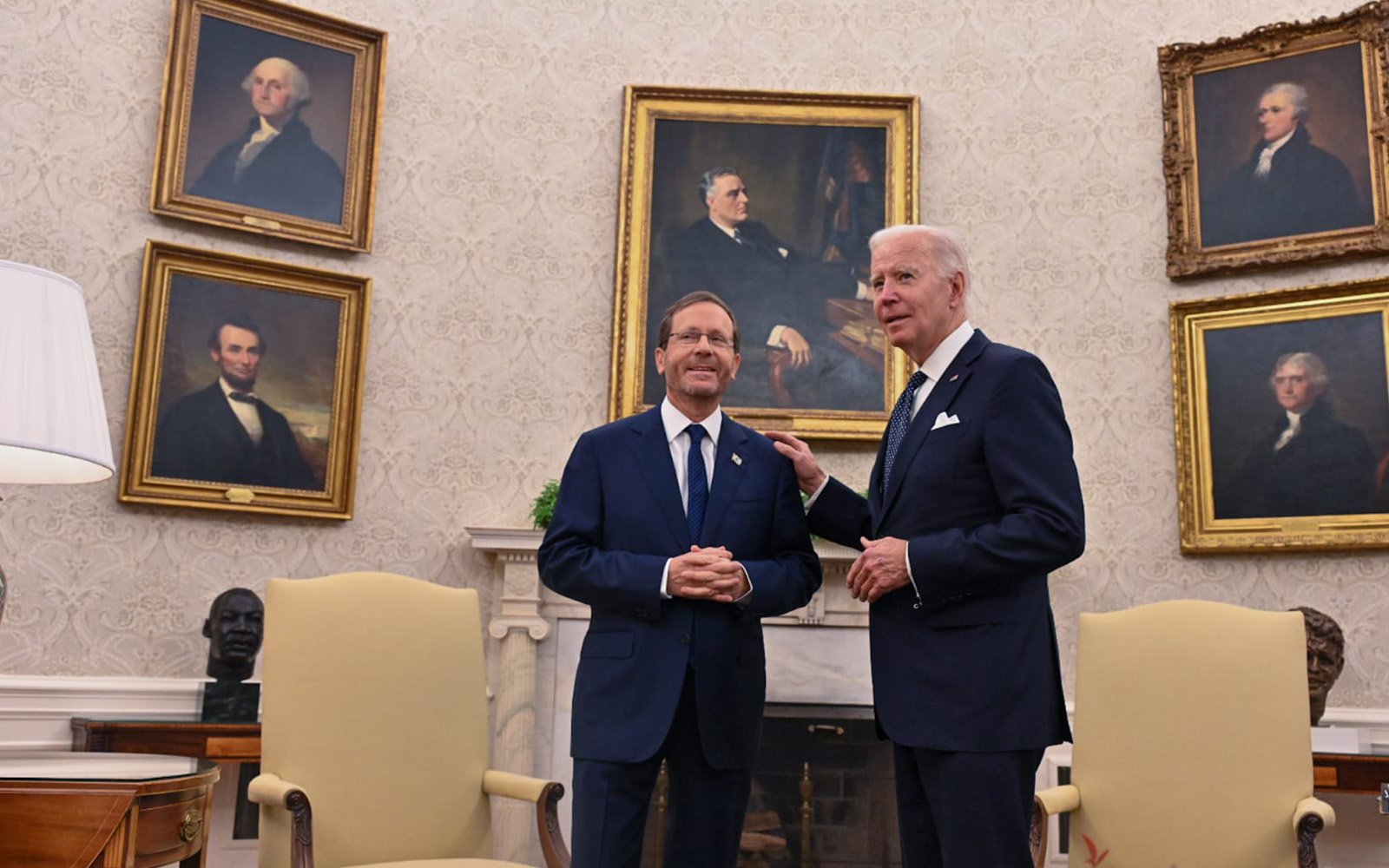
WASHINGTON — US President Joe Biden lauded the US-brokered maritime border agreement between Israel and Lebanon during a meeting with President Isaac Herzog on Wednesday, calling the deal a “historic breakthrough.”
Herzog tacked in a different direction in his opening statement at the meeting. He briefly thanked Biden for the US role in the Lebanon deal, but first, he tore into Iran for its brutal crackdown against protesters, for its alleged nuclear weapons aspirations and for “killing innocent citizens” in Ukraine.
The two leaders’ priorities highlighted the Biden administration’s mixed success in its attempts at dialogue-focused diplomacy in the Middle East — in Lebanon, evidence the White House’s approach can pay real dividends, and with Iran, a stark failure the administration appears to be reckoning with.
On Saudi Arabia, Israel views the Biden administration’s outreach as a positive development, despite US frustrations with Riyadh, while the Palestinians have been relegated to a second-tier concern amid tensions between Washington and Ramallah.
The trip was Herzog’s first to the US since becoming president last year. The role is largely ceremonial, but Herzog is an influential figure and has taken an active role in Israel’s diplomacy.
Herzog repeatedly harped on the Iranian threat during his two-day visit to Washington, as Israeli leaders tend to do — Iran and its terrorist proxies present a clear danger to the Jewish state. Before the trip, Herzog said the most pressing topic on the agenda would be “the Iranian threat, which is destabilizing not only the Middle East but the entire world.”
He brought with him images that he said proved Iranian drones were being deployed against Ukraine, even as the US acknowledged a week ago that Iranian troops were on the ground in Crimea assisting Russian drone attacks, amid denials from Tehran and Moscow.
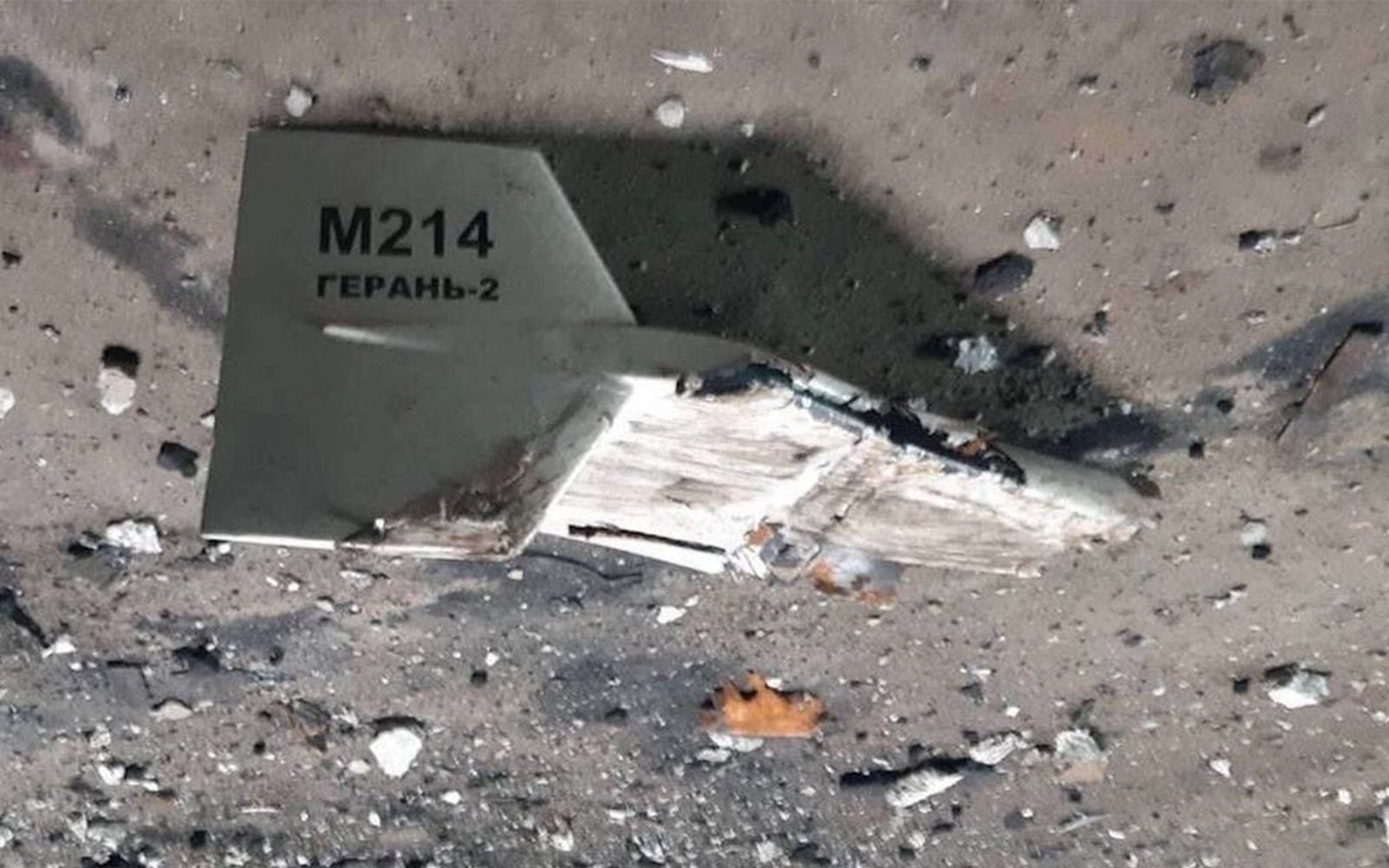
The real message Herzog communicated with the images was in the subtext: Iran is a bad actor and cannot be trusted. Iranian security forces violently suppressing women-led protests and helping Russia bomb Ukrainian civilians bolstered his argument.
“In every region where there is killing, suffering and hate — Iran is there,” Herzog said. “Iranian weapons play a central role in global destabilization, and the international community must learn its lesson, now and in the future.”
“The Iranian regime has shown the world its true colors, which Israel has known for years,” he said.
Biden, speaking after Herzog, did not mention Iran in his opening comments, and Herzog did not bother showing him the drone photos, since the US does not actually need any further evidence of Iran’s involvement in Ukraine.
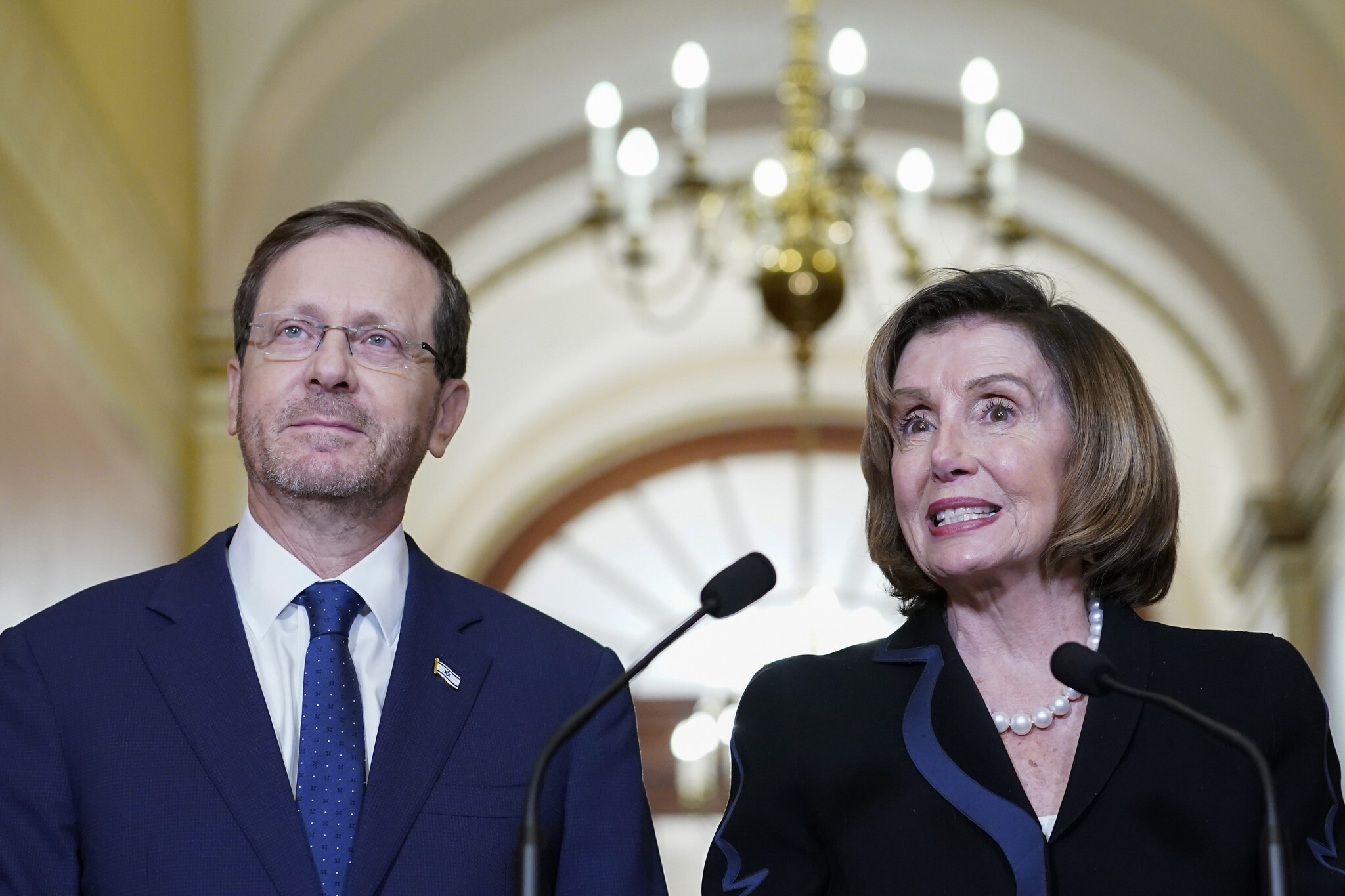
House Speaker Nancy Pelosi also lauded Israel and Lebanon’s “breakthrough agreement” during an appearance with Herzog, and alluded to concerns about “stability in the region” and “what’s happening in Crimea” without mentioning Iran.
“Israel’s thinking is always important to us,” she said.
US Secretary of State Antony Blinken issued straightforward condemnation of Iran, saying its drones were causing “horrific” effects in Ukraine.
A senior Israeli official said Wednesday toward the end of the visit that the US has soured on the possibility of reviving the 2015 Iran nuclear deal, and is disappointed and angry at Tehran over its approach to the moribund negotiations.
The US still believes in dialogue with Iran, but the atmosphere in Washington toward Tehran has turned “very negative,” according to the official, who is familiar with the Americans’ thinking on the issue.
The US has realized that “there’s no one to trust or talk to” on the Iranian side, and is struggling to square its support for human rights with Iran’s crackdown on protesters, the official said.
White House National Security Council spokesman John Kirby said as much in a Wednesday press briefing.
“Frankly, we are just too far apart right now to have any meaningful discussions,” he said.
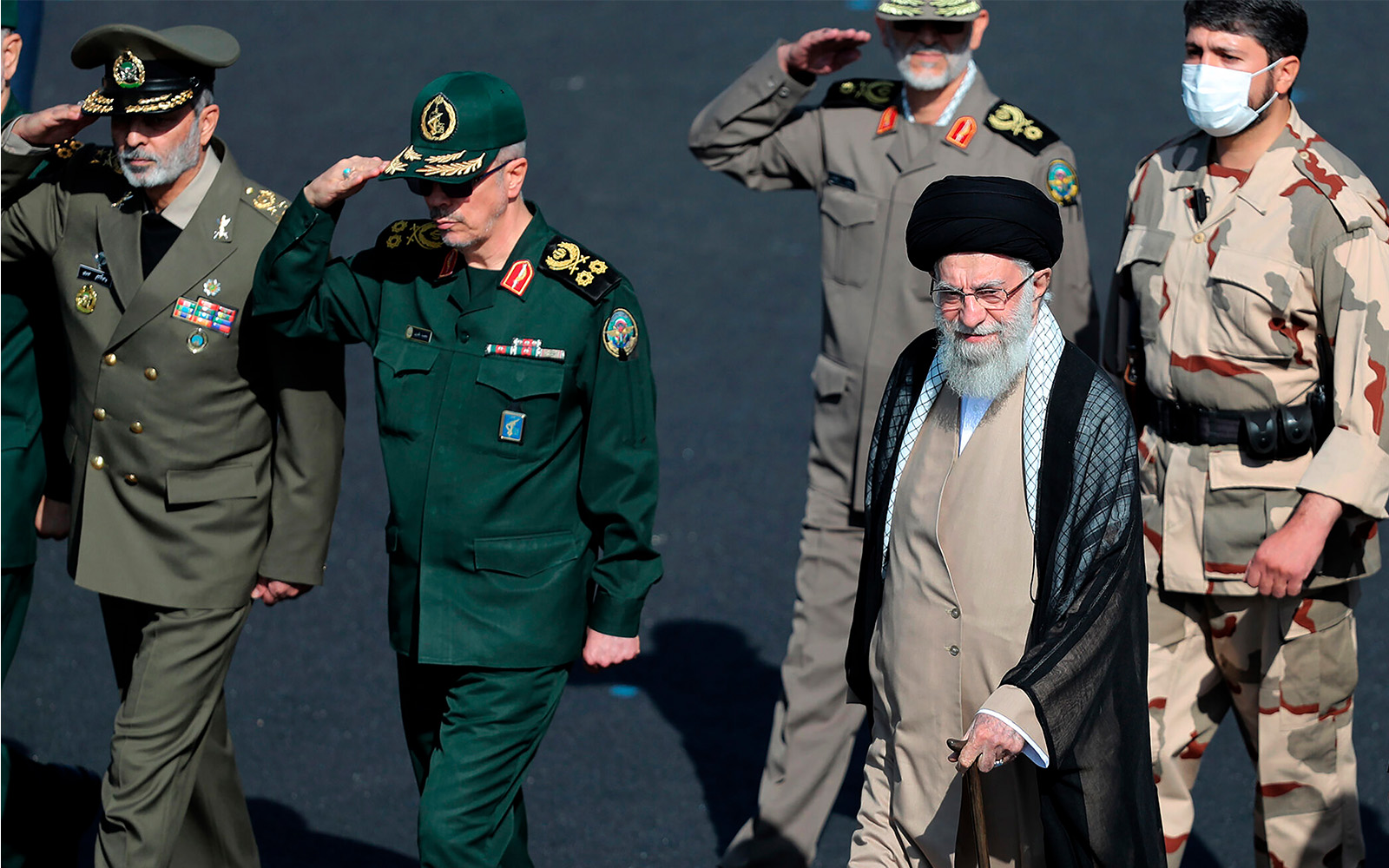
Biden and his administration are proud of the Lebanon agreement and view it as an achievement that will bring significant benefits to both Israel and Lebanon. Despite that success, the US appears to be moving toward Israel’s point of view when it comes to Iran — that talks won’t work.
Herzog and Biden did not discuss Saudi Arabia during their meeting. Washington is irked at Riyadh because — after Biden bit the bullet and visited Saudi Arabia earlier this year despite having said its crown prince would be treated as a pariah — the Saudis cut oil output earlier this month in a boon for Russia.
Israel still views Biden’s visit to Saudi Arabia with approval, though. The Israeli official said one of Biden’s primary motivations was to push for Israel’s inclusion in the region and the trip sparked dialogue about Jerusalem’s regional ties.
The US is not mediating between Israel and Saudi Arabia, and things are not moving forward on that front at the moment, although the US wants to expand the Abraham Accords into broader regional integration for Israel and sees it as a priority.
The Palestinian conflict was a lesser topic of discussion during Herzog’s trip. Washington and Ramallah are at odds; Palestinian Authority President Mahmoud Abbas said during a meeting with Russian President Vladimir Putin earlier this month that the Palestinians “don’t trust America,” drawing a rare public rebuke from the US.
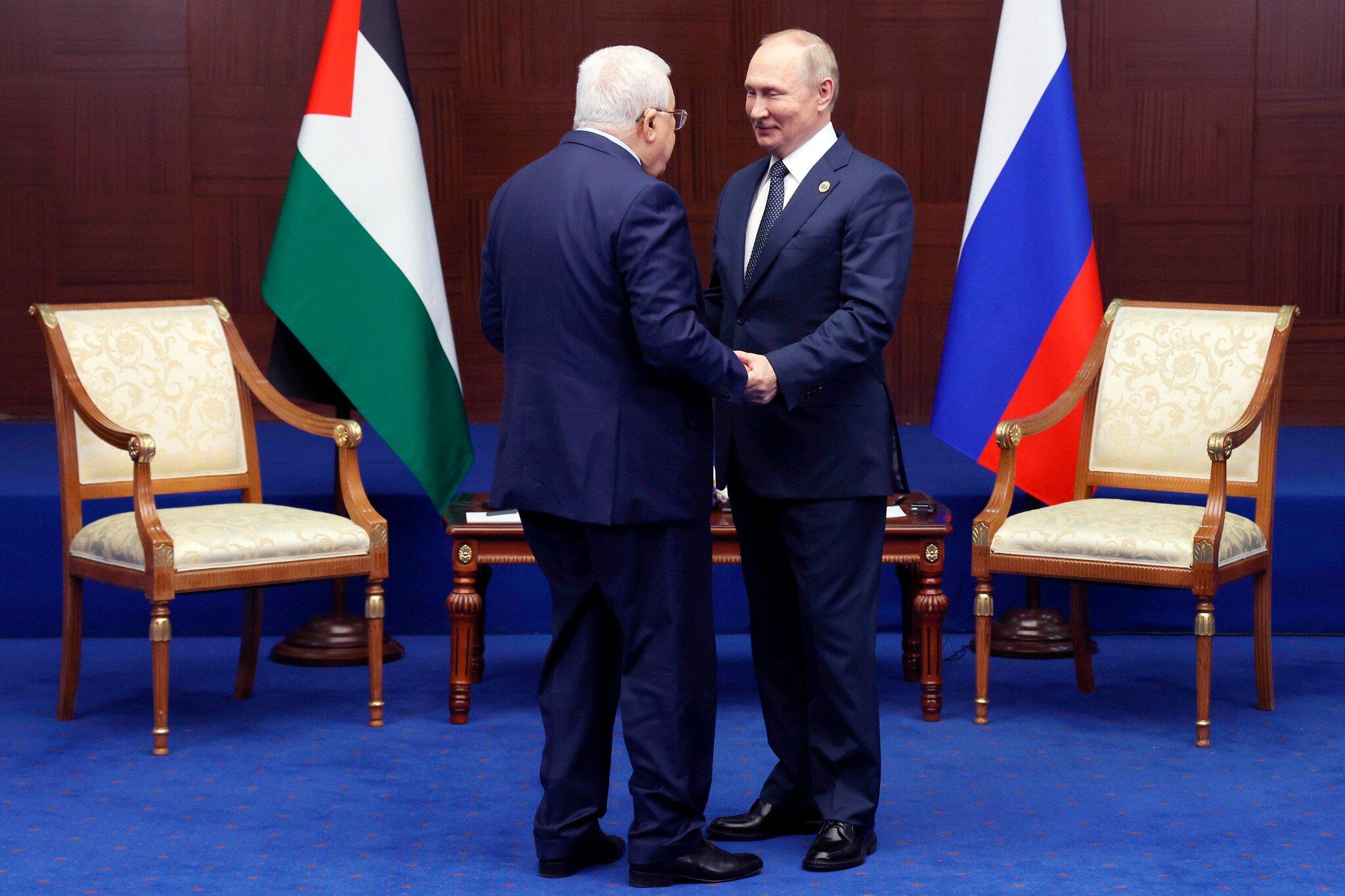
Blinken said the US has “real concern” over rising West Bank violence, without taking sides.
“We are urging everyone to take the necessary steps to try to de-escalate that violence and to avoid actions or statements that may incite it,” he said. The US also wants Arab countries party to the Abraham Accords to step up economic involvement with the Palestinians to alleviate pressure in the West Bank.
Neither Biden nor Pelosi mentioned the Palestinians in their public statements, and the US, with a plateful of other problems to attend to, did not ask Herzog questions regarding the Palestinians or make any demands about Israel’s security operations.

Elections loom
Israeli and US officials stressed the strong bonds between the two countries during the trip, which came at a sensitive time politically. Israelis head to the polls on November 1, and Democrats and Republicans will vie for control of Congress and power in the states the following week.
Herzog repeatedly said the countries’ relationship needed to remain above national politics, amid concerns over the rise of the extremist Israeli lawmakers Itamar Ben Gvir and Bezalel Smotrich.
At least two pro-Israel Democratic lawmakers have warned Israel over Ben Gvir’s ascent, eliciting disdain from their political ally opposition leader Benjamin Netanyahu, who said he would not “bow his head” to outside pressure.
“You have elections and midterms, we have elections in Israel next week. I think one thing should transcend both — the friendship and close bond between Israel and the United States is unbreakable and it is a value that we must all cherish and work for. May I also add we must respect each other’s democracies,” Herzog told American Jewish leaders.
“There will be of course discussions about the outcome,” he said of elections. “First and foremost, the underlying rule should be ‘we honor and respect democracy.’”
He delivered a similar message alongside Pelosi and Biden, who reciprocated by highlighting the historical and powerful bond between Israel and the US.
President Biden meets with Israeli President @Isaac_Herzog in the Oval Office. pic.twitter.com/CrwBfgAQoL
— CSPAN (@cspan) October 26, 2022
Herzog and Biden enjoy a cordial relationship and their White House meeting was warm and easygoing. The Israeli official said the US remains “totally dedicated” to Israel’s security.
“I’ve said this 5,000 times in my career — the ironclad commitment the United States has to Israel is based on our principles, our ideals, our values. They’re the same values,” Biden said.
That commitment was made clear when Democrats Pelosi and Senate Majority Leader Chuck Schumer invited Herzog to address a joint meeting of the US Congress, an honor afforded to only a few foreign leaders. Republican Congressional leaders supported the move.
Herzog’s speech will mark the 75th anniversary of Israel’s founding and will take place in the spring around the time of Israel’s Independence Day.








The Times of Israel Community.