

Wounds of the past, wounds of the present
The Hebrew-language media delves into domestic violence, secret peace plans, and the enigmatic Yemenite Children Affair
 Add ToI as a Preferred Source on Google
Adiv Sterman is a breaking news editor at The Times of Israel.
Sometimes, weeks with no major political developments bring out the more interesting pieces of writing and journalism, as the country’s papers finally find time deal with issues which are regularly sidelined despite their importance. Such is the case today, as the Hebrew-language media takes a closer look at violence at home, government peace demands being made under the negotiation table, and the open wounds from Israel’s alleged mistreatment of immigrant children in the years after the state’s establishment.
Yedioth Ahronoth leads with a saddening plea for authorities to crack down on domestic violence and abuse, following the murder of 17-year-old Henriett Kara, from the central Israeli city of Ramle, apparently by a member of her own family. The paper features photos of Kara, 41-year-old Maya Goren, and 27-year-old Odeliah Bachar, all of whom were murdered over the past week, allegedly by their partners or relatives (in Bachar’s case, it’s not clear if she and her partner died in a suicide pact or a murder-suicide).
“The blood of the murdered women does not scream,” writes Yedioth columnist Merav Batito. “It drips slowly and is absorbed in the ground of wretched apathy, coagulates in the depths of Israeli collective consciousness and finally evaporates as if it were a random event devoid of any connection to reality…
“If only every murder of a woman would receive a tenth of the commotion surrounding a stabbing attack which ended with a soldier being lightly wounded, if only the cry of the frightened woman would be heard like protests against poets are heard, maybe some of them would still be here today,” Batito continues. “[B]ut everyone would rather cover themselves in a blanket of apathy and delve into other important news. For tomorrow there will anyway be another murder.”
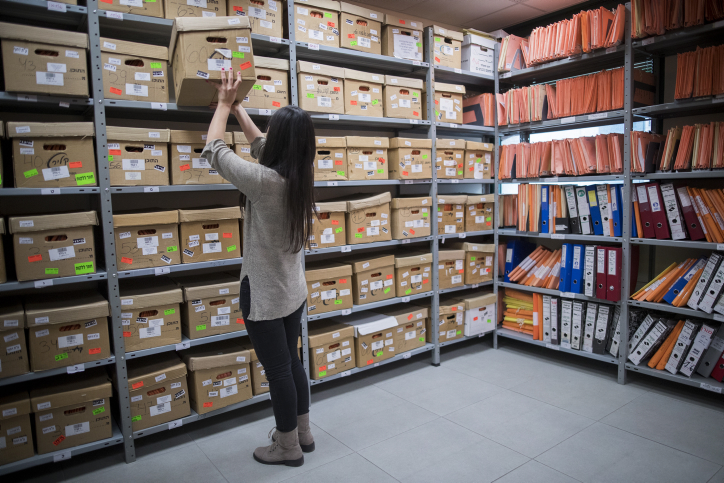
Israel Hayom is short on opinion pieces, and instead leads with a feature on the still-enigmatic and painful episode of the alleged kidnapping of Yemenite immigrant children by Israeli authorities in the 1950s. Over the past several decades, the government has appointed three investigative committees to probe the case, with all concluding the majority of children died in the hospital and were simply buried without the families’ being informed or involved.
The last panel to probe the affair in 2001 reached similar conclusions, but sealed various testimonies from the probe in the state archive for 70 years. Late last year, Prime Minister Netanyahu inaugurated an open-access online database of some 400,000 pages of declassified documents that the state hopes will help bring closure to the decades-long controversy known as the “Yemenite Children Affair.”
According to Israel Hayom, one of the documents recently uncovered reveals testimony by a physician who had worked for the state during the affair and who claimed he and his colleagues were requested to perform experiments on certain kids to determine if they were kushim — a Hebrew racial slur often compared to the n-word — and to test if they had “black blood.” The physician adds that after the experiments concluded, many of the children died and autopsies were performed on the bodies.
Following the uncovering of the testimony, the paper reached out to Likud MK Nurit Koren, who heads the Knesset’s special lobby regarding the Yemenite Children Affair, who said that she had been exposed to “chilling documents that should shock” anyone. “The treatment of the children and their parents by authorities was like clay at the hands of a creator, the autopsies were hidden from the parents and they were not asked for permission on the matter as required by law,” Koren adds, vowing to continue the investigation until “all parts of the puzzle are put into place.”
In Haaretz, Middle Eastern affairs analyst Zvi Bar’el critiques Prime Minister Benjamin Netanyahu’s plan to include in peace negotiations a clause that guarantees that certain Israeli West Bank settlers will be allowed to remain in their homes and under Israel’s authority if they choose to do so, even if the Jewish state cedes control of the area in question and the territory is handed over to the Palestinians as part of a future deal.
Netanyahu’s offer, which was uncovered by Haaretz reporter Barak Ravid several days ago, was raised in 2014 during talks between Israeli officials and former US president Barack Obama’s administration, and was even green-lighted by the American leader, according to the paper. “As usual, the political logic on which these types of offers lean does not take into account the Palestinian vision,” Bar’el writes. “Why would the Palestinian leadership agree to absorb 200,000 Jews — 8% of the Arab population in the West Bank — while Israel is not willing to accept even one Palestinian refugee.”
Nevertheless, Bar’el notes that the plan may be implemented if US President Donald Trump can be convinced of its merits. However, the Haaretz writer adds — in line with the paper’s typical anti-Netanyahu sentiment — that he is skeptical of the prime minister’s willingness to truly follow through with his own offer. “A peace agreement is the opposite of political survival [for Netanyahu],” Bar’el writes. “It will bring about a world war with the right wing [factions on his government].”
And finally, back in Yedioth, the paper dedicates a small piece to British musician Rod Stewart, featuring a photograph of the performer dressed in brightly colored clothes as he smiles under the Israeli sun ahead of his scheduled concert in Tel Aviv tonight. The paper notes that this is the 72-year-old singer’s third performance in Israel throughout his lengthy career, which began in the early 1960s. Yedioth adds that Stewart will visit the Western Wall during his trip, and is expected to perform all of his greatest hits at the Yarkon Park tonight.







The Times of Israel Community.