

After Trump’s difficult courtship last year, Pence ushers in the AIPAC honeymoon
As pro-Israel lobby meets, there are public displays of great affection, private talk of deep US-Israel coordination, and a long, unpredictable road ahead
 Add ToI as a Preferred Source on Google
David Horovitz is the founding editor of The Times of Israel. He is the author of "Still Life with Bombers" (2004) and "A Little Too Close to God" (2000), and co-author of "Shalom Friend: The Life and Legacy of Yitzhak Rabin" (1996). He previously edited The Jerusalem Post (2004-2011) and The Jerusalem Report (1998-2004).
WASHINGTON — What a difference a year makes.
When presidential candidate Donald J. Trump prepared to address AIPAC’s annual policy conference on Monday night, March 21, 2016, it was widely believed he would be facing one of the toughest tests of his campaign. Demonstrative walkouts were planned against this most divisive of would-be presidents. Worried that some, even many, in the 18,000-strong crowd at the Verizon Center would give him a very torrid time, AIPAC organizers had reminded the audiences at session after session running up to his speech to treat all speakers with courtesy.
In the event, Trump triumphed without breaking a sweat. He was greeted with lukewarm applause. There was laughter — laughter not with, but at him — when he claimed, risibly, that he’d studied the Iran nuclear issue “in great detail… I would say greater by far than anybody else.” But as the unconditional, caveat-free pledges of love and support for Israel accumulated, the audience — whose unifying factor is, of course, love and support for Israel — was gradually won over.
While a few characteristic, off-script swipes at outgoing president Barack Obama — “in his final year — yay!” and “He may be the worst thing that ever happened to Israel” — appalled many in the vast arena, many others delighted in them. By the end, when he was hailing daughter Ivanka’s then-imminent “beautiful Jewish baby,” the crowd was roaring its approval.
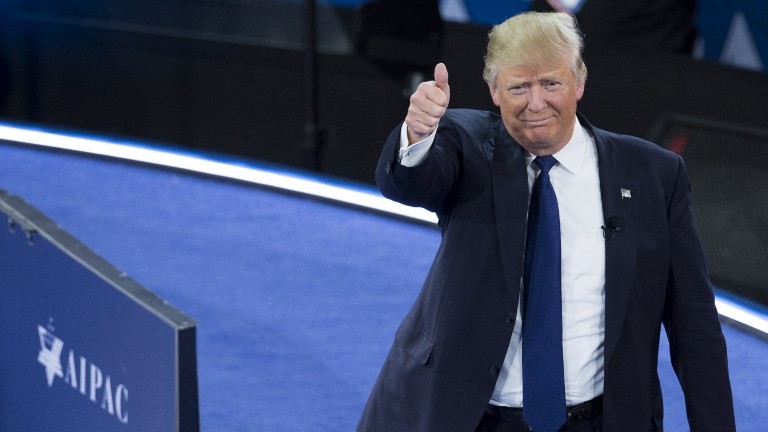
President Trump opted not to return to AIPAC for this year’s conference, possibly because the lobby’s leadership took the dramatic step, on the morning after Trump’s speech last year, of publicly apologizing to Obama, castigating those participants who had applauded the “ad hominem” attacks on him, and without naming Trump, excoriating the candidate’s criticisms of the president.
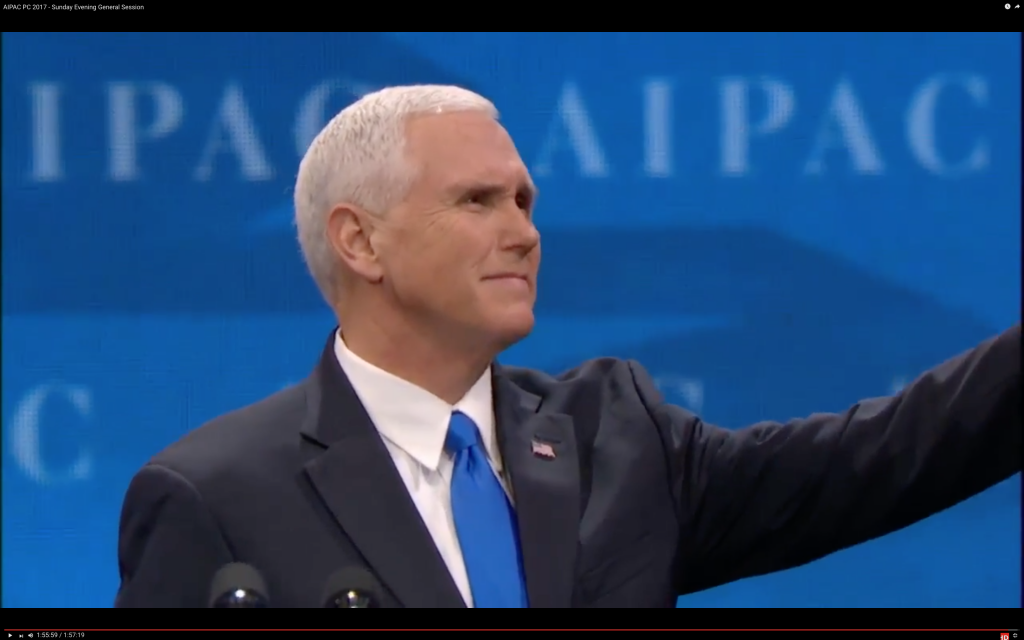
Instead it was Vice President Mike Pence who arrived at the Verizon Center on Sunday — speaking, as he said repeatedly, on behalf of the president — to pledge an “unbreakable” bond with Israel and a “nonnegotiable” commitment to its security.
Astutely, AIPAC deployed its president, Lillian Pinkus, who had issued that apology a year ago, to introduce Pence. But whatever Trump may feel about what unfolded last year, the vice president gave no hint of any grudge held. For much of his address, indeed, Pence seemed to be fighting back tears, so emotionally overwhelmed was he, as a lifelong supporter of Israel, to be addressing Israel’s best friends in the United States.
In contrast to Trump, Mike Pence has been to Israel. Several times. He took his whole family there in 2014. When Pence declared that, in his house, “we pray for the peace of Jerusalem,” nobody in that vast crowd would have doubted him. When he described touring Dachau last month, taking his wife and daughter, and remarked that he had already been there once before as a young man, only a cynic would have questioned his evident lifelong empathy for the Jewish people.
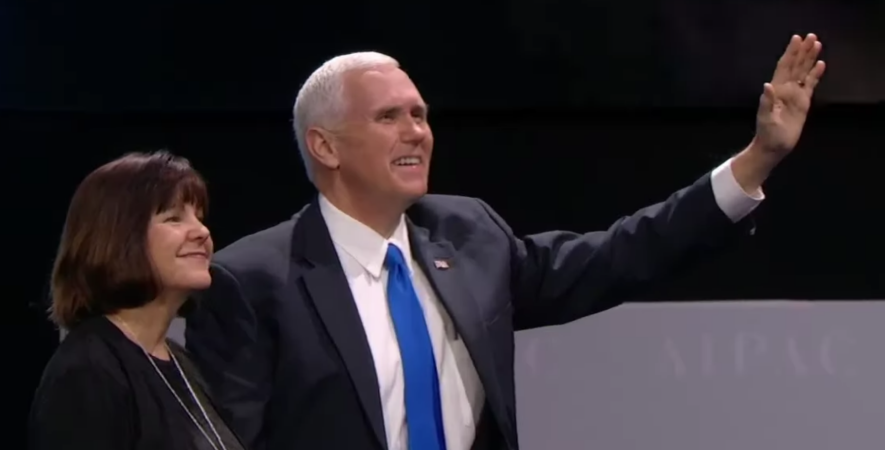
Along with the public declarations of unstinting support, behind the scenes at this year’s AIPAC conference there are Israeli officials who assert that something of substance is playing out in the emerging relationship between the Trump administration and the Israeli government of Benjamin Netanyahu.
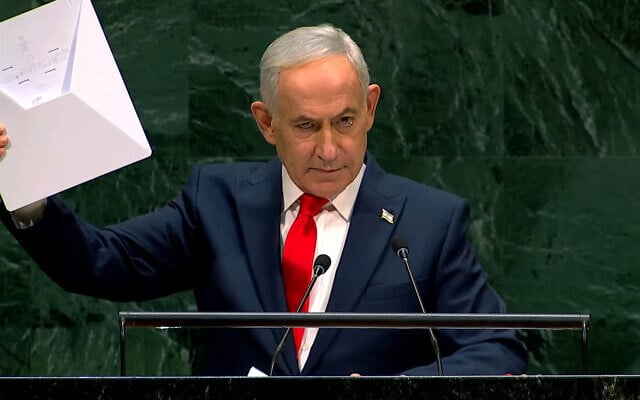
Netanyahu’s trusted envoy here, Ambassador Ron Dermer, said in his Sunday morning address that for the first time in years, there is “no daylight” between the US and Israeli governments — a far subtler swipe at Obama than Trump’s from last year. But away from the microphones, away from the daylight, the talk is of a new administration working far more intimately with Israel than the previous White House did, formulating its policies on the region in deep coordination with Israel.
Where the Obama administration presumed to know what was best for Israel, and took umbrage when Netanyahu and no shortage of other Israeli leaders bitterly criticized its handling of the Iran nuclear deal or its failure to intervene when Bashar Assad gassed his own Syrian people, with the new American leadership, these Israeli officials assert, there is a greater appreciation for, and deference to, Israel’s hard-learned expertise in Middle East realities.
With the new American leadership, some Israeli officials assert, there is a greater appreciation for, and deference to, Israel’s hard-learned expertise in Middle East realities
These officials do not claim that everything is plain sailing. Hours and hours of talks, and then more hours still, have failed to yield anything close to an agreement on the vexed issue of settlement building. Failed so signally, in fact, that both sides may well have given up, and will have to work instead toward nonbinding “understandings” — which sounds like it could be a recipe for trouble.
America is divided under President Trump. And AIPAC — desperately seeking to maintain Israel as a unifying, bipartisan American cause — is no exception.
But looking back to last year’s conference, and to Trump’s speech, one can see it now as representing the candidate’s courting of another section of the electorate, the pro-Israel community — well-intentioned, rather ham-fisted, ultimately successful.
In November, America tied the knot. For four years, at least.
For the new Trump administration and AIPAC, this year’s conference, then, is the honeymoon. Declarations of love, high emotion, a good deal of optimism, and a long, unpredictable road ahead.


The Times of Israel Community.