

All the cool kids are studying Torah these days
A cutting-edge Jewish outreach program publishes a compilation of radical takes on the parasha by hip young artists
 Add ToI as a Preferred Source on Google
Renee Ghert-Zand is the health reporter and a feature writer for The Times of Israel.

Are traditional Torah commentators like Rashi and Ramban not hip enough for you? Then consider a new collection of scriptural interpretations by 54 of North America’s coolest young Jews.
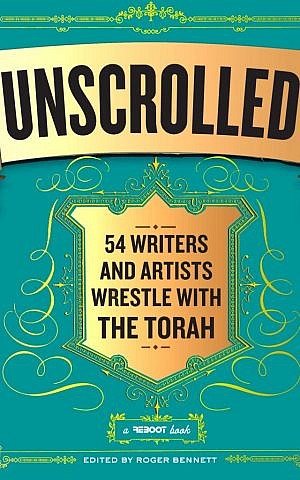
Just in time for Simchat Torah, Reboot, a cutting-edge New York-based national Jewish outreach and engagement non-profit, has published “Unscrolled” (Workman Publishing, 2013) an eclectic compilation of radical takes on the weekly portions by noted Gen X and Millennial writers and artists.
For the most part, none of these leading cultural influencers had cracked open a chumash since their b’nei mitzvah ceremonies before being invited to contribute to the book. But, of course, it’s never too late to learn Torah. And if the cool kids are doing it, then we’ll bet everyone else is going to want to do it, too.
This, at least, is the hope of Roger Bennett, Reboot’s founder and the book’s editor. “Text study is core to Reboot’s mission,” he tells The Times of Israel. His organization creates and facilitates opportunities for young people to grapple with key aspects of Jewish identity and revitalize Jewish traditions for our times.
While text study has generally been an aspect of every project Reboot has done (Sabbath Manifesto, 10Q, and Sukkah City, for example), this is the first time that it has been put front and center.
“Working in Torah has long been our goal,” says Bennett, who is in his early forties. “We want to catalyze a conversation among the newest members of the oldest book club in the world.”
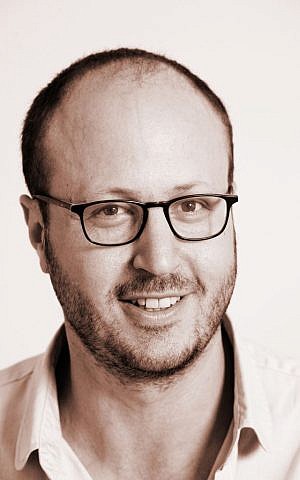
To create his lineup of influential commentators, Bennett turned to his considerable network of Rebooters — individuals who have participated in at least one of the by-invitation-only annual Reboot summits in Park City, Utah.
Amichai Lau-Lavie, founder of highly innovative Jewish ritual communities and programs like Lab/Shul and of Storahtelling, has helped lead each of the summits going back to the first one in 2003.
Lau-Lavie, the nephew of Israel’s former Ashkenazi Chief Rabbi Yisrael Meir Lau and the cousin of current Chief Rabbi David Lau, took on the role of Torah tutor to many of the “Unscrolled” contributors.
“I provided context and guidance to them, because some of them did not have the tools to make sense of the Torah narrative,” he says. “I walked some of them through their chosen or assigned parasha and explained to them the difference between pshat and drash,” he explains, using the Hebrew terms for two traditional approaches to textual interpretation.
The New York-based Lau-Lavie welcomed the opportunity to help his fellow Rebooters delve in to the weekly portions. “Innovation and cultural fascination are fantastic, but without context and a reclaiming of Jewish literacy, it’s just froth,” he warns.
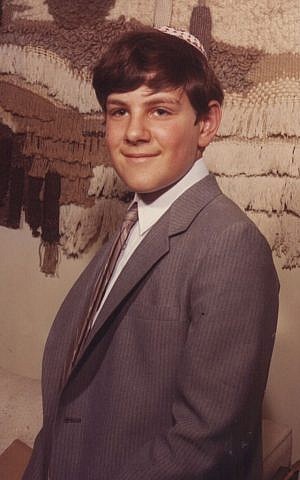
He himself contributed to the book, writing the d’var Torah he wishes he had been able to give at his bar mitzvah 30 years ago. The portion is Aharei Mot (Leviticus 16:1-18:30), which deals with the laws prohibiting certain types of sexual relationships. In his re-written speech, Lau-Lavie comes out as gay to his family, something he had not been ready to do as a bar mitzvah boy in the 1980s.
“And there I stand, thirty years later, placing a hand on my thirteen-year-old self’s shoulder and whispering softly, ‘It’s going to be all right,’” he writes at the close of the piece.
The interpretive pieces that follow the short parasha summaries by Bennett vary greatly in style. Sprinkled among the more essay-like pieces are commentaries in the forms of photographs, cartoons, drawings, typewritten memos and scripts, Google searches, and even elaborate computer-generated architectural renderings.
There are contributors who present material reminiscent of their work already in the public eye. Award-winning Los Angeles television screenwriter and movie director Jill Soloway’s psychological piece on the Abraham-Sarah-Hagar triangle in Lekh L’kha (Genesis 12:1-17:27) echoes the plot of her new feature film, “Afternoon Delight,” about a Jewish housewife who hires a stripper as her child’s nanny.
“I’ve been writing a version of this story, of the wife-other woman dyad and the broken feminine that splits us women off from our wholeness, for a long time,” Soloway explains. “I always saw ‘Afternoon Delight’ as Sarah and Hagar. Getting inside these stories can change relationships.”
Bennett thought of David Sax, author of “Save the Deli,” a history and survey of Jewish delicatessens around the world, as a natural to tackle the laws of kashrut in Sh’mini (Leviticus 9:1-11:47).

“I was intimidated by it,” admits Sax, who lives in Toronto. “I hadn’t really read any Torah since my bar mitzvah.” But he studied the portion carefully and connected it to his interest in kashrut as it was interpreted in the delis he knows and loves. He came up with a humorous essay questioning “outlandish products” that circumvent the spirit of the law while adhering to the letter of the law.
He goes on a humorous rant against items like Baconnaise. “Sounds like treif city to me. Cue the fire, bring on the brimstone. Wait, it’s kosher? Certified by the Orthodox Union to be consumed with meat, dairy, and parve foods? Seriously?”
Author Rich Cohen, known for his biographies of tough Jews, used Ki Tissa (Exodus 30:11-34:35) as an opportunity to get in touch with his priestly heritage. “I’m not a Rebooter, I’m a normal civilian,” Cohen quips. “But Roger approached me and I told him I was interested in writing about the Golden Calf.
“It’s a weird story, and it has always bothered me that Aaron has been vilified in popular culture, especially in Cecil B. DeMille’s “The Ten Commandments,” he explains. He mounts a defense of Aaron, claiming that it is impossible to break a law that is created ex-post facto. “How can you break a law that hasn’t been written yet?” he asserts.
This was the first time the Connecticut-based Cohen analyzed a biblical narrative, and he liked that nothing in the text was clear. “They [biblical stories] read like non-fiction. They have too many loose ends to read like fiction.”
“Unscrolled” gave Mireille Silcoff, a Montreal writer and longtime Rebooter (she edited Guilt & Pleasure, the organizations’ now-defunct quarterly), a chance to cast an adult eye on the only parasha she remembered learning as a girl at Orthodox day school. That portion was B’har (Leviticus 25:1-26:2), which deals with the sabbatical laws.
Silcoff surprised herself by how much she wanted to use the parasha as a way to relate to and write about her childhood self. “I usually don’t write about my childhood, but this Torah portion made me realize how it took until my thirties for me to realize what kind of kid I was.”
No one involved with “Unscrolled,” especially Bennett, is under the illusion that this collection of commentaries is revolutionary. After all, Jews have been interpreting and reinterpreting the Torah for millennia. But it can help young Jews’ evolve in their relation to foundational Jewish texts.
“The book is an entry point,” explains Reboot’s associate director Amelia Klein. The organization has developed a series of strategies to take people beyond what is between the covers of “Unscrolled.” These include a do-it-yourself educational kit for educators and rabbis at Reboot’s approximately 600 community partners (synagogues, Hillels, JCC’s, etc.), and several ways to connect online about the weekly portions. There are also interactive “Unscrolled” launch events scheduled for New York, San Francisco and Los Angeles in September and October.
“If going through this process had been only for the contributors — dayenu,” says Lau-Lavie.
But Bennett and Reboot are banking on the contributors’ hipness quotient to keep the Torah “unscrolled” and accessible to any and all young Jews, especially unaffiliated ones.
“Sure, there’s the celebrity factor — for better or worse,” notes Lau-Lavie. “But let’s face it, these are the taste-makers and changers.”









The Times of Israel Community.