

Could prisoner releases put Abbas back in the saddle?
With the promised freeing of pre-Oslo inmates, might the Palestinian Authority president gain the support to deflate Hamas and move toward a deal?

 Add ToI as a Preferred Source on Google
Avi Issacharoff, The Times of Israel's Middle East analyst, fills the same role for Walla, the leading portal in Israel. He is also a guest commentator on many different radio shows and current affairs programs on television. Until 2012, he was a reporter and commentator on Arab affairs for the Haaretz newspaper. He also lectures on modern Palestinian history at Tel Aviv University, and is currently writing a script for an action-drama series for the Israeli satellite Television "YES." Born in Jerusalem, he graduated cum laude from Ben Gurion University with a B.A. in Middle Eastern studies and then earned his M.A. from Tel Aviv University on the same subject, also cum laude. A fluent Arabic speaker, Avi was the Middle East Affairs correspondent for Israeli Public Radio covering the Israeli-Palestinian conflict, the war in Iraq and the Arab countries between the years 2003-2006. Avi directed and edited short documentary films on Israeli television programs dealing with the Middle East. In 2002 he won the "best reporter" award for the "Israel Radio” for his coverage of the second intifada. In 2004, together with Amos Harel, he wrote "The Seventh War - How we won and why we lost the war with the Palestinians." A year later the book won an award from the Institute for Strategic Studies for containing the best research on security affairs in Israel. In 2008, Issacharoff and Harel published their second book, entitled "34 Days - The Story of the Second Lebanon War," which won the same prize.
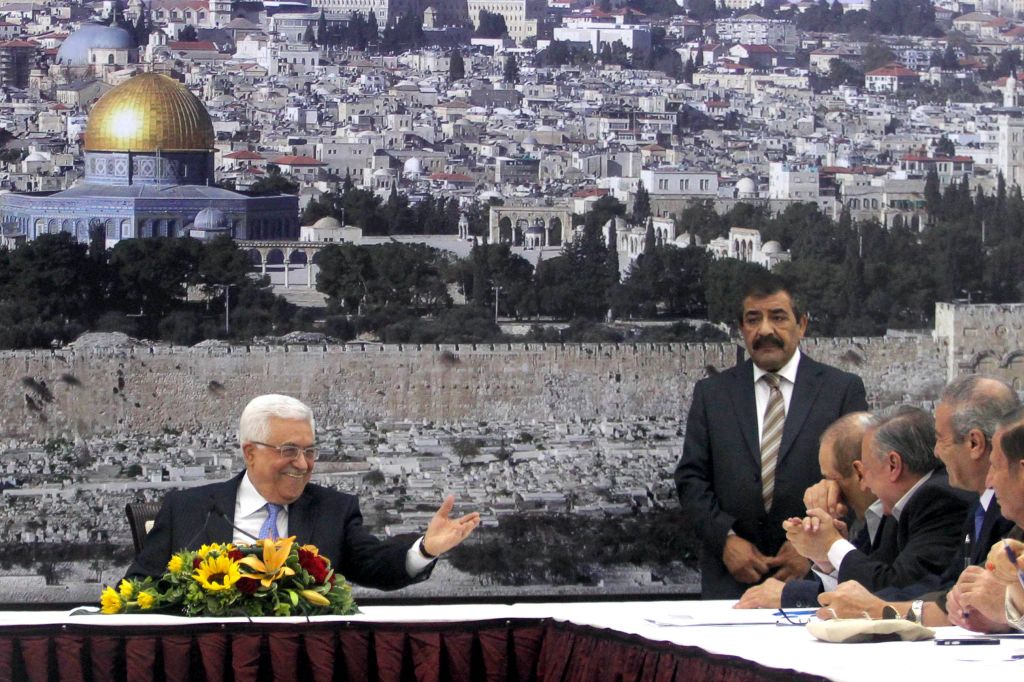
It is still hard to say what made Palestinian Authority President Mahmoud Abbas agree to return to the negotiating table. The understandings between Israel, the US, and the PA are still largely confidential. What is clear is that Abbas’s preconditions to entering negotiations were not met in full and in some cases, not even in part.
For now, there is no settlement construction freeze, certainly not in the large settlement blocs or in East Jerusalem. Similarly, there is no Israel agreement to hold the talks with the ’67 lines as their starting point. Israel apparently refused such preconditions without reservations and will not make a public statement to that effect as the Palestinian leadership was still demanding on Thursday night.
And yet it seems Abbas will receive, in return for starting talks, the most visible concession of all: the release of Palestinian prisoners. Already on Saturday, senior officials, including minister Yuval Steinitz, confirmed that Netanyahu plans to free Palestinian inmates, even those who murdered Israelis and have been imprisoned in Israel for decades, from before the signing of the Oslo Accords. These are prisoners who, for Palestinians, have become symbols of the Israeli occupation. Israel has repeatedly released terrorists in prisoner swaps in the past, but has always refused to set free those who murdered Israelis before the start of the Oslo peace talks.
It must be said that the Palestinian public is by and large apathetic to the negotiations. In the West Bank, the understanding is that another round of peace talks will end the same way its predecessors did — nowhere. The Palestinians also don’t believe that settlement construction will come to a halt.
However the release of veteran prisoners, whose names are familiar in every household, will produce a real change of atmosphere for the Palestinians, possibly even providing a glimmer of hope. It is on this matter that we will see how the resumption of talks will influence Abbas’s standing. Abbas will be judged on his actions. Whether the talks are based on the ’67 lines is less of an issue to the Palestinians than the release of prisoners. If he is able to follow through on his promise to get them released, it will do wonders for his standing.
Understanding this goes a way toward explaining Abbas’s partial backing down from his Thursday position. The Palestinians had demanded a written commitment from Secretary of State John Kerry and the US administration that the talks would resume on the basis of the ’67 lines. However, when Ramallah internalized the notion that such a commitment would apparently not be forthcoming, it realized that the release of 350 prisoners — 105 of them long term inmates — could produce much larger gains in public opinion than any letter could.
The internal issues are most pressing for Fatah’s leadership. They have no great hopes that the negotiations will lead to a Palestinian state, but officials are hoping that any step they do take, helps strengthen Abbas.
Hamas has already condemned the decision to return to the table. On Friday, its members held a demonstration in support of ousted Egyptian president Mohammed Morsi, in the courtyard of the Al-Aqsa mosque. Fatah supporters, for their part, held up signs relating to the prisoners incarcerated in Israeli jails.
The Islamist organization finds itself at a low-point following Morsi’s overthrow and it is under heavy pressure to resume the reconciliation process with Fatah. Some in Hamas, however, have already stated that they can’t resume those talks while the PA is negotiating with Israel. This only serves to further strengthen Abbas at Hamas’s expense — not only will Hamas be blamed for sabotaging reconciliation talks, Abbas will also be able to take credit for freeing prisoners at long last.
A big question is how long the Israeli-Palestinian talks will last. Hamas will be quick to gloat over an additional failure. And if we’re to be perfectly honest, the chances of talks succeeding range between low and very low.
And yet, as we’ve seen before, Kerry is the type of man who refuses to take no for an answer. The finest experts and analysts were quick to eulogize Kerry’s efforts and he laughed in their faces. Perhaps this time too, the American war hero, who was once a presidential candidate, will manage to pull off the impossible and produce some sort of progress between Netanyahu and Abbas,
And what about the chances of a peace deal? Even the dreamers dare not wish it out loud.






The Times of Israel Community.