

Active COVID-19 cases in Israel drop below 10,000 for 1st time in 3 months
Just 651 people test positive for coronavirus on Thursday; positivity rate for new cases steadily declines
 Add ToI as a Preferred Source on Google
The number of active COVID-19 cases in Israel has dropped below 10,000 for the first time in over three months, according to figures released on Thursday and Friday by the Health Ministry.
As the Delta outbreak continues to wane, active cases stand at 9,354 as of Friday morning, after passing 90,000 in early September. The data also showed 651 new cases were confirmed on Thursday, down from between 5,000 and 6,000 daily almost two months ago. On Thursday, active cases stood at 9,551.
Serious cases were down to 227 as of Friday morning, including 133 on ventilators and 153 in critical condition. The death toll was up by six since Thursday morning for a total of 8,081.
Israel’s COVID-19 positivity rate has also steadily declined in recent weeks, reaching a low in recent days not seen since the beginning of July, according to Health Ministry statistics.
Just 651 people tested positive for the coronavirus on Thursday, out of close to 77,000 tests, marking a positivity rate of 0.92 percent, up slightly from Wednesday’s 0.81%. At the peak of Israel’s fourth wave in early September, the positivity rate surpassed 8%.
But ahead of the expected approval of vaccinations for ages 5-11, health officials have been warning against dropping the ball on vaccines that could stave off future waves.
On Wednesday, the government voted to cancel the restrictions on outdoor gatherings, which until now had been capped at 5,000 people.
As of Friday, open-air gatherings that require a Green Pass will be able to have an unlimited number of attendees.
Overall, all indicators point to the ending of Israel’s fourth COVID wave, which began in July and at its height saw more than 10,000 new cases reported each day.
Under Israel’s traffic light program — which ranks localities as red, orange, yellow or green depending on their number of new cases, rate of positivity, and growth rate of cases — just one town is currently listed as red: the Beit El settlement outside Jerusalem. Eleven towns are ranked as orange, and the rest of the country is either yellow or green.
The end of Israel’s fourth wave has been credited at least in part to its booster vaccine campaign, which began among those over 65 in August and was quickly rolled out to the rest of the population. As of Friday morning, almost 4 million Israelis — more than 42% of the total population — have received a third dose of the COVID vaccine. Close to 67% of the total population has received at least one shot.
Around 650,000 people who are eligible for vaccines have not received any of the shots, while about 1.1 million Israelis eligible for the booster have yet to receive it.
A key Health Ministry advisory panel is set to meet next week to begin the approval process for vaccinating 5- to 11-year-olds, after the US Food and Drug Administration approved it earlier this week. Health Ministry director-general Nachman Ash said he expects a fair amount of hesitancy among parents, but that the ministry is aiming to make the approval process as transparent and clear as possible to alleviate any concerns.
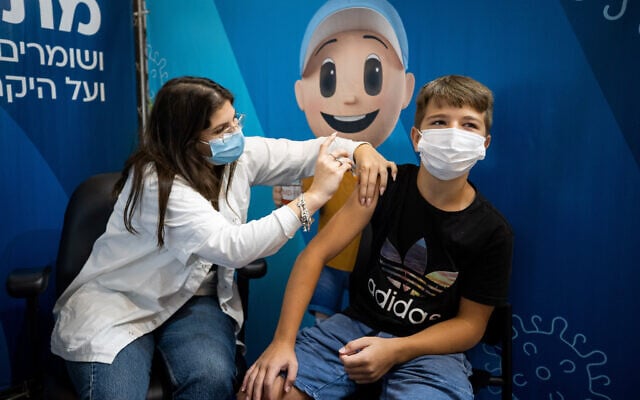
Israel is still awaiting a shipment of the Pfizer COVID doses for children, which are one-third of the dose given to adults. Prime Minister Naftali Bennett reportedly ordered health officials to hurry along the shipment, which is slated to arrive in mid-November.
Starting Monday, Israel will be opening up its borders — somewhat — allowing in vaccinated tourists who have received a second or third dose, or recovered in the past six months. Despite the restrictions, experts say that reopening Ben-Gurion will pose a risk of new variants and a spike in cases.
According to Channel 12 news, tourists caught violating quarantine will be deported and banned from re-entry for three years. And those caught violating quarantine while COVID-positive will be deported and banned for five years.









The Times of Israel Community.