

After Erdogan’s big election win, tentative hope of reconciliation
Some analysts see Israel’s new natural gas bounty, and mutual wariness over Russia’s support for Assad, as possible catalysts for a warming of ties with Turkey
 Add ToI as a Preferred Source on Google
Raphael Ahren is a former diplomatic correspondent at The Times of Israel.
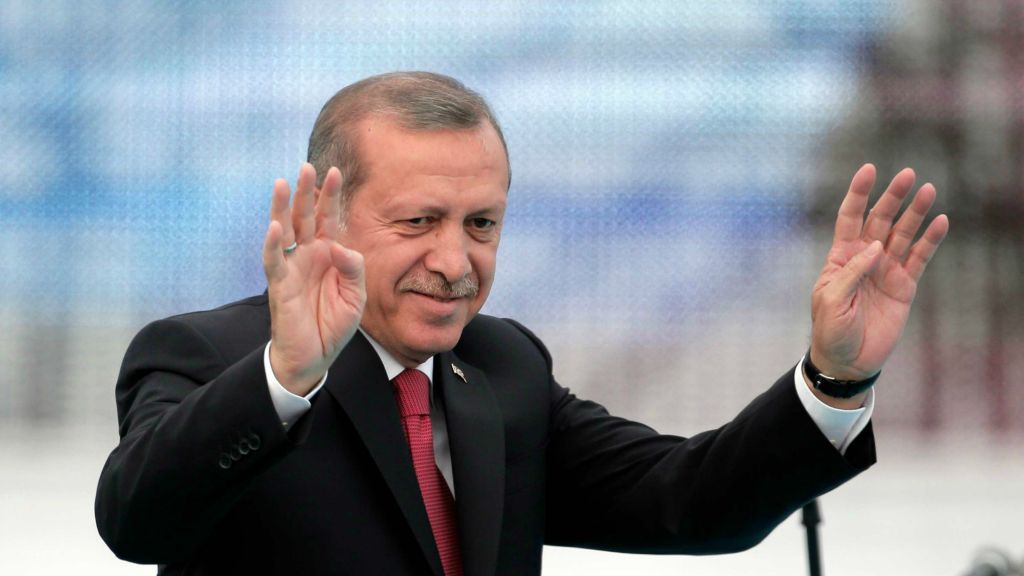
The handsome victory of Turkish president Recep Tayyip Erdogan in the country’s election offers a faint hope of future reconciliation with Israel, analysts said this week.
On Sunday, Erdogan’s Justice and Development Party, known in Turkish as AKP, won nearly 50% percent in snap national elections and can continue a govern without the need for a coalition partner.
Normalizing relations with Israel appears low on the incoming government’s agenda. Turkey currently faces manifold internal and external challenges, such as the European refugee crises, the Syrian civil war raging on its southern borders, the advances of the Islamic State and clashes in the country’s Kurdish area.
Furthermore, some experts argue that the status quo — low-level ties with no ambassadorial representation in either capital — is in Erdogan’s interest and that he will thus do nothing. Yet others recognize small but potentially significant indications that a détente between Jerusalem and Ankara is achievable in the coming months.
Ties with Israel started to decline drastically after the 2010 flotilla incident, in which Israeli commandos killed nine Turkish citizens when under attack by activists aboard a vessel seeking to break Israel’s Gaza security blockade. Ties further deteriorated until Prime Minister Benjamin Netanyahu apologized to Erdogan in March 2013.
Further steps to heal the broken relations were taken, and in April 2014 — weeks before Israel launched Operation Protective Edge — Erdogan said that “normalization” with Israel was just a “matter of weeks.” But a complete restoration of diplomatic ties remained elusive, partially because of elections in both countries and the failure of both leaderships to take the last steps needed to bury the hatchet.
While the Israel Foreign Ministry this week declined to comment on the Turkish election results, Energy Minister Yuval Steinitz expressed open disappointment. “During Erdogan’s time in power, and specifically in recent years, relations with Israel have deteriorated from cooperation to bitter tensions,” Steinitz told an Israeli radio station in an interview. “Turkey is drawing closer to Hamas and radical Islam at the expense of relations with Israel, including incitement against Israel.”
Slivers of hope
Ahead of the March 2014 local elections, Erdogan viciously lashed out against Israel, but during the most recent campaigns, he hardly mentioned the Jewish state, leading some observers to assert that he is intent on ending the feud, or at least seeks to lower the intensity of the disagreements.
In recent months, observers noticed several indications that a thaw with Israel is in Ankara’s interest, not least of which was a meeting between Turkey’s Foreign Minister Feridun Sinirlioglu and the director of Israel’s Foreign Ministry, Dore Gold.
Sinirlioglu, who served as Turkey’s ambassador to Israel between 2002 and 2007, is considered a good friend of the Jewish state. “In fact, since the Marmara affair, he has been the two governments’ go-to person for bilateral relations, which was seen in a very positive light by Israel,” said Nimrod Goren, a Hebrew University expert on Turkey.
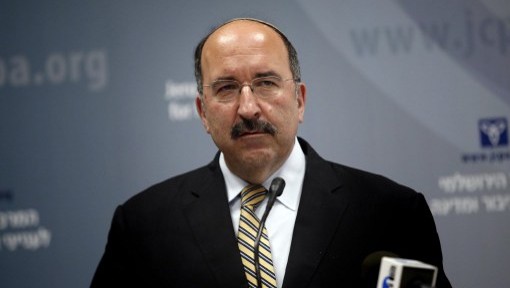
A career diplomat, Sinirlioglu was appointed foreign minister in June after elections failed to yield a stable government and prompted snap elections. It is currently unclear whether he will remain in the position in Turkey’s new cabinet. “If he stays on, Israel will have a more comfortable channel to Ankara. What’s being decided on the political level regarding reconciliation is something else, but at least the channel is there,” Goren said.
Another important factor that could boost a Turkey-Israel healing is Russia’s increasing involvement in the Syrian civil war.
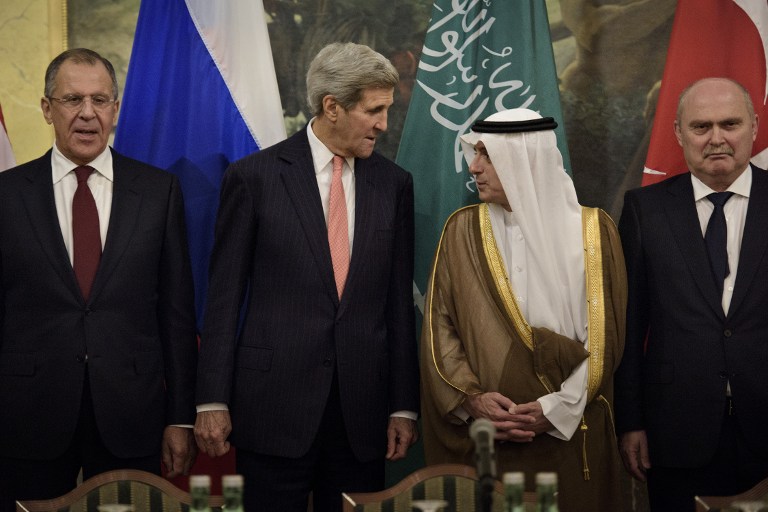
“The Turks are worried about the Russians in Syria and think that maybe Israel can somehow be of help,” Goren posited . “Maybe this could be a driving force for a rapprochement. In the past Syria was a source of disagreement between Jerusalem and Ankara, but now it could be the opposite.”
Moscow’s efforts to assist embattled Syrian President Basher al-Assad is a major game-changer for Turkey, which insists on regime change in Syria, agreed Alon Liel, a former Israeli ambassador to Turkey. “It’s a strong hit for Turkey. They’re not on good terms with Iran and with Russia over their support for Assad. Erdogan is rather isolated in the region, and thus needs to think about damage control.” This could possibly drive Erdogan back into Israel’s arms, he suggested.
There are several other factors that could prompt an improvement of Israeli-Turkish ties, according to Liel, who also served as director-general of the Foreign Ministry, for instance the fact that Avigdor Lieberman no longer serves as Israel’s foreign minister.
Liberman disapproved of Netanyahu’s apology to Erdogan, whom he once called an “anti-Semitic neighborhood bully”; indeed the former foreign minister vehemently opposed any concessions toward Turkey. Instead, Liberman pivoted toward other countries in the region, seeking to bolster ties with Cyprus, Bulgaria and Greece.
Now that Netanyahu himself is foreign minister, one major obstacle to reconciliation has been removed, Liel said. Gold, a close confidante of the prime minister, indeed seems keen on fixing ties with Turkey. It could happen “in the not too distant future,” Gold said in August.
“The strategic environment around Turkey is much more complicated than it was two or three years ago, with the rise of ISIS as a challenge to Turkey, not just Syria, and the growth of Iranian power, which is not just a problem for Israel, but for Turkey as well,” Gold said in an interview.
Another development that could contribute to a rapprochement between Ankara and Jerusalem is Israel’s emergence as a natural gas exporter, Liel said. “A pipeline delivering Israeli natural gas to Turkey is in both countries’ interest — it makes the most sense, economically, but wasn’t talked about because politically it was deemed impossible. If the Israeli ambassador returns to Ankara, the gas deal would return to the table right away,” he said.
The Turks really need to find a new source of gas, since they are on bad terms with their usual providers — Russia and Iran — over their support for Assad, Liel said.
And yet, the road to full reconciliation remains long and thorny, and it’s possible that the status quo will prevail for years to come. There are significant obstacles still to be overcome, such as working out the details of the arrangement to lay to rest the Marmara affair and the not insignificant matter of Turkey’s support for Hamas.
“I don’t foresee any significant change as a result to the election,” said Efrat Aviv, a Turkey expert at Bar-Ilan University. True, Sinirlioglu, the current foreign minister, is a friend of Israel who is well respected among the powers that be in Ankara, she allowed, but nobody knows if he’ll remain in office for long. And even if he does, she added, détente with Israel “is currently not very high on Turkey’s agenda.”





The Times of Israel Community.