

Aid convoys arrive as Haiti gauges extent of hurricane damage
Officials count at least 522 dead in one area alone after Matthew rips through island, another 350,000 in need of aid; in US, weakened storm kills 10 in Florida, Carolinas
 Add ToI as a Preferred Source on Google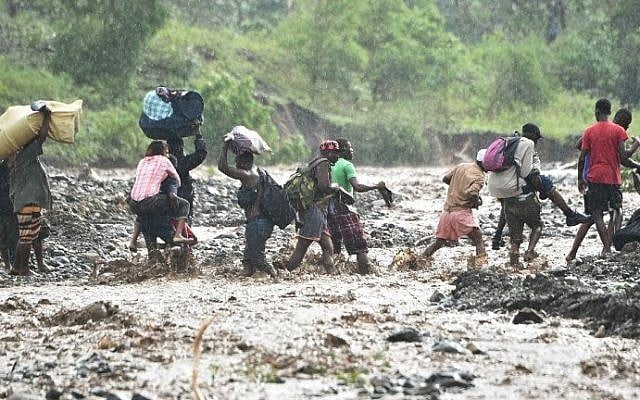
JEREMIE, Haiti — A small airstrip at the edge of town hums with activity. Aid convoys are arriving from the capital, now that some roads washed out by Hurricane Matthew have been cleared. A barge carrying food and water is moored offshore of this coastal town.
An international response to the staggering blow delivered by Hurricane Matthew to southwestern Haiti was finally getting underway Saturday even as authorities were still trying to gauge the full extent of the death and destruction.
“It’s beginning to pick up now,” said Stephane Rolland, a regional coordinator for the International Federation of the Red Cross, as workers unloaded blankets, soap, bleach and other critical items in Jeremie.
There are clearly limits, though, including the fact that the airstrip in Jeremie is unable to accommodate large cargo planes, and only operates in the daytime. Many of the villages in the southwestern peninsula are difficult to reach. And people are growing increasingly desperate after losing everything when the storm ripped through the area on Tuesday.
One woman stared with outstretched arms as a UN convoy drove through town. “I am hungry. I hope they can help,” said Fabienne Charles, explaining that she would normally be working as a market vendor but lost her supplies in the storm.
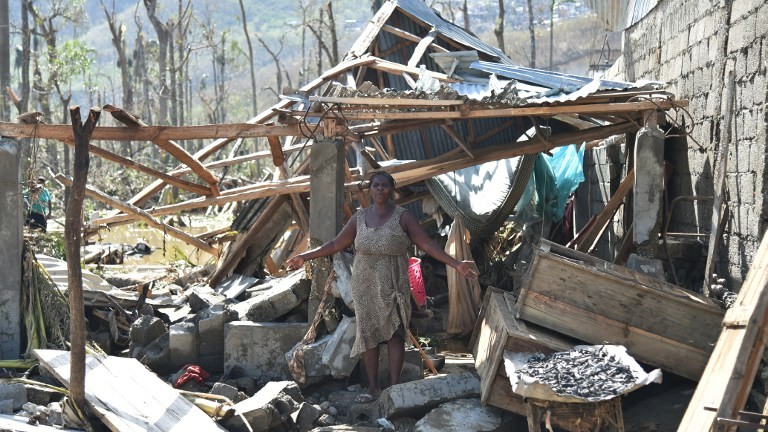
The precise death toll from the storm remained uncertain. Guillaume Silvera, a senior official with the Civil Protection Agency in the Grand-Anse Department, which is on the tip of the southern peninsula and includes the city of Jeremie, said they had confirmed 522 deaths, not including anyone in several remote communities that they have yet to reach because of collapsed roads and bridges.
“We think the numbers will have to go up,” Silvera said.
Civil Protection headquarters in Port-au-Prince, meanwhile, said Saturday their official count for the whole country was 336, which included 191 deaths in Grand-Anse.
Death tolls are frequently difficult to tabulate in the immediate aftermath of a natural disaster in any country, though it is particularly difficult in remote and mountainous southwest Haiti.
Government officials estimate that at least 350,000 people need assistance, and concern was growing over an increase in cholera cases following widespread flooding unleashed by Matthew. An ongoing cholera outbreak has already killed roughly 10,000 people and sickened more than 800,000 since 2010, when the infectious disease was introduced into the country’s biggest river from a UN base where Nepalese peacekeepers were deployed.
Maria Sofia Sanon, a health worker overseeing the open-air cholera treatment center in a corner of Jeremie’s main hospital, said they were ill-equipped to deal with patients. The area was strewn with broken tree branches, and a group of young mothers sat outside holding up the arms of their glassy-eyed children being rehydrated via IVs.
“They’re not supposed to be in the sun, but we have no more beds,” Sanon said.
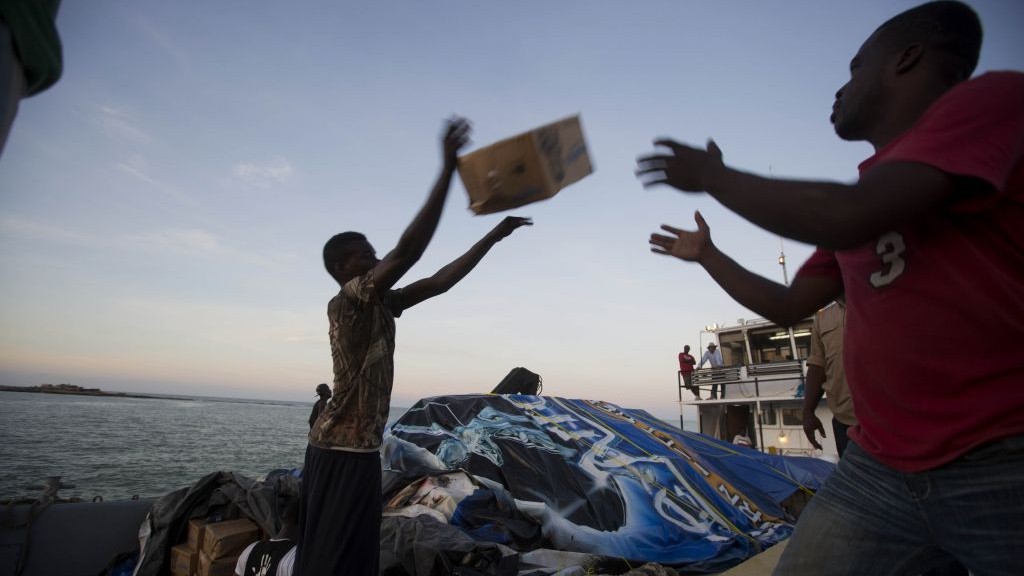
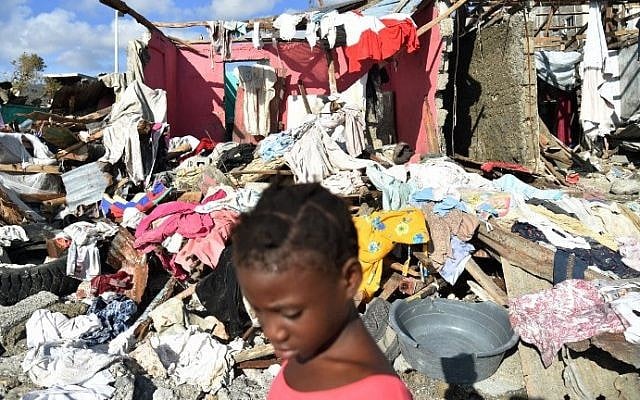
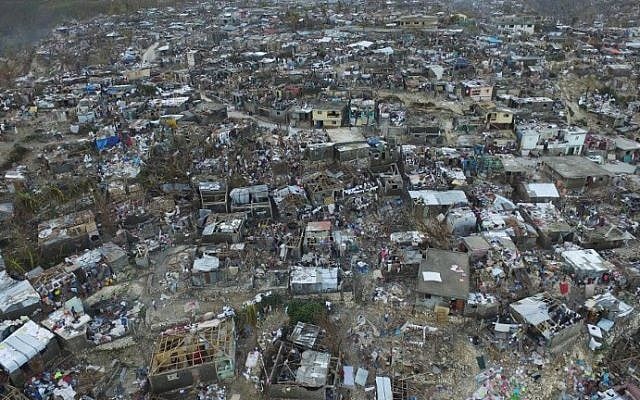
The World Food Program says there has been massive destruction of crops. Hospitals and clinics have been damaged or destroyed as they struggle to deal with an increase in patients with injuries sustained during the storm as well as an apparent increase in cholera. UNICEF said that in Grand Anse alone there were 66,000 houses destroyed and 20,000 heavily damaged.
“Information gathered from various sources in the field suggests that the human toll (dead and injured) will be heavier than the current official figures,” the agency said in a report.
Jocelyne Saint Preux was part of the crowd that lined up in an orderly fashion to get food as aid began to arrive, including shipments of food and other emergency supplies from the US Agency for International Development carried by waves of military transport helicopters.
The mother of three children whose home was destroyed said officials were handing out wheat, beans, oil and salt.
“Yes, they brought food, but it’s not sufficient,” she said. “There’s no water. There’s no charcoal.”
As aid trickled into Jeremie, Jislene Jean-Baptiste surveyed what remained of the one-room house that the grandmother shares with her three daughters and their children. There wasn’t much left. Storm surge flowed across the road and drenched her belongings in waist-deep salt water, washing away the stores of rice and sugar she regularly sold at the market to support her family. Then the wind tore off her roof.
“That storm was the most terrifying thing that ever happened here,” she said.
In US, Matthew’s blow was less than feared
On Saturday, a weakening Hurricane Matthew lashed Georgia and the Carolinas in what appeared to be the last leg of its march up the East Coast, leaving in its wake millions of Americans relieved that one of the most fearsome storms on record in the US wasn’t that bad after all.
The hurricane was blamed for at least 10 deaths in the US, including that of a 68-year-old Georgia man who died when two trees fell on his home.
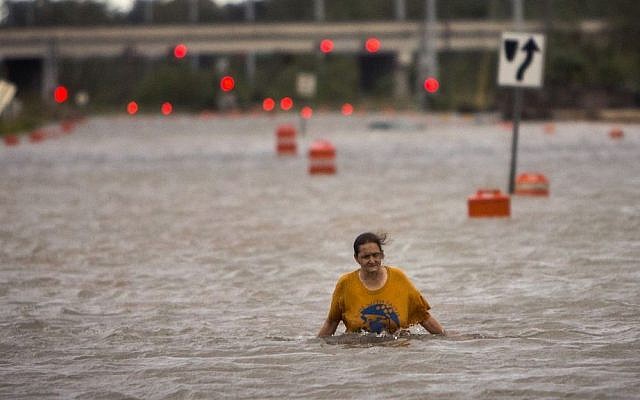
As night fell, authorities warned people to stay off the roads until the storm had passed, and the full extent of the damage likely wouldn’t be clear until daybreak. The unofficial rainfall totals were already staggering: 18 inches in Wilmington, 14 inches in Fayetteville and 8 inches in Raleigh.
The US National Hurricane Center said in its 2 a.m. ET Sunday update that the center of the storm was about 30 miles south-southwest of Cape Hatteras, North Carolina, and had sustained winds of about 75 mph (120 kpm).
“This is a very, very serious and deadly storm,” Gov. Pat McCrory said.
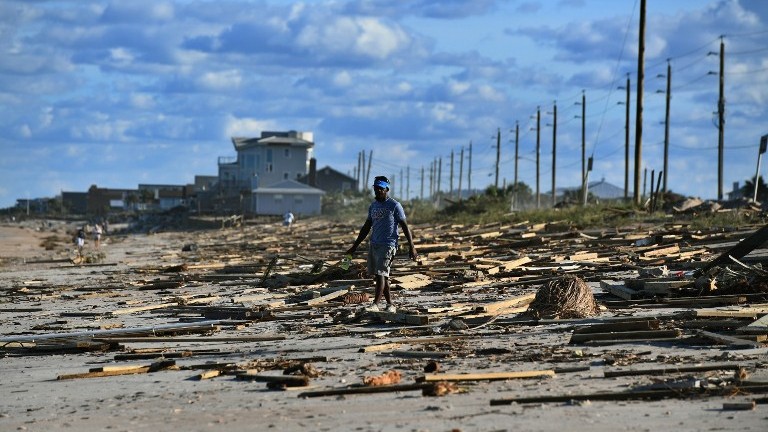
But in many places along the Southeast coast, the damage consisted mostly of flooded streets, blown-down signs and awnings, flattened trees and power outages.
On Saturday, Matthew sideswiped two of the South’s oldest and most historic cities — Savannah, Georgia, and Charleston, South Carolina — and also brought torrential rain and stiff wind to places like Myrtle Beach, South Carolina.
After pounding North Carolina and drenching parts of Virginia, it was expected to veer out to sea, lose steam and loop back around toward the Bahamas and Florida, too feeble to cause any trouble.
For nearly its entire run up the coast from Florida, Matthew hung just far enough offshore that communities did not feel the full force of its winds.
Its storm center, or eye, finally blew ashore just north of Charleston on Saturday, but only briefly. And by that time, Matthew was just barely a hurricane, with winds of just 75 mph.
Within an hour of residents being allowed to return Saturday to Jacksonville Beach, Florida, David Villmow had fired up the two pizza ovens at his beachfront restaurant, The Art of Pizza. He was hoping to start serving customers in a few hours.
“We got really lucky,” he said. “We could be looking at a whole lot worse. All you see are downed signs, downed fences, a few gas station sign letters missing.”










The Times of Israel Community.