

Ambiguity may have ended but nothing is clear: 9 things to know for January 22
Israel whacked Iran, which may hit back or may have gotten the message; and elections, Israeli openness, or a new reality in Syria may be to blame for whatever happens
 Add ToI as a Preferred Source on Google
Joshua Davidovich is The Times of Israel's Deputy Editor
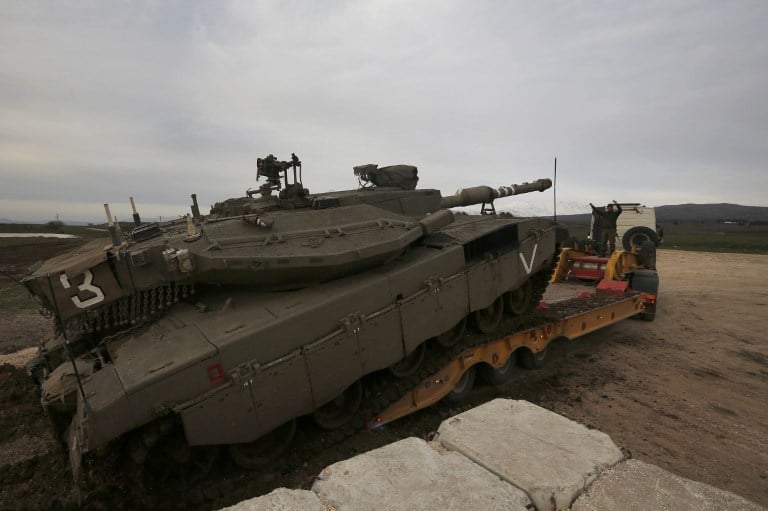
1. Big win: The press is lauding what it’s calling Israel’s big win in an exchange of fire with Iran in Syria on Sunday.
- “Victory for Israel and a message for Iran and Syria,” reads the front page of Israel Hayom, the country’s most widely read daily.
- Yedioth Ahronoth crows about how Israel knew how the whole thing would play out from the start, including “the Iranian missile attack which was not a surprise,” and the “heavy price” paid by Iran’s Quds Force.
- “This was the first round of fighting for chief of staff Aviv Kohavi against Qassem Soleimani, head of the Quds Force, and one can say it ended with a knockout win, even if Israel won’t admit it,” the paper’s Yossi Yehoshua writes. “It seems quality IDF intelligence managed to lead to a type of ambush and exacted a significant price from the Iranians in Syria.”
2. But nobody is under the impression the fighting is anywhere near over. Haaretz quotes unnamed officials in Israel’s defense establishment saying that Iran is more likely to respond to Israeli attacks, given a number of factors at play in Syria, though they think all-out war is a low probability.
- Soleimani “has been fighting Israel for decades and doesn’t seem to have abandoned his efforts. After the Iranians were bruised in the clash between the parties last May, Soleimani rethought his tactics and waited for the right time to resume the battle,” the paper’s Amos Harel writes. “Now, as the Assad regime stabilizes its control over Syria, the struggle is to determine the rules of engagement on the northern front. Iran would like to continue smuggling arms to Hezbollah while building army bases and deploying weapons systems in Syria.”
- Yedioth’s Alex Fishman writes that the harsh Israeli response may trigger an “irrational response” from Soleimani.
3. Hit the slopes: Yet Israel reopened the Hermon ski resort Tuesday, which Israel Hayom’s Yoav Limor points to as proof that Israel is not expecting Iran to respond in any major way soon.
- “Israel assumed that Iran won’t be quick to act against Israel again, despite the harsh blow it suffered,” he writes.
- The ski sites publishes a video showing the site filling up with skiers Tuesday morning despite the tensions.
בוקר טוב חזרנו לשגרה, האתר פתוח למבקרים וגולשים. יום נפלא!
Posted by Mt.Hermon אתר החרמון on Monday, January 21, 2019
- “Visitors are heading there in droves,” the Kikar Hashabbat news site reports.
4. There are also questions about whether Israel’s “victory” was so big. In ToI, Avi Issacharoff notes that Iran’s response to Israel’s alleged previous strike was hardly comprehensive, and likely part of a larger strategy to avoid things getting too out of hand.
- “Those who fired the rocket clearly were trying to avoid getting dragged into a larger war; otherwise they would have launched dozens of projectiles. The goal, it seemed, was to begin to construct a new architecture of deterrence, while limiting the chances of sparking a broader confrontation,” he writes.
- The Asia Times’s Shaiel Ben Efraim opines that Israel’s air power isn’t all it’s cracked up to be in dealing with Iran.
- “There is no reason to believe Israel will achieve its goal of curtailing Iranian influence by bombing targets in Syria. A ground invasion of the war-torn country is not even under consideration. The only realistic solution is a diplomatic one. In this respect, Jerusalem has limited options,” he pens, noting that all the campaign is really doing is alienating Russia.
5. Ambiguous reaction: Some think the Iranian willingness to respond is tied to Israel’s recent willingness to open up about its bombing campaign, leaving little room for strategic denial, though others recognize that it’s all a charade anyway.
- The New York Times quotes one news site there as saying that “Iran and Israel were heading toward a dangerous confrontation over Syria, adding that Israel had recently changed what it called the unwritten rules of the conflict.”
- But a look at the Iranian press by the Iran Front Page website shows the exchange getting little play in the Iranian press, which may belie the claim that Israel’s openness is being translated into pressure on Tehran to respond.
- Israeli researcher Yoel Guzansky tells the Associated Press that by speaking out Israel hopes to “stir a debate” in Iran and perhaps turn public opinion against the leadership’s “adventures” in Syria at a time of economic hardship. He says Israel also wants its foes to know that the promised withdrawal from Syria by American forces will have no effect on its policies.
6. A vote for war?: Israel’s openness and willingness to respond with such force is also be seen as a dangerous byproduct of upcoming elections.
- “When the prime minister is also the defense minister, and when the new chief of staff, Aviv Kochavi, tags the IDF as a ‘lethal army’ and wants to make his mark as soon as he can, the system of checks and balances meant to characterize the military decision-making process may be dangerously biased. The fear of such a bias is reinforced by the behavior of the prime minister ahead of the decisions by the Attorney General Avichai Mandelblit on his legal cases,” Haaretz’s lead editorial reads. “Prime Minister Benjamin Netanyahu’s aggressive campaign makes clear that no institution or mechanism is immune if it does not enlist to save the leader.”
- “The Iranian provocation was a response to Netanyahu’s bragging a week ago. What if the Iron Dome didn’t intercept the missile on the Hermon? Today we would be in an unnecessary war just because of pre-election bragging,” Yesh Atid MK Omer Bar-Lev writes on Twitter.
7. What doesn’t have to do with the upcoming elections these days? At the notorious Ofer Prison in the West Bank, Hamas and Islamic Jihad prisoners have launched a hunger strike, following riots there over surprise searches of prisoners for contraband.
- Reporter Shimrit Meir notes on Twitter that prisoners there are blaming the crackdown and other harsh policies enacted by Minister Gilad Erdan on Likud primaries, as he tries to look tough to the voter.
8. Kick in the Shas: The ultra-Orthodox Shas Party has launched its own electoral campaign, putting the kibosh on rumored unity with other ultra-Orthodox factions and vowing to stick by Netanyahu as long as it is legally allowed to, should he be indicted.
- The party’s leader is Aryeh Deri, who himself has spent time in prison for graft and may be facing another indictment.
- The party’s slogan is “Koah Shas” which translates to Shas Force or Shas Squad, both of which sound awfully militant for a party that doesn’t support military enlistment of ultra-Orthodox yeshiva students.
- Translating party slogans into English can be a fool’s errand, though, as ToI’s Raoul Wootliff notes.
- “In this election cycle — with some parties resembling amoebas as they split and form new factions and yet others being established from scratch — media outlets are also being challenged to translate numerous new party names that do not make sense in English, and don’t even have the advantage of being pithy or brief,” he writes.
- “For new parties that put considerable effort into finding the right brand, the decision on the English name may seem trivial. English speakers make up only 2.9 percent of the eligible electorate and most of them also speak Hebrew. But with journalism representing the ‘first rough draft of history’ (as famed Washington Post publisher Phillip L. Graham said), a bad initial translation or transliteration could stick for decades or more.”
9. Sahel, what the hell: A report on Channel 13, later confirmed elsewhere, says that Mali’s president will soon visit Israel, as part of a diplomatic awakening toward Israel in Africa’s Sahel.
- Israel Hayom, whose editor Boaz Bismuth used to be ambassador to Mauritania, notes that Prime Minister Benjamin Netanyahu met with Malian president Ibrahim Boubacar Keïta two years ago and the two promised to deepen ties, though the counties haven’t had relations for 50 years.
- The paper also calls Mali a failed state suffering from terror, and others wonder why Israel is so keen to forge ties with third world basket cases, especially Chad.
- ToI’s Raphael Ahren notes, “None of the African countries Netanyahu has courted are model democracies. But few have a poorer scorecard than Chad, which is one of the poorest, most unfree and least literate countries in the world.”
- Why court it, then? Probably to shave a few hours off flights to Rio: “The most important reason for Netanyahu’s efforts to restore ties with Chad may have been the country’s strategic location and the opportunities it may open for Israeli aviation. Having gained overfly rights from Chad, Netanyahu is very close to being able to shave off several hours for Israeli planes headed to West Africa and Latin America,” Ahren writes.
- Ben-Dror Yemini writes in Yedioth that Netanyahu should instead be spending his time trying to patch up relations with America, including the Jewish community there.
- “True, ties with Trump are great, the US embassy is moving to Jerusalem. But Trump is just a passing fad,” he writes. “Israel is weakening in the US. We lost the elites long ago. Then most of the Jews. And now there is a fight with the Democrats, who are putting BDS supporters into office.”





The Times of Israel Community.