

Amid worker shortage due to war, Israeli constructors struggle to build
With most Palestinian workers banned from Israel in wake of Oct. 7 onslaught, and thousands of foreign workers gone, the building sector says it’s at a ‘complete standstill’
 Add ToI as a Preferred Source on Google
Shoshanna Solomon was The Times of Israel's Startups and Business reporter
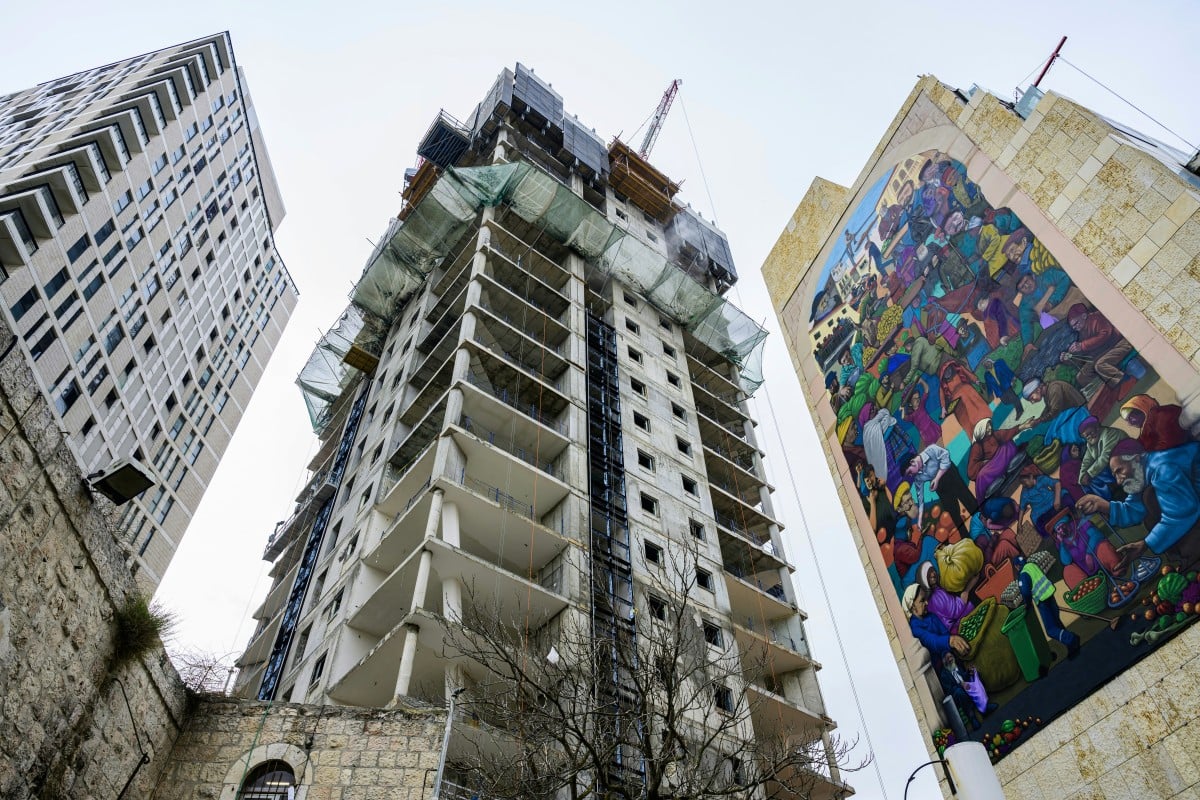
At a construction site in north Tel Aviv, drilling machines sputtered back to life and enthusiastic hammering and shouting by workers with hard-hats could once again be heard, following long weeks of uneasy quiet.
Safety instructions in Arabic and Chinese were still plastered on the perimeter of the structure, while a small tractor shoveled away debris from the entrance.
Slowly, some building sites are getting back to work after weeks of being shuttered following Hamas’s devastating October 7 attack on southern Israel, in which terrorists killed more than 1,200 people, most of them civilians, and took some 240 hostages.
Palestinian workers, upon which the construction industry relies, disappeared overnight, as Israel enacted an immediate ban on workers from Gaza and restricted access to most of those from the West Bank. Thousands of foreign workers from China, Thailand, the Philippines and other countries also went home following the shock attack, as the economy ground to a halt.
In addition, over 350,000 Israelis have been called up to reserve duty, taking a toll on the economy, and some 250,000 have been evacuated from their homes in the destroyed south and the north, facing long months of uncertainty as reconstruction plans slowly take shape.
In this new reality, Israeli contractors are competing for fewer workers, paying higher hourly wages, and hoping a government decision to allow the entry of foreign laborers to the sector will ease some of the pain.
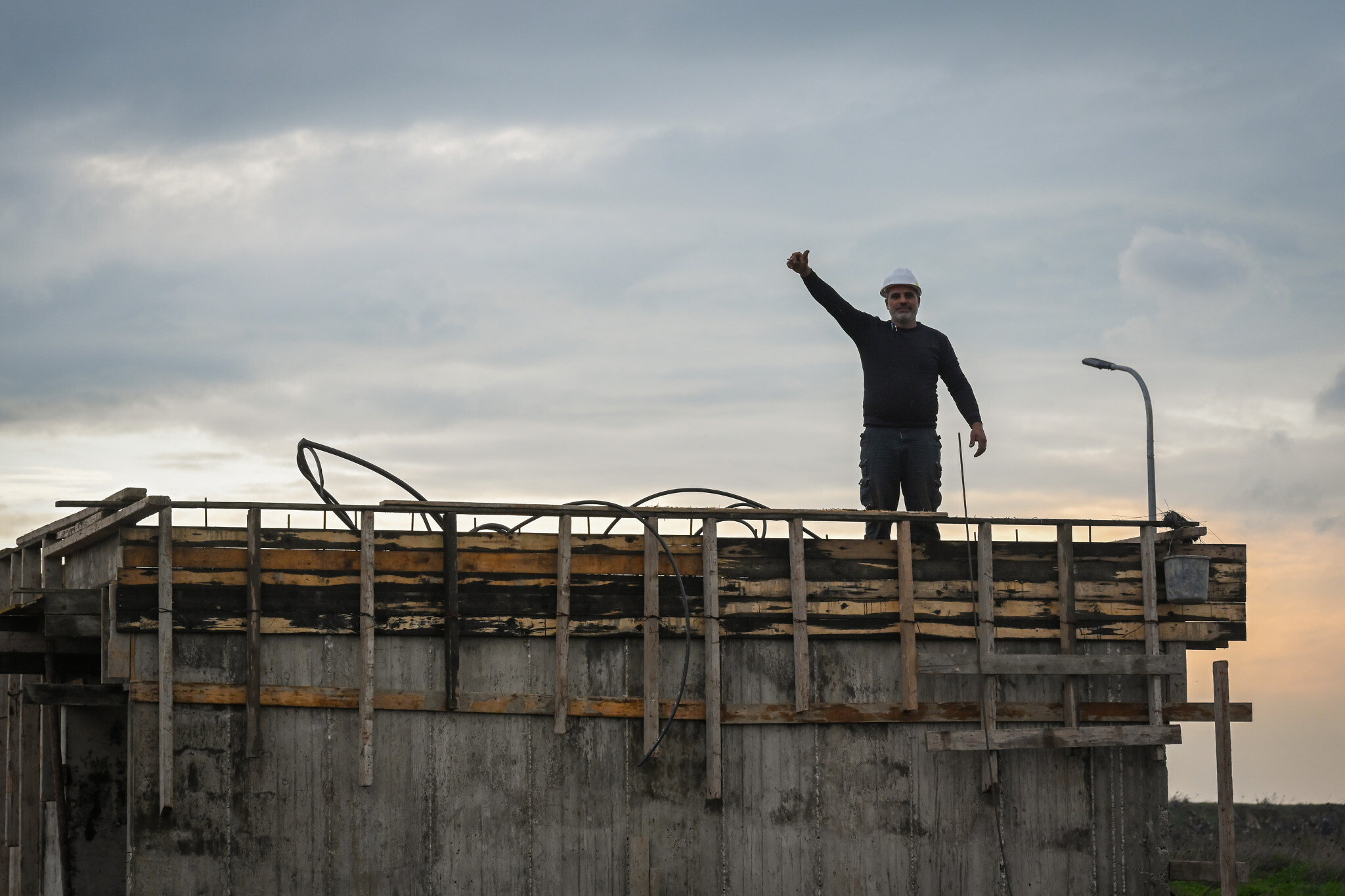
Until that happens, they say, there is a risk of company closures, delays in the delivery of homes and schools as well as essential infrastructure work, amid an overall upheaval in the housing sector that was already marked by insufficient supply and high costs.
‘A complete standstill’
“We are in very dire straits,” Raul Sargo, president of the Israel Builders Association, told the Knesset Committee on Foreign Workers on December 25.
“The industry is at a complete standstill and is only working at 30 percent capacity. Some 50% of construction sites are closed and there is an impact on Israel’s economy and the housing market.”
The Finance Ministry has estimated the economic damage of Palestinians not coming to work at some NIS 3 billion ($830 million) a month.
This shortage could have implications for the economy as a whole, as the building and real estate sectors owe banks and non-banking institutions some NIS 400 billion, according to Bank of Israel data in the August 2023 Financial Stability Report.
“Even if a small part of the debt is not repaid, it will be a huge hit for the whole economy,” Shay Pauzner, vice president for the Israel Builders Association, told The Times of Israel in a phone interview.
According to data compiled by the Bank of Israel, as of the second quarter of 2023, some 208,000 Israelis were working in the construction sector, with 75,000 reported workers from the West Bank and 12,000 from Gaza.
An additional 15,000 workers from the West Bank were working illegally in the sector, while the number of reported foreign workers was some 23,000, the data said.
“In the construction industry, a particularly significant impact is expected to labor supply due to restrictions on the entry of laborers from Judea and Samaria, and the complete cessation of employment of laborers from Gaza. These are expected to continue having an effect into 2024,” the research department of the Bank of Israel said in its macroeconomic forecast in November.
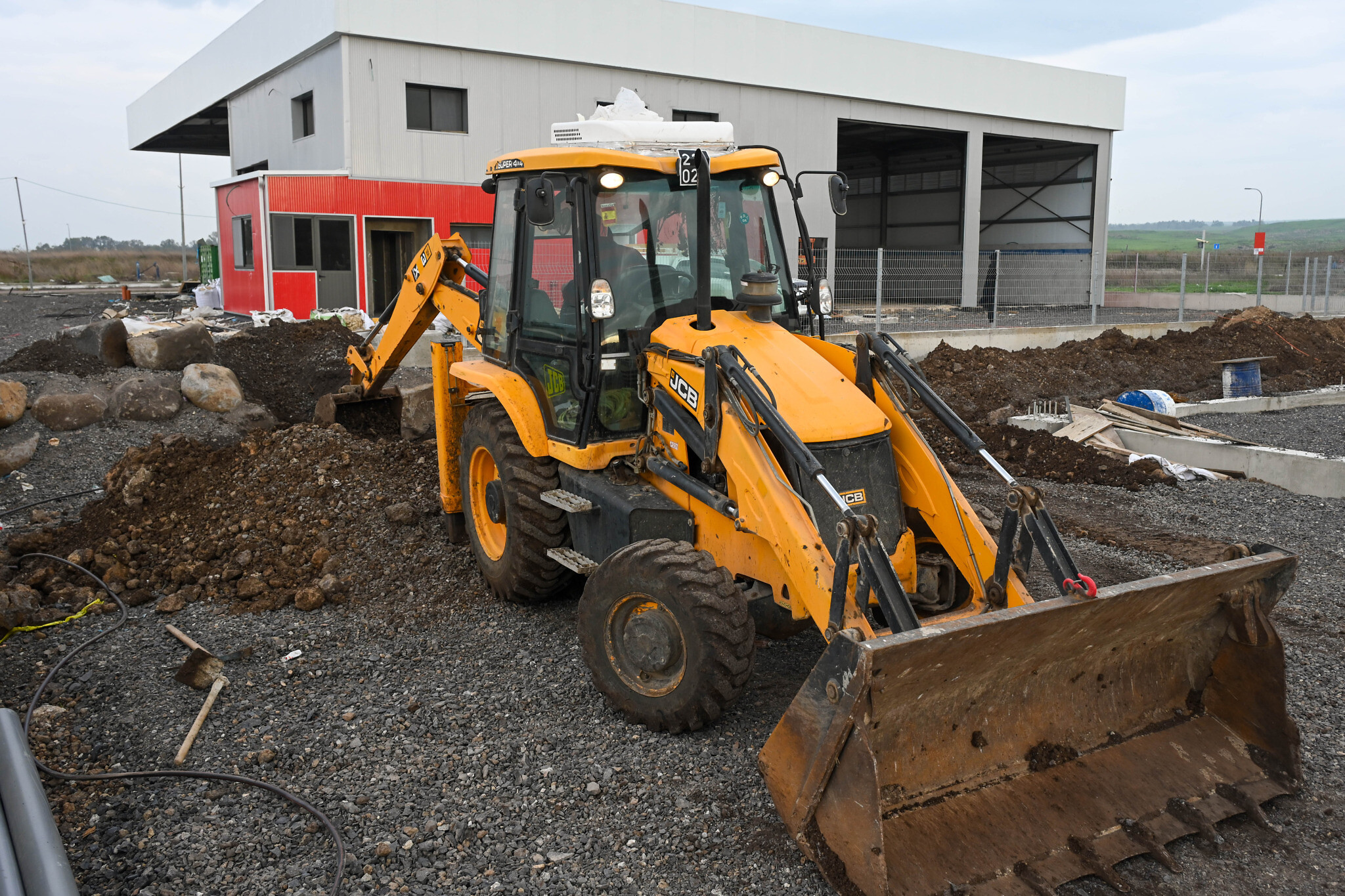
Palestinian and foreign workers oversee the labor-intensive stage of putting up the structure of the building – the so-called “wet work” when the foundations are set. They also carry out infrastructure work such as sewage drains, or setting up infrastructure for railways, ports, or public structures.
“Israeli workers enter into the picture when the structure is already up,” Pauzner said. “They mainly focus on creating the plumbing, electricity, paint, and installing the sanitary items.”

The construction industry accounts for some 6.2% of the nation’s GDP, with the tech sector taking up a lion’s share of the economy or 17% of GDP, said Itai Ater, an economics professor at Tel Aviv University’s Coller School of Management, and a senior fellow at the Israeli Democracy Institute.
Since 2000, Ater said, there has been a gradual increase of Palestinian workers in Israel — except during the COVID pandemic, when there was a drop — with a record high in 2022 during a construction boom.
The Israeli economy is thus “very dependent” on Palestinian workers, mainly from the West Bank, he said.
There have been some attempts to bring workers to Israel from China and India for diversification, he said, but because of the sheer numbers required, it will be difficult to bridge the gap.
“You can bring some workers in, but bringing the same number of Palestinian workers who used to work in construction to fill this gap is a big challenge,” Ater said. “There is no way to fill the void of the Palestinian workers. Perhaps things will change, but it is not something we are seeing now.”
Setbacks and proposed solutions
Earlier this month, the Israeli security cabinet postponed a vote on a proposal to allow Palestinian workers from the West Bank to enter Israel, after the 15-member socio-economic cabinet rejected the proposal.
Finance Minister Bezalel Smotrich, who heads the socio-economic cabinet, said Israel “can and must advance alternatives that will provide a different solution to the economy.”
In response, the builders’ association warned that because of the continued shortage of Palestinian workers, the industry will only be able to return to full activity in “many, many months,” leading to the “collapse of many contractors and business owners.”
Meanwhile, the government is trying to bring more foreign workers into Israel. Over 12,000 new and veteran foreign workers have arrived or returned to Israel in the wake of Hamas’s October 7 assault, including 2,218 in agriculture, half of them from Thailand, a representative of the Interior Ministry told lawmakers on December 20.
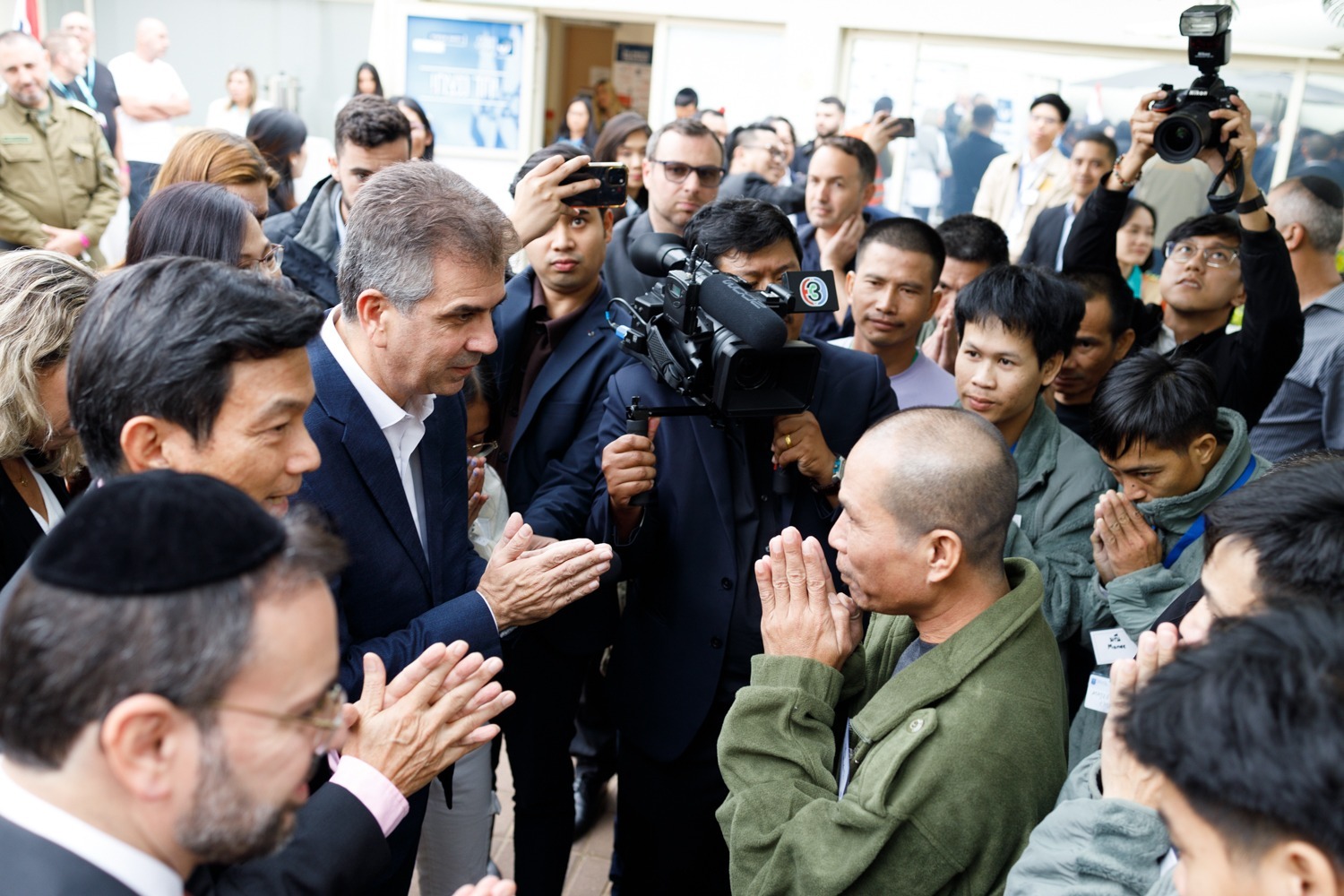
Testifying before the Knesset Committee on Foreign Workers on December 20, Inbal Mashash, the director of the Population and Immigration Authority’s Foreign Workers Administration, announced the arrival of the first group of 100 workers from Sri Lanka out of what officials say will be an eventual total of 10,000, noting that efforts are also being made to attract laborers from countries such as Moldova.
Pauzner, from the builders’ association, said that representatives of construction firms in Israel are making trips to India and Sri Lanka to vet workers for the sector.
The idea is to allow initially 10,000 and then an additional 30,000 workers into the country at the start of next year, earmarked for the construction sector, he said.
Acute shortage and higher prices
In this tense environment, builders are competing to draw existing workers to their sites, sending salaries surging.
PHI Engineering and Construction, based in the Re’em Industrial Zone in southern Israel, had some 50 Palestinian workers on its payroll before the war, and employed an additional 200 workers, some 100 of them Palestinians, via subcontractors and HR firms.

“The Palestinian workers aren’t coming at the moment,” said Polina Soibelzon, who has been working in the field for 13 years. “Their number is down to zero.”
In addition, 12 out of the 40 engineers working for the firm are in reserve army duty, with the rest of the team doubling up on their work hours to make up for their absence, she said. The laborers who are still available, she said, mainly Chinese, tend to choose to work for the highest bidder.
“If we ask for five workers, we get just one,” she said, referring to the HR firms. “And we just received a letter informing us that these firms will be raising their prices for the workers from January 1.”
“We used to pay NIS 75 for each of these workers per hour,” she said. “Now we will have to pay NIS 100.”
Palestinian workers, she said, were paid the minimum legal wage of NIS 31.5, while more professional and experienced Palestinian workers were getting NIS 50 to NIS 55 per hour.
The firm works mainly on residential projects in Tel Aviv, Herzliya and Ramat Hasharon. A project in Herzliya, for example, was shut down for some three weeks. Now the site is open but is working with an acute shortage of manpower.
“This is a site that could be holding between 120-150 workers to progress at a good pace,” Soibelzon said. “In practice… if we have 11 or 12 workers there, it is considered a good day. So I am paying for the overheads every day — the site managers, the crane, the scaffolding, but work is not progressing.”
“We are trying to limit the damage,” she said. The firm has found a subcontractor who uses Israeli workers and who will be able to start work in January. PHI must pay them 20% more money, she said. “In a situation in which my overheads are so high, it is worth my while to pay and make progress on the work rather than wait for something else.”
“Let’s hope the foreign workers come,” she added. “I still don’t see them in the market.”
At the end of the war, the construction industry will play a leading role in rebuilding infrastructure and communities destroyed by the war. For that, it will need workers.
“There are 20 kibbutzim and villages in the Gaza envelope that will need to be rebuilt, and there is also huge damage in the north,” said Pauzner. “All of this will have to be rebuilt. We will have to work at 150% capacity but without the Palestinian workers. It is a void we will need to fill.”









The Times of Israel Community.