

Arabic artists sneak anti-‘Homeland’ graffiti into episode
Calling the show ‘racist’ for its depiction of Muslims, artists commissioned by production crew leave unnoticed criticisms on walls of set
 Add ToI as a Preferred Source on Google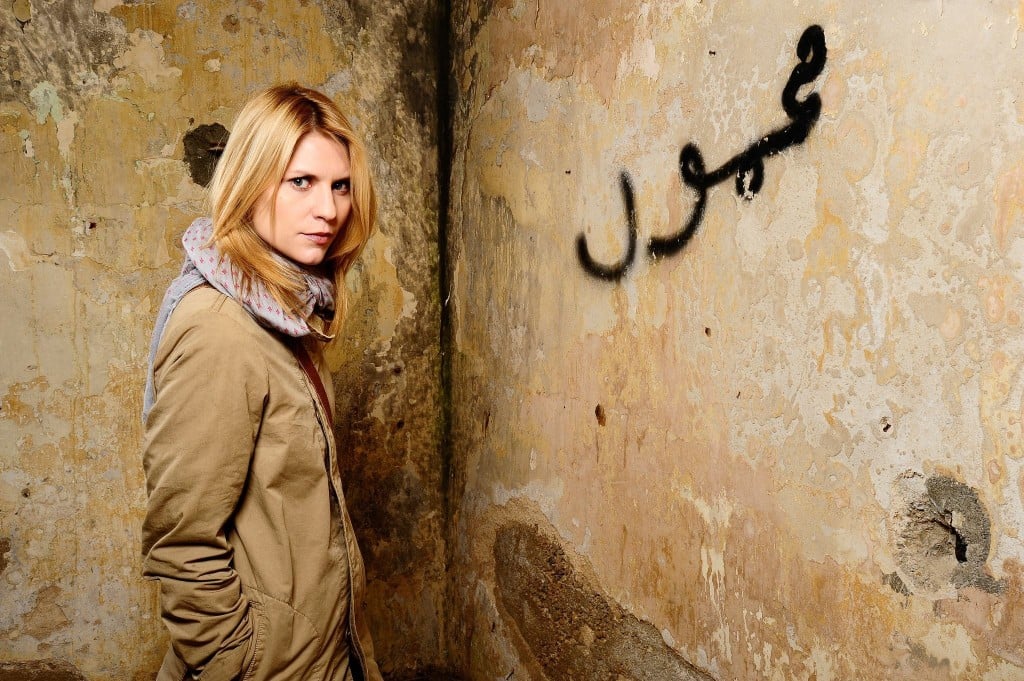
Arabic-speaking graffiti artists commissioned to add Arabic scrawls to the set of the Homeland TV series announced Wednesday they had “hacked” the episode by including criticism of the show in the graffiti.
“The series has garnered the reputation of being the most bigoted show on television for its inaccurate, undifferentiated and highly biased depiction of Arabs, Pakistanis, and Afghans, as well as its gross misrepresentations of the cities of Beirut, Islamabad – and the so-called Muslim world in general,” the artists, identifying themselves as Heba Amin, Caram Kapp and Stone, wrote in an online letter explaining their actions.
The episode in question is Homeland’s most recent — season 5, episode 2 — in which central character Carrie Matheson (played by Claire Danes) is seen walking through a Syrian refugee camp built in a Berlin set.
Unbeknownst to the production crew, Carrie walks past Arabic graffiti with messages including “Homeland is racist” and “Homeland is a joke, and it didn’t make us laugh.”
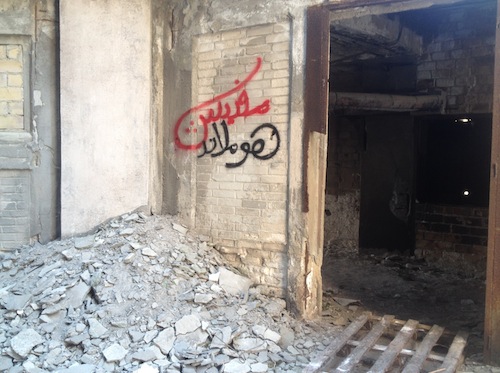
The three artists said they were commissioned to work on the set of “Homeland” — which is based on the Israeli series Hatufim (English title: Prisoners of War) created by Gideon Raff — in early June. Homeland’s production company “were looking for ‘Arabian street artists’ to lend graffiti authenticity to a film set of a Syrian refugee camp on the Lebanese/Syrian border for their new season.”
The artists were hesitant at first, “given the series’ reputation,” but soon realized “what a moment of intervention could relay about our own and many others’ political discontent with the series. It was our moment to make our point by subverting the message using the show itself,” the artists wrote.
They got away with it, they explained, because production staff were too busy to check the content of the graffiti.
“The set decoration had to be completed in two days, for filming on the third. Set designers were too frantic to pay any attention to us,” they wrote.
“They were busy constructing a hyper-realistic set that addressed everything from the plastic laundry pins to the frayed edges of outdoor plastic curtains. It looked very Middle Eastern and the summer sun and heat helped heighten that illusion. The content of what was written on the walls, however, was of no concern. In their eyes, Arabic script is merely a supplementary visual that completes the horror-fantasy of the Middle East, a poster image dehumanizing an entire region to human-less figures in black burkas and moreover, this season, to refugees.”
The latest episode isn’t the first time the show seemed confused about the details of the Middle East.
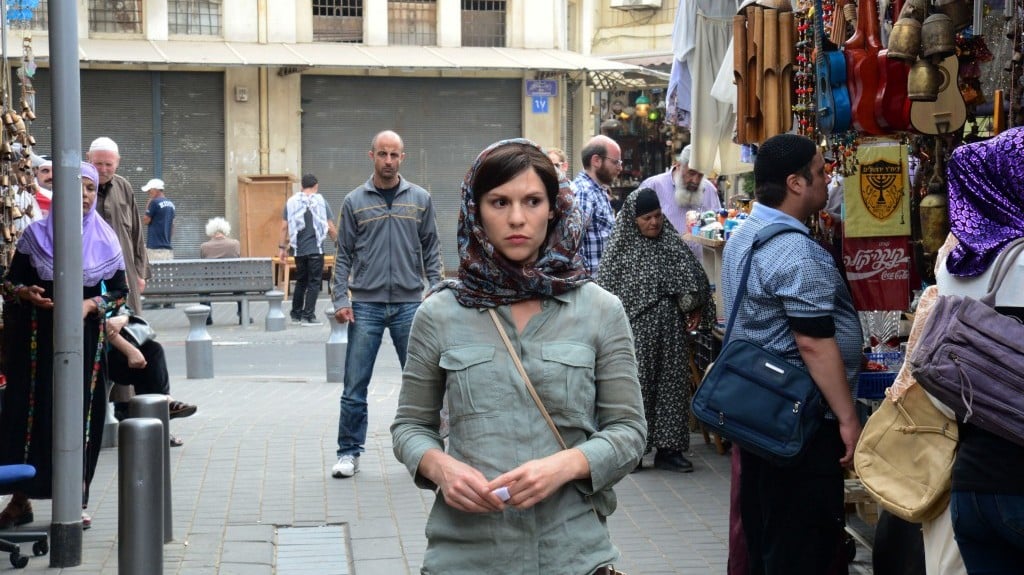
An episode of the show’s second season, ostensibly depicting Beirut but actually filmed in Tel Aviv, had scenes with vehicles bearing the distinctive yellow Israeli license plate, red-and-white curbs that designate no-parking zones, an Israeli-style traffic circle and a well-known minaret and clock tower in Jaffa.
In one rooftop scene, parts of the Tel Aviv skyline, with hotels lining the Mediterranean and the iconic Shalom Tower skyscraper, can be seen in the distance.
And in a publicity shot for the episode, Danes’s character is walking through a Beirut open market and passes a stall selling two Israeli T-shirts: one red with the white Coca-Cola logo in large Hebrew letters, the other a yellow jersey of a Jerusalem soccer team with the name, Beitar Yerushalayim, in Hebrew and a menorah.




The Times of Israel Community.