

As Likud votes for leader, Netanyahu calls Putin to ask for backpacker’s release
PM, who boasts of close Kremlin ties, says he repeated plea for freedom of Israeli-American Naama Issachar jailed on drug charges; discusses Syria, Iran and Putin’s upcoming visit
 Add ToI as a Preferred Source on Google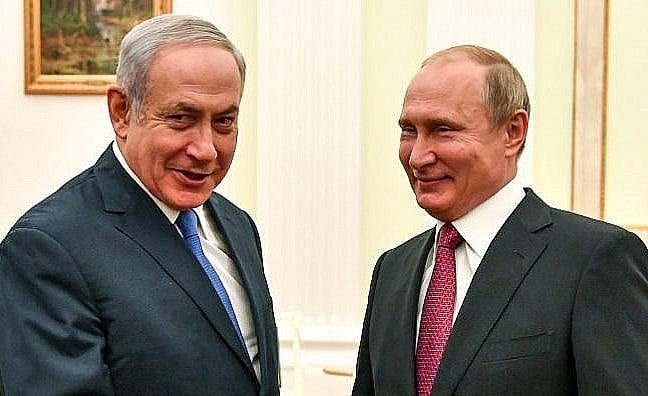
Prime Minister Benjamin Netanyahu asked Russian President Vladimir Putin to pardon an Israeli-American woman imprisoned in Moscow on drug charges, his office said Thursday.
The two leaders also spoke about Iran and Syria, according to Netayahu’s office.
The call, which the Kremlin said was initiated by Netanyahu, came as members of the premier’s party were voting in a high-stakes leadership primary on whether to keep him as the head of the Likud faction.
Netanyahu, who has touted close ties with Moscow, promised during a campaign event earlier this month to spring Naama Issachar from Russian prison, raising hopes of a diplomatic breakthrough.
Issachar has been held in Russia since April after several grams of cannabis were found in her luggage during a layover at a Moscow airport. She was sentenced in October to seven and a half years in prison. A Russian appeals court rejected her release request last week.
After the hearing, Netanyahu told Issachar’s mother that he was continuing to work for her release. Israeli officials have expressed hopes that Putin will release Issachar as a goodwill gesture before or during his visit to Israel next month.
Netanyahu also asked Putin to pardon Issachar during a phone call earlier this month.
Moscow has said the Russian leader would consider the request.
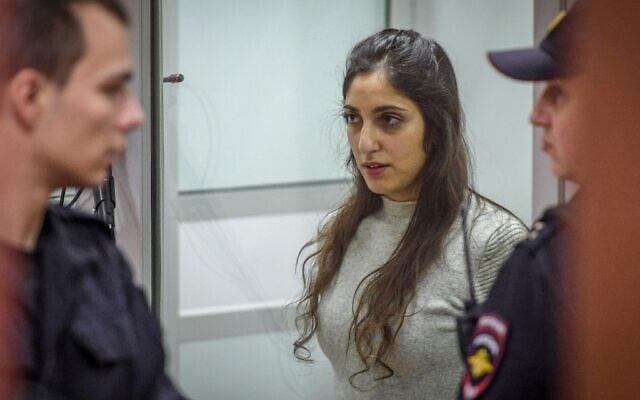
“I request you [Netanyahu] do everything you can to convince Putin to allow Naama to light a Hanukkah candle as a free person in the State of Israel, before she is transferred in the coming days to a very remote jail in Russia that’ll make it hard for me to visit her,” Issachar’s mother Yaffa said in response to Thursday’s phone call.
Netanyahu called Issachar’s sentence “absurd,” in an interview to Israeli media that aired Wednesday.
A Russian readout of the phone call did not mention the Issachar request.
The Kremlin said the two discussed regional issues and bilateral ties in light of Putin’s visit to Israel on January 22 for events marking the 75th anniversary of the liberation of Auschwitz, the Kremlin said.
“President Putin wished the prime minister a happy Hanukkah blessing and Prime Minister Netanyahu congratulated the [Russian] president on the Novi God [New Year],” according to a statement from Netanyahu’s office.
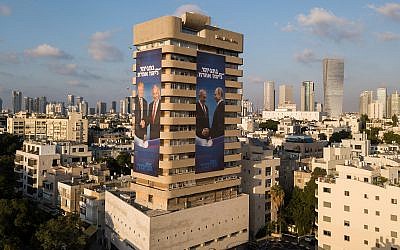
Netanyahu has touted his relationship with Putin and other world leaders during Israel’s repeated elections over the past year, which have failed to produce a government. Israelis will go again to the polls on March 2.
In a rare interview Wednesday, Netanyahu claimed Putin told him Israel and Russia would be at war if not for the close ties between their leaders.
“Putin told me that were it not for our relationship, we could have found ourselves in the midst of a military clash… Only because we meet every few months has this been avoided,” Netanyahu said in an interview with Army Radio.
“We have four times come close to collisions — our planes in Syria’s crowded airspace almost collided with Russian planes,” the premier continued, speaking openly regarding Israel’s conduct beyond its borders.
Israel has conducted hundreds of airstrikes in Syria targeting Hezbollah weapon shipments and Iranian military installations. The raids are coordinated with Iran-allied Russia to avoid a clash in the Syrian skies.
Russia backs the government of Syrian leader Bashar Assad and has criticized previous Israeli airstrikes aimed at preventing an Iranian entrenchment near Israel’s northern border.
The Russian embassy declined to comment on the remarks Netanyahu attributed to Putin.



The Times of Israel Community.