

Attack on troops draws fresh scrutiny to army’s response to Yitzhar violence
The hilltop outposts around the northern West Bank settlement have long been a hotbed of ‘price tag’ attacks, with more than 150 incidents this year, and little law enforcement


 Add ToI as a Preferred Source on Google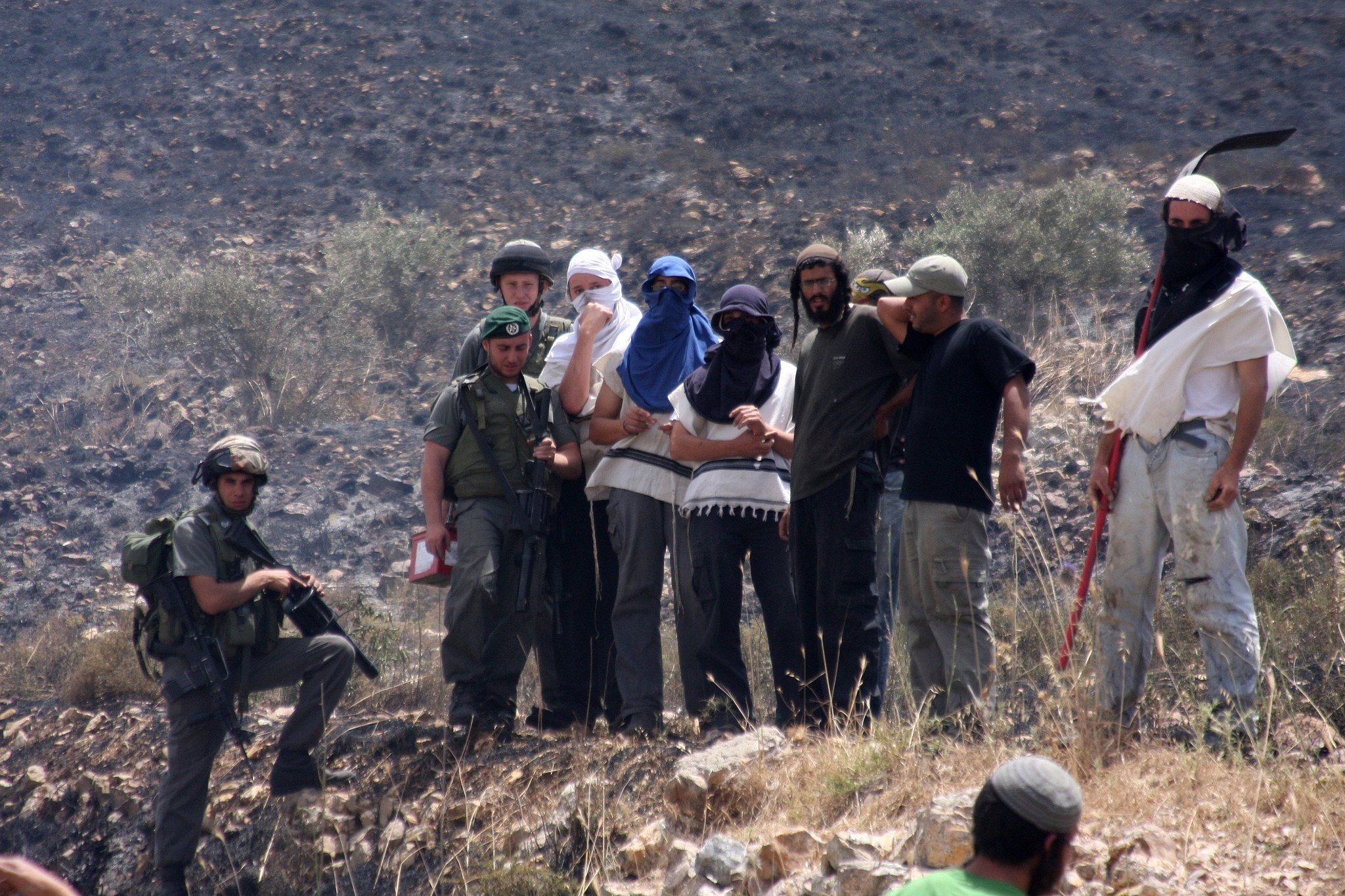
Since the beginning of the year, the area surrounding the Yitzhar settlement has again emerged as a hotbed of violence against Palestinians, left-wing Israeli groups and Israeli security forces.
There have been over 150 acts of violence carried out by residents of Yitzhar and the surrounding settlements in the Samaria region of the northern West Bank, principally the illegal Kumi Ori outpost, since January 1, a security official told The Times of Israel Sunday.
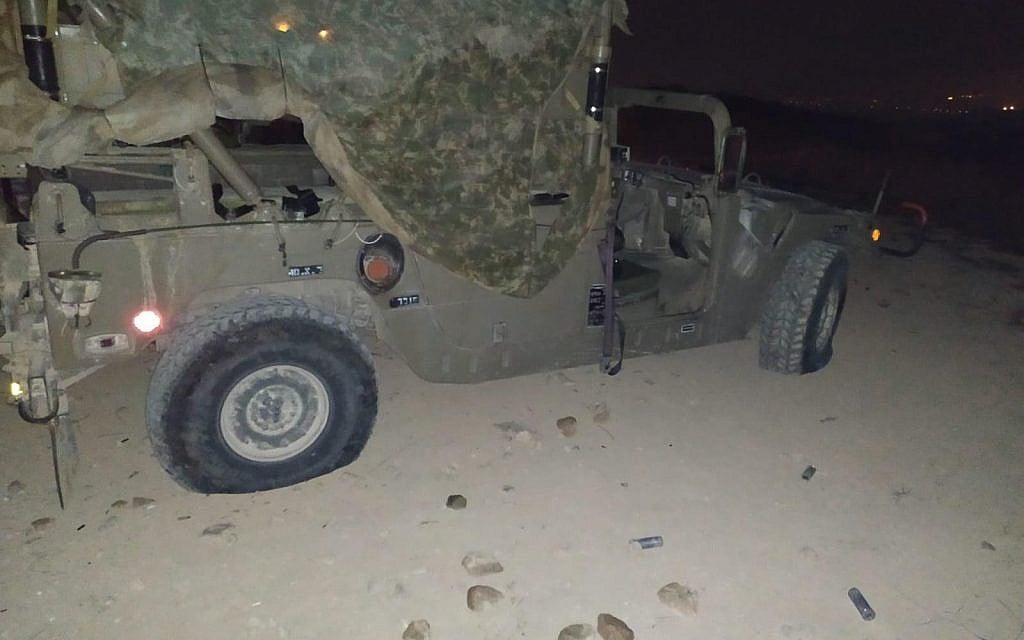
The latest of these attacks occurred outside Kumi Ori on Saturday night, in which some 30 residents of the wildcat outpost hurled stones at soldiers and punctured the tires of military vehicles. A soldier was lightly injured by a rock. The riot was apparently in response to the arrest of two teenage settlers, one of them a resident of Yitzhar suspected of threatening the commander of a reconnaissance battalion in the Israel Defense Forces’ Golani infantry brigade. The other allegedly tried to start a fire in a Palestinian-owned field.
The attack on IDF troops on Saturday night drew wall-to-wall condemnations — from right-wing and settler groups to liberal non-government organizations — but limited punitive or legal action was expected in response.
Hours later, no arrests had been reported.
A Border Police battalion was ordered to take up position near the Yitzhar settlement as a deterrent against further violent activities by residents of the outposts in the area, Israel’s Kan broadcaster reported Sunday. This could not be immediately confirmed by police.
This was not the first time that the Yitzhar settlement has made headlines as a source of settler violence; indeed the community has been viewed as such for years. Local government officials insist that the phenomenon does not originate with Yitzhar residents, but rather with the so-called “hilltop youth” who flock to the surrounding hills and establish illegal outposts on them.
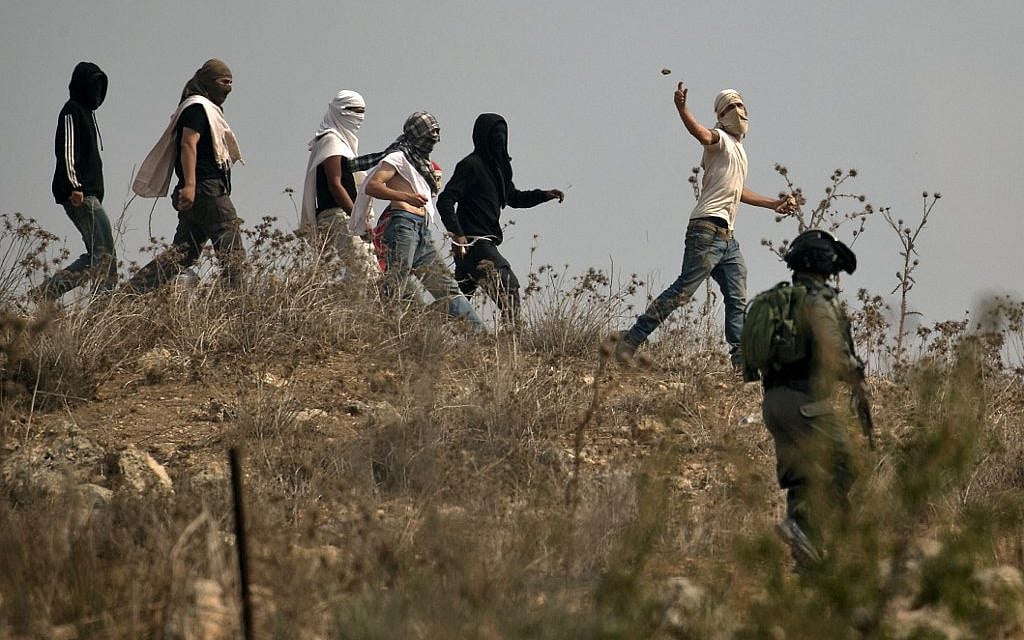
This violence tends to consist of throwing rocks at Palestinians and Israeli troops; vandalizing vehicles, homes and businesses in surrounding Palestinian villages; and burning or cutting down Palestinian-owned olive trees and agricultural fields. These are commonly referred to as “price tag” attacks, with their perpetrators claiming that they’re the retaliatory cost for Palestinian violence or government policies seen as hostile to the settler movement.
Israeli security forces have generally refrained from arresting and trying these hilltop youth, either to avoid an ugly political debate regarding Jewish nationalist terror or out of an inability by the Israel Police’s West Bank division to effectively investigate these crimes. Instead, the primary method of containing or countering the violence has been through the issuing of restraining orders by the commander of the IDF Central Command against hilltop youth activists in order to keep them out of the area.
As these orders come from the IDF, which is legally considered the sovereign in the West Bank, the legal requirements for them are far lower than a similar measure imposed by an Israeli civilian court, thus making it an easier and simpler tool for security forces to use compared to the legal tools available to law enforcement in Israel proper.
In some cases, as with this week, additional Border Police troops have been deployed in the area to act as a deterrent against settler violence and to rapidly quell any unrest between Israelis and Palestinians before it deteriorates into more serious violence.
No other long-term or far-reaching initiatives to address violence by hilltop youth had been proposed as of Sunday evening.
In past outbreaks of settler violence, Israeli security forces have temporarily stepped up law enforcement or increased deployments to problematic regions in order to calm tensions, but quickly reined in these efforts as soon as the situation quieted down.
An uptick
The past week has seen a significant increase in the level of violence in the northern West Bank around Yitzhar.
Last Wednesday, a group of masked settler youth armed with crowbars coming from the Yitzhar area attacked an 80-year-old Israeli activist, Reform Rabbi Moshe Yehudai, and a group of largely foreign volunteers assisting Palestinian farmers with the annual olive harvest in the northern West Bank villages of Burin and Haware.
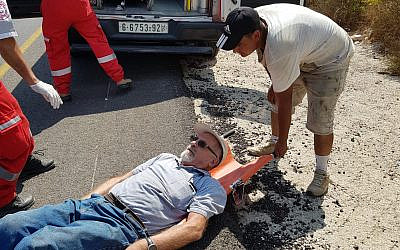
Yehudai, an activist with the Rabbis for Human Rights group, sustained blows to the arm and head. He was evacuated to the Meir Medical Center in Kfar Saba with a broken arm. The other four volunteers who were injured were visiting from the US, UK and other European countries, according to a field worker for the left-wing Yesh Din legal organization.
A statement from Yitzhar settlement blamed the incident on “provocations caused by extreme-left activists,” who it said had approached the settlement and created “a security hazard.”
The Saturday night incident came on the backdrop of a pair of arrests that angered hardline residents of Yitzhar and the surrounding outposts: The first was on Wednesday, when security forces nabbed a teenager suspected of starting a fire in a Palestinian-owned field located near his home. The minor’s attorney claimed the arresting officer from the Golani brigade used unnecessary force in apprehending the suspect, who was released two days later to house arrest.
That evening, a second teen was arrested in the Yitzhar area after the army said he threatened Golani infantry brigade commander Lieutenant-Colonel Ayoub Kayouf.
“On Friday, several residents gathered and blocked a military vehicle at the entrance to the settlement on Yitzhar,” the army said in a statement regarding the second arrest. “One of the settlers opened the door of the vehicle and threatened its passengers. At that point, the commander of the unit, who was in the vehicle, emerged and the settlers left the area.
The military said that the incident was taken care of with the cooperation of the Israel Police and local settler leadership, leading to the arrest of the youth.
A history of violence
A defense official last year referred to Yitzhar, a settlement of roughly 1,500 residents, as a “refuge for hilltop youth.”
The official, who spoke to The Times of Israel on condition of anonymity, said that in addition to rogue settlers from Yitzhar, students from the community’s Od Yosef Chai yeshiva have also been involved in carrying out hate crimes over the years.
Last July, a group of settlers from Kumi Ori violently clashed with Israeli security forces as they conducted a routine inspection of a nearby outpost, injuring a Border Police officer and Defense Ministry employee in the process.
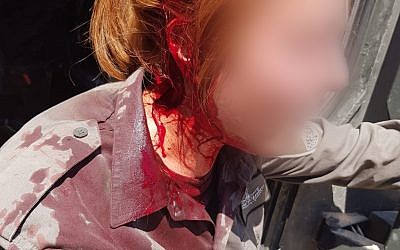
There were no convictions or eve indictments against those involved in the attack.
The spring of 2014 also saw a significant outbreak of violence from the Yitzhar area. That April, a rioting mob of dozens of settlers destroyed an IDF encampment in response to the demolition of five illegal buildings in Yitzhar.
During the melee, the settlers threatened the soldiers, all reservists, telling them to stand aside to avoid getting hurt. They then began to destroy army property in the settlement, a military official said at the time.
Eight people, including six Border Police guards, were injured. All of the military equipment at the site was destroyed, including tents, heating equipment, a toilet, and a water tank.
There were no indictments or convictions against those involved in the attack.
In rare cases, the violence has led to public pushback against Yitzhar and the surrounding outposts by members of Israel’s defense establishment.
Last November, a senior official in the Civil Administration, a body within the Defense Ministry that governs daily affairs in Israel-controlled Area C of the West Bank, said the military should not continue to treat the hardline settlement as if it were a normal residential community.
In her letter, which was published by the Kan public broadcaster, senior Civil Administration officer Idit Zargarian criticized IDF Central Command chief Maj. Gen. Nadav Padan in particular for what she viewed to be his willingness to accommodate Yitzhar’s requests, despite the violent incidents from residents of the area.
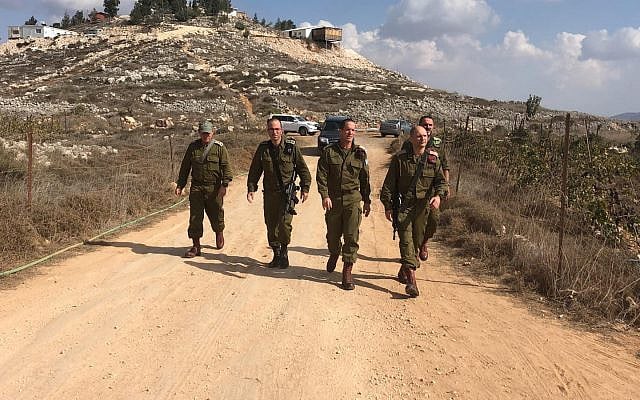
“We cannot continue treating Yitzhar with a double standard: promoting civilian issues, examining unique requests from residents, and finding creative solutions to their problems alongside the continued violation of the rule of law by the residents,” she wrote.
In defense of Yitzhar
Right-wing groups and politicians have adamantly defended Yitzhar, stressing that those involved in the violence are not representative of the community as a whole.
“Yitzhar residents serve as reservists, volunteer and are good Zionist people. It is saddening that there are rioters who sully the name of the community and harm the entire settlement movement,” said right-wing Jewish Home party leader Rafi Peretz Sunday.
Many of its defenders, including former justice minister Ayelet Shaked, have also noted that Yitzhar often leads the country in the number of live kidney donations.
“We must distinguish between [the rioters] and the residents of Yitzhar, who hold the national record for most kidneys donated,” she wrote on Twitter.
The right-wing lawmakers struck a similar tone to that of Padan, who also criticized the recent violence, but insisted that it had been carried out by a “handful” of lawbreakers not representative of the broader Yitzhar settlement.
Former IDF Spokesman Peter Lerner called Padan’s statement “weak.” Lerner argued on Twitter that the Central Command head’s insistence on viewing a non-representative “handful” of youths as the root of the problem, as opposed to the broader Yitzhar settlement that has not acted against those youths for years, is what has allowed acts of violence to persist.






The Times of Israel Community.