

Bestselling French-Jewish author contemplates move to Israel
Eliette Abecassis wrote her latest novel ‘Alyah’ after ‘Europe’s old demon surfaced’ in Paris during last summer’s Gaza war
 Add ToI as a Preferred Source on Google
PARIS – Although a work of fiction, Eliette Abecassis’s new book “Alyah” reads like a pamphlet against the rise of anti-Semitism. Published in France mid-May and written in reaction to the January attacks against Paris magazine Charlie Hebdo and kosher supermarket, the book is a heart-felt cry that has kept French media buzzing.
“A few years ago I would go out on the street wearing a Star of David around my neck. I was proud to be named Esther Vidal, and I would never lower my voice to say my name. We were not in danger in the city, nor attacked in front of a school, a synagogue, or in the privacy of our home. Calling someone a ‘dirty Jew’ was taboo.
“I never thought it would be possible to see anti-Semitic riots in Paris. In truth, I never imagined that I would hear the words ‘Death to Jews’ at a demonstration,” Abecassis writes in “Alyah.”
In “Alyah,” Abecassis tells the story of Esther Vidal, a Jewish woman of Moroccan descent living in Paris. Caught between her love for France and the temptation to move to Israel, the character’s dilemma echoes Abecassis’s fears for the future.

A best-selling novelist and philosophy teacher, Abecassis was born in Strasbourg to a Sefaradi family. “Alyah” is not the first time she has addressed Jewish issues via literature: Her 2000 novel “La Répudiée” was the inspiration for Amos Gitai’s film “Kaddosh.”
A decade later, she published “Et te voici permise à tout homme” (“You are hereby permitted to all men”), which tells the story of Anna, a young Parisian mother who struggles to obtain the get – the Jewish decree of divorce – from her ex-husband.
Just ahead her new novel’s release, Abecassis sat in a Paris café with The Times of Israel and discussed her desire to one day move to Israel.
Why did you write this book?
It took me six months to complete it. I’ve never written a book so quickly in my life. A sense of urgency dictated it. I first felt the need to write about aliyah (immigration to Israel) last summer, because Europe’s old demon surfaced once again. There was a wave of pro-Palestinian rallies in the streets of Paris, which turned into anti-Semitic marches. People yelled unashamedly “Gas the Jews” and “Death to Jews.”

I was writing another novel at the time. Suddenly, everything else seemed trivial and frivolous to me. I stopped writing. I became scared and possessed by this radical turn of events.
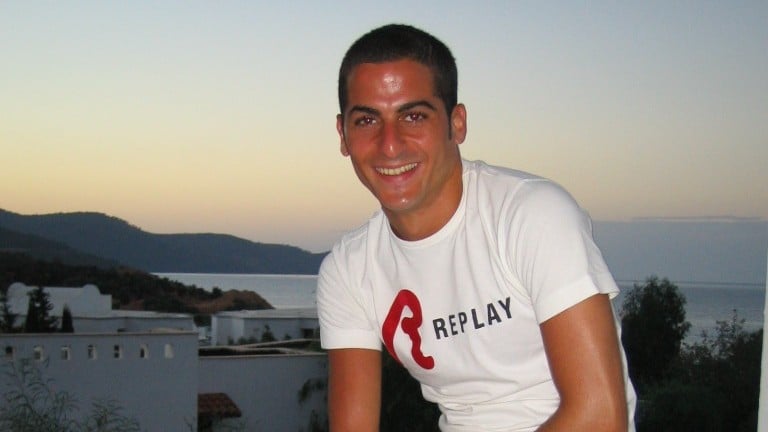
This period of time was emblematic of a deeper crisis that started years ago in France. First, there was the killing of Ilan Halimi, in 2006 [a young Parisian Jewish man who was abducted by a group called the Gang of Barbarians, tortured for three weeks, and left to die, handcuffed near railroad tracks]. Then, Mohammed Merah, a young Muslim fanatic, coldly assassinated three children and a rabbi in a Jewish school in Toulouse in 2012.
This stayed with me. I became obsessed with Ilan Halimi. As French writer Albert Camus once said: “Ecrire, c’est mettre de l’ordre dans ses obsessions.” (“Writing is putting one’s obsessions in order”). That’s precisely what I tried to do in my novel.
In this book, do you encourage French Jews to make aliyah? Are you thinking about moving?
Everyone should be making this decision for oneself. I cannot tell people what to do with their lives. We all have different ideals and aspirations for the future. Leaving a country is not a random decision.
I’m definitely thinking about moving to Israel. The question is no longer “if” I want to make aliyah, but “when.”
‘My book echoes the question that any French Jew who saw last summer’s anti-Semitic rallies has asked himself at least once: “Should I stay or leave?”’
When I was younger, I lived in the United States and in Israel for a couple of years, and I loved it. But making aliyah is much different. My book echoes the question that any French Jew who saw last summer’s anti-Semitic rallies has asked himself at least once: “Should I stay or leave?”
For French Jews, moving to Israel is reassuring and heartbreaking at the same time. Leaving the country where you were born and raised is a significant step. It can also make you feel bitter and uprooted.
I always wondered what it was like for my parents to leave Morocco in the 1960s and to start a new life in France. Apparently, to them, it was much different. They had a deep admiration for France and felt like they were already in exile, when they lived in Morocco. Circumstances have considerably changed for us.
You also wrote about the Republican marches that gathered millions of people in the streets of France, on January 11. The French media said that the Paris rally gathered more people than the liberation of Paris at the end of World War II. Did this day make you feel better about the situation?
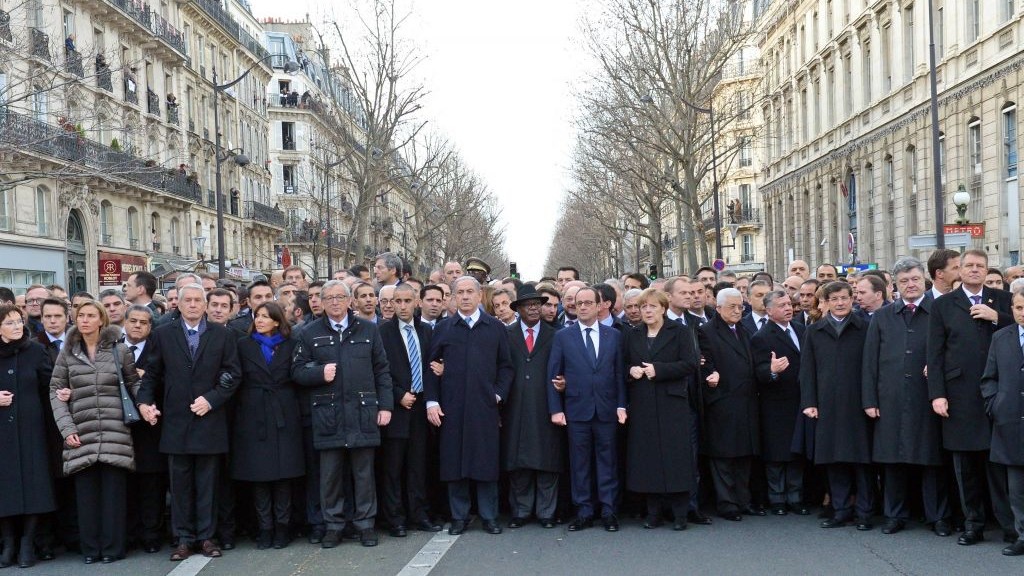
I’m quite divided about this rally. It was a wonderful thing to see. But at the same time, it was a big, tight slap in the face for the French Jewish community. I couldn’t help but ask myself, “Would all these people have gone out on the streets if only Jews had been killed in January?” Unfortunately, I don’t think so.
‘Aren’t Jews considered “real” French people?’
In a way, does it suggest that killing Jews is not as revolting and scandalous as killing Charlie Hebdo cartoonists? Aren’t Jews considered “real” French people? The answers to these questions tend to depress me and to make me sad.
Where were all these people demonstrating on the streets when Ilan Halimi was brutally murdered for being a Jew? Where were they when school kids and their father were the victims of Islamist terror in a Toulouse school? This is the kind of questions that keeps me up at night sometimes.








The Times of Israel Community.