

Eisenkot urges Gantz to resign, as polls show his party failing to enter Knesset
Blasting Blue and White leader’s attempt to join Netanyahu’s coalition, his former partner says PM to blame for lack of hostage deal, not far-right parties
 Add ToI as a Preferred Source on Google
Sam Sokol is a former political correspondent at The Times of Israel. He was previously a reporter for the Jerusalem Post, Jewish Telegraphic Agency and Haaretz. He is the author of "Putin’s Hybrid War and the Jews"
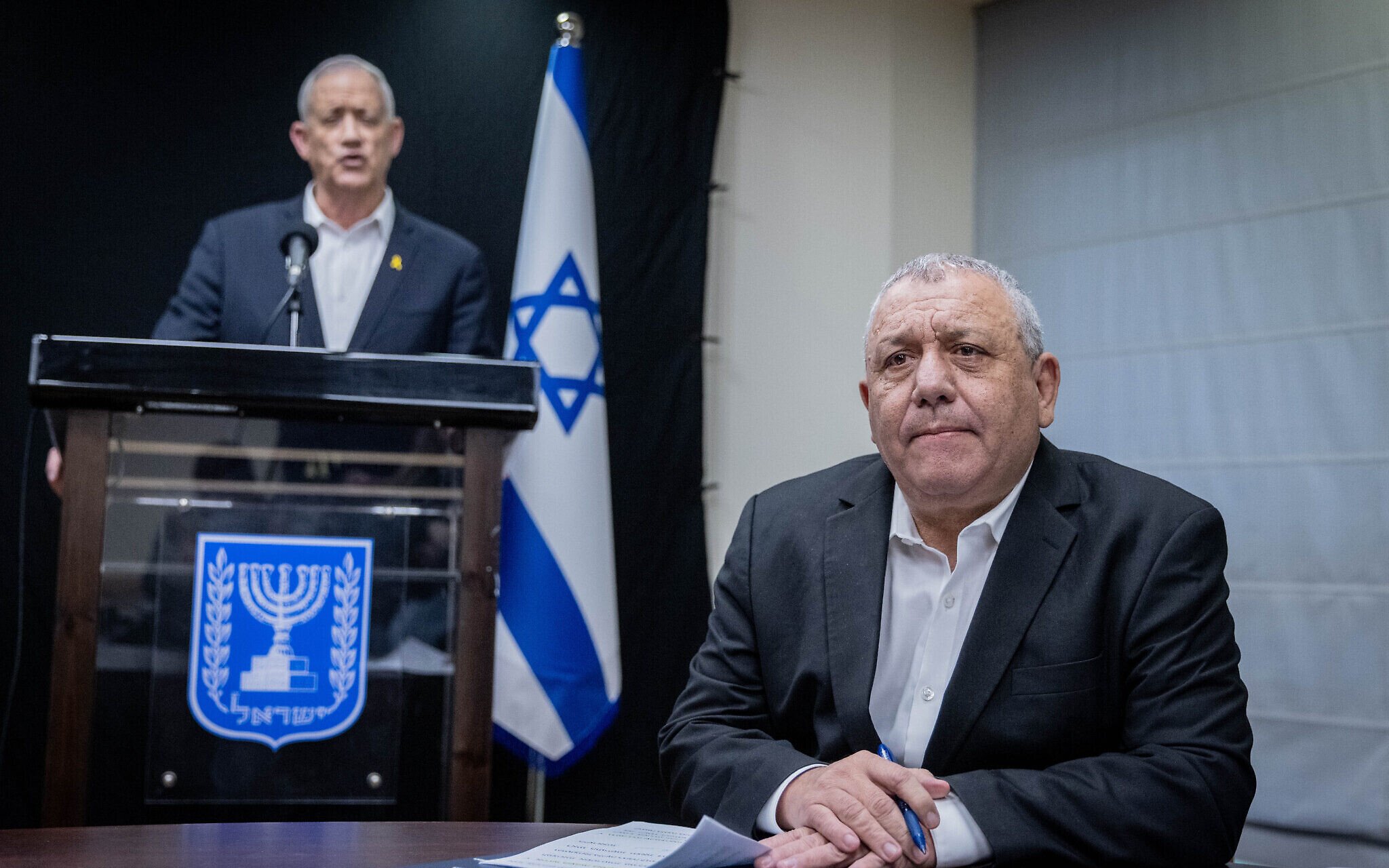
With Blue and White-National Unity hovering around the electoral threshold and at risk of failing to return to the Knesset after the next election, party chairman Benny Gantz should consider stepping down, former party number two Gadi Eisenkot declared on Thursday.
The next national election must be held by October 27 next year. Recent polling has shown Blue and White-National Unity hovering around the 3.25 percent threshold, with a survey this week showing the center-right opposition party receiving only four seats if elections were held today.
“If Gantz is around the threshold, he needs to resign,” the former MK told Army Radio.
He also said that Prime Minister Benjamin Netanyahu is to blame for the lack of hostage deal, rather than the far-right ministers in his cabinet.
Eisenkot, who like Gantz is a former IDF chief of staff, asserted that while current military chief Lt. Gen. Eyal Zamir says the conditions have been met for the hostages’ return, “the prime minister ignores and obstructs. It isn’t [far-right ministers] Ben Gvir and Smotrich, it’s [Netanyahu].”
Israeli leaders on Wednesday dismissed a statement from Hamas declaring its willingness to free all the hostages in exchange for ending the war in Gaza. Zamir has urged the government to accept a ceasefire deal that will see the hostages released.
Eisenkot’s statement blaming Netanyahu was an implicit criticism of Gantz, who recently called on the prime minister and opposition leaders to establish a temporary emergency government tasked with securing the release of all remaining hostages held in Gaza and drafting Haredi young men — a proposal that was met with derision from the coalition and opposition.
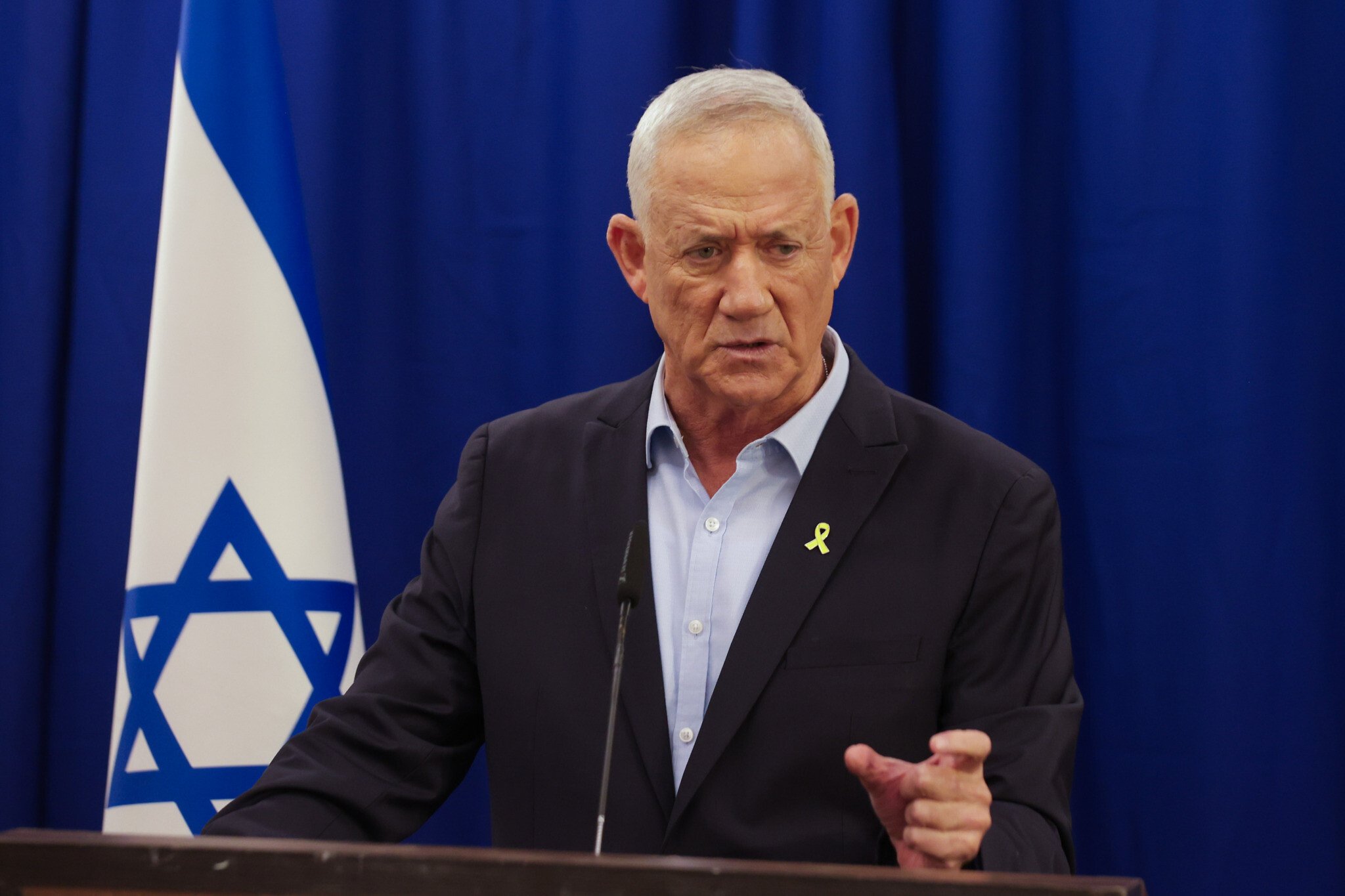
During a press conference in late August, Gantz proposed forming what he termed a “government of hostage redemption and equality in the [military] burden,” with a clear six-month mandate, after which the country would head to elections — moving up the timetable from October 2026.
Making it clear he believed Netanyahu was avoiding a Gaza deal due to political pressure from his far-right allies rather than valid security considerations, Gantz insisting that ditching them was in the national interest.
In a statement responding to Eisenkot’s interview, the Blue and White-National Unity party called it “inconceivable” that Eisenkot “claims Netanyahu is not making a hostage deal because of Ben Gvir and Smotrich — and instead of joining Gantz’s initiative for a time-limited government to bring back the hostages, continues to be preoccupied with polls and strategic consulting.”
The party added, “We suggest that Gadi stop focusing on polls — some of which show him not even passing the electoral threshold — and on elections that unfortunately have not yet been declared, and start dealing with what can be done today for the hostages, for the soldiers, for the country.”
Eisenkot, who had been No. 2 in Blue and White, quit both the faction and Knesset over the summer, stating that while he and Gantz had worked together for many years and respect each other, their differences eventually drove them apart politically.

The departure of Eisenkot, who said that it was necessary “to build a leadership alternative that would bring about victory in the next elections,” from Blue and White was quickly followed by that of MK Matan Kahana, who told The Times of Israel at the time that he would try to broker a political alliance with former prime minister Naftali Bennett.
Following Eisenkot and Kahana’s resignations, the party changed its name from National Unity to Blue and White-National Unity.
Less than a month later, lawmaker Orit Farkash-Hacohen announced her resignation from the party, although the longtime Gantz ally said she would not give up her Knesset seat and will “act in coordination” with the party “so as not to give the coalition another vote.”










The Times of Israel Community.