

Everything is fresh at iconic Jewish Montreal eatery frozen in time
Since 1942, when Hymie Sckolnick opened Beauty’s luncheonette with wife Freda, only the surrounding neighborhood has changed
 Add ToI as a Preferred Source on Google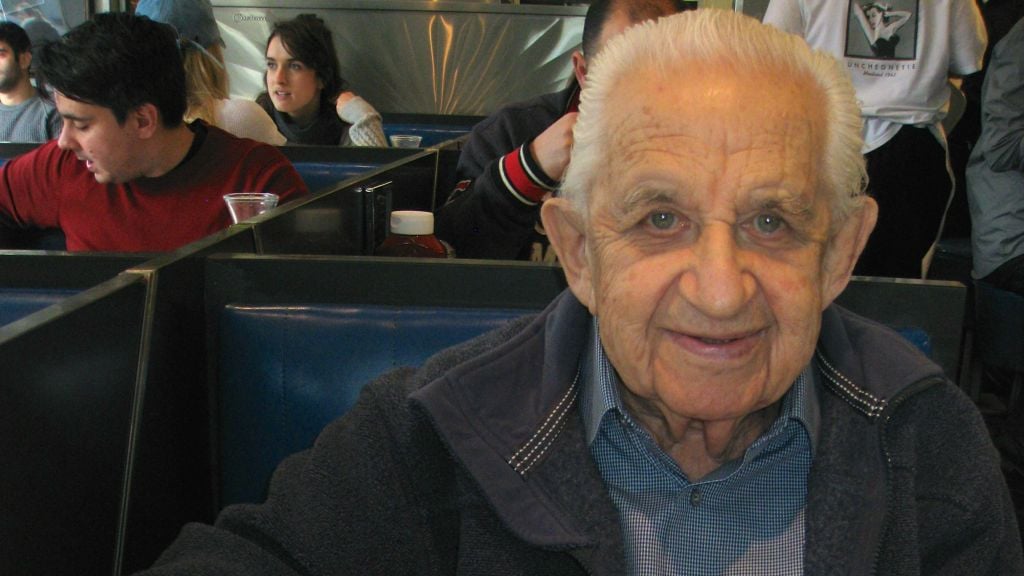
MONTREAL — The ancient Greek philosopher Heraclitus said, “The only constant in life is change.” It seems Heraclitus of Ephesus never met Hymie Sckolnick of Montreal.
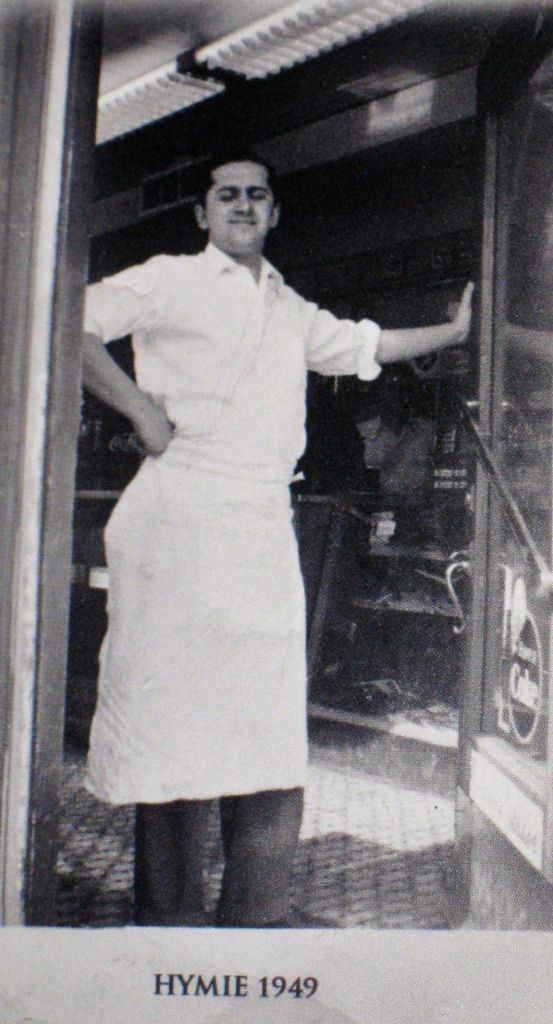
In 1942, Hymie and his fiancée Freda bought a little snack bar in the city’s Plateau borough. Incredibly, 74 years later, in the same spot, Hymie still greets and seats every customer who enters his Beauty’s luncheonette.
Eager to hear the backstory of this remarkable Montreal mainstay, I sat down with 95-year-old Hymie in a Beauty’s booth on a recent autumn day. The chill in the outside air was in sharp contrast to the heimische warmth inside the restaurant, provided by Hymie and his granddaughter Julie, as well as the plates of steaming, fragrant comfort food passing us in the aisle.
Hymie, born in August 1921, sipped a cup of hot tea while speaking of his family and the Jewish surroundings in which he was raised.
“My parents immigrated here from Russia in 1915. By the 1930s, Montreal had about 150,000 Jewish people. Nice community. But in those days, it was a little tough for Jewish people, because there was a lot of anti-Semitism. The French would call us ‘Maudit Juif,’ goddamn Jew,” Hymie said.
At age 11, Hymie began working in a local snack bar.
“I sold Coca-Cola to people in the restaurants and the manufacturing buildings, and over the years, I saved up a little bit of money. I met Freda in 1937. Her parents were also immigrants. And in 1942, I bought the Bancroft snack bar for $500. I put $200 down. We got married the next year,” he said.
At the corner of St. Urbain and Mont Royal streets, the store was in the middle of what Hymie called “the Jewish ghetto.”
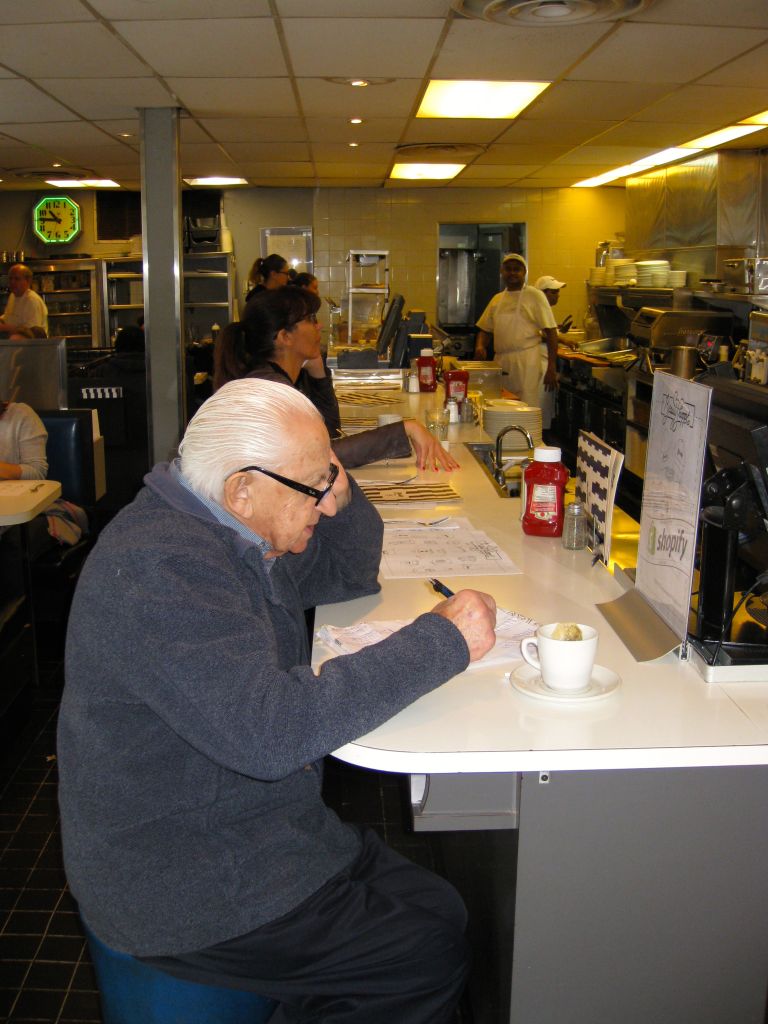
“It was 100% Jewish here. Everyone worked in the needle trade, the shmatta business. Montreal had 80,000 people in that business then. Now it’s finished,” he said wistfully. “We had a Jewish library not far from here. We sold chips and candy and toffee apples, for a nickel each. Nobody had the money during World War II to eat in restaurants. And it was before television, so everyone played pinball machines here. We used to make good money from that.”
At some point, the snack bar became a restaurant, and the Bancroft name gave way to Hymie’s nickname “Beauty” from his beloved bowling league.
“I was a good bowler,” he said. “But I can’t now. I’m an old man. I can’t bend. I might break!”
Hymie and Freda, who died seven years ago, began serving sandwiches to the local garment business workers, gradually expanding the business to a full-service luncheonette.
“We put bacon and eggs on the menu,” he recalled with a smile, “but the customers were all Jewish, and nobody bought it in those days. But we sold bagels for two cents apiece. Coffee was a nickel. Cigarettes were 10 for 10 cents. People were poor but happy.”
Over the years, while other nearby diners offered the ubiquitous poutine, Beauty’s began featuring the “Mish-Mash” omelet, an over-the-top mélange of eggs, hot dogs, green peppers, onions and salami. Another consistent big seller has been a wood oven-baked sesame seed bagel from the legendary St-Viateur shop, with excellent lox and a shmear of fluffy, homemade cream cheese, finished with tomato and onion.
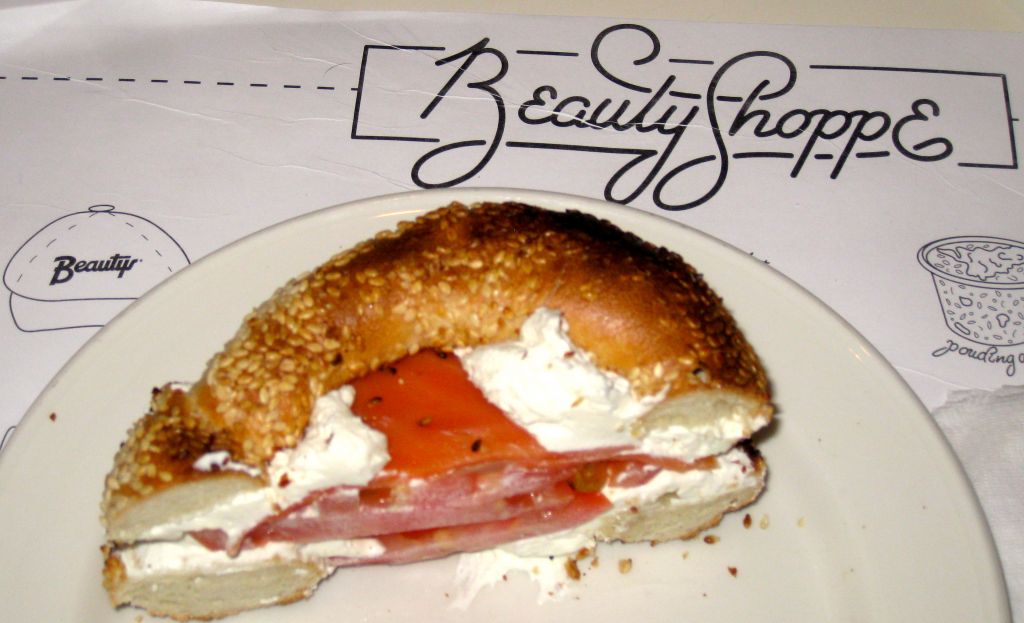
While never kosher, traditional Jewish-style specialties co-exist peacefully at Beauty’s with non-kosher items. The chopped liver sandwich with onions shares menu space with grilled cheese and bacon, and blintzes are not far from the BLT.
As Beauty’s attained legendary status, show business legends began to put in appearances, now immortalized with photos on the luncheonette’s walls.
“Tony Bennett was here,” said Hymie, “and Frank Sinatra, Jerry Lewis, Jack Lemmon, Dustin Hoffman, and Dean Martin many times. They ordered the Mish-Mash. We always treated them low-key, like every other customer. Never bothered them.”
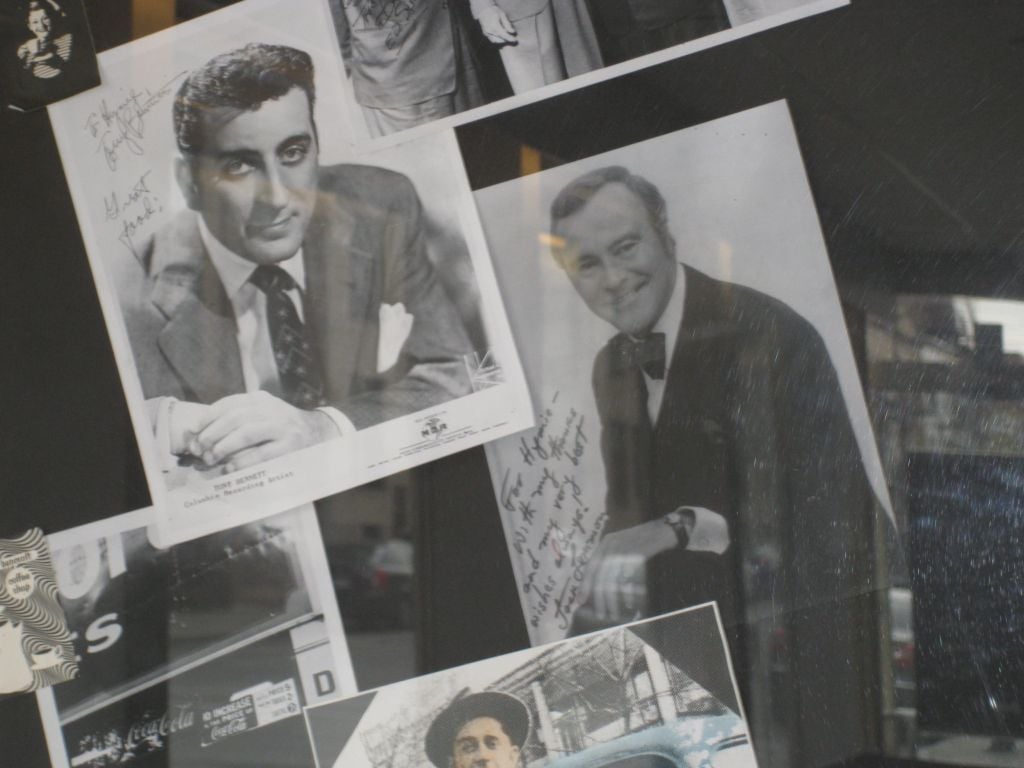
Howie Mandel is a Beauty’s fan these days.
Hymie and Freda had one son, Larry, three grandchildren, and five great-grandchildren. While Hymie sits on the first stool at the counter, welcoming customers, Larry runs the place, along with his daughter Julie, “the middle granddaughter.”
Julie, 43, worked there part-time as a teenager, and over the years, increased her involvement.
The neighborhood, Mile End, is no longer a Jewish ghetto, and only about 20% of the current clientele is Jewish.
“We have so many French people come in,” said Julie, “and they ask for ‘shallah,’ which is how they pronounce ‘challah.’ They love it, and then they learn how to say it!”
Although she’s an eyewitness to the growth of the business, it still surprises her.
“It’s surreal, unbelievable,” she said. “Sometimes I look around on the weekends, it’s so packed with tourists, it’s crazy. And my grandfather built all this. He works so hard. He’s been a real model to all of us, my sister and brother. His great-grandchildren are in awe of him. They know they’re always welcome here, and other than a Friday night dinner or family event, this is where they come to see him.”
After nearly three-quarters of a century, Hymie still boasts about his restaurant’s food.
“Everything is good here. Everything is fresh; nothing frozen,” he said with perceptible pride. “That’s why we have a good reputation.”
Could he have imagined in 1942 that he’d still be in business in 2016?
“Never. I would never believe it. We’re the last of the old-time diners. You don’t see this no more,” he said.
But it’s more than the fantastic French toast, the sensational smoothies, and the memorable mac ‘n cheese.
As Julie explained, “People walk in here and they say it’s a feeling. A comfortable, homey good feeling, with comfortable food.”
And, of course, one key ingredient that nobody else has: Hymie Sckolnick.










The Times of Israel Community.