

Flournoy said to reject US defense secretary job
Leading candidate to succeed Chuck Hagel reportedly concerned White House interference would impede her work
 Add ToI as a Preferred Source on Google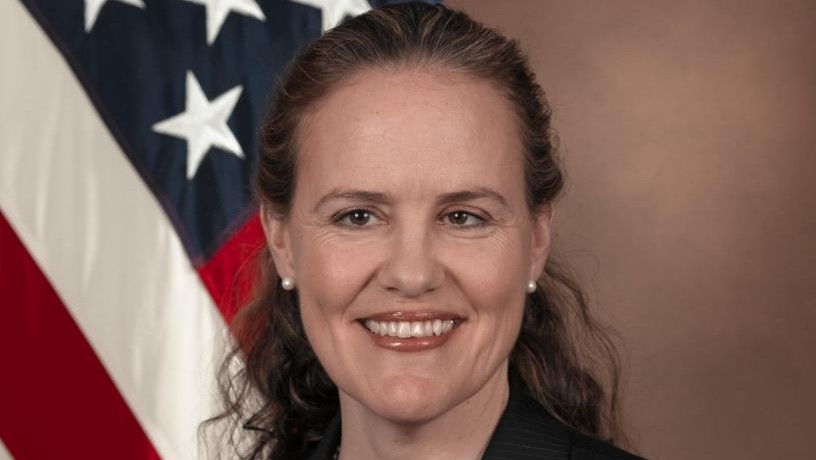
WASHINGTON — Michele Flournoy, a top contender to replace Defense Secretary Chuck Hagel, has taken herself out of consideration for the Pentagon’s top job, people familiar with the process said Tuesday.
Flournoy’s decision underscores the difficulty US President Barack Obama may face in finding a candidate to take the helm at the Pentagon late in his second term and as the administration faces intense criticism of its management of crises in the Middle East and elsewhere in the world.
Administration officials quickly touted Flournoy as a leading candidate for Pentagon chief following Hagel’s forced resignation Monday. Flournoy would have been the first woman to become defense secretary.
However, a person close to Flournoy said she had concerns about the job, including whether she would be given more latitude than Hagel in policy making. Pentagon officials have long griped about White House micromanagement, and Hagel was largely seen as someone who would acquiesce to the West Wing.
Flournoy served as a top Pentagon official during Obama’s first term and then returned to the Center for a New American Security, the think tank she co-founded. She sent a letter to the think tank’s board Tuesday saying she had asked the president to take her out of consideration for the Pentagon job, citing family issues.
The people familiar with the process insisted on anonymity because they were not authorized to discuss the matter by name. Flournoy’s decision was first reported by Foreign Policy magazine.
Other contenders include Ashton Carter, until last year the Pentagon’s No. 2-ranked official, and Robert Work, Hagel’s current deputy.
Sen. Jack Reed isn’t interested in the job, a spokesman said Monday. Obama had mentioned Reed on Monday as he recounted a 2008 trip to Afghanistan with the Rhode Island Democrat and Hagel, then a Republican senator from Nebraska.
At the White House, Obama said Hagel would stay on until the Senate confirms a successor. No timeframe for the transition was given.
Flournoy, among the most senior female officials in Pentagon history, has a long history with Obama. After winning the 2008 election, President-elect Obama asked her to co-lead his transition team at the Defense Department. She then kept a relatively low profile as undersecretary of defense for policy, engaged in efforts to end the war in Iraq, reinvigorate the military campaign in Afghanistan and redesign US defense strategy to deal with severe budget cuts.
Always loyal to the president publicly, Flournoy often played the role of principled objector in closed-doors meetings, differing on matters such as the size and scope of the Afghan surge with Vice President Joe Biden and Tom Donilon, Obama’s former national security adviser. Her suggestions were often more muscular in approach than those Obama authorized.
When she left office in December 2011, Flournoy cited strains on her family life after three years in one of the most demanding national security jobs in Washington. She is married and has three children.

At the same time, Flournoy, who is now 53, said she hoped to return to government service one day. And when Defense Secretary Leon Panetta stepped down after Obama’s re-election, she was among those mentioned for the post. Obama opted for Hagel, however. Flournoy would likely have a relatively easy confirmation in the new Republican-led Senate.
Like Hagel, Panetta and Gates, Flournoy has railed against the military funding cuts known as “sequestration,” urging significant new investments in the armed forces.
In Afghanistan, where she has been credited with helping strengthen the national army, Flournoy has urged a slower withdrawal strategy — a policy Obama appears now to be adopting with his recent authorization of a wider US military role in the country next year.
Just months ago, with a security agreement in doubt, US officials were floating the idea of pulling all US troops out of Afghanistan — as happened in Iraq in 2011.
Before she joined the Obama administration, Flournoy’s think tank cautioned against a policy of “unconditional disengagement” from Iraq and called for a residual force of up to 60,000 US troops to prevent a renewed civil war.
Copyright 2014 The Associated Press







The Times of Israel Community.