

High Court orders recalcitrant justice minister to convene Judicial Selection Committee
In unanimous decision, judges reprimand Levin for claiming no time left for appointments before elections, when he has refused to appoint district court judges for 16 months
 Add ToI as a Preferred Source on Google
Jeremy Sharon is The Times of Israel’s legal affairs and settlements reporter
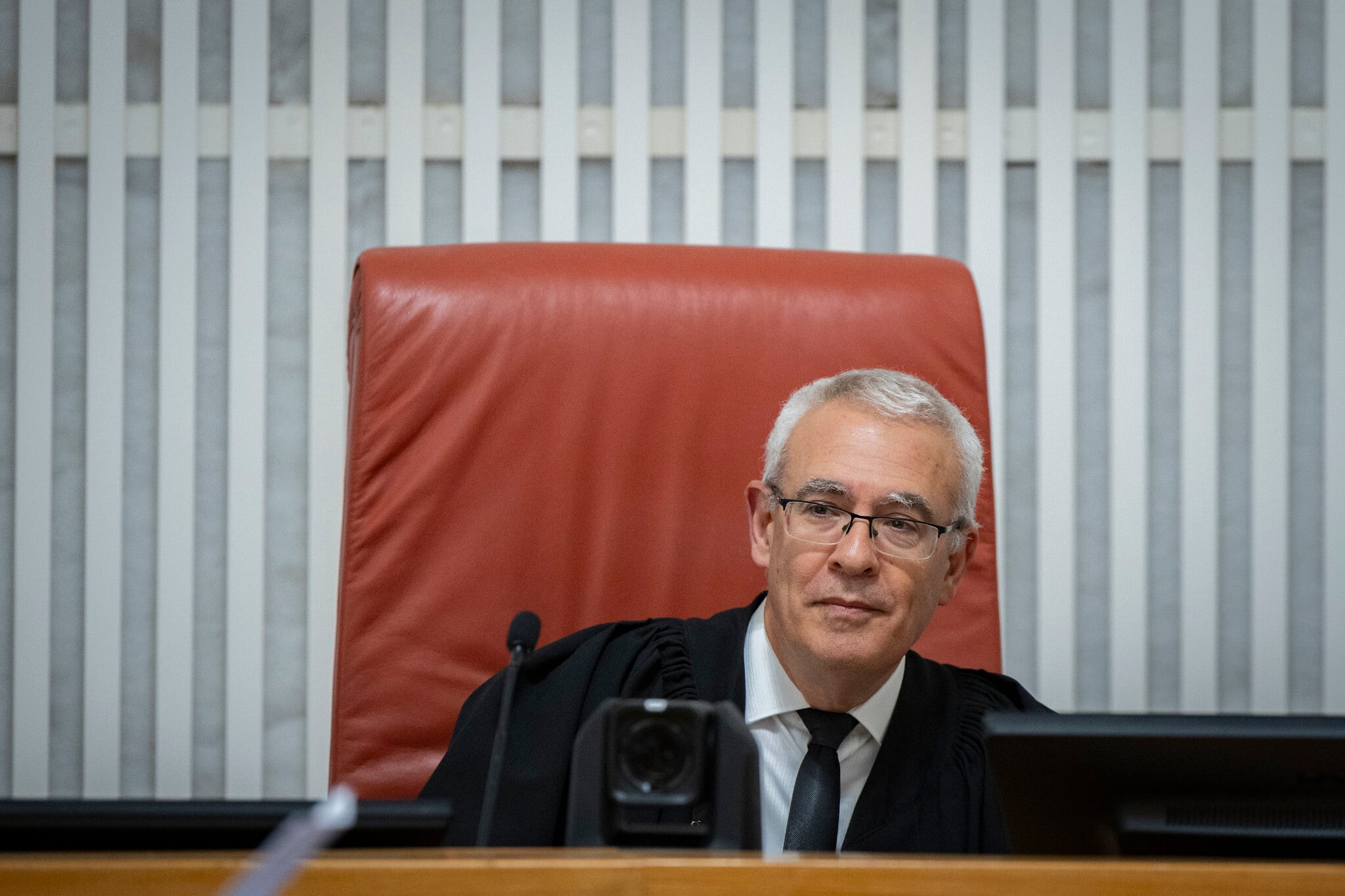
In a setback for Justice Minister Yariv Levin, the High Court of Justice ruled unanimously that he is obligated to convene the Judicial Selection Committee as soon as possible in order to appoint judges to district courts, something he has refused to do since January 2025.
The court ruled that Levin’s demand that there must be full consensus on the committee to make appointments undermined the stipulations of the judicial appointments law, which allows for appointments by majority.
The court also upbraided Levin for arguing recently that there is no longer enough time to select judges before the Knesset is dissolved — when judicial appointments become more problematic — pointing out that the justice minister himself caused the problem since he refused to convene the committee for the last 16 months.
Levin’s refusal to make appointments led to an acute lack of judges on numerous magistrate and district courts around the country, with some district courts particularly badly affected, harming the courts’ ability to advance the legal process in key cases, including in matters affecting public safety.
The court stated specifically in its ruling that priority should be given to the Beersheba and Haifa district courts, which are short five judges and three judges, respectively.
It also ordered Levin to publish a list of candidates for the judicial vacancies in the state gazette by June 8, in order to allow for the requisite 45 days’ deliberation on those candidates before a vote in the Judicial Selection Committee can be held, something the court said should happen “as soon as possible.”

The ruling was issued by Justices Ofer Grosskopf, Alex Stein, and Gila Canfy-Steinitz.
Levin called the ruling “an apparently illegal decision,” and accused the judges of creating a constitutional crisis, “which is entirely their responsibility,” seeming to indicate that he will not abide by the ruling.
Because Levin, who, as justice minister, heads the Judicial Selection Committee, has refused to convene the panel and make appointments since January 2025, there are currently 51 vacancies on the country’s various magistrate and district courts, a number that will rise to 67 by the end of the year.
Levin lacks a majority on the Judicial Selection Committee to guarantee his preferred candidates can get appointed to serve as judges on those courts, and has therefore insisted on achieving “broad consensus,” meaning unanimity within the committee, over all appointments before moving ahead with the process.
This approach has seen Levin propose a deal to the six members of the committee who are not from the coalition. When that deal was rejected, he decided to stymie all further appointments.
The fight over judicial appointments comes against the backdrop of Levin’s broader campaign throughout the course of his tenure to diminish the powers of the judiciary and to remove legal checks on executive power, in particular that of the attorney general.
Last March, the coalition passed legislation that greatly politicized the judicial selection process, although it will only take effect after the next election.
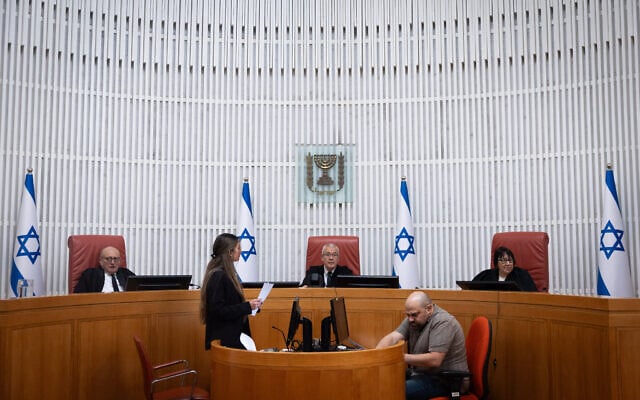
The court noted that Levin’s refusal to convene the committee and make judicial appointments has created a severe dearth of judges on numerous courts around the country, which has harmed the courts’ ability to enforce the law and provide service to the public.
Following pressure from the court, Levin agreed earlier this month to make appointments to magistrate courts, but refused to make appointments to district courts, proposing to appoint temporary judges instead.
But the High Court insisted that district court appointments must be made as well, as quickly as possible.
In its ruling, the court noted that its previous ruling ordering Levin to convene the committee to appoint a Supreme Court president was based on the terms of the judicial appointments law that a majority of seven was needed to make an appointment — not a unanimous opinion of the entire committee as Levin was demanding.
The court ruled on Sunday that the same principle applied to lower court appointments.
The court also pointed out its previous determination that, although the justice minister can stall appointments in order to reach consensus on the committee, that justification fails when the court system faces shutdown due to a lack of appointments, something it said was now the case.
“This [consensus] consideration does not justify completely avoiding convening the committee for such a long period, during which the needs of the system have slowly become a cry of breakdown,” the court said.
The court noted that Levin had offered to make appointments to some magistrate courts and to appoint temporary judges to the district courts. But it said that temporary appointments are designed to ease the caseload on fully staffed courts in the short-term — not as a replacement for large numbers of judicial vacancies. It also pointed out that permanent appointments are still possible in the available time period, meaning there is no reason to make temporary appointments.
It also rejected as unacceptable Levin’s assertion that he did not have time for due diligence in reviewing candidates, saying that the urgent need of the courts for more manpower required him to do so.
“The difficulty in the minister’s position is even more acute since the [tight] timetable is the result of his own conduct… in light of the long period of time he had at his disposal to complete the due diligence, during the period in which the Judicial Selection Committee was not convened,” the court reprimanded Levin.
It added that the 45-day period between publishing candidates in the state gazette and convening the committee was sufficient to properly review those candidates.
The court therefore ordered Levin to publish the candidates’ names by June 8, adding that he was then “obligated to convene the committee in order to fill the vacancies in the district courts as soon as possible, bearing in mind the expected date of the elections” at the end of October.
Levin denounced the decision, and said the judges should stand for election to the Knesset if they wanted to decide when to convene the Judicial Selection Committee.
“Three judges have single-handedly created an unprecedented constitutional crisis, and all responsibility lies with them,” he said.
The Movement for Quality Government in Israel, one of the petitioners in the case, warmly welcomed the decision, calling it a “complete victory for the rule of law and a resounding slap in the face to Justice Minister Yariv Levin.”








The Times of Israel Community.