

High Court rules PM was not in contempt by saying he’d involve himself in overhaul
Judges accept attorney general’s position, say PM must not be involved in legislation due to conflict of interest, but reject assertion he was in breach of court order
 Add ToI as a Preferred Source on Google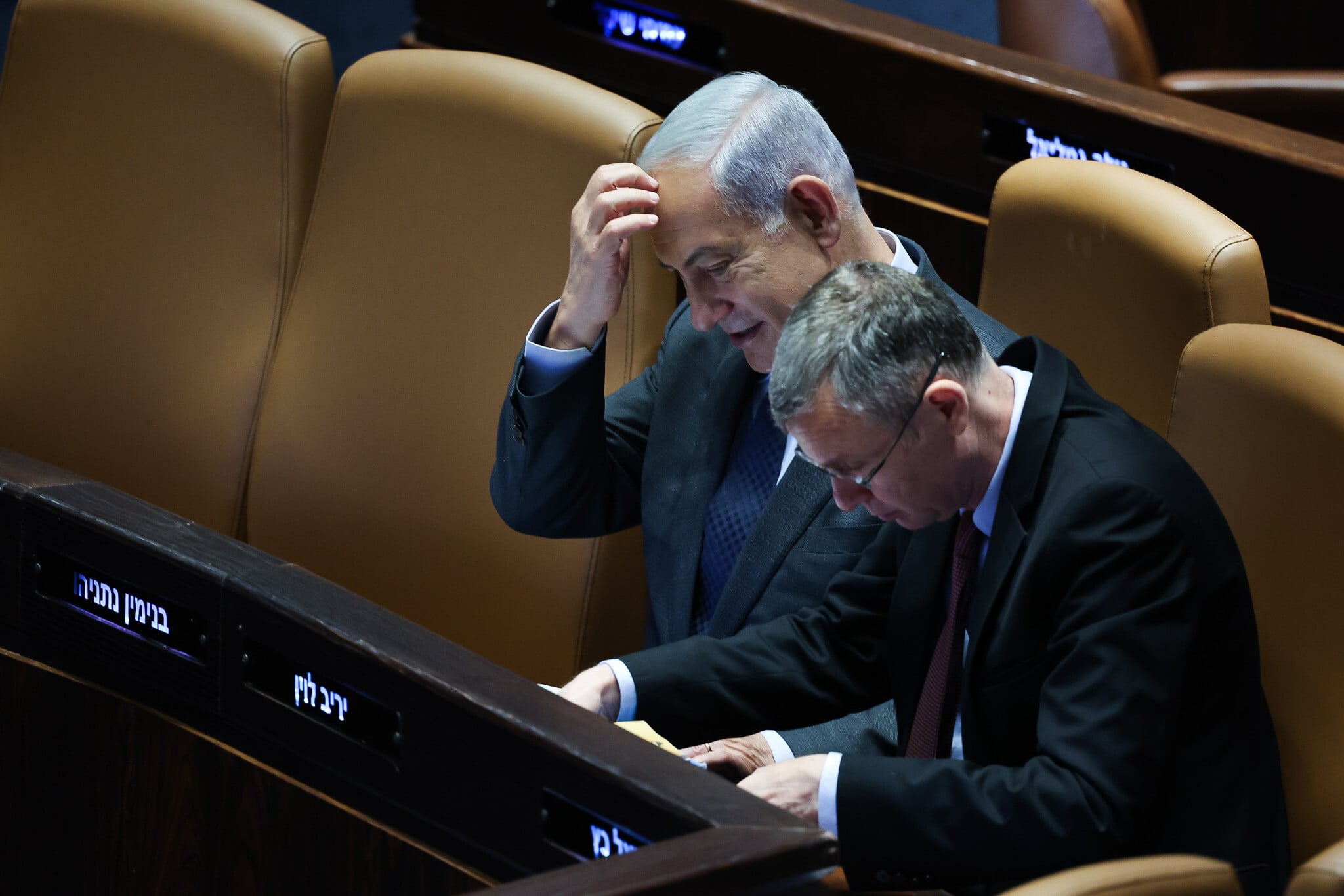
The High Court of Justice ruled Monday that Prime Minister Benjamin Netanyahu was not in contempt of court when he declared in March that he would get involved in legislation to overhaul the judicial system, but ordered him to heed Attorney General Gali Baharav-Miara’s instructions to stay out of the matter.
The ruling comes in response to a petition arguing Netanyahu was violating an arrangement that bars him from involvement in matters that could impact his trial on graft charges. Baharav-Miara has said that the arrangement prohibits Netanyahu from involving himself in his coalition’s efforts to radically alter the judiciary, but that his announcement did not itself put him in contempt of court, as the court had been made aware of the agreement, but had issued no ruling on it.
A panel of three judges, led by Chief Justice Esther Hayut, found that Baharav-Miara was correct in assessing that the prime minister’s actions could not be seen as contempt, despite the assertion of the petition filed by the Movement for a Quality Government watchdog last month.
However, the court noted that even in situations where a contempt of court order does not apply, the attorney general’s instructions must be respected.
In March, Netanyahu announced that he would henceforth ignore the conflict of interest deal and directly involve himself in the unfolding, deeply controversial judicial overhaul legislation.
Many observers doubt that Netanyahu has not been involved in the matter behind the scenes, with the legislation being his government’s central effort in the months since its formation. But his public declaration that he would do so despite the conflict of interest apparently forced the attorney general to intervene.
The next day Baharav-Miara fired off a letter to the prime minister informing him that he had violated the conflict of interest agreement that allows him to govern during his ongoing corruption trial, and called his statements and any further involvement in the judicial overhaul “illegal and tainted by a conflict of interest.”

The 2020 deal forbade Netanyahu from making senior law enforcement and judicial appointments or getting involved in legislative matters that may impact his ongoing trial on corruption charges. Netanyahu’s announcement at the time came hours after the Knesset passed a law designed to shield him from being removed from office for breaking the boundaries of the conflict of interest arrangement.
Netanyahu’s government is trying to pass legislation that will drastically curtail the powers of the judiciary. Since January, there have been mass protests against the plan, which critics say will sap the High Court of its power to act as a check and balance against the Knesset, and dangerously erode Israel’s democratic character. The government and its supporters say the legislation is needed to rein in an overreaching court.
The legislation drive, spearheaded by Justice Minister Yariv Levin, has been paused while negotiations are held between the government and the opposition, in an effort to reach an agreement on the plan.
Netanyahu is on trial in three cases, facing one count of bribery and three counts of fraud and breach of trust. He denies any wrongdoing and accuses police, prosecutors and the media of colluding against him.









The Times of Israel Community.