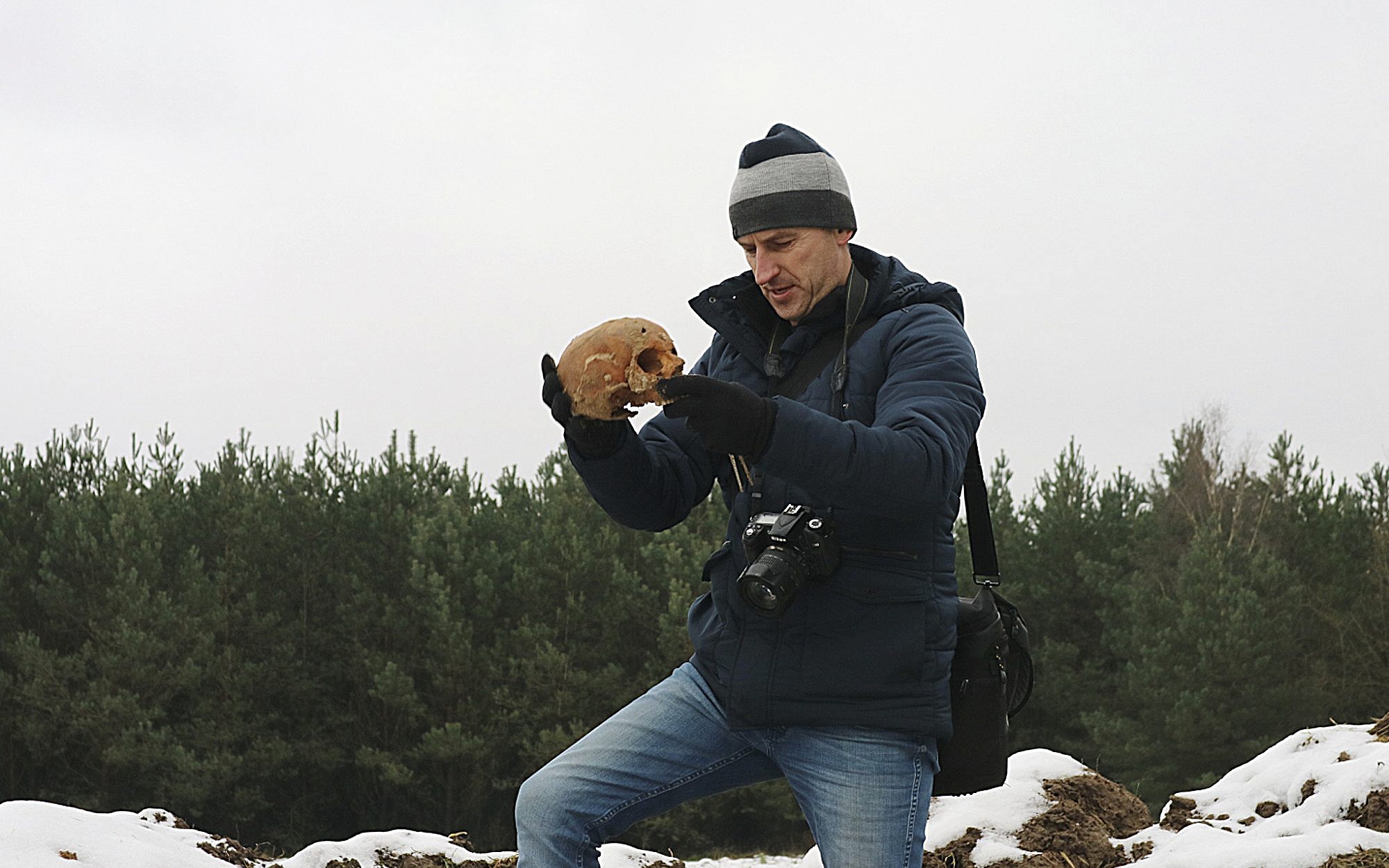
This photo from Dec. 5, 2017, shows an unidentified man holding human remains which had been removed from an old Jewish cemetery and dumped in huge mounds in Siemiatycze, Poland. (Aleksander Schwarz/The Union of Jewish Communities in Poland via AP)
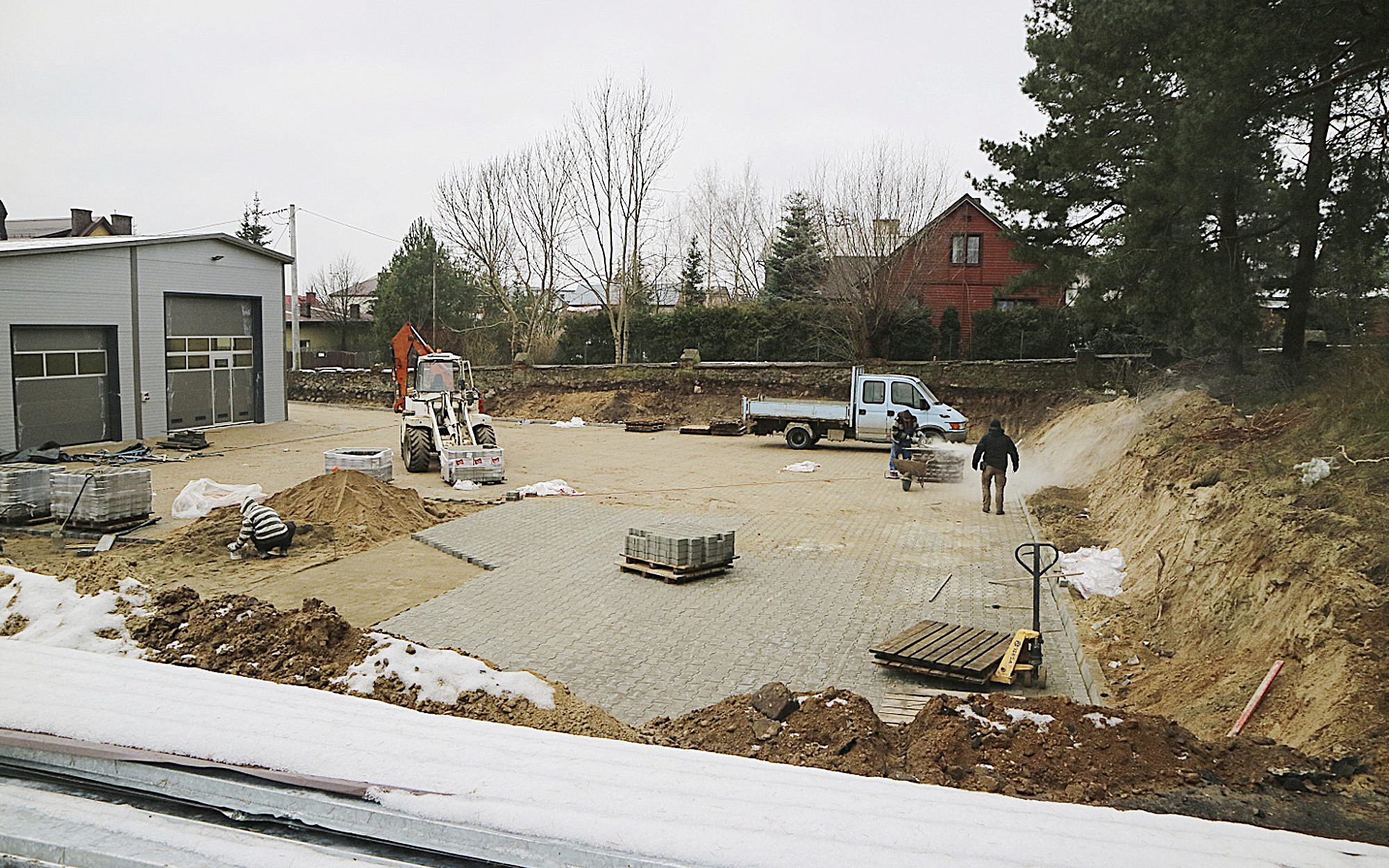
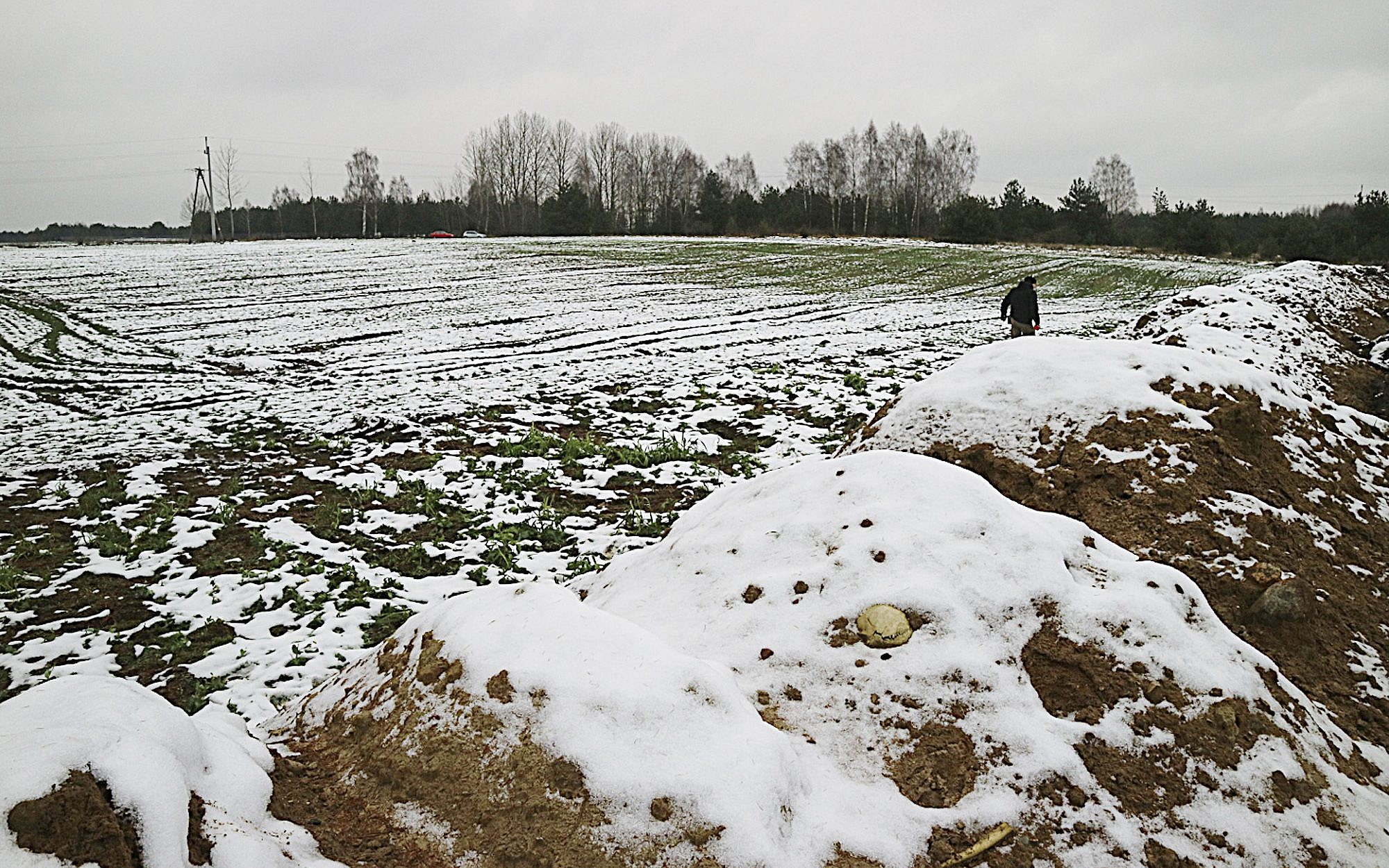
Human remains were dug up Tuesday during construction work near a Jewish cemetery in eastern Poland and dumped unceremoniously in an empty lot to make way for a supermarket, parking lot and an electrical transformer station.
The remains were unearthed during work to modernize the power grid for the city of Siemiatycze. The ground where the remains were uncovered is adjacent to the fence of the Jewish cemetery.
The case is being investigated by the District Prosecutor’s Office in Siemiatycze.
This photo from Dec. 5, 2017, shows the building and parking lot that are being built on the site of an old Jewish cemetery. (Aleksander Schwarz/The Union of Jewish Communities in Poland via AP)
The chief rabbi of Poland, Michael Schudrich, said he believes the incident is “the worst desacralization of the Jewish cemetery” that he has seen since assuming his post 17 years ago.
“There are no words to describe how this is possible today in a free, democratic Poland,” Schudrich said.
Get The Times of Israel's Daily Editionby email and never miss our top stories
The mayor of Siemiatycze, Piotr Siniakowicz, told the Polish Press Agency that the bones should be respected, but that the rabbi had made too strong of an accusation, since the town does take care of the Jewish cemetery.
The ground on which the bones were found is not owned by the city.
This photo from Dec. 5, 2017, how human remains which had been removed from an old Jewish cemetery and dumped in huge mounds in Siemiatycze, Poland. (Aleksander Schwarz/The Union of Jewish Communities in Poland via AP)
Siemiatycze, a town in eastern Poland of some 15,000 people, was about 60 percent Jewish until the Holocaust. Today no Jews live there.
Advertisement
Both representatives of the Jewish community and the local government expressed their desire to cooperate in order to resolve the situation.
The bones were handed over to the rabbinical commission for Jewish cemeteries.
Under Jewish law, human remains should not be disturbed.
Construction has been halted as prosecutors investigate the case.
Animal lovers, this one's for you
In 1935, Rabbi Max Shorenstein left Denmark to pursue his lifelong dream: building a zoo in Tel Aviv and teaching children to love animals. The Tel Aviv Zoo became one of the city’s greatest attractions, but envy, greed, and corruption drove Shorenstein from the paradise he created.
The film 'There Are No Lions in Tel Aviv' is available to screen November 19-26 for members of our reader support group, The Times of Israel Community. Join the Community todayto support our work and watch our DocuNation series of outstanding Israeli documentary films.
We’re really pleased that you’ve read X Times of Israel articles in the past month.
That’s why we started the Times of Israel - to provide discerning readers like you with must-read coverage of Israel and the Jewish world.
So now we have a request. Unlike other news outlets, we haven’t put up a paywall. But as the journalism we do is costly, we invite readers for whom The Times of Israel has become important to help support our work by joining The Times of Israel Community.
For as little as $6 a month you can help support our quality journalism while enjoying The Times of Israel AD-FREE, as well as accessing exclusive content available only to Times of Israel Community members.
Thank you, David Horovitz, Founding Editor of The Times of Israel


 Add ToI as a Preferred Source on Google