

In Dutch university cities, nonviolent street protests present a sticky situation
From Amsterdam to Rotterdam, anti-Israel stickers festoon Dutch urban centers and university campuses while, observers say, few pro-Israel stickers remain un-defaced for long
 Add ToI as a Preferred Source on Google
Reporter at The Times of Israel
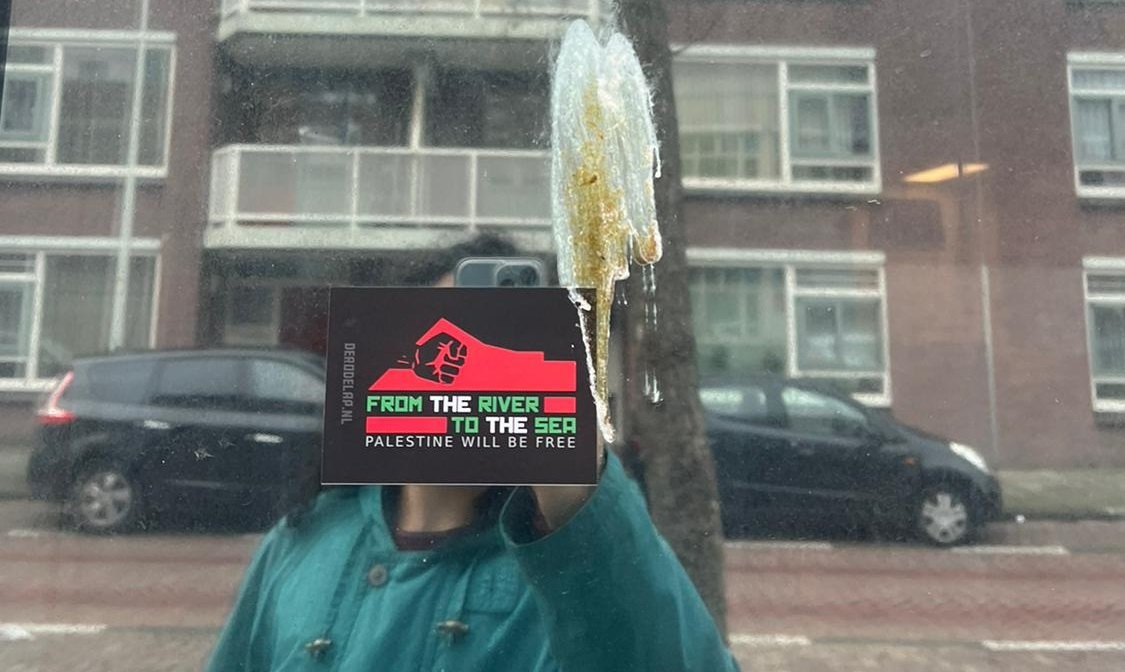
AMSTERDAM — Since October, Dutch universities have seen their share of protests against Israel’s war with the Hamas terror group. However, nothing in the Netherlands yet resembles the spate of arrests made by police across two dozen United States campuses at the end of April. For the Dutch, police arrests at protests are typically tied to climate change, not Mideast wars.
That doesn’t mean things can’t still get sticky on campuses when it comes to the ongoing war in Gaza.
With several Dutch cities hosting thousands of international students, the presence of anti-Israel political stickers is particularly intense on college campuses, political science student Ethan Gabriel Bergman told The Times of Israel. The pro-Israel activist studies at Leiden University and regularly spends time in Amsterdam, Rotterdam, and The Hague.
“You don’t need to walk anywhere on a campus to see anti-Israel stickers,” said Bergman. “They are all over poles on the street, electrical boxes, really anything they can be stuck to,” he said.
Since the Hamas massacres of October 7, a call to action has circulated among student bodies at Dutch universities, he said: “Raise awareness about Palestine, no matter the circumstance.” And while most Dutch universities require permission for students to hand out or post flyers, making use of stickers bypasses asking university administrators for permission — and is more eco-friendly.
“This slogan about raising awareness whenever possible is why Palestinian stickers can be found on laptops and metros and storefronts and benches,” said Bergman.
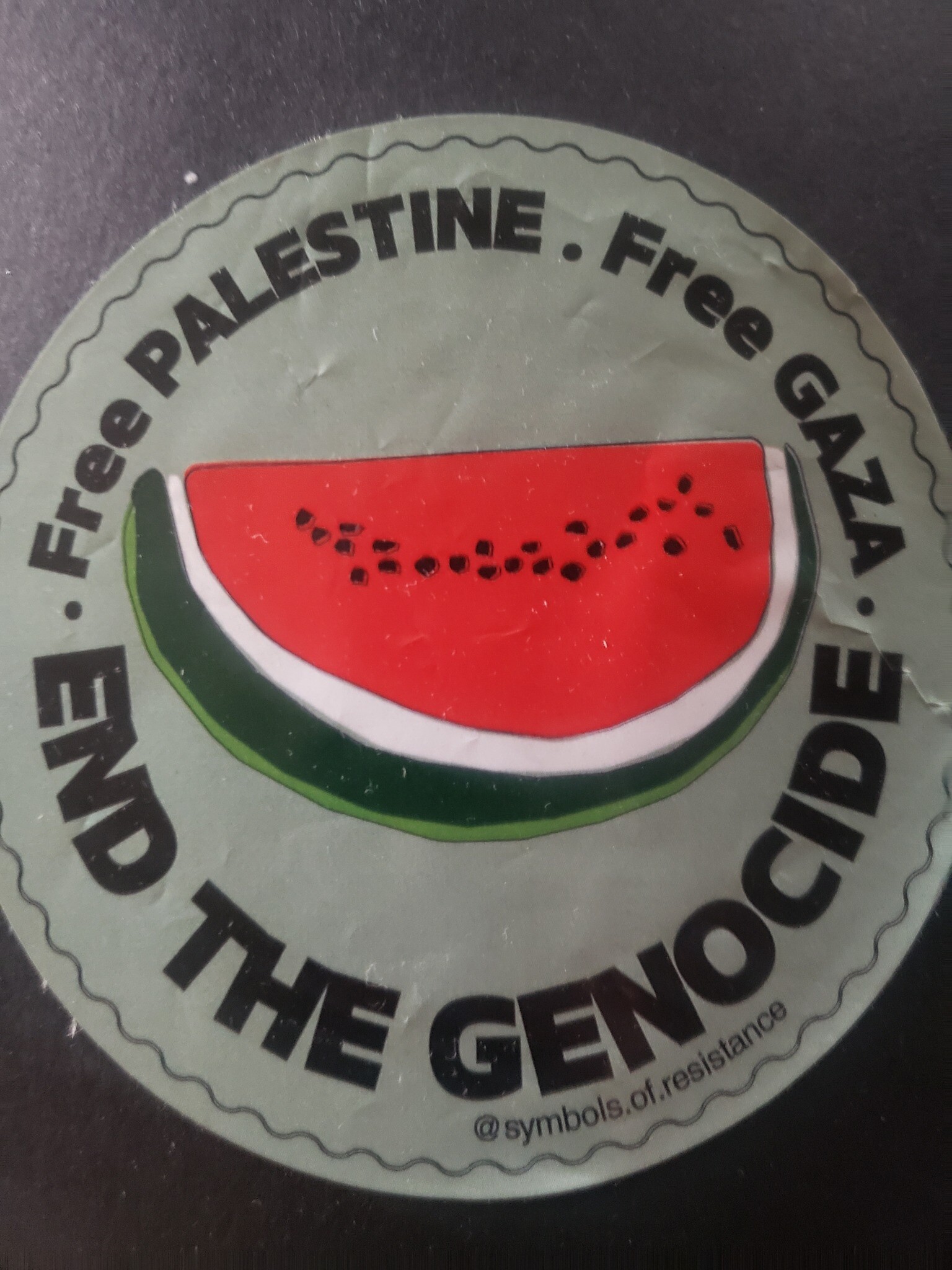
Since the war sparked by the October 7 Hamas onslaught on southern Israel, in which terrorists killed 1,200 people and took 253 hostage, cities around the world have become canvases for public opinion regarding the conflict.
In Amsterdam, a proliferation of stickers against Israel drown out the few pro-Israel stickers that have not been defaced or removed, said Bergman. Additionally, he said, pro-Palestinian stickers are much larger and more sophisticated compared to those seen during past Israel-Gaza conflicts.
“The typical slogans of the pro-Palestinian camps have evolved to become catchier and the images have become more explicit. Unfortunately, this also means the tendency to dehumanize and delegitimize Israel and the Jewish character has been overtly present,” said Bergman.
When a watermelon is no longer merely a fruit
The watermelon as a Palestinian symbol of resistance was the most common Israel-Gaza sticker in the old center of Amsterdam. The symbol was adopted because the colors of a watermelon are the same as the Palestinian flag. (On the internet, pro-Palestinian activists have used watermelons to avoid online censorship and shadow banning, reported NPR.)
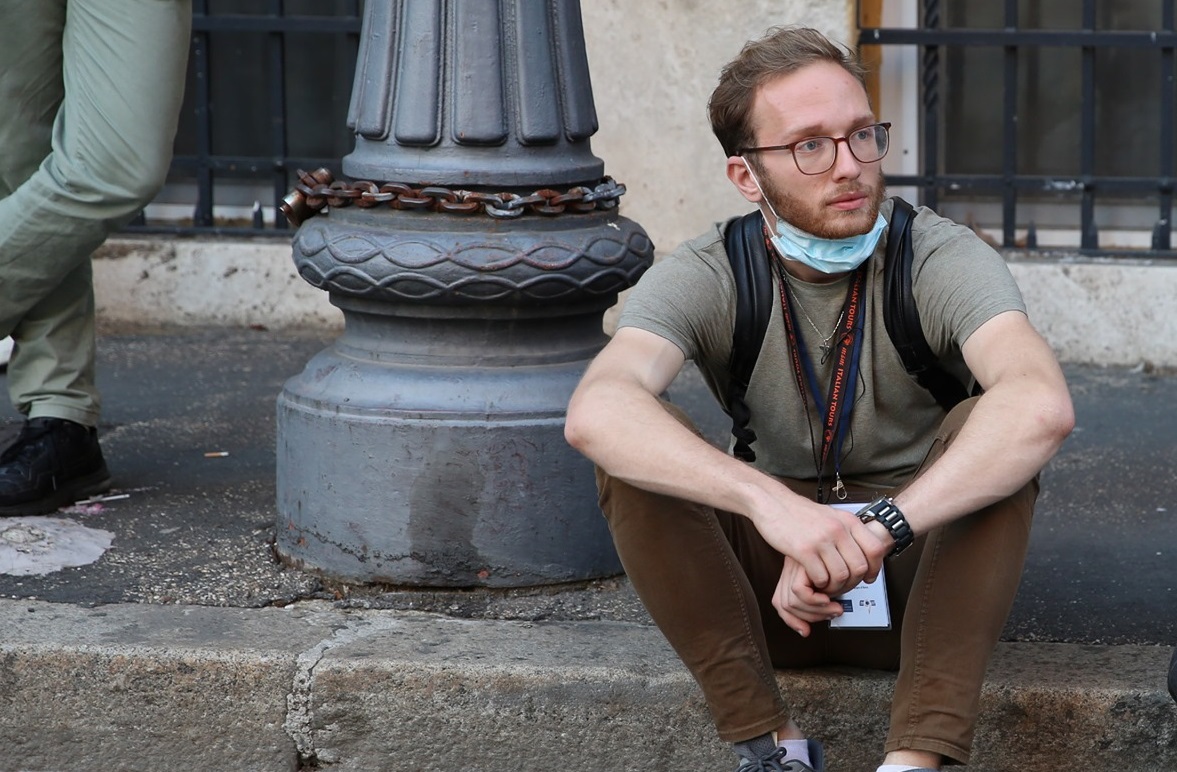
The watermelon might look cartoonish, but it is accompanied by the unsubstantiated allegation, “End the Genocide.”
By the nature of their transient appearance on city streets, stickers are difficult to quantify. However, the shopping website Etsy reports more than 17,000 people bought a roll of heart-shaped Palestinian flag stickers in recent months. The website’s most popular pro-Israel sticker, by way of contrast, is an Israeli flag sticker purchased by 3,600 people.
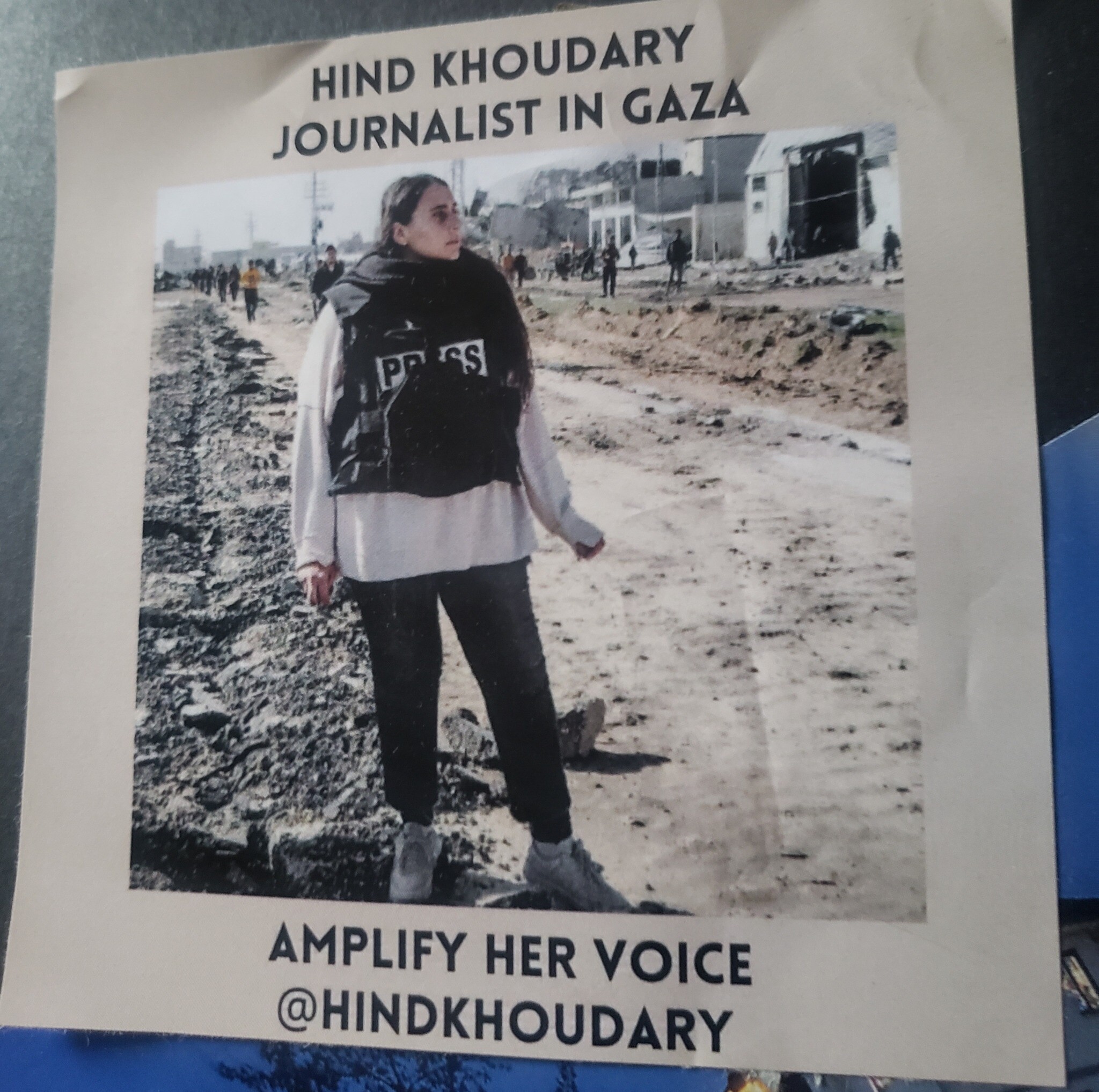
Several journalists who the IDF allegedly killed in Gaza are remembered in a series of stickers plastered throughout Amsterdam with their photographs and the words, “Amplify his or her voice.”
Other anti-Israel stickers seen in Amsterdam resemble infographics and can be larger than a cellphone. An example is a side-by-side comparison that equates the October 7 atrocities with the “Deir Yassin Massacre” during Israel’s War of Independence.
The heart of anti-Israel stickering in “Mokum” — Amsterdam’s widely used Yiddish nickname — is Dam Square. Anti-Israel protests have been held there for decades in front of the Royal Palace and World War II memorial. The streets converging in the square are likewise home to a concentrated number of anti-Israel stickers.
This reporter did not observe anti-Israel or pro-Palestinian stickers in proximity to the city’s Jewish monuments and museums, including the Jewish Cultural Quarter and the Anne Frank House. None of these sites are within the city’s old urban core, of which the heavily plastered Dam Square and Red Light District are the heart.
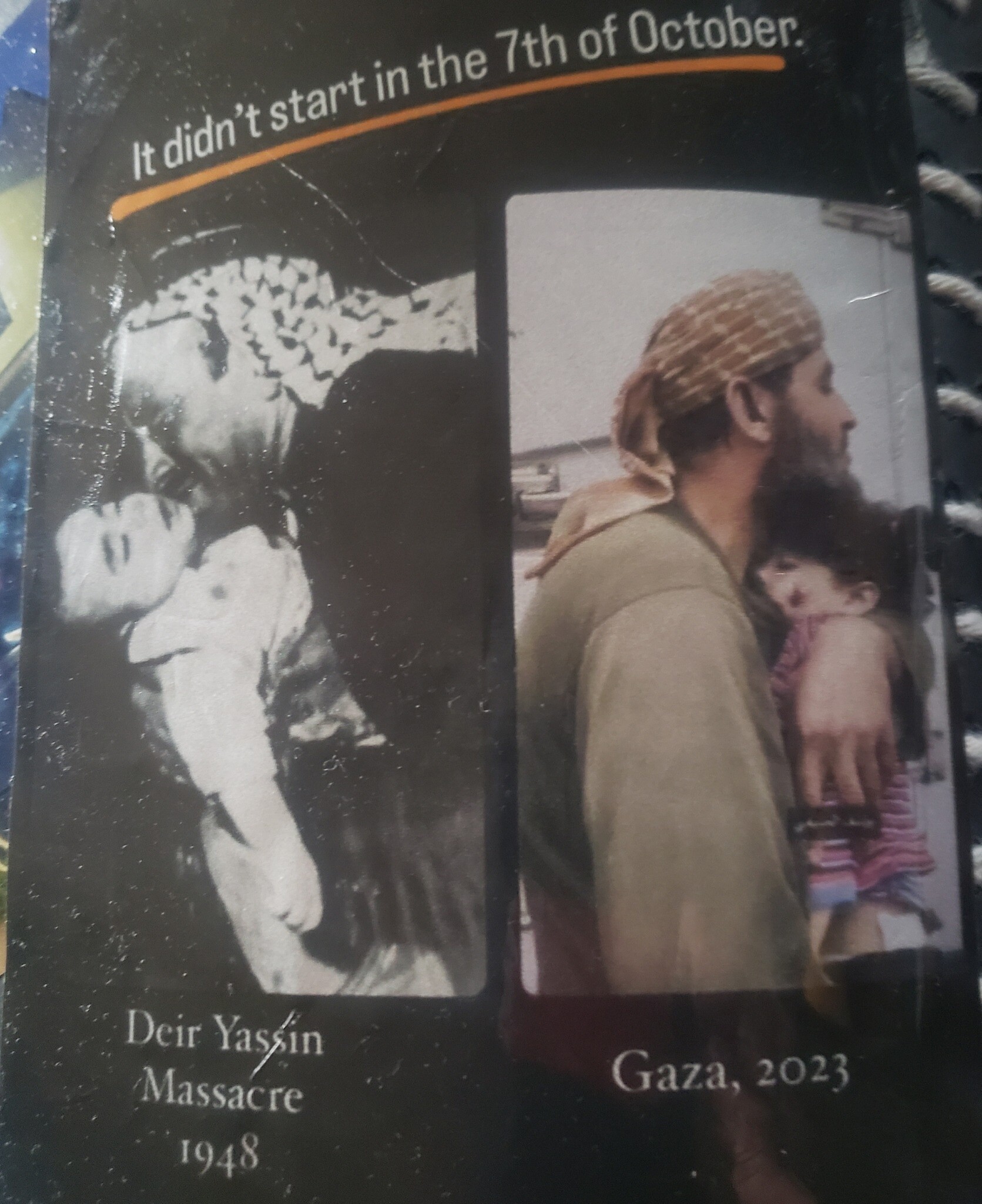
However, other Amsterdam neighborhoods — including de Pijp — were observed to have numerous pro-Palestinian and anti-Israel stickers, some of them put up by storefront owners in Europe’s largest street market, Albert Cuypmarkt.
‘Hurting both the Israelis and Palestinians’
Throughout the Netherlands, the political party DENK — which caters to the country’s Turkish minority — stepped up anti-Israel stickering and flyering in tandem with campaigning for power, said Bergman.
In Leiden, where Bergman studies, DENK activists pinned hundreds of postcard-sized flyers with the party logo reworked to include the Palestinian flag. The DENK website includes several photos of party head Stephan van Baarle standing alongside Palestinian flags.
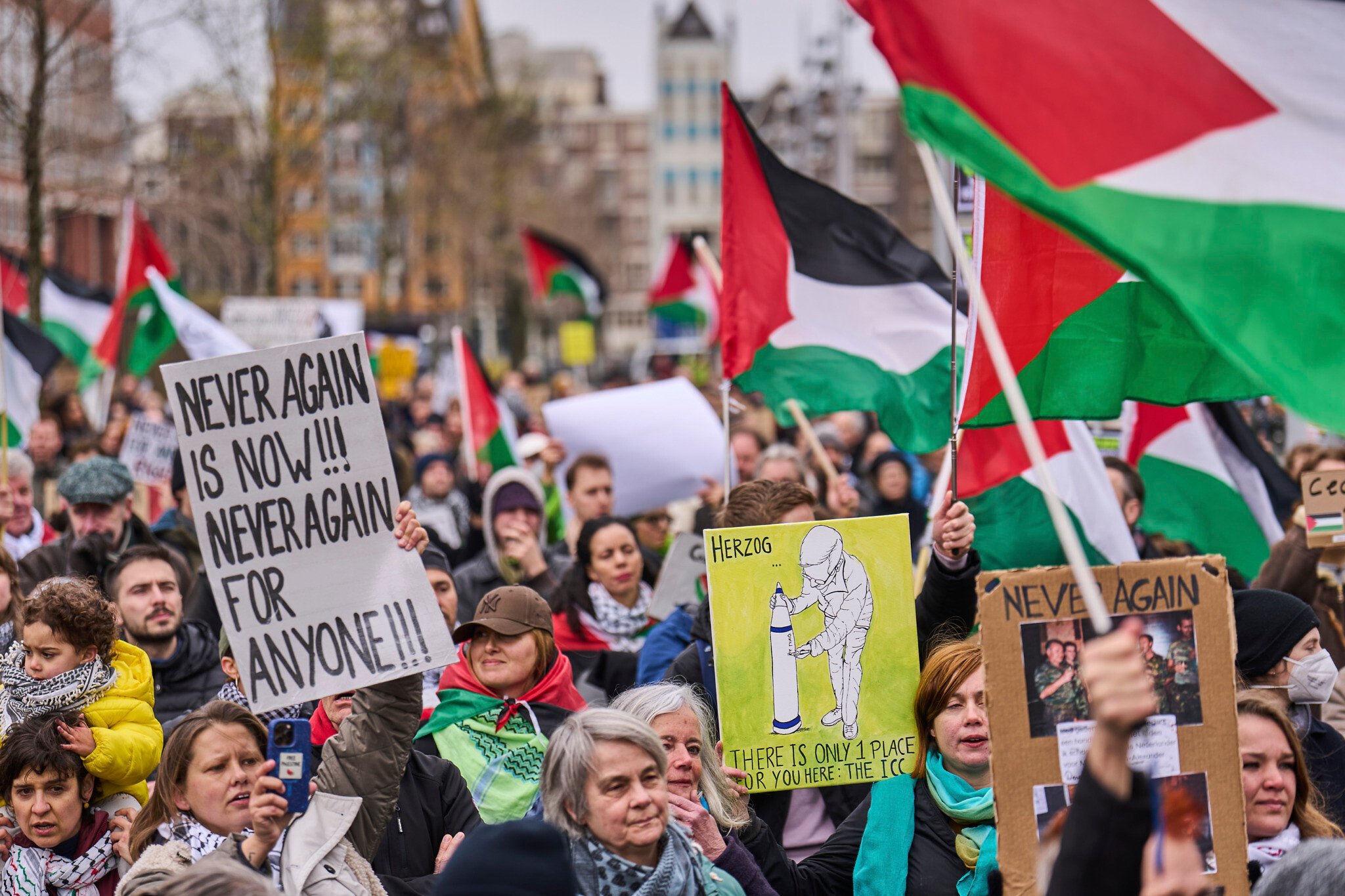
In early March, the opening of the Dutch National Holocaust Museum saw thousands of pro-Palestinian rioters descend into Amsterdam’s Jewish Cultural Quarter.
The rally was organized by the Dutch Jewish anti-Zionist organization Erev Rav, alongside Dutch Palestinian activists and Socialist International. Dozens of activists held mocked-up street signs to redirect Israeli President Isaac Herzog’s motorcade to The Hague, home to the International Criminal Court. The signs followed Herzog’s motorcade throughout his visit.
As with any anti-Israel rally held in Dam Square, after the activists vacated the area, a trail of pro-Palestinian stickers was left in their wake, said Bergman.








The Times of Israel Community.