

In Gaza, Syrians try to rebuild lives in ruins
Most of the few hundred illegal immigrants in refugee camps find life under Hamas rule ‘very hard’
 Add ToI as a Preferred Source on Google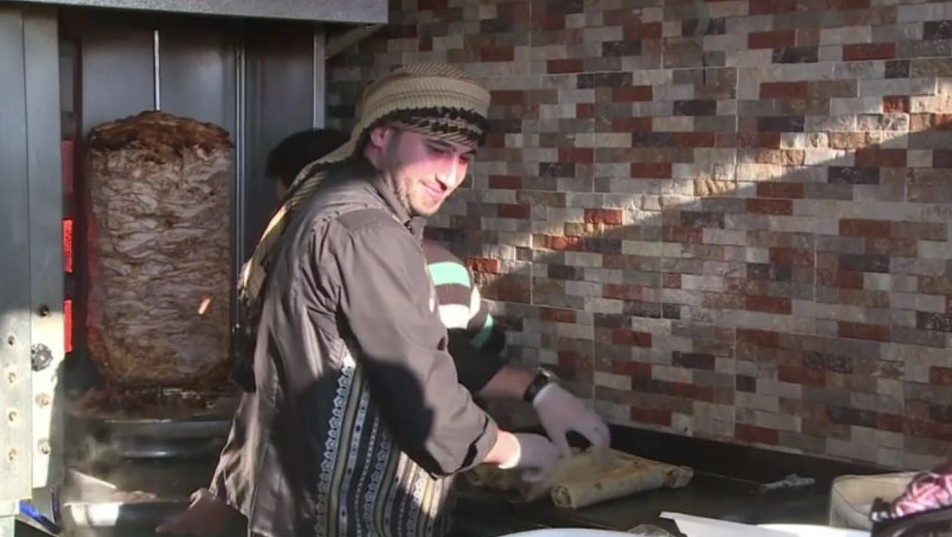
When his family’s restaurant in Aleppo was crushed by bombs, Anas Qaterji had no choice but to flee war-torn Syria.
He made his way to Turkey, then Egypt, before slipping into the Gaza Strip, blockaded by both Israel and Egypt, though a tunnel under the border.
Since his arrival in 2013, he has attempted to recreate his life in the formerly prosperous Syrian economic capital by opening a restaurant identical to the one he left behind near the citadel of Aleppo.
In Nusseirat Palestinian refugee camp, south of Gaza City, 29-year-old Qaterji was able to buy a 50-square-meter facility for $50,000 (NIS 185,000).
From Aleppo, he managed to salvage a 500-year-old wooden panel inscribed with Koranic verses, which now stands in the middle of the small restaurant of the huge Nusseirat camp, where nearly 160,000 refugees live in overcrowded conditions.
Above traditional coffee pots and antique copper cups, a sign reads: “Restaurant Jar al-Qalaa 2: taking you to Aleppo.”
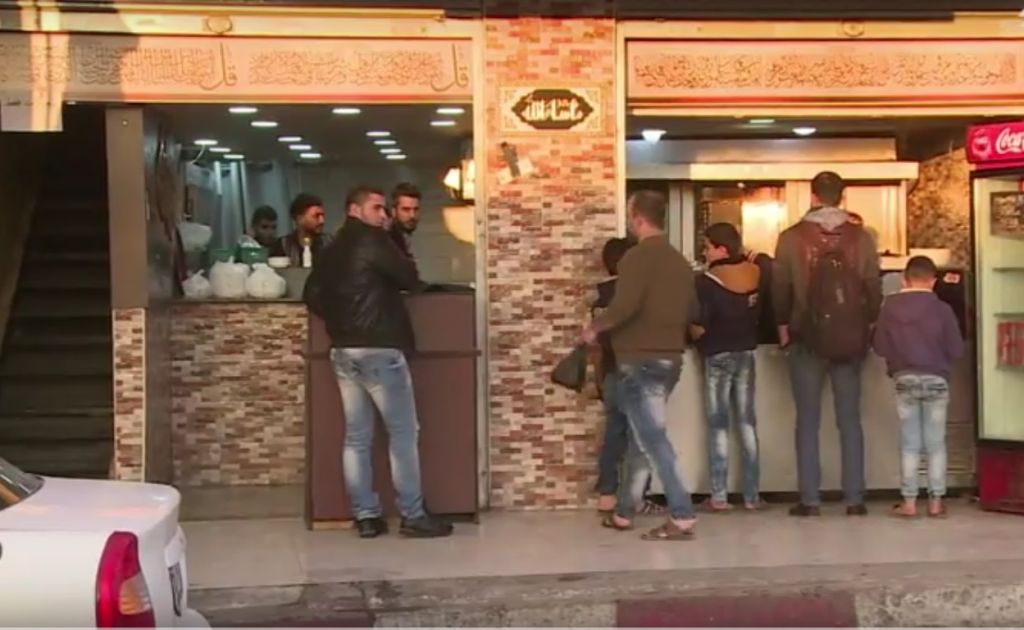
“Here, everyone speaks about Aleppo. The Palestinians follow the Syrian news closely,” says Qaterji.
It is difficult to put an exact number on the Syrians in Gaza, most of whom entered from Egypt during the short presidency of Islamist Mohamed Morsi, ousted in 2013, via illegal tunnels that Egypt has since largely destroyed.
But according to several sources, between 150 and a few hundred of them reside in the small territory held firmly by the Islamist terror group Hamas and ravaged by three wars fought against Israel since 2008 and endemic unemployment. None of them have formally declared their entry or are officially registered.
Endemic poverty
Warif Qassem Hamido, head of an association of Syrian families in Gaza, also left everything behind in Aleppo. He arrived in Gaza one day in 2013, along with eleven other Syrian families.
He opened his “Syriana” restaurant but very few Syrians have managed to rebound and start businesses.
For all other war refugees, life in the crowded Palestinian territory is “very hard,” Hamido said.
In the small enclave where the unemployment rate is 45 percent and inflation continues to climb, the Syrians “have no way to pay their rent, to care for themselves or pay their children’s university expenses,” he added.
More than three-quarters of Gaza’s population are registered as refugees with the United Nations, and UNRWA, the UN agency in charge of Palestinian refugees, is a vital source of aid. But it exclusively supports Palestinians.
For emergencies, Hamido’s group — which has a television program on the Syrians of Gaza — launches Facebook appeals.
The latest was a call for donations to finance the appendectomy of a three-year-old boy, Issam.
Qaterji, meanwhile, pines for his aging parents who stayed in Aleppo, but he will not return to them as he has found a wife in Gaza.
‘Same suffering’
At Qaterji’s restaurant, customers enter one after the other to buy shawarma [meat sandwiches or wraps] and other Syrian favorites at affordable prices.
Among them is Nadia Baraka, for whom a visit is a visual and gastronomic treat as well as a gesture of support.
“I’m showing my solidarity with the people of Aleppo, who are undergoing the same suffering as we have endured during the Israeli offensives,” said the 20-year-old student, gazing at the elegant decor of the room, where staff in Ottoman dress serve diners.
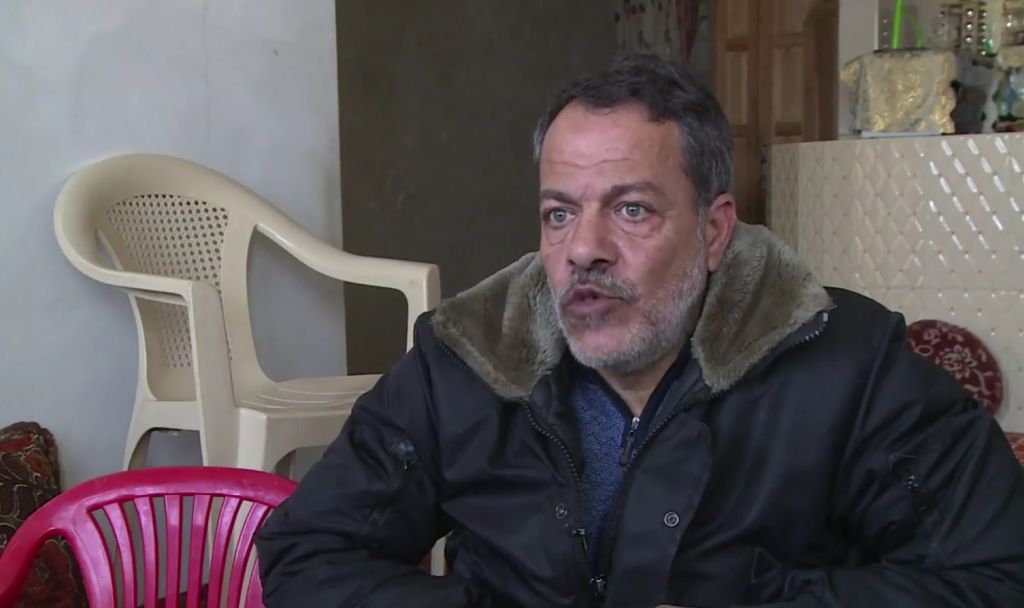
That kind of support is not enough for Majed al-Atar, 47, who arrived from Damascus in the summer 2012 through a tunnel.
He left the Syrian conflict only to live through two wars between Hamas and Israel in Gaza. Unable to find permanent work, he cannot pay for his children’s school or the eye operation his wife needs.
Today, he said, without the help of authorities and forced to increasingly rely on charitable associations, “the authorities in charge of the refugees must get us out of Gaza and relocate us elsewhere, because the situation is getting worse day by day.”








The Times of Israel Community.