

In Knesset hot seat, Netanyahu calls allegations against him ‘hot air’
Grilled by lawmakers at first Question Time, PM says Abbas ‘runs’ from peace talks; laments Israeli rabbis’ rejection of top NY rabbi’s conversion
 Add ToI as a Preferred Source on Google
Marissa Newman is The Times of Israel political correspondent.
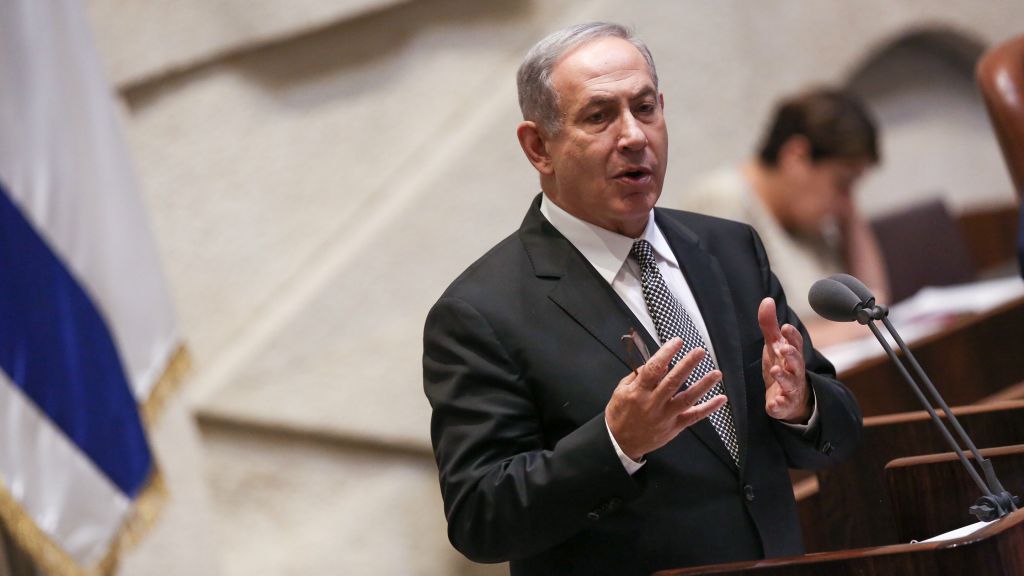
Prime Minister Benjamin Netanyahu on Monday dismissed allegations of criminal wrongdoing against him as “hot air” and “lies” and expressed confidence a preliminary examination ordered by the attorney general would ultimately be closed with no incriminating findings.
The prime minister was subject to his first Question Time grilling by lawmakers in the plenum, fielding questions from primarily opposition Knesset members for nearly two hours as part of a new format introduced several months ago by the Knesset in a bid to reduce the weekly no-confidence votes.
During his appearance, the prime minister also acknowledged that the Supreme Rabbinical’s Court non-recognition of a conversion by US rabbi Haskel Lookstein was problematic, chided another rabbi for calling homosexuals deviants, and accused the Palestinian leadership of not being interested in peace talks.
At a sometimes raucous session, Zionist Union MK Yael Cohen Paran asked the prime minister to address reports that a passport had been produced under his son Yair’s name, that a bank account was created in this name, and that funds were unlawfully funneled to this accounts through Panama.
Waving off Knesset Speaker Yuli Edelstein, who insisted he need not respond since the question did not refer to any of his government office roles, Netanyahu said: “There is no passport, there is no Panama [account], there is no account.”
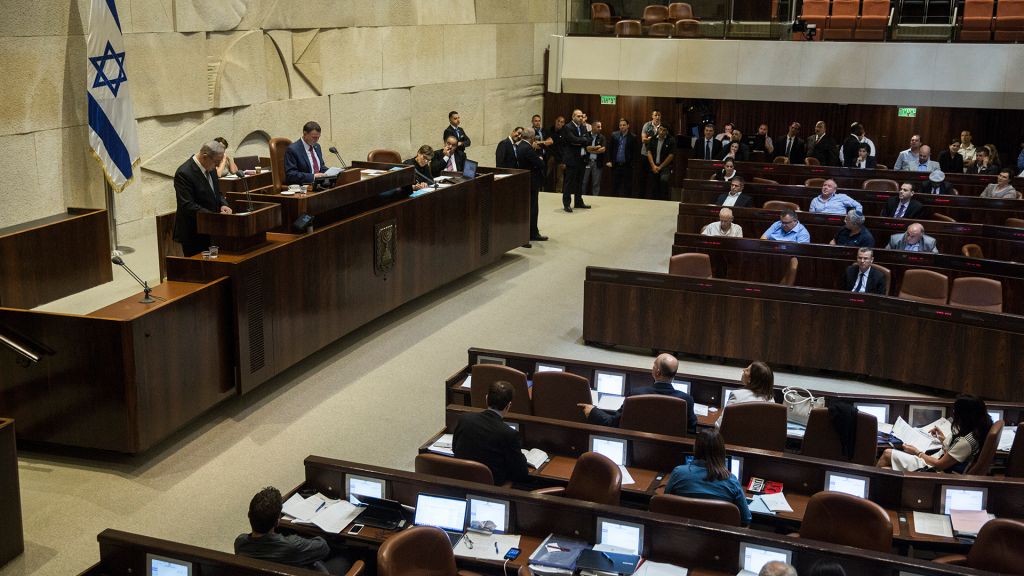
Netanyahu is currently being investigated because of suspicions surrounding campaign fundraising overseas, but he slammed all allegations against him as “nonsense” and “lies.”
“In this case as well, there is no fire, there is no smoke, there is only hot air. A lot of hot air,” he said.
“Spoiler alert,” Netanyahu added, “There will be nothing [to come out of the probe], because there is nothing.”
The prime minister also touched on various religious outcries in recent weeks, namely anti-gay comments by a prominent rabbi last week and a rabbinical court ruling that failed to recognize the credentials of Lookstein.
On the first, the prime minister said remarks by religious Zionist rabbi Yigal Levinstein, who termed homosexuals “deviants,” were “inappropriate and unacceptable, certainly not for me and shouldn’t be acceptable to anyone else.”
“I think a human being is a human being and I act accordingly.”
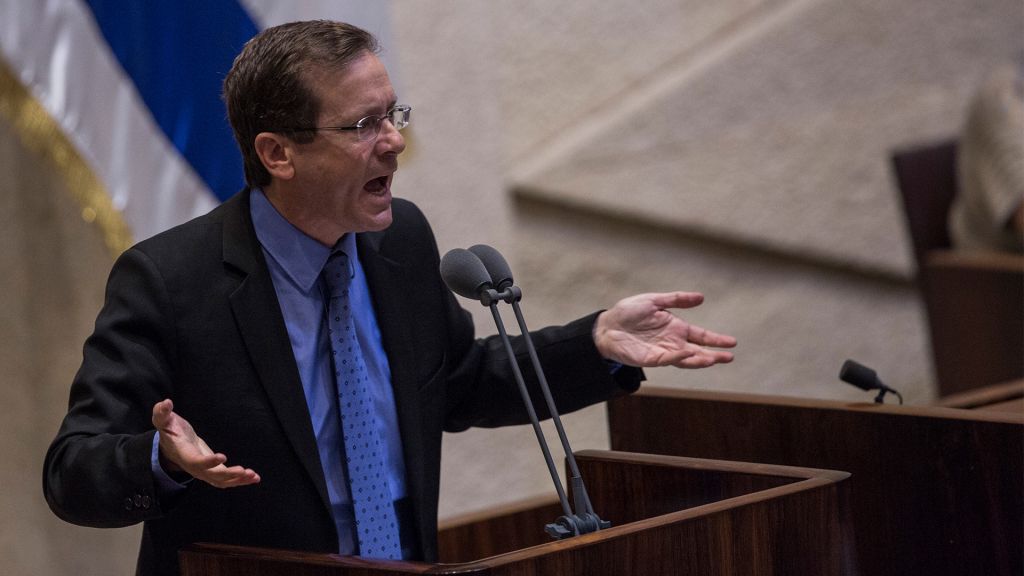
Meretz leader Zahava Galon later challenged the prime minister to act on his words and attend Thursday’s gay pride parade in Jerusalem. “I don’t attend these marches or any others,” replied Netanyahu, adding that he also doesn’t attend weddings or bar mitzvahs, “but I support them.”
On Lookstein, the prime minister admitted his failure to bridge the divides between Israel’s rabbinate, the Israeli public, and Diaspora Jewry.
“It’s not easy. It’s one of the most difficult problems I’ve encountered,” he said.
“The rabbinate is not mine,” he added. Since entering politics, Netanyahu said he has striven to reach agreements from both sides on the issue.
He said he feared the “tears” both within Israel and in discussions with Diaspora Jewry, but reiterated the need for agreement on the issue.
“I want to solve it by way of agreement, it’s not easy. And until this moment, I can’t say I have succeeded,” he said.
The session was most stormy when matters turned to the Israeli-Palestinian conflict.
Netanyahu reiterated that he is in favor of a disarmed Palestinian state that recognizes Israel as a Jewish homeland, but said Palestinian Authority President Mahmoud Abbas’s refusal to compromise has undermined peace talks thus far.
Abbas “runs away, runs away, runs away, because he knows that he will have to make concessions — concessions on Jaffa, concessions on Acre, concessions on Beersheba. This is the simple truth,” he said.
“There is no mutual recognition,” he said.
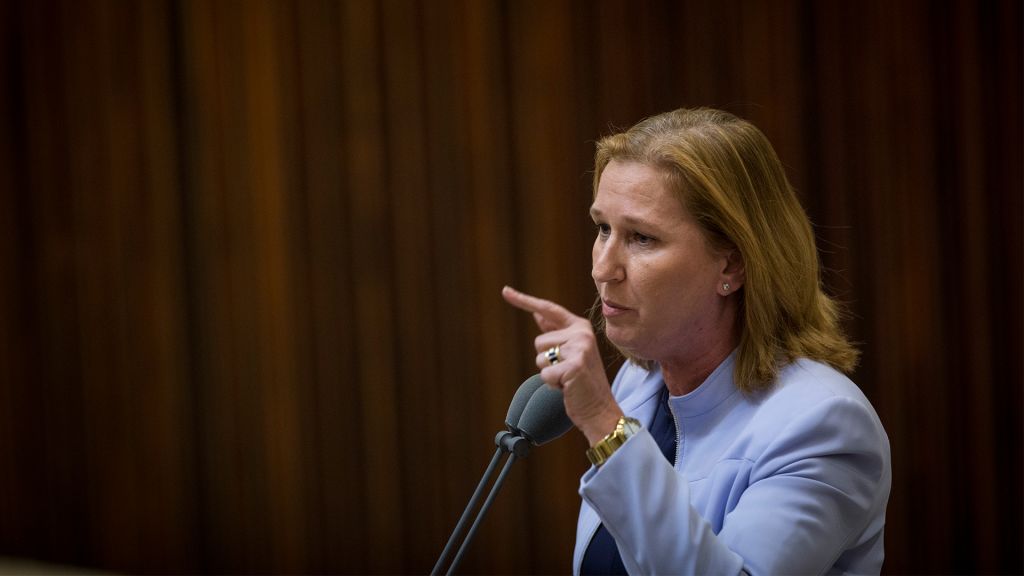
Zionist Union member Tzipi Livni, a former peace negotiator, rejected Netanyahu’s comments, saying the Palestinians have long given up on Jaffa and other formerly Palestinian cities, and asking him if he would be willing to impose a total settlement freeze.
The implication that a settlement freeze would bring the Palestinians to the table and encourage progress on a peace deal is an “assumption,” he said.
Israel had a “total freeze” from the end of 2009 for 10 months, he added. “This hasn’t proved successful, to put it mildly, until today.”
Abbas, he said, makes demands as preconditions for talks that “my government can’t agree to, and I don’t think an alternative to my government would agree to.”
Netanyahu, who also holds the Foreign Ministry portfolio, brushed off accusations that he is a “part-time foreign minister,” saying that he had met with 120 world leaders in the past year alone, and insisted Israel’s diplomatic standing and relations were better than ever.
He expressed hopes that burgeoning ties with moderate Arab states “will bring Palestinians to a more realistic position. We’re trying it; it’s not entirely clear what these states will bring” to the Israeli-Palestinian relationship”
Netanyahu said the Arab League’s peace initiative could be a basis for peace talks with the Palestinians, but only in a revised form.
“If it’s a script, then certainly we cannot [agree to it]. If it’s a basis to open talks, then sure,” he said.






The Times of Israel Community.