

In rabbinate protest, Lookstein and Sharansky urge revision, not revolution
US Orthodox rabbi wants Israeli religious institutions to expand list of rabbis whose conversions are accepted as legitimate
 Add ToI as a Preferred Source on Google
Ben Sales is a news editor at The Times of Israel
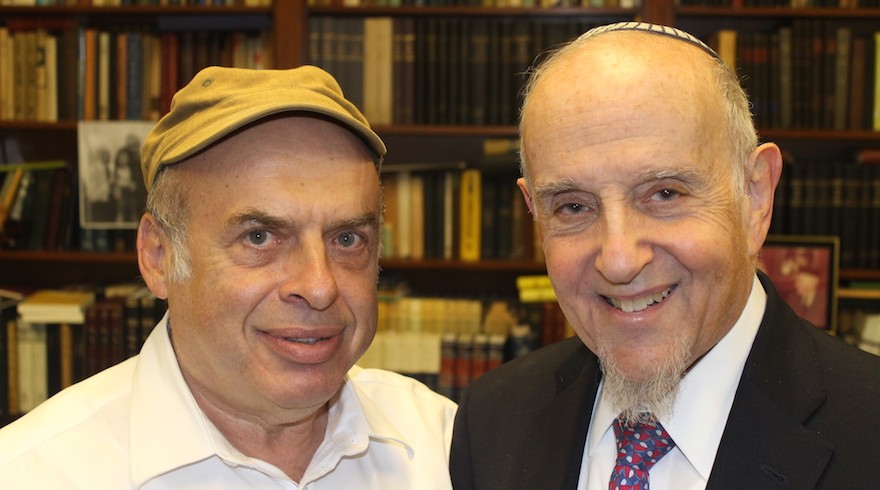
NEW YORK (JTA) — Three months after Israel’s Chief Rabbinate rejected his authority to perform conversions, one of America’s most prominent Modern Orthodox rabbis joined with Natan Sharansky to advance a message: The rabbinate needs to become more open. But not too much more.
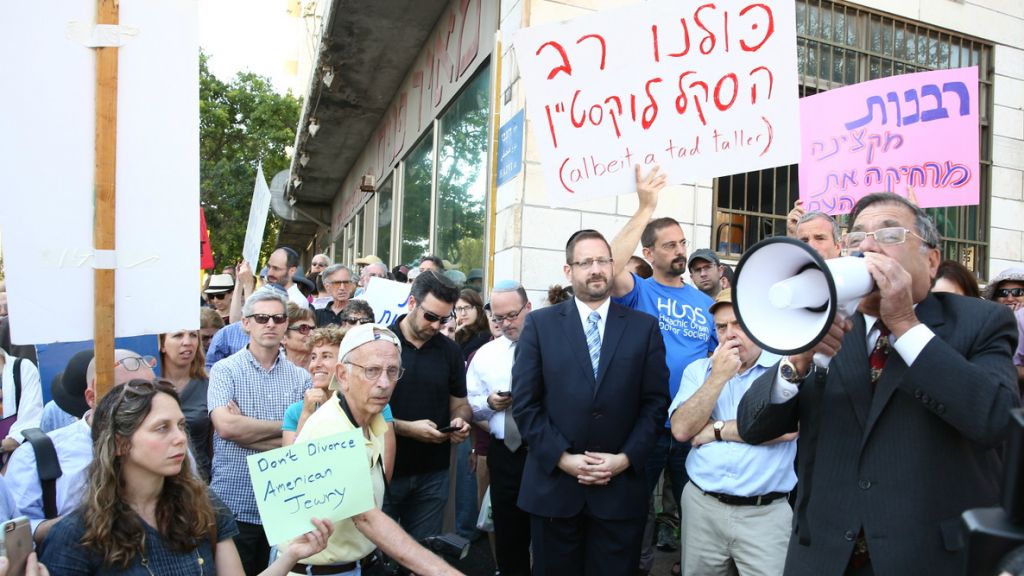
A widely respected rabbi in New York’s Orthodox community, Haskel Lookstein saw his credentials called into question when a conversion he performed was deemed invalid by a rabbinical court in the Tel Aviv suburb of Petah Tikva. The court’s decision has amplified calls for the Orthodox-dominated rabbinate to reform.
On Wednesday, Sharansky spoke at a 200-person protest on Lookstein’s behalf in front of the Chief Rabbinical Court in Jerusalem.
But in a joint interview on Thursday in New York, the changes Lookstein and Sharansky proposed were relatively mild. They want the rabbinate to recognize a wider range of Orthodox rabbis. Sharansky — chairman of the Jewish Agency for Israel — wants the Israeli government to accept or reject rabbis according to a set of objective criteria.
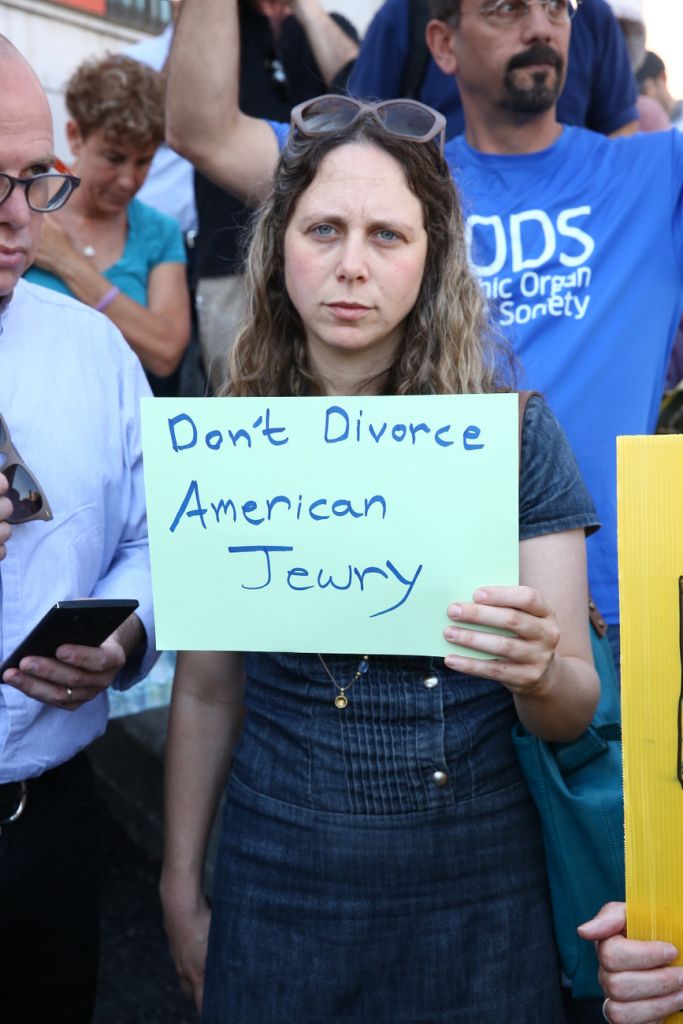
The two, however, stopped short of backing calls for the rabbinate to dissolve, to recognize non-Orthodox movements or to surrender its monopoly on Jewish marriage and conversion in Israel. They’re not asking the rabbinate to change its core philosophy or mission — only its procedures.
“My specific overall goal is to reach a point where the Chief Rabbinate of Israel will recognize the conversion work done by recognized rabbis, respected rabbis, in America,” Lookstein said. “I believe it should be broader than the RCA — rabbis who are communally recognized as halacha-abiding rabbis.”
The Rabbinical Council of America is the main professional association for Modern Orthodox rabbis in the United States.
Lookstein, who has performed hundreds of conversions including that of Donald Trump’s daughter Ivanka, is the former rabbi of Kehilath Jeshurun, a tony modern Orthodox synagogue on Manhattan’s Upper East Side. He also previously served as the head of school at the Ramaz School, an elite Manhattan Modern Orthodox preparatory school.
A woman who converted under Lookstein’s auspices last year applied for marriage registration with the rabbinical court in the Tel Aviv suburb of Petah Tikva in April, only to have her conversion declared invalid. The court did not recognize Lookstein’s authority because he was not on its list of approved rabbis.
The woman has appealed her case to Israel’s Chief Rabbinical Court, which held her hearing Wednesday and is expected to deliver a judgment soon. Israel’s Ashkenazi Chief Rabbi David Lau has vouched for Lookstein, making it likely the Petah Tikva court’s decision will be overturned.
“They are guilty of persecuting a convert, for which the Talmud says there are 46 prohibitions,” said Lookstein. “They are guilty of every single one of these prohibitions. This is very serious persecution of a person, and it casts doubt on the whole system that doesn’t trust American rabbis.”
The case has shined light on how the Orthodox-dominated rabbinate has begun to alienate even its Orthodox allies. The rabbinate has never recognized non-Orthodox rabbis or ceremonies. But the past few years have seen it question the credentials of a few leading liberal Orthodox rabbis as well.
In 2013, the rabbinate rejected — then later accepted — a conversion by New York Rabbi Avi Weiss, who founded the liberal Yeshivat Chovevei Torah. Last year, it threatened to revoke the appointment of American-born Rabbi Shlomo Riskin, who advocates progressive Orthodox policies, as chief rabbi of the West Bank settlement of Efrat. Sharansky said as long as the rabbinate’s protocols stay the same, American rabbis will continue being delegitimized.
“We are lucky it happened with Rabbi Lookstein, because it makes a lot of noise,” Sharansky said. “OK, we accept Rabbi Weiss. OK, we accept Rabbi Riskin. OK, I’m sure they will say we accept Rabbi Lookstein. And tomorrow it will be some rabbi from Phoenix [or] Omaha.”
Lookstein said the rabbinate should accept conversions by all US Orthodox rabbis — including members of the Rabbinical Council of America and graduates of Chovevei Torah. Sharansky suggested Israel’s Interior Ministry could set out objective criteria for Orthodox rabbis to meet: a congregation of a certain size, for example, and certification from a recognized Orthodox seminary.
Conversions should be accepted “as long as there’s a community that is a recognized Jewish community, and there is a rabbi who got semicha,” or rabbinic ordination, Sharansky said. “If there is a group of people who for years have this community, everyone can check if it is a real one.”
But neither Sharansky nor Lookstein called for more radical changes to the rabbinate, which a coalition of Israelis — Orthodox and not — have pushed. Pluralism activists in Israel have long called for the rabbinate to be abolished or replaced with a system that also recognizes non-Orthodox movements. According to polls by Hiddush, a group that advocates religious pluralism in Israel, solid majorities of Israeli Jews support instituting civil marriage in Israel and recognizing non-Orthodox conversions.
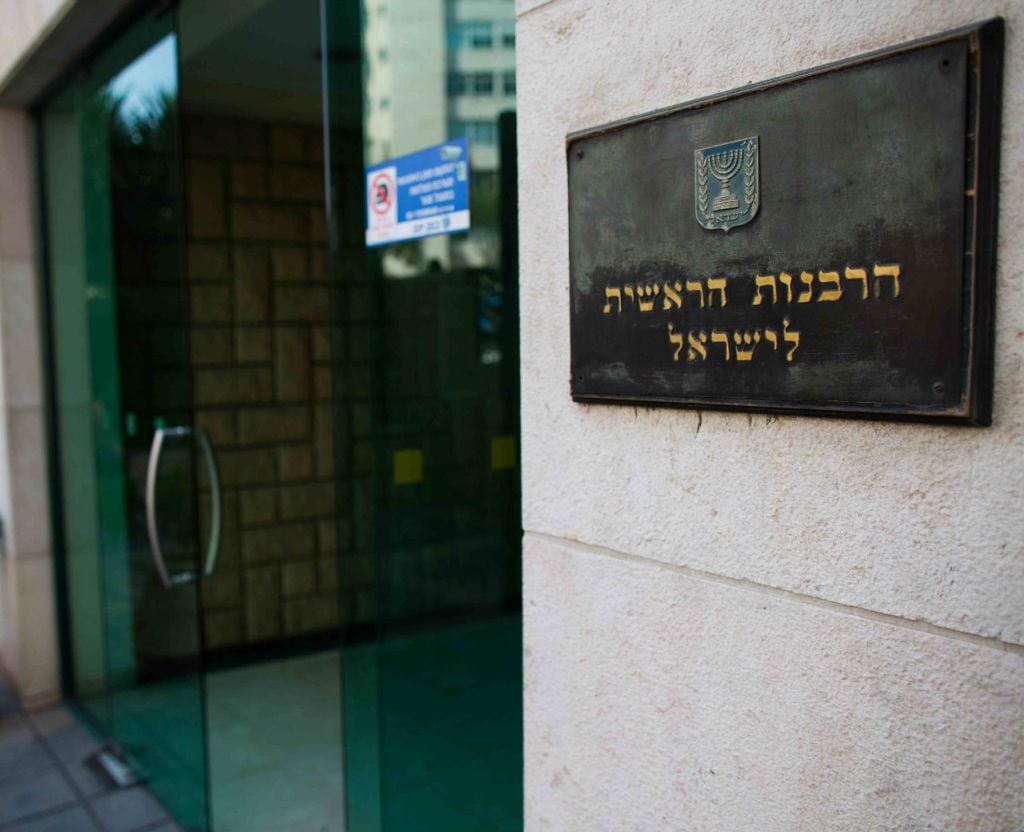
Lookstein did not comment on calls to abolish the rabbinate or remove its monopoly over Jewish marriage in Israel. Sharansky said that despite the body’s flaws, it provides valuable religious services to Israelis.
“I think the Chief Rabbinate is playing an important role in the life of Israelis,” he said, crediting the rabbinate for “connecting the Jewish state with Judaism.”
Lookstein said he generally refrains from criticizing Israeli government actions. But he spoke out on this issue, he said, because of the hurt it caused one of his converts.
“I did not start this fight,” Lookstein said. “The rabbinate in Petah Tikva rejected a convert who was converted properly and was living a religious life.”










The Times of Israel Community.