

Israel arrests 10 East Jerusalemites suspected of leading Temple Mount clashes
Group that sparked fight at holy site between police, worshipers in July was led by a Hamas-linked ex-con whose father committed a deadly shooting attack in 2016, Shin Bet says
 Add ToI as a Preferred Source on Google
Judah Ari Gross is The Times of Israel's religions and Diaspora affairs correspondent.
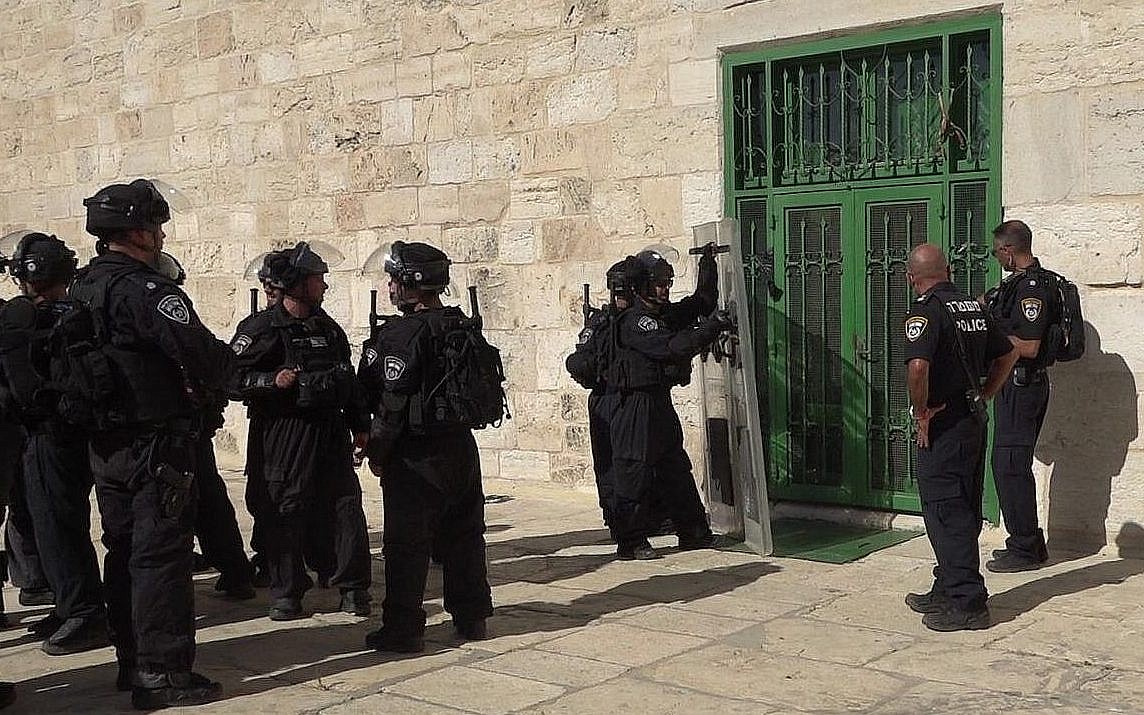
Israeli security forces arrested 10 East Jerusalem men in recent weeks who were suspected of leading clashes with police on the Temple Mount earlier this summer, the Shin Bet security service said.
On July 27, Israeli police squared off against Muslim worshipers, who barricaded themselves inside the Al-Aqsa Mosque.
During the clashes, four police officers were injured and the holy site was shut down for several hours.
According to the Shin Bet, the violence was led by a group of 10 East Jerusalem residents, at least two of which have criminal backgrounds and ties to the Hamas terror group.
https://content.jwplatform.com/previews/UChrXGd0-U4CTA3JQ
“The cell purchased fireworks, which were smuggled onto the Temple Mount in order to use them to attack security forces stationed outside the mount at the end of Friday prayers,” the security service said in a statement.
The arrests were carried out in a joint operation by the Shin Bet and Israel Police.
Emed Abu Sabih, of the East Jerusalem neighborhood of Kafr Aqab, was said to lead the cell.
Abu Sabih, who has an Israeli ID card, was released from prison earlier this year after completing an eight-month sentence over his activities in the Hamas-linked Shabab al-Aqsa group, which was outlawed in Israel in 2011, the Shin Bet said.
“The investigation found that Sabih led the violent incident, transferred the funds to buy the fireworks and called for other operatives to be called up to take part in the rioting on the Temple Mount — and also shot fireworks at Israeli forces,” the security service said.
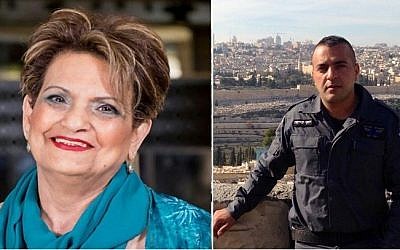
Abu Sabih’s father, Mesbah, committed a Jerusalem shooting attack in October 2016 in which two people — Levana Malihi and police officer Yosef Kirma — were killed and five more were wounded, the Shin Bet said. He was killed in a gun battle with police.
According to the security service, the younger Abu Sabih was assisted in his Temple Mount activities by Rashid Rashak, who was imprisoned from 2014 to 2016 in connection with a stabbing attack.
“Rashid called up operatives and told them what to do during the event. In addition, in the weeks following the clashes, Rashid worked to instigate a similar violent event on the Temple Mount, but without success, due to the efforts of security forces to prevent it,” the Shin Bet said.
The security service would not release the identities of the eight other suspects, who were said to be involved to a lesser extent.
The Shin Bet said indictments were expected to be filed in the coming days.
The July clashes began following a parade at the Temple Mount, known to Muslims as the Haram al-Sharif, to mark the anniversary of Israel removing metal detectors that were temporarily placed at the entrance to the holy site following a terror attack there.
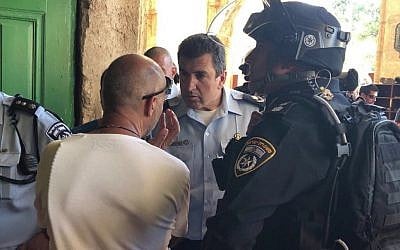
Police arrested 24 suspects during the clashes themselves, 16 of whom had barricaded themselves in the mosque.
The Al-Aqsa Mosque is the third holiest site in Islam and sits atop the Temple Mount, the most sacred place in Judaism and revered as the home of the ancient Jewish Temples.
Israel installed security measures, including metal detectors, at the entrances to the site in response to a July 14, 2017, attack in which three Arab Israelis shot dead two police officers near the Lions Gate. They used weapons they had stored at the mosque.
For almost two weeks, Muslim worshipers stayed out of the sacred Jerusalem compound as protests and deadly unrest continued in and around East Jerusalem and the West Bank.
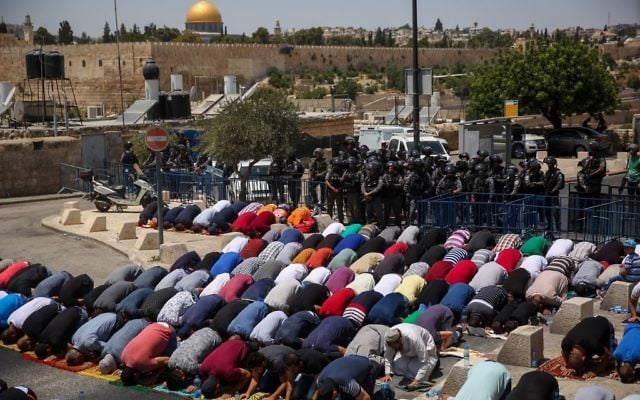
Instead, worshipers performed mass prayer protests outside the shrine, some of which devolved into clashes with Israeli security forces.
The security measures, which included scaffolding, railings, and cameras in addition to metal detectors, were removed on July 27, 2017. The removal of the railings and scaffolding prompted celebrations by Palestinians, who danced, whistled, and honked their horns near the site.
Palestinians perceived the security measures as a move by Israel to assert further control over the site, a charge Israel has repeatedly denied.
Times of Israel staff and AFP contributed to this report.






The Times of Israel Community.