

Israeli assessment: Next bout with Iran only a matter of time
IAF’s large-scale reprisal raids, which destroyed much of Syria’s air defenses, meant to deter Assad from future attacks on Israeli jets
 Add ToI as a Preferred Source on Google
Judah Ari Gross is The Times of Israel's religions and Diaspora affairs correspondent.
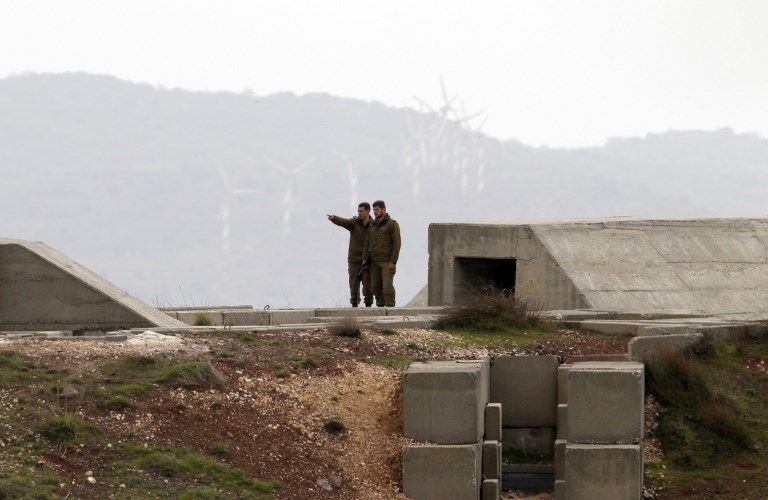
Israeli security assessment on Sunday following the major aerial clashes in Syria a day earlier indicated that the current round of clashes has ended, but the next altercation is only a matter of time.
Early Saturday morning, an Iranian drone piloted by an Iranian operator entered northern Israeli airspace near the Jordanian border, where it was shot down by an Apache attack helicopter, according to the Israel Defense Forces.
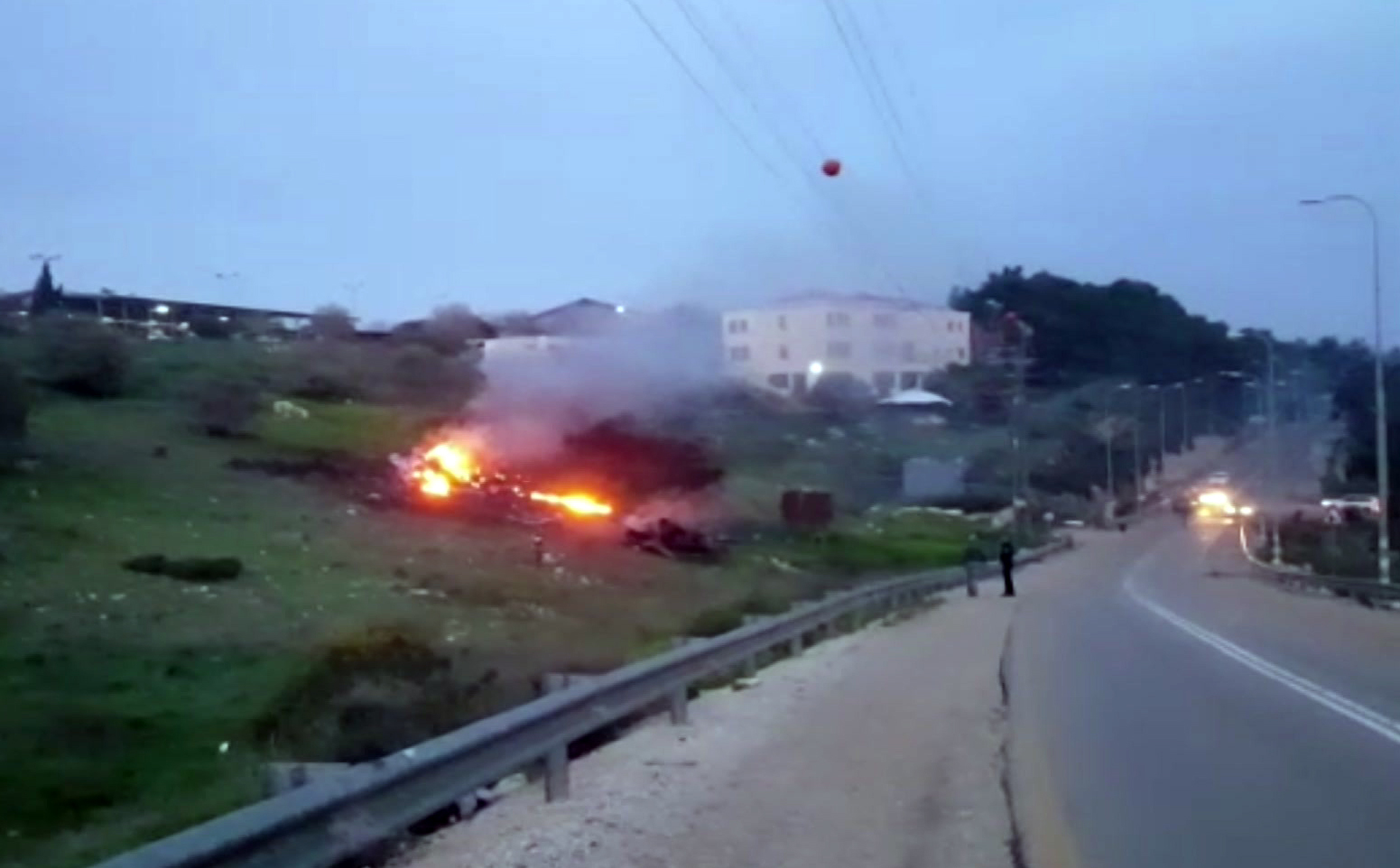
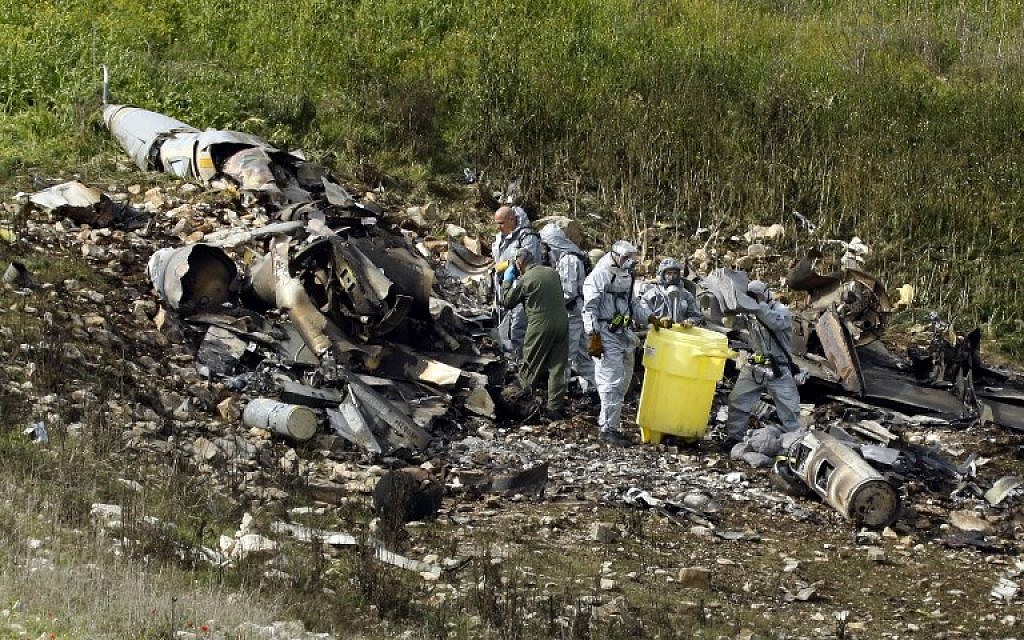
Israeli jets conducted a series of reprisal raids against military positions in Syria, during which one F-16 was apparently hit by shrapnel from an exploding Syrian anti-aircraft missile, and crashed in northern Israel.

The two airmen inside it ejected from the plane. The pilot was seriously wounded, but over the course of Saturday and Sunday his condition improved, his doctors said. The navigator sustained light injuries and was released from the hospital on Sunday afternoon.
In response, the Israeli Air Force carried out a second round of strikes shortly before 9 a.m. on Saturday, again facing a massive barrage of anti-aircraft fire, which included dozens of Russian-made air defense missiles, the army said.
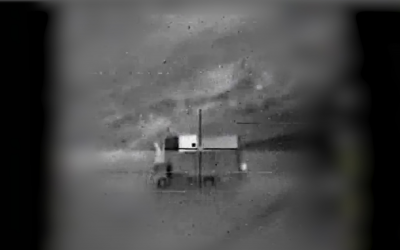
According to the IDF, in the retaliatory strikes, the Israeli aircraft targeted at least a dozen sites in Syria, including multiple air defense batteries and four Iranian positions in the country.
The Israeli army said the targets included the mobile command center from which the drone was operated on the T-4 air base outside the Syrian city of Palmyra, which has been under Iranian control for months, an Israeli military official said Saturday.
According to rebel forces, both Syrian and Iranian troops were killed in the IAF strikes. The Syrian Observatory for Human Rights, which monitors the civil war, said the raids killed at least six pro-regime fighters, including both Syrians and foreigners.
“The death toll is expected to rise because there are some people in critical situation,” the Observatory said Saturday.
It marked the first time that Israel publicly acknowledged it conducted airstrikes against Iranian military sites inside Syria.
The official Israeli assessment is that this is likely not the last time that Israel and Iran will directly square off in Syria.
The large-scale offensive was apparently designed to physically limit Syrian dictator Bashar Assad’s ability to attempt such an attack against Israeli aircraft in the future, and to make him consider what a larger Israeli aerial assault would do to his military.
The Iranians, for their part, have denied Israel’s claims, saying that the drone was flying inside Syria as part of a reconnaissance mission targeting jihadist groups in the country.

As of Sunday, the IDF had yet to officially determine, or at least announce, the exact cause of the F-16’s crash.
However, the air force was still working under the assumption that it had been hit by shrapnel from an exploding Syrian missile.
A Hadashot TV report on Monday evening said the pilots, in their debriefing, said they had no choice but to eject from the plane. It said the F-16 was targeted by dozens of Syrian anti-aircraft missiles, one of which exploded alongside.
The military was investigating the possibility that the pilots failed to notice that a missile had locked onto them until it was too late for them to fully avoid it, Hadashot TV news reported.
According to Brig. Gen. Amnon Ein Dar, head of the IAF’s Training and Doctrine Division, the strikes represented “the biggest and most significant attack the air force has carried out against Syrian air defenses since 1982.
“We carried out a wide-scale attack on the aerial defense system — radars, rockets, batteries, posts — and we performed a substantial strike, which, as can be seen, they are trying to hide,” Ein Dar said on Sunday.
Israeli political and military leaders have long warned that Iran is working to establish local air and naval bases from which it can arm Hezbollah and other Shiite groups in Syria, as well as carry out attacks of its own.
On Saturday night, Prime Minister Benjamin Netanyahu said in an English video message that the day’s events had proved Israel’s claims.
https://content.jwplatform.com/previews/8Hcx1Jb0-U4CTA3JQ
“This morning Iran brazenly violated Israel’s sovereignty. They dispatched an Iranian drone from Syrian territory into Israel,” he said. “And this demonstrates that our warnings were 100 percent correct.”
The prime minister added, “Israel wants peace, but we will continue to defend ourselves with determination against any attack on us and against any attempt by Iran to entrench itself militarily in Syria or anywhere else.”









The Times of Israel Community.