

Klezmer troubadours sing the Jewish refugee experience in new musical
Using a shipping container as a set, Canadian playwright Hannah Moscovitch teams up with folk artist Ben Caplan to tell her ancestors’ story
 Add ToI as a Preferred Source on Google
Renee Ghert-Zand is the health reporter and a feature writer for The Times of Israel.
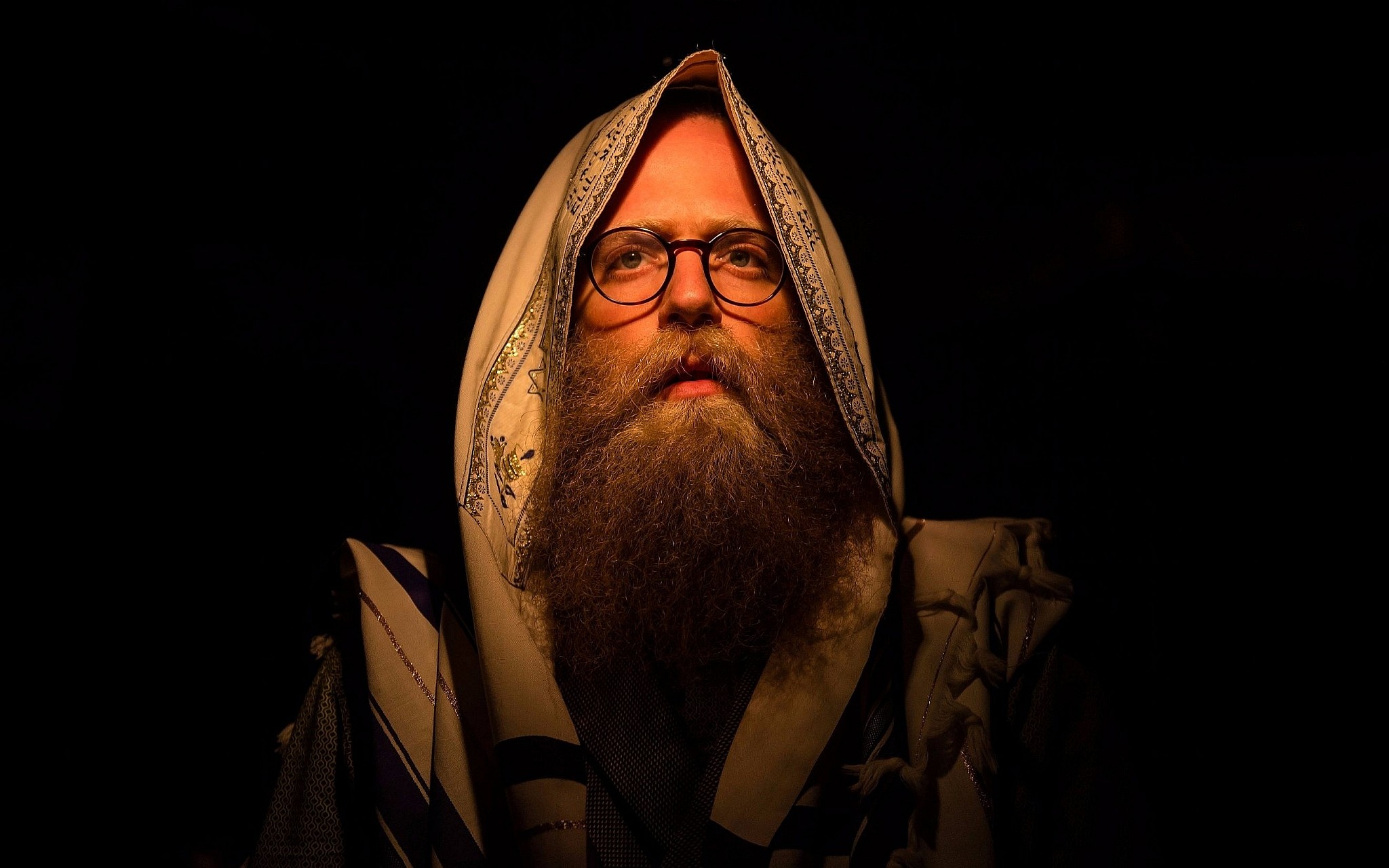
At a time when their country is working to absorb more than 25,000 recently arrived Syrian refugees, theater-going Canadians are being inspired by the dramatic tale of a Jewish-Romanian immigrant couple from a century ago.
“Old Stock: A Refugee Love Story,” by acclaimed playwright Hannah Moscovitch, presents audiences with a particular story of Eastern European-born characters and klezmer-inspired music, and leaves them with a universal message about the human experience of displacement and migration.
The production recently wrapped up a run at the Edinburgh Fringe Festival, where it garnered several awards and excellent reviews. Originally developed at Halifax’s 2b theater company, the production now returns to Canada to play to audiences across the country after successful runs earlier this year in Halifax and Ottawa.
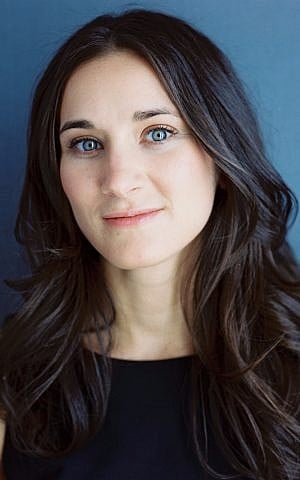
“Old Stock” is the story of Moscovitch’s own great-grandparents Chaya Yankovitch and Chaim Moscovitch, who met in 1908, in the queue for medical examinations after disembarking at Halifax’s Pier 21, Canada’s equivalent to Ellis Island. Chaya had arrived from Bucharest with everyone from her family — except for her husband, who had died and left her a very young, childless widow. Nineteen-year-old Chaim, who escaped Brasov following the murder of his relatives in a pogrom, was alone.
Moscovitch, 39, wrote “Old Stock” as a theater-musical concert hybrid together with her theater director husband Christian Barry, 38, and independent folk music artist Ben Caplan after visiting Pier 21 and looking up her family records.
“I’d been living in Halifax for quite a while, but it had never occurred to me that my own ancestors had landed in Canada right here. My aunt was visiting us, so we visited the Pier with my young son Elijah, and it hit me that Elijah wouldn’t be here if Chaya and Chaim had not escaped Romania and sought refuge in Canada,” the Ottawa-born Moscovitch told The Times of Israel.
Around the same time, Barry had been in discussions with Caplan, whose edgy contemporary folk compositions are inspired by Balkan, Romani and cantorial music, about collaborating on a performance project.
“Ben is a very theatrical creature,” Barry said of the 31-year-old Caplan, who grew up in Hamilton, Ontario in a Conservative Jewish family and considered becoming an actor before pursuing a professional music career.
Caplan, who has put out two albums and constantly tours nationally and internationally, has gained notoriety not only for his gravelly singing voice, but also striking stage presence — especially his wild mane and massive beard.
Barry, who had just become father to a Jewish son, was interested in exploring Jewish themes and was attracted to the Jewish cultural undertones in Caplan’s music. The two initially mined traditional Jewish folk literature by Sholem Aleichem and other Yiddish writers, as well as Caplan’s own family history for potential material. However, they realized they had their story when Moscovitch came home excited about her discoveries at Pier 21.
“This was just around the time of Aylan Kurdi,” said Barry, referring to the three-year-old Syrian refugee whose dead body was found washed up on a Turkish beach after he drowned in the Mediterranean Sea while his family tried to escape to Greece.

The global migration crisis was blowing up in the headlines, and Moscovitch’s own great-grandparents’ historical story could become a portal into the contemporary refugee experience.
“The idea was to present the human experience of being a refugee, and go beyond the statistics everyone was reading in the news,” Barry said.
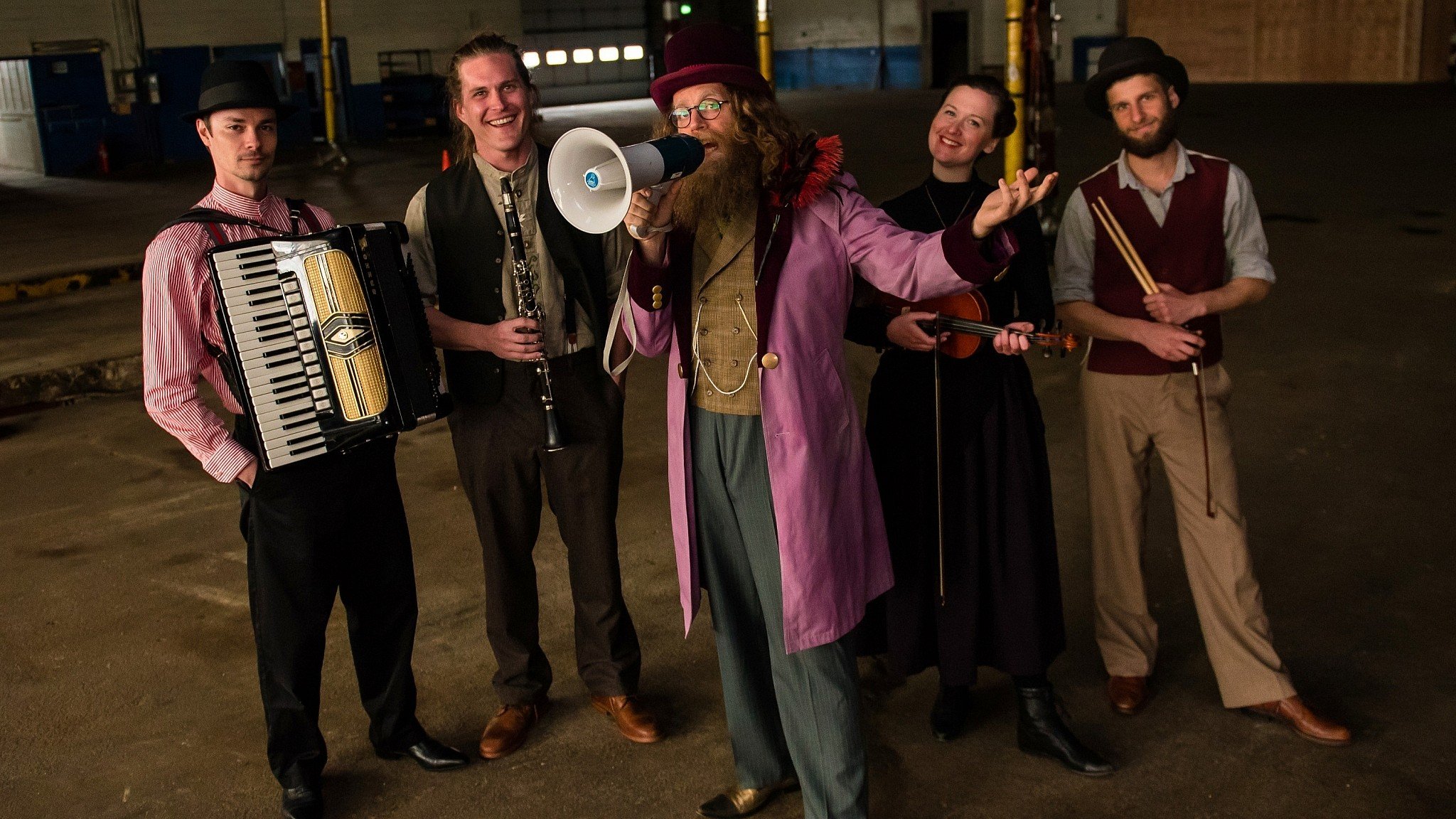
With the Windham Campbell Prize-winning Moscovitch writing the script, and Barry and Caplan the songs, the trio came up with what Barry termed a “music-theater-hybrid-concert-klezmer-folk fusion.” Caplan stars in the production, and appears on stage with a group of talented musicians who also take on character roles, including Chaim and Chaya.
“The story would be told by a traveling band of troubadours. The set is a shipping container, the modern equivalent of a caravan. The container opens to reveal the travelers and their instruments. They are wanderers,” Barry said.
The 85-minute long play’s narrative scope is intimate, dealing with the young couple’s difficult adjustment to Canada and one another after they marry and start a family. There are several references to the couple’s Montreal neighborhood, but the focus is primarily on what’s happening in their home and minds, rather than with what’s going on in the outside world.
Moscovitch used her imagination to create the dialogue between her great-grandparents, whom she never met, and about whom she had heard nothing while growing up.
“I didn’t even know my grandfather [Chaya and Chaim’s son]. He died when I was six,” Moscovitch said.
“I was able to get some limited information from a distant elderly relative I interviewed, but otherwise, I just created the story based on facts I pieced together from ship manifests, census records, and my grandfather’s birth certificate,” she said.

Moscovitch suspects that her ancestors experienced and carried with them a great deal of trauma, and that they likely chose not speak about the past because they wanted to forget it.
This haunting loss comes across clearly in “Old Stock,” which employs cynicism, dark humor and a generous dose of magical realism. It’s a story about renewal in a strange land, and ultimately there are children, grandchildren, great-grandchildren, and now a great-great-grandson (Moscovitch and Barry’s son Elijah), but the play doesn’t end with an absolute happily-ever-after. Instead, the show’s final lines artfully encourage the audience to consider their own stance toward today’s migrants and refugees.
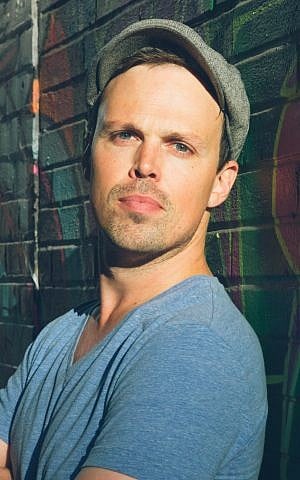
“Hannah has emphasized the universality of the specific. The play uses this particular story to show that migration is migration, and refugees are refugees, and it’s the same story over and over again. There are many hints that bring into the minds of the audience that the story is not just about these two Jews, but about people in general,” Caplan said.
Canadians will recognize specific references in the play’s dialogue and song lyrics to political controversies regarding immigration policy. One example is the famous “None is too many” quote attributed to a Canadian immigration official when asked in 1939 how many Jews would be allowed into the country after the war. (The phrase became the title of a popular scholarly 1983 book by Irving Abella and Harold Troper about Canada’s restrictive immigration policies toward Jewish refugees during the Holocaust years.) The play’s title, “Old Stock,” is taken from a 2015 statement by former prime minister Stephen Harper, whom many believe was trying to sew division among Canadians of various backgrounds.
Barry emphasized that he and his co-writers were not intent on convincing viewers to adopt a specific political viewpoint.
“We were just trying to attach a face to the issue before people make a political decision. Our place as artists is to focus on the human question,” he said.










The Times of Israel Community.