

Kurdish sources deny Israeli woman captured by IS
Gill Rosenberg was not in Kobani, where jihadi sites claim the IDF veteran was taken by Islamic State fighters, according to people on ground
 Add ToI as a Preferred Source on Google
Lazar Berman is The Times of Israel's diplomatic reporter
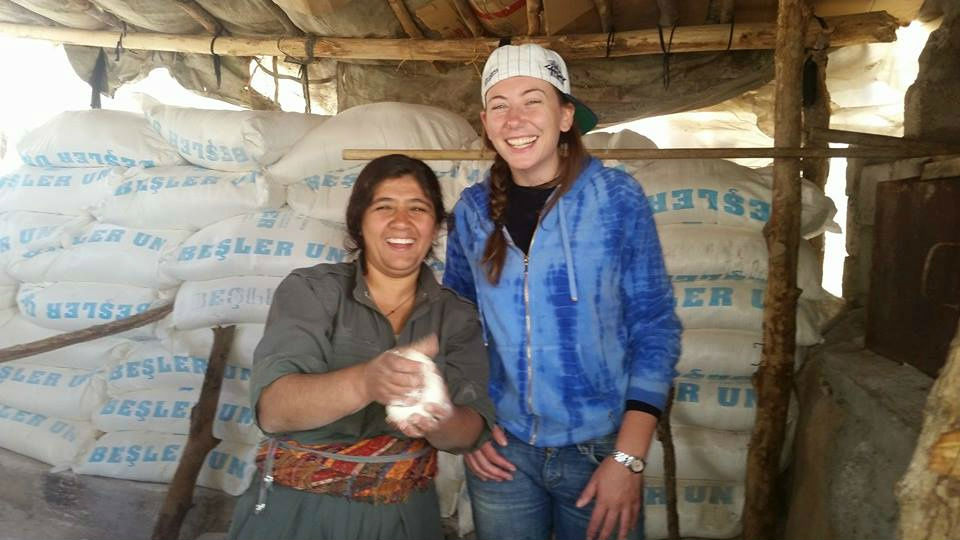
Doubts surfaced Monday over reports that a Canadian-Israeli woman had been kidnapped by the Islamic State terrorist group near the Syrian-Turkish border.
Kurdish sources told the NRG news site that they were aware of the “wave of rumors” that IS had captured an Israeli citizen in Kobani, presumably Gill Rosenberg, an IDF veteran who had traveled to Iraq to fight for the Kurdish YPG militia.
“This is false propaganda by IS,” the Kurdish sources said. “We can say with a high level of certainty that no Israeli volunteer, or any international volunteer for that matter, arrived to fight in the city of Kobani in Syria.”
They said she is meant to be training in the Kandil mountains in Iraqi Kurdistan, along with other international volunteers.
In addition, they said, international volunteers are not placed in combat roles, but instead support the front-line fighters.
Posting on Rosenberg’s Facebook page Monday, a friend named Oliver Brimo said Rosenberg was safe “and all the allegations about her kidnap are unfounded.” He noted that she had warned a few days ago that she would not be active on Facebook for a few days because she had no internet access. “Once she has internet access she will be updating her status.”
Reports came out Sunday that Rosenberg, 31, was captured by jihadists near the flashpoint city of Kobani in the past few days. The Canada native was taken after the jihadists launched three suicide bombings in the area, and her condition is unknown, according to the reports, which were not initially confirmed by the Islamic State group.
Recent photos on Twitter showed Rosenberg in fatigues and holding a rifle, according to a Kurdish source.
Two Kurdish fighters quoted by Israel Radio cast doubt on the reports of Rosenberg’s capture. One, an American fighter, said Rosenberg was never in Kobani. Another soldier on the ground said that he had heard nothing of her alleged abduction.
https://twitter.com/murad_med21/status/536634262486020098
The rumors of Rosenberg’s kidnapping were published on the Samoach al-Islam blog, which largely operates as a mouthpiece for the Islamic State terror group, as well as by jihadists on Twitter.
The US-based monitoring group SITE said Islamic State jihadists claimed a woman described as a “female Zionist soldier” had been captured in the embattled Syrian border town.
https://twitter.com/ShamiWitness/status/539054596321447936
Canada and Israel said Sunday that they were aware of the reports that a Canadian-Israeli woman may have been kidnapped in Syria.
“The Government of Canada is aware of reports that a Canadian citizen was kidnapped in Syria,” a Foreign Ministry statement from Ottawa said. “Canada is pursuing all appropriate channels to seek further information and officials are in close contact with local authorities.”
The ministry added that it would not “comment or release any information which may compromise ongoing efforts and risks endangering the safety of Canadian citizens abroad.”
Israeli Foreign Ministry spokesman Emmanuel Nachshon said that the ministry was “watching with interest the various reports about the abduction of an Israeli woman by the Islamic State, and is trying to obtain more information on the matter.”
SITE said jihadists were discussing on the Internet whether the woman should be executed or traded for Muslim prisoners.
In her last Facebook post to date, Rosenberg wrote on November 20 that someone would be managing her profile for two weeks, and asked that people not message her “as this is not me.”
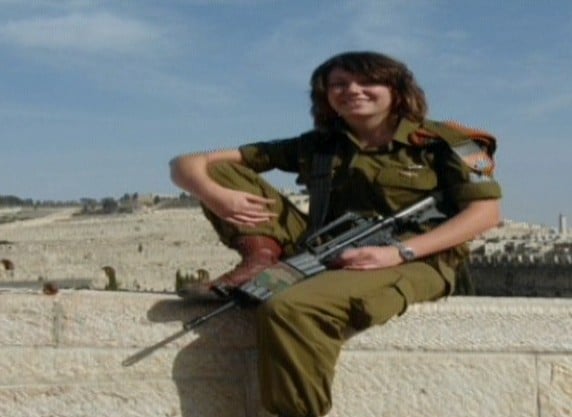
Rosenberg set out from her home in Tel Aviv on November 2, stopping in Amman before flying to Erbil, the capital of the autonomous Kurdistan Region of Iraq.
Rosenberg told Israel Radio that she wanted to do her part for the Kurdish national struggle, and that she was hopeful her experience in the Israel Defense Forces would be useful to the Kurds.
According to Rosenberg’s Facebook page, she served in the IDF’s Home Front Command.
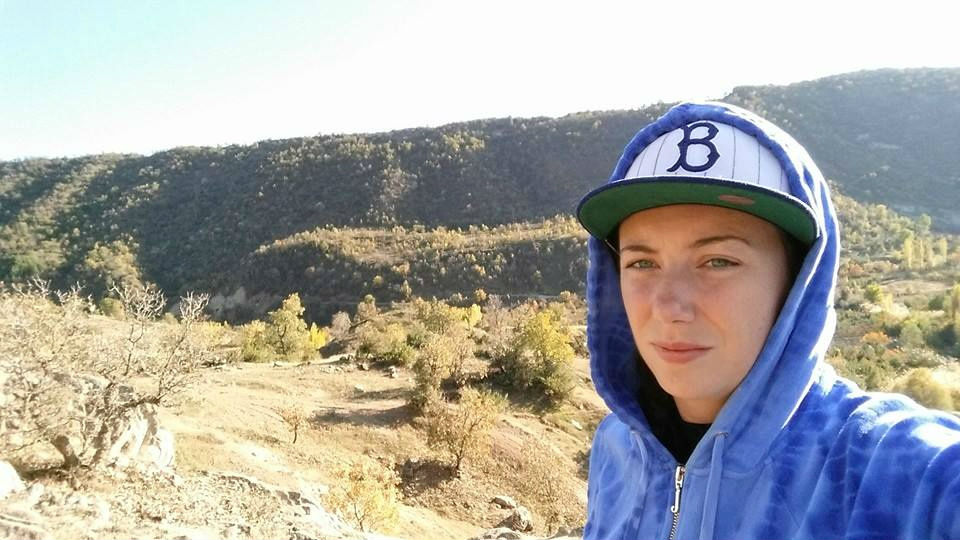
Rosenberg has posted pictures of herself in mountains of Iraq and Syrian Kurdistan.
“In the IDF, we say Aharai – After Me. Let’s show ISIS what that means,” she wrote, using an alternate acronym for Islamic State.
In 2009, Rosenberg was arrested in a joint Israeli police and FBI operation on suspicion that she had been part of a ring that cheated elderly American citizens out of their money by posing as lottery officials and convincing the unsuspecting seniors to pay for fictive services, according to the Walla news site. The members of the ring, which included 11 other Israeli citizens aside from Rosenberg, were said to have stolen up to $25 million.
Rosenberg was later convicted of the crime and sentenced to four years in a US prison, though her term was eventually shortened and she was deported to Israel instead, Channel 10 reported.
US airstrikes in Syria in recent days have targeted IS fighters who are attacking the predominantly Kurdish town of Kobani on the Turkish border.
The Observatory said that at least 50 IS militants were killed on Saturday and early Sunday in clashes with Kurds and in coalition airstrikes. Eleven Kurdish fighters were also killed, according to the Observatory.
Idris Nassan, a Kurdish official from Kobani, said by telephone that dozens of IS militants were killed, but he did not have a concrete figure.
IS has been attacking Kobani since mid-September. The militants’ offensive has bogged down, and the Syrian Kurds — backed by their Iraqi brethren with heavy weapons — appear to have seized the momentum and to have begun pushing the jihadis back.
The Islamic State group began its Kobani offensive in mid-September, capturing parts of the town as well as dozens of nearby villages. The town later became the focus of airstrikes by the US-led coalition against the militants.
Kurdish fighters slowly have been advancing in Kobani since late October, when dozens of well-armed Iraqi peshmerga fighters joined fellow Syrian Kurds in the battles. The fighting has killed hundreds of fighters on both sides over the past two months.
Israeli-American journalist Steven Sotloff was beheaded by the Islamic State group in early September. Sotloff went missing in Syria in August 2013, and the jihadists were reportedly unaware of his Jewish heritage and Israeli citizenship until after his death.
Marissa Newman, AFP and AP contributed to this report.




The Times of Israel Community.