

Liberman puts kibosh on Army Radio’s move to Defense Ministry
Complexity of station’s integration and need for legislation require more discussion before IDF can cut ties to the famed broadcaster
 Add ToI as a Preferred Source on Google
Judah Ari Gross is The Times of Israel's religions and Diaspora affairs correspondent.

Defense Minister Avigdor Liberman on Sunday said he was walking back his plan to move the Army Radio station from the military to his ministry.
Last month, Liberman announced the famed radio station and its music-centered sister station Galgalatz would cease being subordinate to the Israel Defense Forces and become instead a unit of the Defense Ministry.
That organizational restructuring was halted on Sunday, following a discussion between Liberman and Attorney General Avichai Mandelblit.
Army Radio — known in Hebrew as Galei Tzahal — has been on the chopping block for years as the army looks to streamline itself.
“The military position is not to close it, but that it doesn’t need to be within the IDF. The IDF does not need to have any public media outlets. Where it goes is for the government to decide,” an IDF official told The Times of Israel in November 2015.
However, the attempt to move the radio station to the Defense Ministry was met with immediate resistance, notably from the Organization of IDF Workers, which promised to fight the unit’s transfer as the decision had been made without consultation.
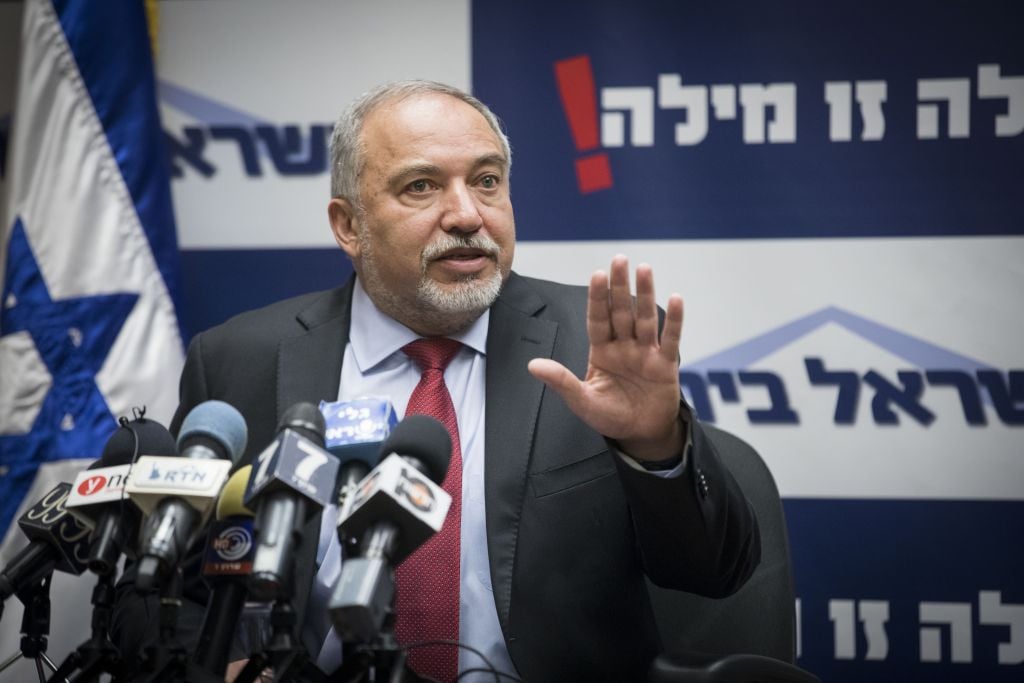
The ministry did not credit the Organization of IDF Workers with blocking the move, but said it had to do with the station’s “independence as a public broadcasting body, the complexity of integrating the station into the Defense Ministry and the need to first regulate the process through initial legislation.”
In light of these difficulties, the minister halted the move until further notice.
Army Radio began its broadcasts in 1950, taking over for the pre-state Haganah’s broadcasts.
It has served as a breeding ground for some of the country’s most famed journalists, including Ilana Dayan, Yonit Levy, Nitzan Horowitz and more.
Given its dual role as a news broadcaster and a military unit, the radio station has regularly been criticized by lawmakers for appearing to take sides on political and cultural issues.

Last month, a Galgalatz DJ was fired after she appeared to express support for a man who killed a police officer during an operation to raze homes in the Bedouin village of Umm al-Hiran.
In July, Army Radio also came under fire after airing an educational segment about renowned Palestinian poet Mahmoud Darwish as part of its “fundamental Israeli texts” program. “It is a serious matter that the works of a man who wrote anti-Zionist texts that are used to fuel terrorism against Israel would be included in the Army Radio program alongside ‘Jerusalem of Gold,’” Liberman said at the time, referring to the classic 1967 song by Naomi Shemer.









The Times of Israel Community.